Journal prompts for mental health
Journal prompts for mental health are guided questions that help people process ...

2
Last Updated: Oct 13, 2026

The Worry Tree is a cognitive behavioral therapy flowchart that sorts each worry into one you can act on and one you cannot.
If the worry names a current problem, the patient plans one action. If it is a hypothetical what-if, they use worry time or mindfulness.
NHS services distribute the Worry Tree as a self-help resource, in line with NICE’s general recommendation of CBT for anxiety.
Plenty of worries are only partly actionable, so the patient acts on the controllable half and lets the rest go.
Practice management software like Pabau assigns the worksheet, stores the responses, and reminds patients of their worry time.
A one-page decision flowchart with space to write the worry, the yes and no branch questions, and prompts on evidence and worst-case thinking. It closes with a plan box for the worries a patient can act on.
Download templateThe Worry Tree is a cognitive behavioral therapy (CBT) flowchart built around one question: can I do something about this worry right now? A yes sends the patient toward a plan. A no sends them toward a letting-go technique, such as mindfulness or a scheduled worry time.
Practices running mental health EMR software hand the sheet out at intake, then work a live worry through it in session. The tool earns its keep on the second branch, because the worries that keep patients awake are usually the ones nobody can solve.
Download the worksheet above, and read on for what belongs on each branch.
The Worry Tree is a decision flowchart that helps patients and practitioners sort worries as they arrive. It is widely attributed to psychologists Gillian Butler and Tony Hope, who set it out in their self-help work on managing anxiety.
NHS services distribute it as a self-help resource, in line with NICE’s general recommendation of CBT for anxiety. NICE guidance backs CBT as a treatment approach rather than any single named worksheet.
The central question is deliberately plain: is this a current problem I can act on? If the answer is yes, the patient moves into problem-solving. If it is no, they apply acceptance or mindfulness instead.
Answering in that order removes the ambiguity that keeps a worry circling.
Each branch handles a different kind of worry, and the response changes with it:
That sort is the whole point of the sheet. Psychology practice software can carry the same logic into the client record, so you can see which branch a patient reaches for most often.
Plenty of worries sit on both branches, and the flowchart looks broken until you split them. Take a patient waiting on a biopsy result. Booking the follow-up call is the actionable half, so it goes down the yes branch and into a plan.
The waiting itself has no action attached, so it belongs in worry time or mindfulness. Ask the patient to write both halves on the sheet, one under the plan box and one under the letting-go prompt. Splitting the worry keeps patients from abandoning the tool when the yes or no question has no clean answer.
Five steps take a patient from noticing a worry to reviewing what the response achieved:
The routing is easier to hold in mind as a diagram than as a list, especially for a patient reading it for the first time.
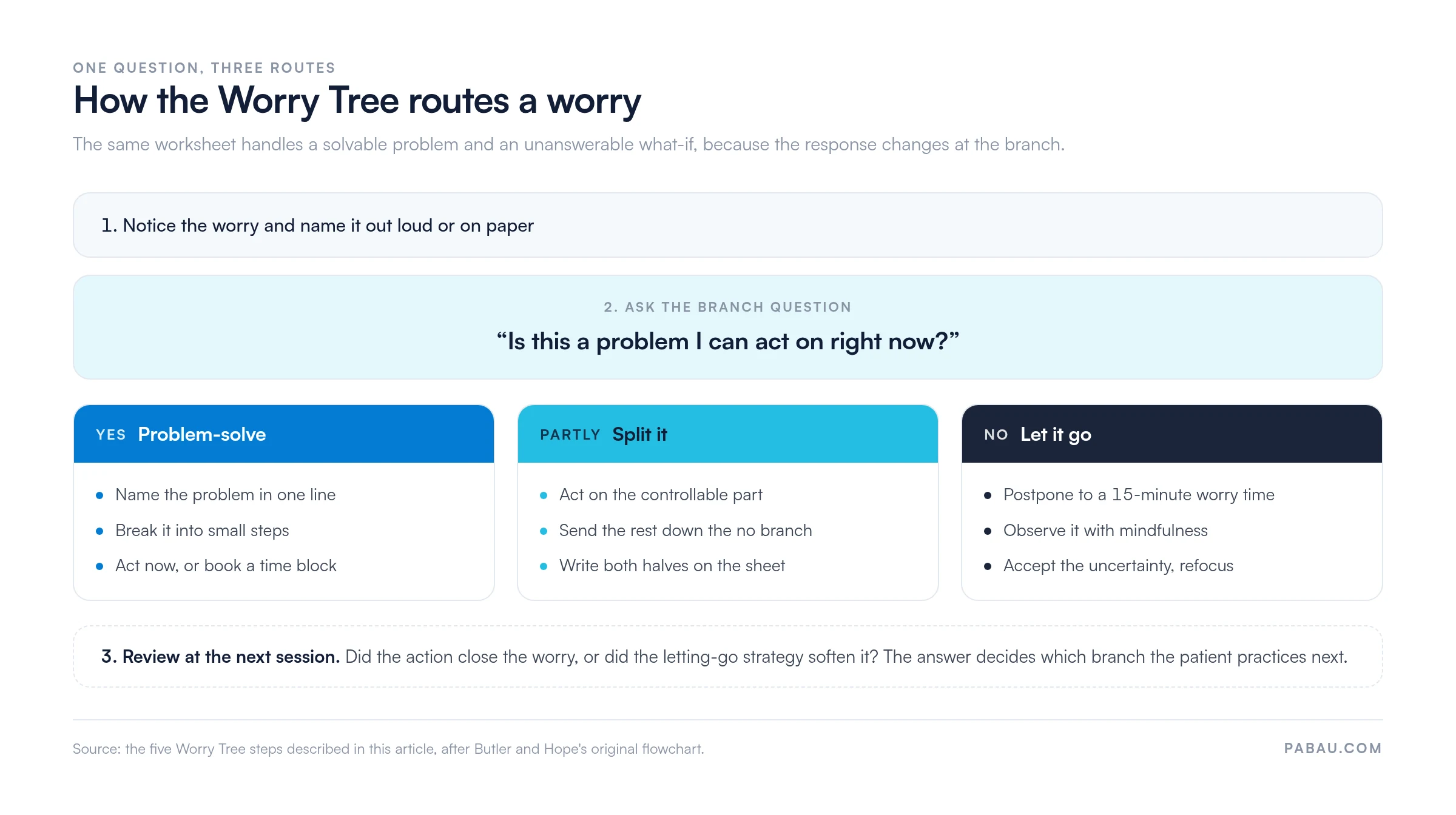
When the worry names something actionable, the sheet turns into a task-management framework. The patient names the problem, breaks it into steps, and assigns a timeline. Practitioners often use it to separate “I need to fix this today” from “I can schedule this for Thursday evening”.
For worries the patient cannot control, the sheet offers three paths. Worry time sets aside 15 minutes at a fixed hour to process the worry in full. Mindfulness means observing the worry without fighting it. Acceptance means acknowledging the uncertainty and moving attention back to the present.
Patients who worry mainly about events that have not happened yet often do better with a dedicated anticipatory anxiety worksheet alongside this one.
Worry time is the companion technique to the letting-go branch. Instead of letting intrusive thoughts interrupt the day, the patient books a 15-minute worry window each evening. When an uncontrollable worry surfaces before then, they postpone it. “I’ll think about this properly at seven tonight” is enough to park it.
During the window the patient lets the worry run, worst-case scenarios included. Worry loses force once it has a slot on the schedule, because the brain stops treating it as an emergency. Patients report that daytime worries feel less intense within a few weeks, and that the sessions get shorter.
An automated evening message from the practice can prompt the worry window until the habit holds on its own.
The sheet pays off on both sides of the appointment:
The sheet works best when it has a fixed place in the routine. Therapy practice management software makes each step of that routine repeatable:
A patient portal closes the loop. The patient completes the sheet at home, and their answers land in the record before the next appointment.
The sheet is a self-help tool, not a substitute for assessment or treatment. Patients should speak to a healthcare provider if any of the following applies:
Practices commonly pair the sheet with cognitive restructuring, exposure work, or medication, depending on the clinical presentation. It supports a treatment plan rather than standing in for one.
Most practices hand the worksheet out on paper. The patient takes it home, fills it in, and the sheet either comes back creased in a folder or never comes back at all. The practitioner then rebuilds the week from memory at the start of the next session.
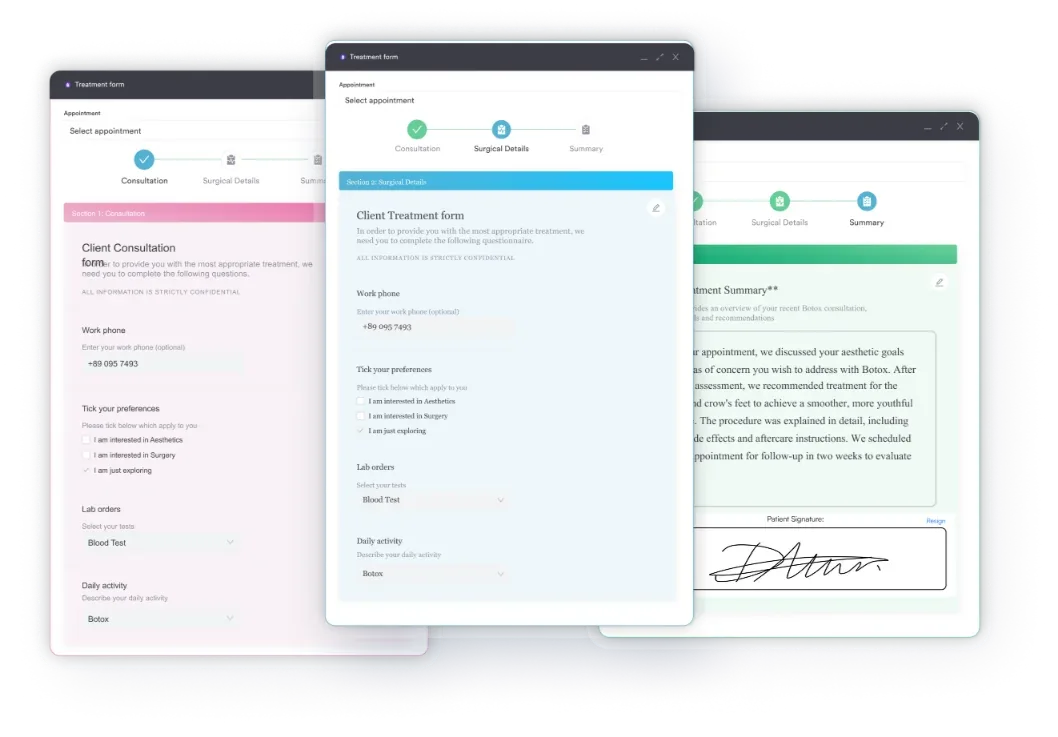
Practice management software like Pabau moves that loop into the client record. You build the Worry Tree as a digital form and attach it to an appointment type. The patient receives it with their confirmation, and their answers save straight into the file, next to the treatment notes.
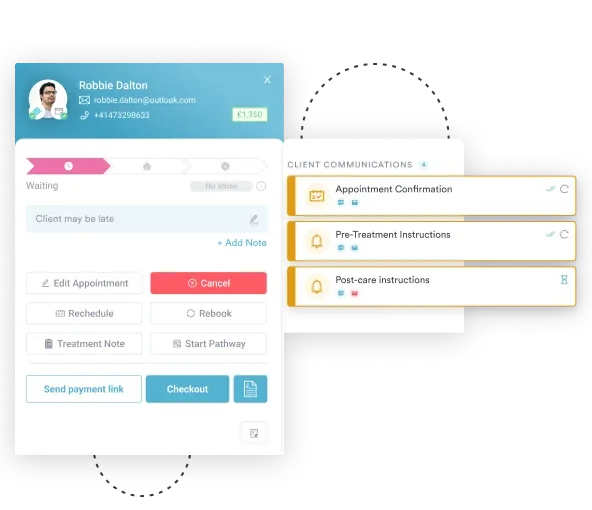
Automated reminders prompt the worry window between sessions, so the habit does not rest on the patient remembering. The completed sheet is waiting for you at the next appointment, so the hour goes on the pattern rather than the paperwork.

Pabau’s digital forms and automated reminders keep the worksheet and its responses in the client record, so nothing depends on a paper sheet coming back.

The Worry Tree earns its place because it is small. One question, two branches, and a patient who stops treating every worry the same way.
The work is in the follow-through. A sheet handed out and never reviewed just fills a folder. Build the review into the next appointment instead of waiting for the patient to raise it. Track which branch each patient leans on, and within a month you will know whether the tool suits them.
Download the worksheet above and use it in your next session. Book a demo to see how Pabau keeps the sheet, the responses, and the follow-up in one client record.

Want to challenge the thought, not just sort it? Thought record worksheet gives patients a structure for testing the evidence behind a worry.
Working with a patient who dreads what has not happened yet? Anticipatory anxiety worksheet targets the future-focused worries that the letting-go branch handles.
Need something for the moment anxiety spikes? Grounding techniques worksheet collects the exercises patients can use before they reach for the flowchart.
Want a score to track alongside the worksheet? GAD-7 anxiety assessment template measures severity, so you can see whether the tools are working.
Building a wider CBT toolkit for your practice? CBT cheat sheet summarizes the techniques and distortions worth having on hand in session.
The Worry Tree is a CBT flowchart that asks one question about each worry: can I act on this right now? A yes leads to problem-solving. A no leads to mindfulness or a scheduled worry time. Sorting the worry first is what makes the response obvious.
NHS services distribute it as a self-help resource, in line with NICE’s general recommendation of CBT for anxiety. NICE guidance backs CBT as a treatment approach, not this specific worksheet. The tool is widely used in psychology and counseling settings.
Worry time is a scheduling technique that supports the letting-go branch. Patients set aside 15 minutes a day to process hypothetical worries, and postpone them at other times. Intrusive worry thoughts get less frequent as the habit holds.
Yes. The flowchart is visual and uses plain language, so young people follow it easily. Practitioners often simplify the wording and pair it with other age-appropriate anxiety work. Parents can practice the steps at home too.
Whenever they notice themselves worrying, which may be several times a day in the first few weeks. The question becomes automatic with practice, so the printed sheet stops being necessary. Track usage in session and adjust from there.
No. It is a self-help tool that works best inside a treatment plan, alongside therapy, medication, or other evidence-based work. Patients with severe anxiety, panic disorder, or co-occurring conditions should be assessed by a mental health professional.