HCPCS Code E0272: Foam rubber mattress billing guide
HCPCS Code E0272: official descriptor and code overview HCPCS Code E0272 is the ...

Last Updated: Nov 6, 2026
T1016 is the HCPCS Level II code for case management, each 15 minutes.
Case managers and behavioral health agencies bill T1016 when they coordinate care, develop service plans, or conduct follow-up for Medicaid beneficiaries — not when they deliver direct clinical treatment. Because the code is time-based and documentation-intensive, claim denials are common: missing start and stop times, absent prior authorization, or the wrong provider type account for the majority of rejections.
Let Pabau's smart automation suggest the right codes, reduce claim denials, and keep your practice compliant—effortlessly.
Automate repetitive tasks and focus on what matters most—your patients.
Reduce coding errors and ensure compliance with the latest regulations.
Clean claims, fewer denials, and faster reimbursements.
Powerful insights and reporting to help your practice thrive.
HIPAA compliant SOC 2 certified GDPR-compliant Trusted by 4,000+ clinics worldwide

HCPCS code T1016 describes case management services billed per 15-minute unit under Medicaid TCM programs, not Medicare.
Only Medicaid-enrolled agencies and qualified case managers may bill T1016; licensing requirements vary by state plan.
Every service note must record start and stop times, the specific activity, and the provider’s signature to withstand audit.
Pabau’s claims management software tracks time-based billing units and flags documentation gaps before submission.
HCPCS code T1016 is a Level II Healthcare Common Procedure Coding System code maintained by the Centers for Medicare and Medicaid Services (CMS) that describes “case management, each 15 minutes.” It sits within the HCPCS T-code range, which is reserved exclusively for state Medicaid programs and is not recognized by traditional Medicare Part A or Part B.
The service represented by HCPCS code T1016 is targeted case management: The structured coordination of services for Medicaid beneficiaries who have complex medical, behavioral, or social needs. Each unit billed equals one completed 15-minute increment of qualifying case management activity.
Not every case management activity qualifies for T1016 reimbursement. The distinction matters because Medicaid auditors review service notes against the allowed activity list.
Covered activities:
Excluded activities (not billable under T1016):
Provider eligibility for T1016 is set by each state Medicaid plan, so the specific requirements vary. The common qualifying provider types across most states include licensed social workers, licensed professional counselors, registered nurses acting as case managers, and qualified case management agencies enrolled in the state’s targeted case management program. For behavioral health practices billing Medicaid, enrollment in the state TCM program is a prerequisite – the provider must be on file with the Medicaid agency before any T1016 claim will pay.
Individual practitioners billing under an agency must meet the minimum credential level specified in the state’s billing manual. Some states require a master’s-level clinician for plan development while allowing bachelor’s-level staff to perform monitoring and follow-up activities. Always verify the credentialing rule in your specific state Medicaid provider manual before billing.
T1016 uses per-15-minute unit billing. Total time spent on a qualifying case management activity is divided into 15-minute increments; the result is the number of units to report on the claim. Most states apply the “8-minute rule” or a midpoint rounding convention: A minimum of eight minutes of service is required to bill one unit.
Valid place-of-service (POS) codes for T1016 include the beneficiary’s home (POS 12), a community setting (POS 99), and an office (POS 11). Some states also allow telephonic or telehealth-based case management with an appropriate modifier. Check your state Medicaid billing manual for the full list of approved POS codes.
Modifiers on HCPCS code T1016 claims signal the payer about delivery setting, provider type, or program specifics. Required modifiers vary by state Medicaid plan and managed care organization (MCO).
Always consult your state Medicaid billing manual and your MCO’s provider manual before appending any modifier. An incorrect modifier can trigger an automatic denial even when the underlying service is legitimate.
Every T1016 claim requires a supporting ICD-10-CM diagnosis code that establishes medical necessity for targeted case management. The diagnosis must be documented in the beneficiary’s clinical record before or at the time of service. Medical necessity determination rests with the treating clinician, not the coder.
Choosing between T1016 and T2022 is a frequent source of billing confusion. The two codes cover the same general service category but use different payment structures. Submitting the wrong code for the payer or program results in an automatic denial.
Your state Medicaid plan dictates which code is applicable. Some states use T1016 exclusively; others have adopted T2022 for certain waiver programs. When both appear in a contract, the program type, not the provider’s preference, determines which to use.
Many Medicaid managed care organizations require prior authorization before T1016 services are reimbursable. Whether PA is required depends on your state Medicaid plan and the specific MCO contract – there is no uniform federal rule.
When prior authorization applies, the PA request typically requires the following clinical documentation:
Authorization periods commonly run 90 to 180 days, after which the provider must submit a clinical update to extend coverage. Claims submitted after the authorization end date – or without a valid authorization number on the claim – are denied. Retroactive authorization is rarely granted, so tracking authorization expiration dates is essential to revenue cycle health.
T1016 documentation requirements are more demanding than those for many clinical codes because every unit of time must be independently verifiable. Medical billing compliance for time-based codes requires that your service notes contain specific elements before any claim is submitted.
Every service note supporting a T1016 claim must include:
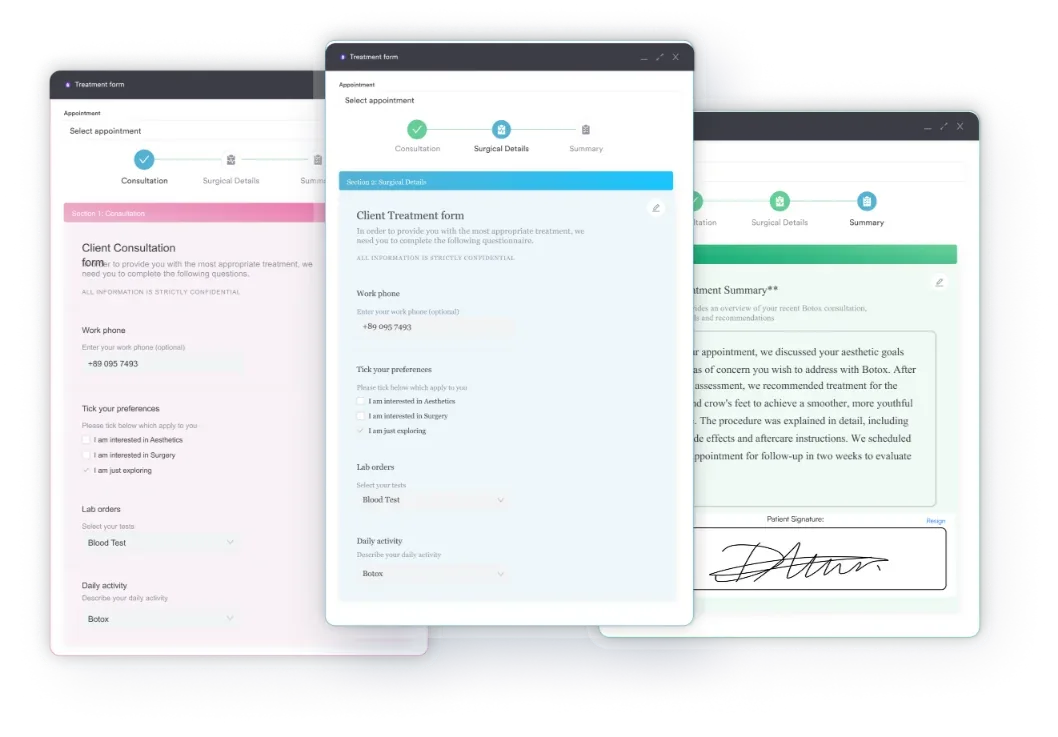
Vague documentation such as “provided case management services” is the fastest route to a denied claim and a failed audit. Digital intake and service forms with structured fields for start/stop times and activity type reduce the risk of incomplete notes at the point of service.
Run a documentation audit on 10 recent T1016 claims before your next billing cycle. Pull each service note and verify that start and stop times, the specific activity, and a provider signature are all present. Missing any one element gives the payer grounds to deny or recoup the entire claim.

Pabau’s claims management tools track time-based billing units, capture structured service notes, and flag documentation gaps before claims leave your practice.

T1016 denial rates are higher than average for HCPCS codes because the billing requirements combine time-based unit calculations, prior authorization, and documentation standards. Each factor is an independent failure point. Denial management workflows that address the root cause rather than just resubmitting clean up most of the volume.
Using claims management software that surfaces denial codes alongside the original claim data shortens the time between denial receipt and corrective action. The AAPC’s HCPCS code lookup and PGM Billing’s HCPCS search tool are useful references for verifying code-level payer policies before resubmission.
T1016 reimbursement rates are set by each state Medicaid agency and vary significantly by state, by provider type, and by whether the claim is paid through fee-for-service Medicaid or a managed care organization contract. No single federal rate applies. The CMS Physician Fee Schedule search does not include T-codes – these are found in state-specific Medicaid fee schedules published by each State Medicaid Agency (SMA).
Factors that affect your allowable rate per unit include the beneficiary’s geographic area (urban vs. rural differentials apply in many states), the provider’s license type, and the specific waiver program under which services are authorized. MCO contracts may set rates above or below the state fee-for-service rate. Review your contract and your state’s current fee schedule annually, since rates are updated on state fiscal year cycles rather than the federal October 1 cycle. For a grounding in medical billing fundamentals, CMS publishes its Medicaid program guidance through state Medicaid director letters available on its website.
No. HCPCS T-codes, including T1016, are not reimbursed by traditional Medicare Part A or Part B. The T-code range exists solely for state Medicaid programs; CMS explicitly excludes T-codes from the Medicare fee schedule. Submitting T1016 on a Medicare claim will result in an automatic denial with a CO-96 (non-covered service) remark code.
Dually eligible beneficiaries – those covered by both Medicare and Medicaid – may still receive T1016-billed case management services, but the claim must be submitted to Medicaid only, not cross-billed to Medicare. Providers billing for dual-eligible populations should verify the correct billing pathway in their state’s dual eligibility coordination guidance.
HCPCS code T1016 requires precise time documentation, state-specific provider enrollment, and active prior authorization management. Most denials trace back to one of three gaps: Missing start and stop times in the service note, an expired or absent authorization number on the claim, or a provider type that is not enrolled in the state TCM program.
Pabau’s claims management software structures the documentation and denial-tracking workflows that keep T1016 claims clean from service note to remittance. To see how it works for behavioral health and case management billing, book a demo.

Need a mental health billing overview? Mental health EMR software covers how Pabau supports behavioral health documentation and billing workflows.
Looking to reduce claim denials systematically? Denial management in healthcare explains the root-cause approach to reducing rework across all payer types.
Want a compliance framework for time-based codes? Medical billing compliance outlines the documentation standards that protect practices during Medicaid audits.
HCPCS code T1016 is a Medicaid billing code that describes targeted case management services billed per 15-minute unit of time. It covers coordination activities such as needs assessment, service planning, referral, and follow-up – not direct clinical treatment. It is not reimbursed by Medicare.
T1016 is billed per 15-minute unit, not per visit. Total time spent on qualifying case management activities is divided into 15-minute increments. Most states require a minimum of eight minutes to bill one unit. Document start and stop times for every activity period to support the unit count.
T1016 is billed per 15-minute unit of service; T2022 is billed per month. Both codes cover case management under Medicaid, but they are used in different program structures. Your state Medicaid plan and MCO contract determine which code applies to a given program – the billing unit structure is the key distinction.
No. T-codes are Medicaid-only. Traditional Medicare Part A and Part B do not cover T1016. Claims submitted to Medicare for this code are denied as non-covered. Dually eligible beneficiaries may still receive these services, but the claim must go to Medicaid, not Medicare.
Every T1016 service note must include start and stop times, the specific case management activity performed, the beneficiary’s response, planned next steps, and the provider’s name, credential, and signature. Generic entries such as “provided case management” are insufficient and will not survive a Medicaid audit.
Common ICD-10-CM codes paired with T1016 include F20.9 (schizophrenia, unspecified), F31.9 (bipolar disorder, unspecified), F41.9 (anxiety disorder, unspecified), Z59.0 (homelessness), and Z60.2 (problems related to living alone). The diagnosis must reflect a documented condition in the beneficiary’s clinical record that supports the medical necessity for case management.