Pabau Engage inbox

Pabau Engage is here: every patient conversation in one inbox.

Learn more
HCPCS Code

HCPCS code L1970 – Custom-fabricated plastic ankle-foot orthosis with ankle joint


Code Definition

L1970 is the HCPCS Level II code for ankle foot orthosis, plastic with ankle joint, custom fabricated.

The orthotist molds the plastic over a model taken from a cast or scan of the patient's limb. A mechanical ankle joint links the foot and calf sections. A prefabricated articulated AFO goes to L1971 when an expert customizes it to fit, or to L1972 when it is dispensed off the shelf.

Level
Level II
Category
L1900-L1990 Ankle-foot orthotic procedures (ankle-foot orthoses, AFO)
Code range
L1970 Ankle foot orthosis, plastic with ankle joint, custom fabricated
Billable
No
Code also known as
AFO, custom AFO, articulated AFO, hinged AFO, drop foot brace, foot drop orthosis
Save time. Improve accuracy. Get paid faster.
Automate coding with Pabau

Let Pabau's smart automation suggest the right codes, reduce claim denials, and keep your practice compliant—effortlessly.

  • AI-powered code suggestions
  • Real-time compliance checks
  • Faster claims, fewer denials
Why practices choose Pabau
Save hours every week

Automate repetitive tasks and focus on what matters most—your patients.

Improve accuracy

Reduce coding errors and ensure compliance with the latest regulations.

Get paid faster

Clean claims, fewer denials, and faster reimbursements.

Grow with confidence

Powerful insights and reporting to help your practice thrive.

HIPAA compliant SOC 2 certified GDPR-compliant Trusted by 4,000+ clinics worldwide

Key takeaways

Key takeaways

HCPCS Code L1970 covers a custom-fabricated plastic ankle-foot orthosis with an ankle joint, molded over a model of the patient’s own limb.

A prefabricated articulated AFO is L1971 when an expert customizes it to fit, or L1972 off the shelf. Fabrication decides the code, not joint motion.

Medicare covers L1970 under LCD L33686 when the patient meets the AFO criteria plus at least one custom-fabrication criterion, documented in the medical record.

L1970 needs no prior authorization, but it does need a face-to-face encounter and a written order before delivery.

Pabau, the practice management platform we build, keeps the order, encounter notes and claim for each device in one record before submission.

HCPCS Code L1970: Official descriptor and device definition

HCPCS Code L1970 is the Level II code for an ankle foot orthosis, plastic with ankle joint, custom fabricated.

Two features define it. The device is a plastic AFO with a mechanical ankle joint, so the foot and calf sections are hinged rather than one rigid shell. It is also custom fabricated, which means the orthotist builds it for one patient from a cast or digital scan of that patient’s limb.

The code belongs to CMS’s HCPCS Level II coding system, which took effect for L1970 on January 1, 2001. Within HCPCS medical billing, the L-codes cover orthotic and prosthetic procedures. The L1900-L1990 range covers ankle-foot orthoses, and L1970 sits near the top of it.

Code elementDetail
CodeL1970
Official descriptorAnkle foot orthosis, plastic with ankle joint, custom fabricated
Code familyHCPCS Level II, L-codes (orthotic procedures), L1900-L1990 (ankle-foot orthoses)
FabricationCustom fabricated from a cast, impression, or digital scan of the patient’s limb
Key featureMechanical ankle joint linking a plastic foot section and a plastic calf section
Prefabricated equivalentsL1971 when an expert customizes the device to fit, and L1972 when it is off the shelf
Effective dateJanuary 1, 2001

Custom fabricated vs prefabricated: What L1970 covers

L1970 is a custom-fabricated code. The orthotist takes a cast, impression, or digital scan of the patient’s limb and builds a positive model from it. The plastic is then molded over that model, and the ankle joint is fitted to the patient’s own anatomy.

A device that starts as a manufactured, standard-sized AFO is prefabricated, even when the orthotist heats, trims, or bends it at fitting. An articulated AFO that an expert trims, bends, molds, or assembles to fit goes to L1971. The same device dispensed off the shelf goes to L1972, a code added on October 1, 2026.

A prefabricated plastic AFO without an ankle joint goes to L1930. Check the DME MAC policy article for the full custom-fabrication definition before you code. The two questions below sort the six plastic AFO codes.

Ankle-foot orthoses, HCPCS L1900-L1990

Two questions decide the code for a plastic AFO

1

Does the device have a mechanical ankle joint?

No ankle joint

Then: custom or prefabricated?

L1940Custom fabricatedPlastic or other material.
L1960Custom fabricatedPosterior solid ankle, plastic.
L1930PrefabricatedPlastic or other material.

Yes, articulated

Then: how was the device made?

L1970Custom fabricatedMolded over a model from a cast or scan of the patient’s limb.
L1971Prefabricated, customized to fitTrimmed, bent, molded or assembled for the patient by an expert.
L1972Prefabricated, off the shelfNew Oct 1, 2026Dispensed as manufactured, with no expert customization.

The ankle joint picks the code family, and fabrication picks the code. Source: CMS HCPCS Level II descriptors, including the October 1, 2026 update.

What the L1970 ankle foot orthosis covers and what it excludes

L1970 covers a custom-molded plastic AFO with an ankle joint, used by a patient who walks. Prescribers choose an articulated design when the patient needs ankle support and stability but still benefits from some motion at the ankle during gait.

Typical clinical pictures include foot drop after a stroke, peroneal nerve injury, cerebral palsy, Charcot-Marie-Tooth disease, and other neuromuscular conditions. A custom device is chosen when a prefabricated AFO will not fit or control the limb well enough.

Several devices and situations fall outside L1970. Coders and suppliers should check these exclusions before coding:

  • Prefabricated articulated AFOs: A manufactured AFO with an ankle joint is L1971 when an expert customizes it to fit. It is L1972 when it is dispensed off the shelf.
  • Custom AFOs without an ankle joint: A custom plastic AFO with no ankle joint is L1940, and a custom posterior solid-ankle AFO is L1960.
  • Fracture orthoses: A rigid, prefabricated tibial fracture orthosis is billed as L2116, not as an AFO in the L1900-L1990 range.
  • Custom metal upright AFOs: Single-upright and double-upright below-knee orthoses are L1980 and L1990, which are also custom-fabricated AFOs.
  • Knee-ankle-foot orthoses: Any orthosis that extends above the knee is a KAFO, and the KAFO codes start at L2000.
  • Separately billed features: Features such as a dorsiflexion assist joint are reported with lower-extremity addition codes, not built into L1970.

L1970 vs L1971: Choosing the right code

L1970 and L1971 describe the same kind of device, an AFO with an ankle joint. The difference is how the device is made. L1970 is custom fabricated for one patient, while L1971 is prefabricated and then customized to fit by an expert. A third code, L1972, covers the same prefabricated device dispensed off the shelf.

The code choice does not turn on joint motion or dorsiflexion assist, since L1971 reads “with or without dorsiflexion assist”. Ask one question instead: was the device molded over a model of this patient’s limb?

CodeOfficial descriptorFabricationUse when
L1970AFO, plastic with ankle joint, custom fabricatedCustom, from a cast or scan of the patient’s limbThe articulated plastic AFO was molded over a model of this patient’s limb
L1971AFO, plastic or other material with ankle joint, with or without dorsiflexion assist, prefabricated, customized to fit by an individual with expertisePrefabricated, then customized to fit by an expertThe articulated AFO started as a manufactured device, and an expert trimmed, bent, molded, or assembled it to fit
L1972AFO, plastic or other material with ankle joint, with or without dorsiflexion assist, prefabricated, off-the-shelfPrefabricated, off the shelfThe articulated AFO was dispensed off the shelf, for dates of service on or after October 1, 2026
L1940AFO, plastic or other material, custom fabricatedCustomThe custom plastic AFO has no ankle joint
L1930AFO, plastic or other material, prefabricated, includes fitting and adjustmentPrefabricated, then fittedThe prefabricated plastic AFO has no ankle joint

The L1900-L1990 range covers ankle-foot orthoses only, from simple spring-wire braces to custom upright designs. At the simple end, L1900 describes a custom-fabricated brace with a spring wire and a calf band that assists dorsiflexion. Knowing where L1970 sits among its neighbors prevents coding errors, and the HCPCS reference for suppliers covers the wider L-code family. Use the AAPC HCPCS code lookup to confirm current descriptors before billing.

CodeShort descriptorKey differentiator from L1970
L1900AFO, spring wire, dorsiflexion assist, calf bandSpring-wire construction with a calf band; no plastic shell
L1902AFO, ankle gauntlet or similar, prefabricatedPrefabricated gauntlet design; not custom molded
L1930AFO, plastic or other material, prefabricatedPrefabricated and has no ankle joint
L1932AFO, rigid anterior tibial section, total carbon fiber or equal material, prefabricatedPrefabricated carbon fiber design with a rigid anterior tibial section
L1940AFO, plastic or other material, custom fabricatedCustom fabricated but has no ankle joint
L1960AFO, posterior solid ankle, plastic, custom fabricatedCustom fabricated with a solid ankle; no joint
L1970AFO, plastic with ankle joint, custom fabricatedReference code
L1971AFO, plastic or other material with ankle joint, prefabricated, customized to fitSame articulated design, but prefabricated and customized to fit by an expert
L1972AFO, plastic or other material with ankle joint, prefabricated, off-the-shelfSame articulated design, but prefabricated and dispensed off the shelf (added October 1, 2026)
L1980AFO, single upright, custom fabricated (BK orthosis)Metal single-upright design rather than a molded plastic shell
L1990AFO, double upright, custom fabricated (BK orthosis)Metal double-upright design rather than a molded plastic shell

Medicare LCD requirements for L1970

Medicare covers L1970 under Part B as an orthotic benefit when the claim meets the DME MAC local coverage determination. The governing policy is LCD L33686 (Ankle-Foot/Knee-Ankle-Foot Orthoses).

Four DME MACs administer it: Jurisdiction A (Noridian), Jurisdiction B (CGS), Jurisdiction C (CGS), and Jurisdiction D (Noridian). The supplier bills the DME MAC for the patient’s state of residence.

Key coverage criteria under LCD L33686:

  • Ambulatory patient: AFOs used during walking are covered for a patient who is ambulatory and has weakness or deformity of the foot and ankle.
  • Stabilization need: The patient must need stabilization for medical reasons and have the potential to benefit functionally from the device.
  • Custom-fabrication criterion: A custom AFO such as L1970 needs at least one extra reason. Examples include a patient who cannot be fitted with a prefabricated AFO. A condition expected to be permanent or of longstanding duration (more than 6 months) also counts.
  • Other custom criteria: The LCD also accepts a need to control the knee, ankle or foot in more than one plane. A documented neurological, circulatory, or orthopedic status that requires custom fabricating to prevent tissue injury also qualifies. So does a healing fracture which lacks normal anatomical integrity or anthropometric proportions.
  • Supplier standards: The supplier must be enrolled in Medicare and accredited by a CMS-approved accreditation organization.

Medicare coverage turns on these functional criteria, so the diagnosis code must match what the medical record documents. A diagnosis alone does not establish the need for a custom device.

Documentation requirements for L1970 claims

Complete records are the most effective way to prevent L1970 denials. Each element below should be in the patient file and ready for audit. Sound medical billing compliance means keeping these records for the payer’s retention period, which is typically seven years for Medicare.

  • Face-to-face encounter: A treating practitioner’s in-person evaluation that documents the patient’s condition and the need for the orthosis, completed before the written order.
  • Written order prior to delivery: A standard written order naming the item, the patient, the date, and the practitioner. The supplier must receive it before delivery.
  • Custom-fabrication rationale: Notes that show which LCD criterion makes a custom device necessary, such as why a prefabricated AFO would not work.
  • Fabrication record: A record of how the device was made, including the cast, impression, or scan and the positive model it was molded over.
  • Device specification: A description confirming the device is a custom plastic AFO with an ankle joint. A prefabricated articulated device goes to L1971 or L1972 instead.
  • Diagnosis code: At least one ICD-10-CM code on the claim that the clinical notes support.
  • Proof of delivery: The patient’s signature and the delivery date, kept with the billing record.

Face-to-face and written order rules for L1970

CMS keeps a master list of DMEPOS items that may need prior authorization, a face-to-face encounter, or a written order before delivery. L1970 sits on that list for the face-to-face encounter and written order requirement only. It does not need prior authorization.

Confirm the current status before each new order, since CMS updates the list through the Federal Register. Insurance eligibility verification belongs in the same check, especially for Medicare Advantage and commercial plans with their own rules.

For L1970, the required sequence runs in this order:

  1. Complete the face-to-face encounter: The treating practitioner sees the patient and documents the need for the AFO within six months before the written order.
  2. Issue the written order: The practitioner signs a written order for the item after the encounter.
  3. Receive the order before delivery: The supplier must hold the written order before delivering the device to the patient.
  4. Deliver and document: Fit the device, capture proof of delivery, and keep the full record set with the claim.

Where a DMEPOS item does need prior authorization, the DME MAC must decide within five business days for a standard request. An expedited request gets a decision within two business days.

Common L1970 denial reasons and how to fix them

Custom AFO claims draw close review because they pay more than prefabricated devices. Effective denial management workflows should address the patterns below before claims reach the payer.

  • Prefabricated device billed as custom: Billing L1970 for a manufactured AFO that was only fitted is the core audit risk. The fix: Bill L1971 for a prefabricated articulated AFO an expert customized to fit, or L1972 if it was off the shelf.
  • Custom criteria not documented: The record shows the patient needs an AFO but not why it must be custom. The fix: Document which LCD custom-fabrication criterion applies.
  • Wrong device type: The device has no ankle joint, so L1940 or L1960 applies instead. The fix: Match the device specification to the descriptor before coding.
  • Missing face-to-face encounter or written order: The encounter was not documented, or the order arrived after delivery. The fix: Hold delivery until the signed written order is on file.
  • Missing KX modifier: The claim meets LCD criteria, but the KX modifier was left off. The fix: Apply KX only when the record supports every coverage criterion.
  • Missing laterality modifier: The claim line has no RT or LT modifier. The fix: Add the right modifier to each line, and bill one line per side for bilateral devices.
  • No proof of delivery: The file has no signed delivery record. The fix: Get the patient’s signature at delivery and keep it with the billing record.

Modifiers commonly used with L1970

ModifierDefinitionWhen to use
RTRight sideThe device is for the patient’s right ankle and foot
LTLeft sideThe device is for the patient’s left ankle and foot
KXRequirements specified in the medical policy have been metThe claim meets LCD L33686 coverage criteria and the record supports it
GAWaiver of liability statement issued as required by payer policyAn ABN is on file because Medicare is expected to deny the claim
GZItem expected to be denied as not reasonable and necessaryMedicare is expected to deny the claim and no ABN was issued
GYItem is statutorily excluded or does not meet the definition of a benefitThe item is not a Medicare benefit in this situation

Pro Tip

Always attach RT or LT to L1970 claim lines. For bilateral custom AFOs, bill two claim lines, each with its own laterality modifier. Leaving the modifier off is one of the simplest denial causes to prevent.

Billing and coding best practices for L1970

A consistent submission workflow reduces rework on L1970 claims. The goal of submitting a clean claim is to answer every question the DME MAC’s edits will ask before a reviewer sees it.

  1. Confirm custom fabrication: Check the fabrication record for a cast or scan and a positive model. If the device started as a manufactured AFO, switch to L1971 when an expert customized it, or L1972 when it was off the shelf.
  2. Confirm the ankle joint: Make sure the device has a mechanical ankle joint. A custom AFO without one is L1940 or L1960.
  3. Check the order sequence: Verify the face-to-face encounter came first and the written order arrived before delivery.
  4. Attach the correct modifiers: Add RT or LT for laterality and KX when the record meets the LCD. Use GA instead of KX when an ABN was issued.
  5. Scrub the claim before submission: Run it through a claim scrubber or clearinghouse edit to catch modifier conflicts and NPI mismatches. The PGM Billing HCPCS lookup tool helps with quick code checks.
  6. Keep records for the full retention period: Store orders, encounter notes, fabrication records, and delivery proof for at least seven years.

Reimbursement rates for HCPCS Code L1970

Medicare pays L1970 from the DMEPOS fee schedule, which CMS updates every year and sets by state. Pull the current-year allowable for the patient’s state before you quote a price or post a payment.

Expect a higher allowable for L1970 than for prefabricated L1971, which is exactly why auditors check the fabrication record. Commercial payers set their own rates, so confirm the contract amount for each plan.

ICD-10-CM diagnosis codes commonly paired with L1970

The diagnosis on the claim must reflect the condition behind the need for an AFO. These codes appear often on custom AFO claims, but the record still has to meet the LCD criteria:

ICD-10-CM codeDescription
M21.371Foot drop, right foot
M21.372Foot drop, left foot
G57.31Lesion of lateral popliteal nerve, right lower limb
G57.32Lesion of lateral popliteal nerve, left lower limb
I69.351Hemiplegia and hemiparesis following cerebral infarction affecting right dominant side
G80.1Spastic diplegic cerebral palsy
G60.0Hereditary motor and sensory neuropathy

How claims management software reduces errors for HCPCS code L1970

Most L1970 denials trace back to paperwork. The encounter note, the order, the fabrication record, and the delivery proof often live in different places. One missing piece can sink a high-value custom AFO claim.
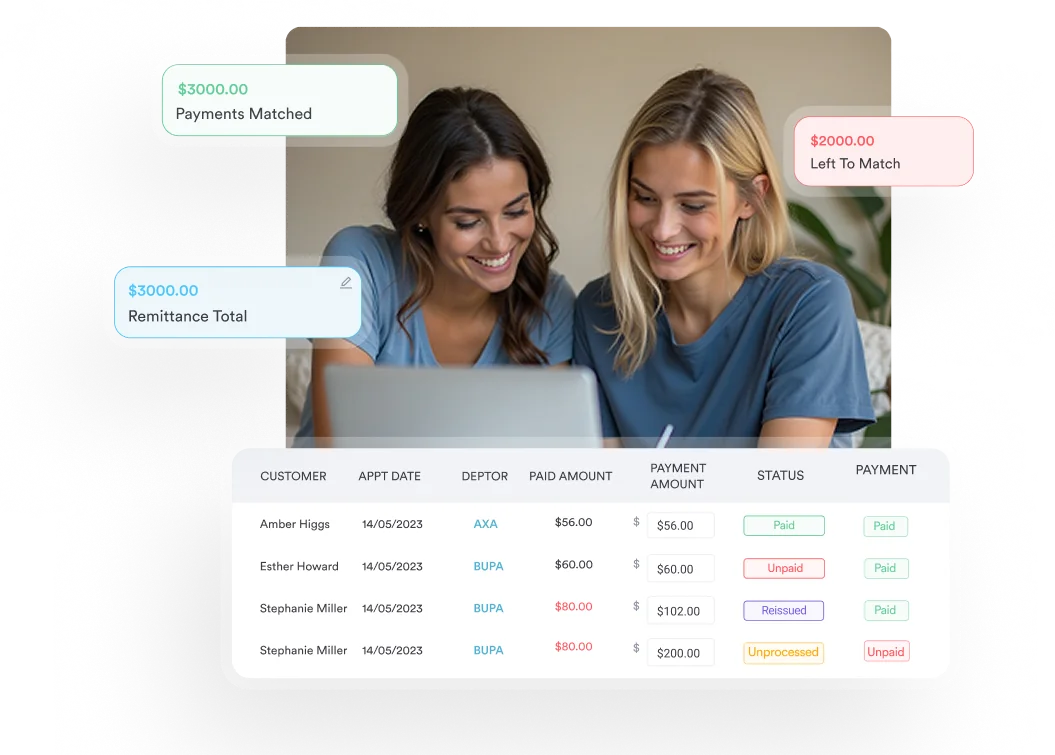
Fully Integrated with Pabau Billing
Pabau’s integrated billing keeps the order, encounter notes, and claim for each L1970 device in one record, so missing paperwork shows up before submission.

Pabau brings those records together. Pabau’s claims management keeps the order, encounter notes and claim for each device in one record, so missing paperwork is easier to spot before submission. Your team can confirm the written order arrived before delivery without digging through files.

Manage HCPCS claims without the documentation chaos

Pabau keeps the order, encounter notes and claim for each device in one record, so DME suppliers and therapy practices spot missing paperwork before submission.

Pabau claims management dashboard

Conclusion

HCPCS Code L1970 comes down to one question: was this articulated plastic AFO built over a model of the patient’s own limb? If it was, and the record shows why a custom device is necessary, L1970 is the right code. If not, the code is L1971 when an expert customized the device to fit, or L1972 when it came off the shelf.

Get the order sequence and the custom-fabrication rationale right, and most L1970 denials never happen. To see how Pabau tracks that paperwork for every claim, book a demo.

Continue your research

Continue your research

Need to understand how clearinghouses process DMEPOS claims? Medical claims clearinghouse guide explains how electronic claim routing and edit checks work for HCPCS codes.

Looking to reduce denied DME claims across your billing operation? Denial management in healthcare covers root-cause analysis and appeals workflows for high-denial code families.

Want a checklist for clean HCPCS claim submission? What makes a clean claim walks through every field Medicare and commercial payers validate before adjudication.

Frequently asked questions

What does HCPCS Code L1970 cover?

HCPCS Code L1970 covers an ankle foot orthosis, plastic with ankle joint, custom fabricated. The orthotist molds the plastic over a model taken from a cast or scan of the patient’s limb. A mechanical ankle joint links the foot and calf sections.

What is the difference between L1970 and L1971?

Both codes describe a plastic AFO with an ankle joint. L1970 is custom fabricated for one patient, while L1971 is prefabricated and then customized to fit by an expert. The off-the-shelf version is L1972. Joint motion, such as dorsiflexion assist or plantar flexion control, does not separate the two codes.

Is L1970 a custom or off-the-shelf orthosis code?

L1970 is a custom-fabricated code. It does not cover off-the-shelf or prefabricated AFOs, even when they are heated, trimmed, or adjusted at fitting. A prefabricated articulated AFO is billed as L1971 when an expert customizes it to fit, or L1972 when it is off the shelf.

Does Medicare cover L1970 ankle-foot orthosis?

Yes, Medicare Part B covers L1970 when the claim meets LCD L33686. The patient must be ambulatory, need ankle and foot stabilization, and meet at least one custom-fabrication criterion. The supplier must also be enrolled in Medicare and accredited.

Does L1970 need prior authorization?

No, CMS’s master list does not require prior authorization for L1970. It does require a face-to-face encounter and a written order before delivery. Check the current list before each new order, since CMS updates it.

Why do L1970 claims get denied?

The most common causes are billing a prefabricated device as custom and missing the custom-fabrication rationale. Others include a late written order, a missing KX or laterality modifier, and no proof of delivery. A pre-submission checklist prevents most of them.

What is the Medicare reimbursement rate for L1970?

The rate comes from the CMS DMEPOS fee schedule, which changes every year and varies by state. Pull the current-year allowable for the patient’s state before quoting or posting payment. Commercial payers set their own contract rates.
Tanja Lepcheska
Content Writer

Tanja is a Senior Content Writer who has a skill to turn complex med spa topics into easy, engaging reads that actually make sense. She loves helping clinic owners feel confident about growing their business. When she’s not writing, you’ll probably find her rewatching her favorite romantic movies, working on a new crochet project, or rearranging her home decor “just one more time.”
×