HCPCS Code J1110: Dihydroergotamine mesylate injection billing guide
HCPCS Code J1110: Official descriptor and drug overview HCPCS Code J1110 is the ...

Last Updated: Oct 29, 2026
L0624 is the HCPCS Level II code for a custom-fabricated sacroiliac orthosis with rigid or semi-rigid panels placed over the sacrum and abdomen. The brace provides pelvic-sacral support and reduces motion about the sacroiliac joint. It includes straps and closures, and may include a pendulous abdomen design.
Most L0624 claim denials trace back to three upstream problems: missing fabrication records, notes that don't support medical necessity, or a coding mix-up. In the mix-up, the biller selects L0623 (prefabricated) when L0624 (custom fabricated) is the correct code, or the reverse.
Let Pabau's smart automation suggest the right codes, reduce claim denials, and keep your practice compliant—effortlessly.
Automate repetitive tasks and focus on what matters most—your patients.
Reduce coding errors and ensure compliance with the latest regulations.
Clean claims, fewer denials, and faster reimbursements.
Powerful insights and reporting to help your practice thrive.
HIPAA compliant SOC 2 certified GDPR-compliant Trusted by 4,000+ clinics worldwide

HCPCS Code L0624 describes a custom-fabricated sacroiliac orthosis with rigid or semi-rigid panels over the sacrum and abdomen, individually made for one patient.
L0623 has the same panels but is prefabricated, off-the-shelf, so how the brace was made decides between the two codes.
The treating practitioner’s records must explain why the patient needs a custom brace rather than a prefabricated one. The orthotist’s records must back that up.
Keep a fabrication file for every L0624 brace: measurements, the mold or scan, the orthotist’s work order, and the delivery and fitting record.
Pabau’s claims management software keeps orders, clinical notes and claim status in one patient record, helping DME billers submit clean L0624 claims the first time.
HCPCS Code L0624 describes a sacroiliac orthosis with rigid or semi-rigid panels that is custom fabricated for one patient. Its official CMS long descriptor, shown in full at the top of this page, combines five elements. Each one decides whether a brace belongs under L0624.
The CMS HCPCS Level II coding system places L0624 in the L-code range for orthotic procedures. That makes it a DMEPOS item reviewed under the DME MAC’s coverage policy, not a physician-service CPT code. Medicare’s allowance for the brace also covers evaluating the patient, measuring or casting, and fitting, so none of those is billed as a separate line.
L0624 covers a sacroiliac orthosis with rigid or semi-rigid panels that is fabricated for one patient. The treating practitioner must document a clinical need for pelvic-sacral support. Coverage is not automatic. Each claim must meet device-level criteria (panel construction, custom fabrication) and patient-level criteria (documented diagnosis, order, medical necessity).
The L0623 vs L0624 distinction is the most common coding error in the sacroiliac orthosis family. Both codes describe a brace with rigid or semi-rigid panels over the sacrum and abdomen. The only difference is how the brace was made: L0623 is prefabricated, off-the-shelf, and L0624 is custom fabricated. Coding from a product’s marketing name rather than its fabrication record leads to denials and audit recoupments.
The practical test is two questions, asked in order. First, does the brace have rigid or semi-rigid panels over the sacrum and abdomen? If not, it is L0621 or L0622. Second, was it individually fabricated for this patient? A brace taken from stock and adjusted at delivery is L0623, while one built from this patient’s measurements, cast or scan is L0624.
Medical necessity for HCPCS Code L0624 must be established by the treating practitioner before the brace is made. The diagnosis on the claim must reflect a condition for which a rigid-panel sacroiliac orthosis is clinically indicated. The ICD-10-CM codes below often appear on sacroiliac orthosis claims. The list is illustrative, so medical necessity still rests on the clinical notes.
Verify the ICD-10-CM code against your MAC’s current policy before billing. Review AAPC’s HCPCS code reference for crosswalk guidance when pairing an orthotic L-code with a supporting diagnosis.
Medicare covers HCPCS Code L0624 under Part B as an orthotic item. DME MACs apply the Spinal Orthoses: TLSO and LSO LCD (L33790) and its policy article, A52500. The LCD covers a spinal orthosis that reduces pain by restricting trunk mobility or aids healing after an injury or surgery. It also covers one that supports weak muscles or a deformed spine. For L0624, the records must also show why a prefabricated brace would not meet the patient’s needs.
Commercial payers often mirror Medicare criteria, but their fee schedules and coverage decisions are contract-specific. Confirm coverage through an eligibility and benefits check before you start fabrication.
Run a Medicare eligibility check before you take measurements for an L0624 brace. Verify Part B coverage, confirm any secondary payer, and note the deductible and coinsurance. A custom brace cannot be restocked, so a coverage gap found after fabrication is a direct loss.
PDAC verification works differently for L0624 than for prefabricated codes. The PDAC (Pricing, Data Analysis and Coding contractor) reviews products and publishes the Product Classification List. That process suits prefabricated braces, where one model is sold to many patients. A custom-fabricated L0624 brace is made for one patient, so it is generally not verified product by product.
The Spinal Orthoses policy article (A52500) dropped L0622 and L0624 from its Product Classification List requirement in 2021. The fabrication record carries that weight instead. Here is how to handle the PDAC question for L0624.
Complete documentation is the most controllable variable in L0624 claim success. A custom brace needs two sets of records. The medical file justifies it, and the fabrication file proves it was made for this patient. Effective medical billing compliance builds both into the workflow, not after a denial.
Date every step of the custom build: order, measurement, mold or scan, work order, delivery and fitting. The dates should run in that order. A delivery date that falls before fabrication finished invites an auditor’s questions.
Most L0624 denials fall into a predictable set of categories. Knowing them in advance lets you build checkpoints into the fabrication and billing workflow instead of managing appeals later. The billing workflow for DME claims is covered in Pabau’s guide to what is medical billing, which applies to physician practices and DMEPOS suppliers alike.
Medicare claim appeals follow a five-level process. Most DME appeals that succeed are resolved at the first or second level with added documentation.
Repeated L0624 denials call for a root-cause review, not just individual appeals. Pabau’s denial management guide outlines a systematic way to find claim failure patterns before they compound.
Entering HCPCS Code L0624 correctly in a billing system takes attention to four claim elements that differ from physician-service CPT billing. Getting them right at entry is the difference between a clean claim and an avoidable rejection.
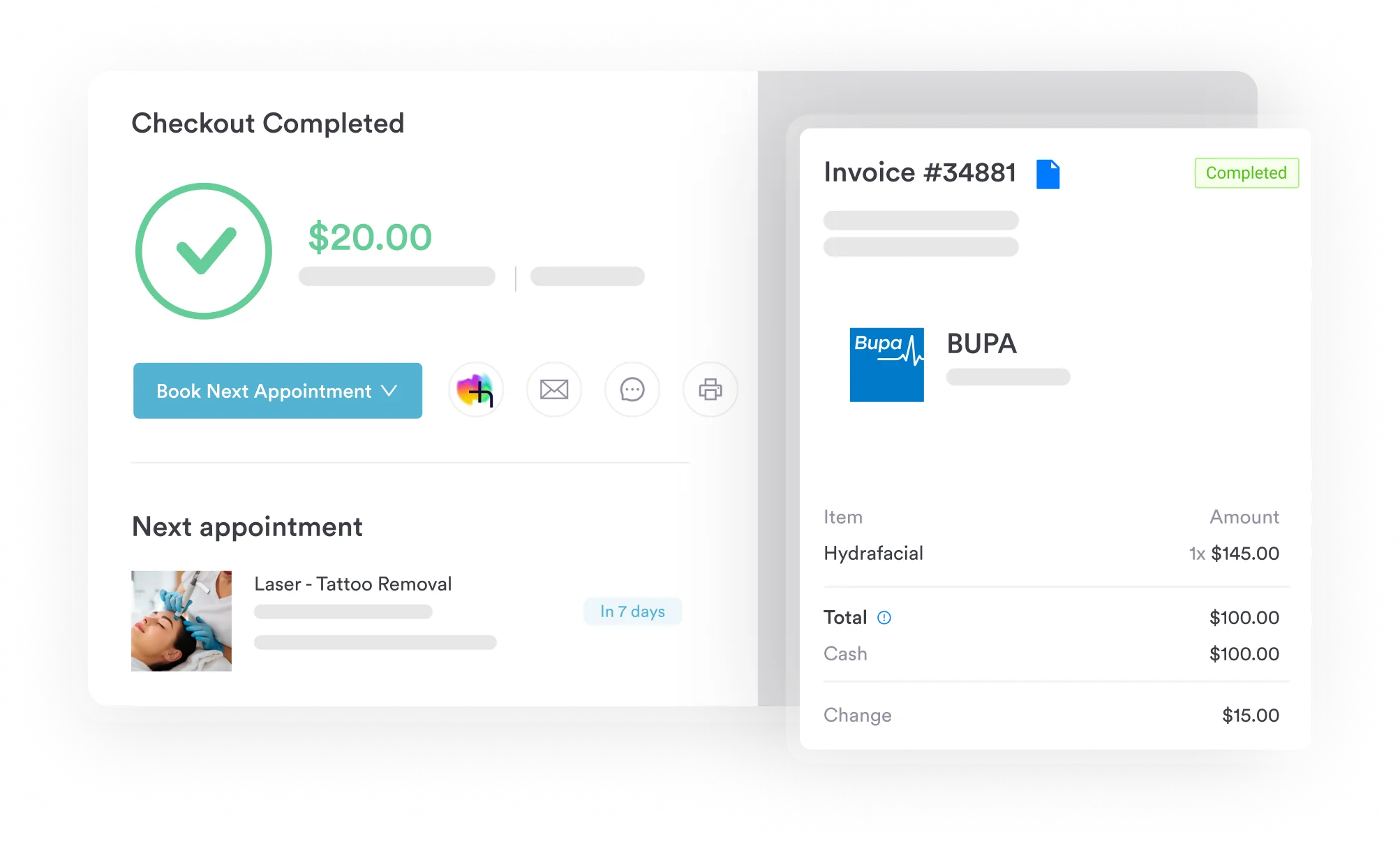
Pabau’s claims management software supports HCPCS Level II code entry with modifier tracking, place-of-service validation, and claim scrubbing before submission. For practices that fabricate custom orthoses, one patient record holds the order, clinical notes and fabrication notes. That closes the gap between clinical and billing work. Pabau also generates superbill-ready encounter summaries that capture the details a clean HCPCS claim needs.
Some physical therapy and rehabilitation practices provide orthotic devices as part of care. For them, Pabau’s physical therapy practice management tools hold clinical notes and DME billing records in one system.

Pabau’s claims management software tracks modifier requirements, clinical notes and prior authorization status across your patient records. See how it works for DME and orthotic billing.

L0624 is a custom code, and its claims are won or lost on proof of custom work. The panels make it a rigid sacroiliac orthosis, but the fabrication file is what separates it from L0623. A practice that opens that file at the first measurement and closes it at a signed delivery rarely has to defend the code later.
Treat the choice between L0623 and L0624 as a clinical decision recorded before fabrication, not a billing decision made afterward. When the practitioner’s notes explain why the patient needs a custom brace, the code follows from the record. To see how Pabau keeps that record in one place for orthotic practices, book a demo.

Need to understand the broader DME billing landscape? What is revenue cycle management explains how DME claims fit into the end-to-end billing cycle, from eligibility verification through payment posting.
Seeing repeated claim rejections across your HCPCS codes? Denial codes in medical billing maps the most common CARC and RARC codes back to their root causes and the corrective actions that resolve them.
Want to verify insurance coverage before dispensing? Insurance eligibility verification covers how to confirm Part B DME coverage, copayment responsibilities, and prior authorization requirements before the patient arrives.
HCPCS Code L0624 is the Level II code for a custom-fabricated sacroiliac orthosis with rigid or semi-rigid panels over the sacrum and abdomen. The brace provides pelvic-sacral support and reduces motion about the sacroiliac joint. Medicare covers it under Part B as an orthotic item, subject to the DME MAC’s spinal orthoses policy.
L0621 is a flexible sacroiliac orthosis with no rigid panels, and it is prefabricated, off-the-shelf. L0624 has rigid or semi-rigid panels over the sacrum and abdomen, and it is custom fabricated for one patient. The two codes differ on both panels and fabrication. The closest neighbor to L0624 is L0623, which has the same panels but is prefabricated.
Yes, Medicare covers L0624 under Part B when the records show the brace is reasonable and necessary under the spinal orthoses LCD. The practitioner’s notes must also explain why the patient needs a custom brace rather than a prefabricated one. The supplier must be an enrolled DMEPOS supplier. Check your DME MAC’s current policy before fabrication.
Not in the way prefabricated codes do. PDAC verification is product-specific, and a custom-fabricated L0624 brace is made for one patient, so it is generally not verified product by product. The fabrication file does that job instead. Check the PDAC’s DMECS listing and the current spinal orthoses policy article each year, because requirements can change.
Codes that often appear on these claims include M53.3 (sacrococcygeal disorders), M53.88 (other specified dorsopathies, sacral region), M54.50 (low back pain, unspecified), and M46.1 (sacroiliitis). M46.1 carries the strongest specificity when examination or imaging documents sacroiliitis. Medical necessity still rests on the clinical notes, so verify against your MAC’s current policy.
Medicare policy comes from the DME MAC’s spinal orthoses LCD and the DMEPOS fee schedule. Commercial payers often follow Medicare coverage logic but may add prior authorization rules or pay lower contract rates. Medicare Advantage plans set their own authorization rules. Confirm coverage, authorization and rates with each payer before you take measurements.