

CCSD code G5100: Bypass of duodenum billing guide
CCSD code G5100 bills a bypass that leaves the duodenum in place CCSD code G5100...

Last Updated: Oct 16, 2026
K0800 is the HCPCS Level II code for power operated vehicle, group 1 standard, patient weight capacity up to and including 300 pounds.
Missing a single modifier or submitting a K0800 claim without a Certificate of Medical Necessity can trigger an immediate denial. DMEPOS suppliers are then left chasing payments for equipment already delivered. Medical billing workflows for power mobility devices are among the most documentation-heavy in DMEPOS, and K0800 is no exception. That includes the official code description, Medicare coverage criteria, documentation checklist, 2026 fee schedule, modifiers, and common denial reasons with how to resolve them.
Let Pabau's smart automation suggest the right codes, reduce claim denials, and keep your practice compliant—effortlessly.
Automate repetitive tasks and focus on what matters most—your patients.
Reduce coding errors and ensure compliance with the latest regulations.
Clean claims, fewer denials, and faster reimbursements.
Powerful insights and reporting to help your practice thrive.
HIPAA compliant SOC 2 certified GDPR-compliant Trusted by 4,000+ clinics worldwide

HCPCS Code K0800 describes a power-operated vehicle (scooter), Group 1 Standard, with a patient weight capacity up to and including 300 lbs.
Medicare Part B covers K0800 only when a physician certifies medical necessity through a face-to-face evaluation and documentation meets LCD criteria.
The KX modifier is required on every K0800 claim to confirm documentation supports medical necessity; missing it is the top cause of denial.
Practice management software like Pabau helps practices document the mobility evaluation and submit patient insurance claims through Claim.MD.
HCPCS Code K0800 is a Level II code maintained by the Centers for Medicare and Medicaid Services (CMS). It describes a power-operated vehicle (POV), Group 1 Standard, with a patient weight capacity up to and including 300 pounds. It is not a CPT code. HCPCS Level II codes cover products, supplies, and services not described by CPT Level I codes, and K-series codes specifically cover DMEPOS items.
The “Group 1 Standard” classification places K0800 at the entry level of the POV range. It covers standard scooters for patients who can sit upright, operate hand controls, and transfer safely. Patients requiring higher weight capacities or more complex seating need codes in the K0801-K0812 range instead.
Medicare Part B covers HCPCS Code K0800 as DMEPOS when a physician certifies that a power-operated vehicle is medically necessary. Coverage is not automatic. Each claim must satisfy the Local Coverage Determination (LCD) issued by the applicable Durable Medical Equipment Medicare Administrative Contractor (DME MAC). Two DME MAC contractors cover the country. CGS Administrators processes Jurisdictions B and C, and Noridian Healthcare Solutions processes Jurisdictions A and D. Each publishes its own LCD for power mobility devices.
Medical necessity for K0800 generally requires a mobility limitation that significantly impairs the patient’s activities of daily living (ADLs). A cane, walker, or manual wheelchair must not adequately address that limitation, and the patient must be able to safely operate a POV. A face-to-face evaluation by the treating physician or non-physician practitioner is required before the order is written. Coverage is subject to medical billing compliance requirements that vary by MAC jurisdiction.
No competitive bidding areas currently apply to K0800. Mobility-equipment contracts under the DMEPOS Competitive Bidding Program lapsed in 2019 and were not renewed. CMS finalized a program restart in December 2025, but it targets 2028. It opens with continuous glucose monitors, insulin pumps, and ostomy, tracheostomy, and urological supplies, not power-operated vehicles. K0800 is reimbursed at the standard DMEPOS fee schedule rate nationwide. Verify current rates with the CMS fee schedule lookup tool.
Insufficient documentation is the primary reason K0800 claims get denied after the fact on post-payment audit. The documentation must be complete before the item is delivered, not assembled retroactively. Structured digital documentation workflows help capture and store the required records in an audit-ready format.
Prior authorization is required nationwide for K0800. CMS added the code to its Required Prior Authorization List on April 13, 2022. The requirement applies in every jurisdiction, regardless of the patient’s condition. Suppliers need a provisional affirmation before delivery. Submitting without one is a common denial trigger that superbill documentation workflows alone cannot fix.
K0800 claims go to the appropriate DME MAC for the patient’s state of residence, not the supplier’s location. Two DME MAC contractors process these claims nationwide: CGS Administrators (Jurisdictions B and C) and Noridian Healthcare Solutions (Jurisdictions A and D). Suppliers must be enrolled in Medicare and hold DMEPOS accreditation to bill this code. Billing without accreditation is a false claim risk.
Claims are submitted on the CMS-1500 form or its electronic equivalent (837P transaction). The billing unit is “each.” K0800 can be billed as a purchase (NU modifier) or a rental (RR modifier). The choice depends on the supplier’s arrangement with the beneficiary and payer requirements. Rental billing typically involves monthly claims for the duration of the rental period, up to the purchase cap. Submitting a clean claim requires that all required data elements, modifiers, and supporting documentation references are present before submission.
Modifier selection directly affects whether Medicare processes or denies a K0800 claim. The KX modifier is not optional when documentation supports medical necessity under the LCD; omitting it generates an automatic denial. The table below shows when to apply each modifier and what it signals to the payer.
Never apply the KX modifier when documentation does not support LCD criteria. Doing so constitutes a false claim. Review the face-to-face evaluation notes, CMN, and physician order against the applicable LCD before appending KX to any K0800 claim.
Run a pre-billing audit on every K0800 claim: confirm the CMN is signed, the face-to-face evaluation is within the LCD-required timeframe, the KX modifier is justified by the documentation on file, and the product description matches a 300 lb capacity Group 1 scooter. Catching these omissions before submission costs minutes. Fixing a denial after the fact can take weeks.
Medicare reimbursement for K0800 is set through the DMEPOS fee schedule, published annually by CMS. Rates are adjusted by geographic region. No competitive bidding areas currently apply to K0800, since mobility-equipment CBA contracts lapsed in 2019. Always verify current rates through the CMS fee schedule lookup or your applicable DME MAC’s published rates before billing.
Reimbursement is also processed through electronic remittance advice (ERA/835 transactions), which detail payment amounts, adjustment reasons, and any denial codes at the line-item level. Reviewing ERAs systematically after each remittance cycle is the fastest way to catch underpayments or processing errors on K0800 claims before they age.
K0800 claims face a predictable set of denial patterns. Understanding the denial codes in medical billing specific to DMEPOS power mobility devices lets suppliers address root causes. That beats simply resubmitting the same incomplete claim. The table below pairs each common denial reason with the resolution step that actually fixes the underlying problem.
Effective denial management strategies for K0800 start before the claim is submitted. Building a pre-delivery checklist, tracking authorization expiries, and reviewing MAC-issued billing articles for your jurisdiction are the three highest-leverage habits. They reduce K0800 denial rates over time.
Selecting the wrong code in the K0800-K0812 range is a billing error that triggers a denial and may require a corrected claim. The key differentiators across the range are group classification (1, 2, or 3), weight capacity, and whether the vehicle is a standard or heavy-duty configuration. Use the table below to identify the correct power scooter HCPCS code for each patient. Check the AAPC HCPCS code lookup or the CMS HCPCS overview for the most current code descriptors.
When the patient’s weight exceeds 300 lbs, K0800 is the wrong code. Billing K0800 for a patient requiring a heavy-duty vehicle will result in a denied or refunded claim. The Group 2 and Group 3 codes (K0806 and above) apply when patients need additional seating options. They also apply when patients need power seating features beyond a Group 1 standard scooter.
Verify the patient’s weight against the delivered equipment’s capacity before selecting a K-code. A 285 lb patient is correct for K0800. A 315 lb patient requires K0801. Document the patient’s weight in the CMN and on the delivery receipt to create a clear paper trail that matches the HCPCS code billed.
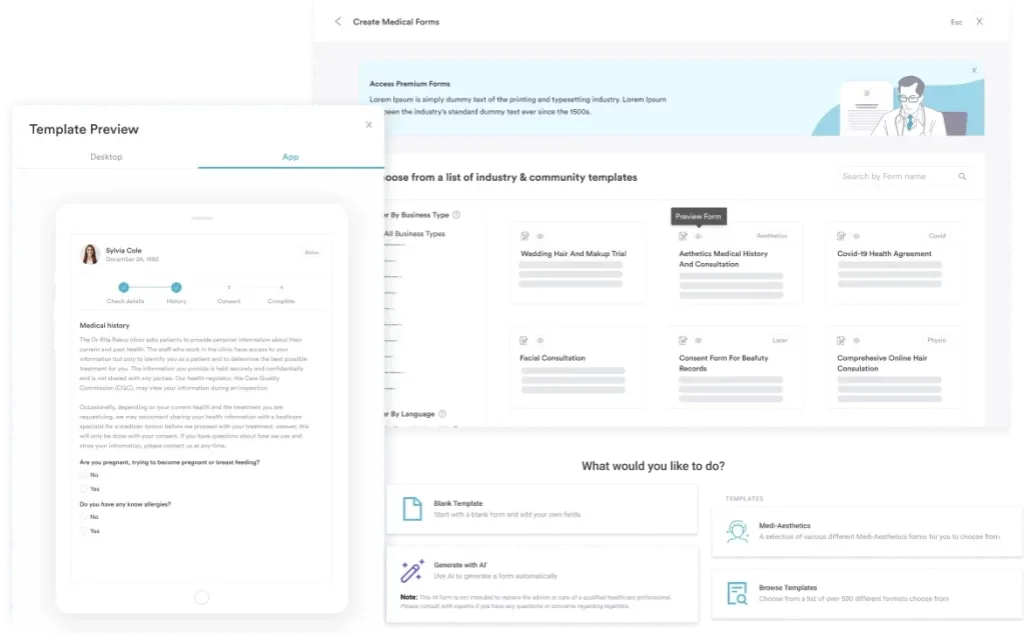
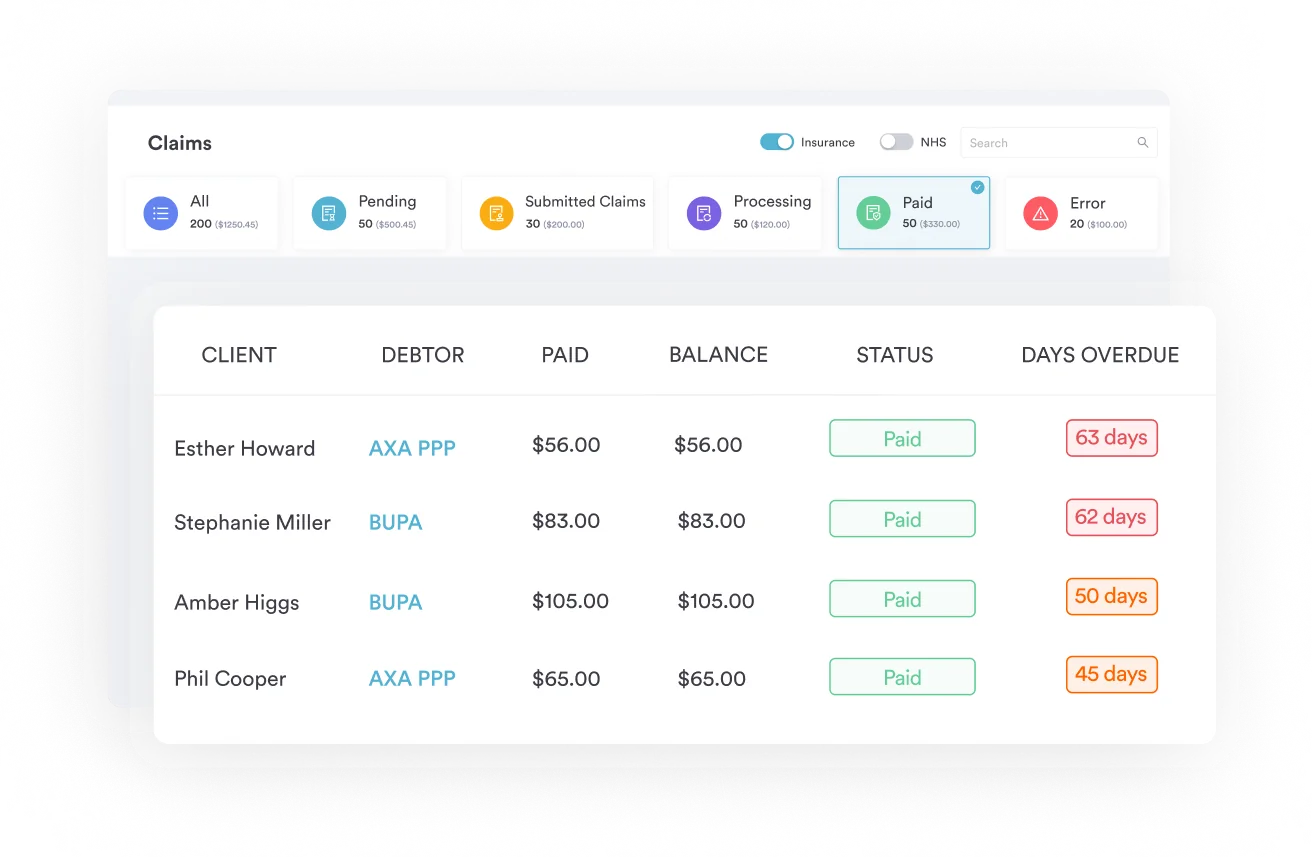
The face-to-face evaluation behind a K0800 order starts in the practice, not with the equipment supplier. Practice management software like Pabau gives providers structured notes covering the mobility limitation and the findings a physician cites when signing the order. Those notes file straight into the patient’s record. When the physician bills that evaluation as a patient encounter, Pabau submits the claim through Claim.MD, the clearinghouse built into the US platform. The practice can then track it from submission through remittance.
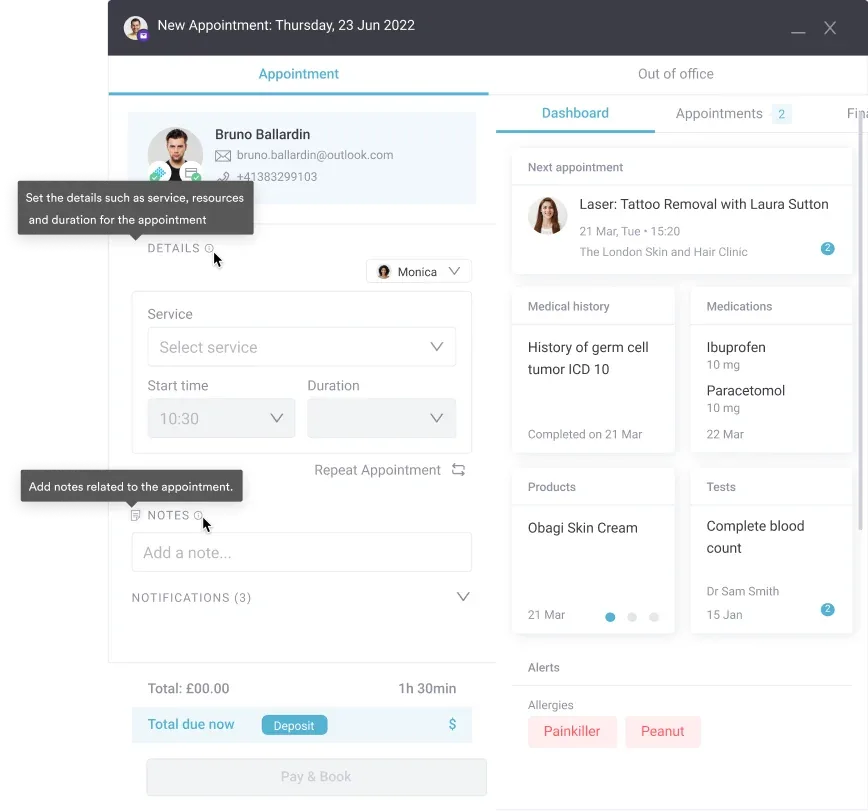
Pabau also keeps the visit itself organized. Practices can schedule the initial evaluation and any follow-up mobility reassessment on Pabau’s calendar. Every note and form is stored in the same patient record used for other visits. That record gives the physician a complete history to reference when they sign the K0800 order or respond to a documentation request.

Pabau gives practices structured notes for the mobility evaluation and files the visit’s insurance claim through Claim.MD. See how it fits your practice.

K0800 claims fail for predictable reasons: missing KX modifiers, incomplete CMNs, and documentation that does not establish home use or functional limitation. Fixing these upstream, before delivery, is the only reliable way to reduce denial rates on power mobility device claims.
For the practice side of that workflow, practice management software like Pabau keeps the face-to-face evaluation notes and patient records in one place. Physicians then have what they need to sign an accurate order. Book a demo to see how Pabau supports the clinical documentation behind a K0800 order.

Need a framework for reducing claim denials across your practice? Denial management strategies in healthcare billing walks through the operational steps that reduce rework and speed up reimbursement.
Unsure how DMEPOS billing fits into a broader revenue cycle? What is revenue cycle management explains the full billing lifecycle from patient intake through final payment.
Want to understand how ERA processing works after claim submission? Electronic remittance advice explained covers how to read 835 transactions and act on adjustment reason codes.
HCPCS Code K0800 is a Level II code describing a power-operated vehicle (POV/scooter), Group 1 Standard. It covers a patient weight capacity up to and including 300 pounds. It is used for Medicare Part B DMEPOS billing when a physician certifies the item is medically necessary. The patient must have a documented mobility limitation.
K0800 is an HCPCS Level II code, not a CPT code. CPT codes are Level I codes maintained by the American Medical Association (AMA) and cover physician services and procedures. HCPCS Level II codes, maintained by CMS, cover durable medical equipment, supplies, and services not described by CPT, including power-operated vehicles like K0800.
Yes, Medicare Part B covers K0800 when medical necessity is documented. That means a face-to-face evaluation, a signed Certificate of Medical Necessity (CMN), and a physician order meeting the DME MAC’s Local Coverage Determination (LCD). Coverage also requires that the POV will be used primarily in the patient’s home.
K0800 covers a Group 1 Standard POV with a weight capacity up to 300 pounds. K0801 covers a Group 1 Heavy Duty POV for patients weighing 301-450 pounds. Billing K0800 for a patient who needs the heavy-duty weight capacity will result in a claim denial. The patient’s weight must be documented and the code selected accordingly.
The most common denial reasons include a missing KX modifier, an incomplete or unsigned CMN, and medical necessity that isn’t established in the evaluation notes. Missing prior authorization and a lapsed supplier accreditation at delivery are the other two. Each requires a different corrective action before resubmission.
The KX modifier is required on every K0800 claim where documentation supports the LCD’s medical necessity criteria. Additionally, use RR for rental billing or NU for a new purchase. Use GA when an Advance Beneficiary Notice has been signed and coverage may be denied. Use GY only when billing a statutorily non-covered version of the item for denial documentation or secondary payer purposes.
Yes, prior authorization is required nationwide for K0800. CMS placed the code on its Required Prior Authorization List on April 13, 2022, and every jurisdiction must obtain provisional affirmation before delivery. Delivering without it typically results in a denial that cannot be remedied retroactively.



