HCPCS code Q4154: Biovance billing, Medicare rate and denial guide
HCPCS code Q4154: definition and code details HCPCS code Q4154 is a Level II cod...

Last Updated: Oct 6, 2026
J2550 is the HCPCS Level II code for injection, promethazine hcl, up to 50 mg.
Coders most often stumble on two points: calculating units when the administered dose crosses the 50 mg threshold, and pairing J2550 with the right drug-administration CPT code rather than billing it standalone. A missing NDC on the claim is the single fastest path to denial for this code.
Let Pabau's smart automation suggest the right codes, reduce claim denials, and keep your practice compliant—effortlessly.
Automate repetitive tasks and focus on what matters most—your patients.
Reduce coding errors and ensure compliance with the latest regulations.
Clean claims, fewer denials, and faster reimbursements.
Powerful insights and reporting to help your practice thrive.
HIPAA compliant SOC 2 certified GDPR-compliant Trusted by 4,000+ clinics worldwide

J2550 covers injectable promethazine HCl up to 50 mg; one unit equals one 50 mg dose increment
Always pair J2550 with a drug-administration CPT code (96372 for IM, 96374 for IV push) – J2550 covers the drug supply only
NDC reporting alongside J2550 is mandatory on Medicare Part B claims; missing it triggers automatic denial
Pabau’s claims management software tracks drug supply codes, NDC fields, and modifier requirements to reduce J2550 claim errors
HCPCS code J2550 is a Level II drug supply code describing injection of promethazine hydrochloride (HCl) in doses up to 50 mg. The official CMS descriptor is: Injection, promethazine HCl, up to 50 mg. Promethazine is a phenothiazine-class antihistamine and antiemetic used clinically to prevent or treat nausea, vomiting, motion sickness, allergic reactions, and as a pre-operative sedative adjunct.
When administered as an injectable by intramuscular (IM) or intravenous (IV) route, the drug supply is billed under J2550, separate from the injection service itself.
The code sits within the HCPCS Level II J-code range, which CMS maintains specifically for drugs not ordinarily self-administered and administered in a clinical setting. Per CMS’s HCPCS Level II code set, J-codes report the drug supply only – not the act of injection.
The table below captures the key reference data for J2550 at a glance. Verify current reimbursement rates directly from the CMS ASP pricing files, which update quarterly.
J2550 applies whenever a licensed provider administers promethazine HCl by injection – IM or IV – in a clinical setting where the drug is not self-administered. Coverage extends across physician offices, outpatient hospital departments, emergency departments, and ambulatory surgery centers.
Critically, J2550 covers the drug supply only. A separate CPT administration code must appear on the same claim:
Billing J2550 without a paired administration code will result in a denial on most payer systems. The administration code is what justifies the clinical encounter; J2550 documents the drug used.
Not every promethazine administration qualifies for J2550. The following scenarios fall outside the code’s scope:
One unit of HCPCS code J2550 equals up to 50 mg of promethazine HCl. The calculation rule is straightforward: divide the dose administered by 50, then round up to the next whole number.
Always document the exact dose administered in the clinical note, not just the vial size drawn. A 50 mg vial from which only 25 mg was given should be billed as 1 unit – the vial size is irrelevant; the dose administered controls unit count.
NDC reporting: CMS requires the 11-digit National Drug Code alongside J2550 on outpatient drug claims. Report NDC in the format xxxxx-xxxx-xx with the qualifier N4 in the appropriate claim field. Missing the NDC is among the top causes of automated claim rejection for this code.
J3490 is the unclassified (not otherwise classified) drug code – use it only when no specific HCPCS code exists for the drug being billed. For standard injectable promethazine HCl, J2550 is the correct and preferred code. Defaulting to J3490 when J2550 applies invites audits and claim delays, because unclassified codes require additional documentation explaining why no specific code was used.
Modifiers refine how HCPCS code J2550 is interpreted by the payer. Appending the wrong modifier – or omitting a required one – is a common cause of partial payment or outright denial.
Payer-specific modifier requirements vary. Verify with each commercial carrier whether JA is required for IV administration before billing – some payers process without it, others deny for its absence.
Medicare Part B covers injectable promethazine HCl when it is given in a covered clinical setting and meets medical necessity criteria. Payment is set per unit billed, using the quarterly ASP + 6% limit covered in the reimbursement section below. You can confirm the paired administration code rates in the CMS Physician Fee Schedule lookup.
Run an insurance eligibility check before each J2550 administration. Some Medicare Advantage plans and Medicaid managed care organizations apply different formulary rules than traditional Medicare – what is covered under fee-for-service may still require prior authorization under the plan.
Most commercial insurers follow Medicare coverage logic for injectable promethazine, but prior authorization (PA) requirements differ widely. Conduct insurance eligibility verification that specifically checks injectable drug coverage and any PA conditions before administering the drug.
Thorough documentation is what converts a clinical encounter into a paid claim. Solid medical billing compliance practices require the following elements in every J2550 claim:
Incident-to billing additionally requires documentation showing the supervising physician’s presence and the established-patient treatment context. Keep this in the chart – it is the first thing a payer auditor checks.
The denial patterns for HCPCS code J2550 are predictable and preventable. Most billing teams encounter the same four or five failure modes repeatedly. Good denial management starts with identifying which of these is hitting your claims most often.
When a denial does arrive, review the remittance advice CARC code first – it will pinpoint which of the above categories applies. A clean claim submission requires all six documentation elements and a correctly paired administration code before the claim leaves the practice.
Medicare reimburses HCPCS code J2550 at ASP + 6% per unit, where ASP is the Average Sales Price of the drug as reported to CMS by manufacturers. Because ASP updates each quarter, do not hard-code a dollar figure into billing workflows. Instead, retrieve the current rate directly from the AAPC HCPCS code lookup or the CMS ASP pricing file released for the current quarter.
Tracking actual reimbursement per unit against expected rates is a core revenue cycle management function. Practices that monitor payment variance at the code level catch underpayment patterns before they become significant revenue losses.
Check the CMS ASP Drug Pricing File each quarter before finalizing fee schedules that include J2550. The file is published on the CMS website approximately 30 days before the new quarter begins. Build a calendar reminder so rates are updated before they affect submitted claims.
Most J2550 denials start at the point of care. A nurse records “promethazine 25 mg IM” in the note, and someone later retypes the dose, route, and NDC into a claim. Every retyped field is a chance to bill the wrong units or drop the NDC.
Practice management software like Pabau keeps the administration note, the NDC, and the diagnosis on the patient’s record. Its claims management software holds each claim for review before it goes out. Billers see the HCPCS code, unit count, administration code, and linked diagnosis on one screen.
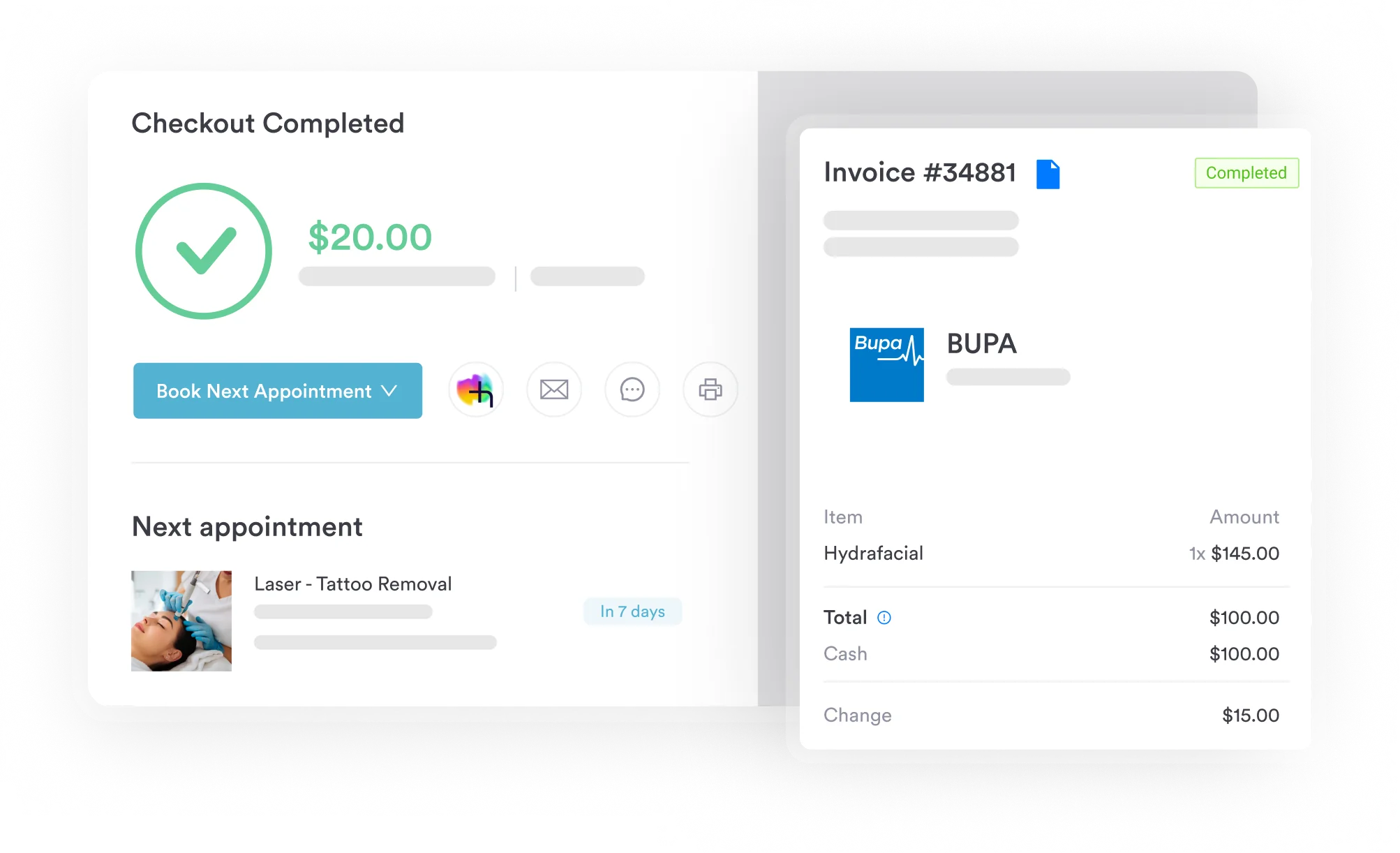
A J2550 line with no paired 96372 or 96374 gets caught there, before the payer sees it. So does a 75 mg dose billed as one unit. Denials are grouped by reason code, so a run of missing-NDC rejections shows up within days.

Pabau holds each claim for review with the drug code, units, NDC, and administration code on one screen. Your billers fix a missing NDC or wrong unit count before the payer sees it.

HCPCS code J2550 is a straightforward drug supply code – but the claims it generates fail more often than they should, almost always for the same preventable reasons: a missing NDC, an incorrect unit count, or a missing administration CPT code. Getting those three elements right on every claim is the difference between a clean payment cycle and a pile of avoidable rework.
Start with your charge master and any order set that lists promethazine. Confirm each one bills J2550 by milligrams given, links 96372 or 96374, and carries the NDC for the vials you stock.
If your team is losing time chasing J2550 denials, book a demo to see how we handle injectable drug claims end to end.

Need to understand how denials are classified and appealed? Denial codes in medical billing explains CARC and RARC codes and how to act on them.
Want a step-by-step framework for cleaner claims? Medical claims clearinghouse guide covers how clearinghouses validate claims before they reach payers.
Looking for guidance on managing drug supply billing across the revenue cycle? Best medical billing software for US practices reviews platforms that handle J-code and drug supply billing.
HCPCS code J2550 is the correct billing code for injectable promethazine HCl (the J-code covers the drug supply). The administration procedure itself is billed separately: use CPT 96372 for intramuscular injection or CPT 96374 for intravenous push.
J2550 covers the drug supply for injectable promethazine hydrochloride in doses up to 50 mg per unit. It does not cover the cost of administering the injection – that requires a paired CPT administration code on the same claim.
J2550 is the specific HCPCS code for standard injectable promethazine HCl and should always be used when it applies. J3490 is the unclassified drug code reserved for drugs without a specific HCPCS descriptor – such as compounded promethazine formulations not covered by the J2550 descriptor. Using J3490 when J2550 is available increases audit risk and slows claim processing.
There is no fixed maximum per encounter – units are determined by the dose administered. One unit covers up to 50 mg; bill additional units for doses above 50 mg. A 75 mg dose = 2 units; a 100 mg dose = 2 units. Clinical documentation must support every unit billed.
The most common denial causes are a missing NDC number, incorrect unit count, absence of a paired CPT administration code, and a diagnosis that does not support medical necessity. Verifying all four elements before submission eliminates the majority of J2550 denials.
Coverage varies. Most commercial payers follow Medicare coverage logic for injectable promethazine, but prior authorization requirements differ. Medicaid coverage is state-specific, with AMP-based reimbursement limits that vary by state. Verify eligibility and drug-specific coverage with each payer before administering.