

HCPCS code E0198: Water pressure pad billing guide
HCPCS code E0198 is a water pad for a standard mattress HCPCS code E0198 is the ...

Last Updated: Oct 13, 2026
J1562 is the HCPCS Level II code for injection, immune globulin (vivaglobin), 100 mg. CMS terminated it with effect from 31 December 2025, so it is no longer valid for claims after that date.
It also sets out the ICD-10 diagnosis codes, documentation rules, and Medicare billing rules that apply. And it names the three immune globulin codes coders most often confuse, so a legacy record does not become a denied claim.
Let Pabau's smart automation suggest the right codes, reduce claim denials, and keep your practice compliant—effortlessly.
Automate repetitive tasks and focus on what matters most—your patients.
Reduce coding errors and ensure compliance with the latest regulations.
Clean claims, fewer denials, and faster reimbursements.
Powerful insights and reporting to help your practice thrive.
HIPAA compliant SOC 2 certified GDPR-compliant Trusted by 4,000+ clinics worldwide

HCPCS Code J1562 described injection, immune globulin (Vivaglobin), 100 mg — a subcutaneous immunoglobulin product billed under Medicare Part B J-codes.
J1562 is a deleted code and cannot be used for current billing. AAPC lists a termination date of December 31, 2025.
No single code replaced it. Seven active codes cover subcutaneous immune globulin products, and the right one depends on the brand administered.
J1563 and J1564 are also deleted and were superseded by Q-codes in 2006. Neither is a valid code for Gammagard S/D, which bills under J1566.
Practice management software like Pabau supports HCPCS code entry and drug injection billing, so infusion practices submit fewer mismatched J-codes.
HCPCS Code J1562 covered the injection of immune globulin under the brand name Vivaglobin, billed per 100 mg. It fell under the HCPCS Level II J-code category. That is the CMS code set for drugs given by a route other than the mouth, which covers intravenous, subcutaneous, and intramuscular injections.
Vivaglobin was a 16% subcutaneous human immunoglobulin G (IgG) solution from CSL Behring, indicated for primary immunodeficiency (PI) diseases.
Subcutaneous immune globulin (SCIG) differs from intravenous formulations in both administration route and clinical setting. SCIG products like Vivaglobin were designed for self-administration or home infusion.
That made them significant for primary immunodeficiency patients who need frequent, ongoing replacement therapy. The 100 mg billing unit matched how payers tracked quantity across infusion sessions. A single session could involve many units, depending on the prescribed dose.
Yes. HCPCS Code J1562 is a deleted code and is not valid on current claims. AAPC’s deleted-code index lists a termination date of December 31, 2025, which makes January 1, 2026 the first service date where the code is invalid.
Submitting a deleted HCPCS code triggers rejection at the clearinghouse or payer level. Payers validate every code against the active code set for that date of service.
Vivaglobin itself was withdrawn from the US market by CSL Behring years before the code was retired. When a drug product is discontinued, CMS eventually retires the associated J-code and directs billers to product-specific codes.
That is what happened across the whole subcutaneous immune globulin category. Instead of one universal successor, CMS assigned an individual code to each SCIG product on the market. The correct code now depends entirely on the brand administered.
There is no single HCPCS Code J1562 replacement. Seven active codes cover subcutaneous immune globulin products, each tied to a specific brand.
CMS Local Coverage Article A57778 lists this set as the codes that support medical necessity for subcutaneous immune globulin. Choose from these first, because J1562 was itself a subcutaneous code.
Two codes in that table cover products licensed for either route. J1561 and J1569 therefore need a route modifier. Use JA for an intravenous infusion and JB for a subcutaneous injection. Omitting it on a dual-route code is a routine denial reason. That is easy to miss when a patient moves from in-office IV to home subcutaneous therapy. A resubmission does not restart the clock, so the original filing limit still governs. A resubmission does not restart the clock, so the original filing limit still governs.
For a practice transitioning a patient off Vivaglobin, J1559 (Hizentra) is the closest functional analogue. It is a CSL Behring subcutaneous IgG formulation billed per 100 mg, matching the route and unit structure of J1562.
Even so, the code must reflect the product actually administered, not the historical one. Verify the brand against the infusion record before you code the claim.
The codes below sit next to the subcutaneous set in the J-code range and get selected by mistake. None of them replaces J1562, because none is a subcutaneous-only product code. They matter for a different reason. A mismatch between route and code is one of the most common immune globulin denials.
Two of those rows are the easiest to mis-pick. J1459 is a CSL Behring product like Hizentra, but it is intravenous, so it never stands in for a subcutaneous code. J1460 covers the same covers the same intramuscular gamma globulin as J1560 at a 1 cc dose, so those two split on volume rather than product.
J1566 deserves particular attention. It is a not-otherwise-specified code for lyophilized intravenous immune globulin, so more than one powdered product bills under it.
Gammagard S/D is the product coders most often need it for. Because it is an NOS code, payers expect the NDC and product name in the claim detail to identify what was actually given.
Three codes in this family are retired. They appear in old claim histories and in outdated crosswalk tables, which is how they end up on new claims by accident.
The lesson from all three is the same. Verify a J-code against the current CMS HCPCS release or the relevant Local Coverage Article before you trust a crosswalk you did not build.
When J1562 was active, Medicare Part B covered immune globulin administration under the outpatient drug benefit. The billing rules for subcutaneous immune globulin carry over to the replacement codes, so they still explain how the category is handled.
According to CMS fee schedule guidance, immune globulin J-codes are paid on the Average Sales Price (ASP) methodology. That is ASP plus a percentage add-on that varies by policy period.
Key billing rules that applied to J1562, and that continue to govern its replacement codes, include the following:
For practices running infusion services alongside other workflows, checking which clinicians can administer IV therapy by state comes before any immune globulin protocol. Scope-of-practice rules affect both clinical delivery and billing compliance.
Check your Medicare Administrative Contractor (MAC) local coverage article before submitting any immune globulin claim. MACs such as CGS, Noridian, and Palmetto GBA publish billing and coding guidance that supplements CMS national policy. Coverage criteria, modifier requirements, and covered diagnosis lists all vary by MAC jurisdiction.
J1562 was reimbursed under Medicare Part B using the ASP-based drug payment methodology. Part B drugs in the J-code series are paid at ASP plus an add-on percentage, historically 6% and subject to sequestration adjustments.
Because J1562 is now deleted, no current ASP rate applies to it. Any rate you find published against the code is historical only.
For current reimbursement data on the active codes, use the CMS ASP quarterly pricing files. CMS publishes them on its website and updates them every quarter. The codes to look up are J1551, J1555, J1558, J1559, J1561, J1569, and J1575 for subcutaneous products.
Add J1459, J1566, J1568, and J1572 if the practice also runs intravenous infusions. SCIG rates move meaningfully with ASP, which is why quarterly checks are standard in infusion billing.
In an outpatient infusion setting, the Medicare drug payment covers the product only. Administration is billed separately, with 96365 for the first hour of a non-chemotherapy infusion.
A single subcutaneous or intramuscular injection is reported with 96372 instead. Bundling the drug cost into an administration code, or the reverse, is a common audit trigger.
Immune globulin administration requires an ICD-10-CM diagnosis code that supports medical necessity. The clinical indications for Vivaglobin and its successors center on primary and secondary immunodeficiency, where IgG replacement is clinically warranted.
CMS Local Coverage Article A57778 carries the authoritative list of covered diagnosis codes for immune globulin billing.
The core diagnosis codes that support medical necessity for immune globulin replacement therapy are set out below.
Always confirm the ICD-10-CM codes accepted by your MAC against Local Coverage Article A57778. The codes above are the core covered diagnoses, and the full article may add secondary immunodeficiency conditions.
Do not use D89.9 in place of a more specific diagnosis when one exists. Payers generally require the most specific code available to support medical necessity.
Practices running infusion therapy across several specialties should read the IV therapy licensing rules alongside their ICD-10 mapping. That matters most when building protocols for immunodeficiency patients.
Claims for immune globulin administration face heightened scrutiny in Medicare audits. Missing or inadequate documentation is the leading reason for post-payment recoupment in this category.
The clinical record has to support every element of the claim. That means the diagnosis, the medical necessity decision, the product, the dose, and the administration event.
Required documentation for immune globulin claims includes the following elements, consistent with CMS LCA A57778 guidance:
Digital documentation tools reduce the risk of incomplete records. Practices using digital clinical documentation forms can build structured infusion logs that capture every required field by default, which makes an omission much harder.
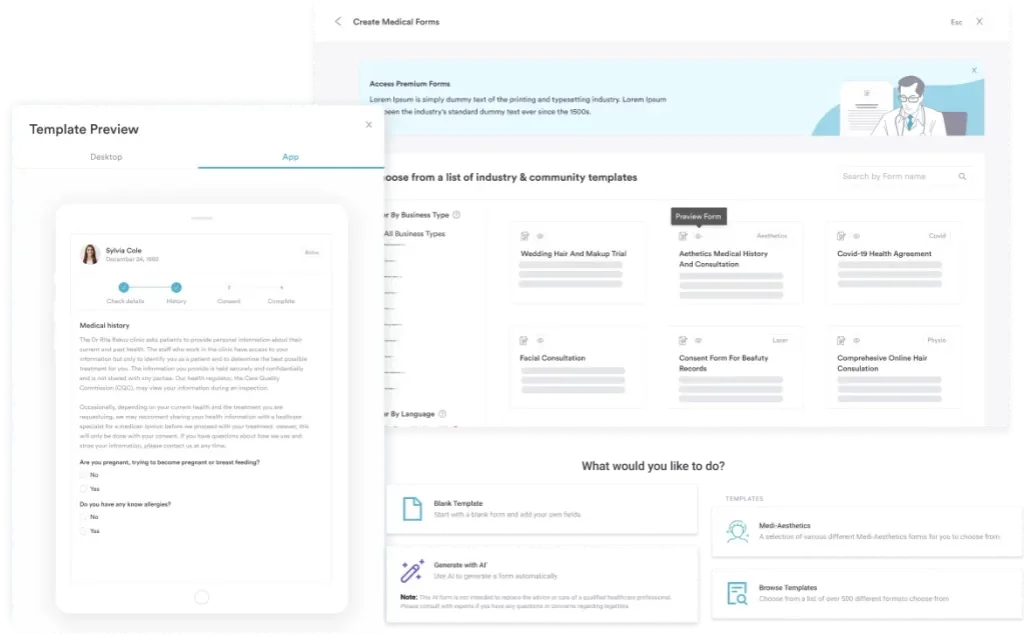
For practices that manage home infusion referrals alongside in-office administration, the product and dose must be documented consistently across every encounter type. Inconsistency between the prescription, the infusion record, and the claim is a common audit trigger.
IV therapy intake documentation gives a practical starting point for building infusion records that capture billing-critical data from the first visit.
Immune globulin denials cluster around a handful of repeatable mistakes. Each one is preventable at the point of claim entry, which is where a check costs minutes rather than months.
AAPC’s index of HCPCS Level II codes and the current CMS HCPCS release are the two sources to confirm code status against. Practices administering immune globulin should review both at least annually, alongside the quarterly ASP pricing updates.
Mobile and home infusion add a wrinkle, because coding accuracy then depends on records that travel with the patient. The rules for mobile IV therapy records apply to immune globulin exactly as they apply to hydration.
Reconcile your drug dispense records against your J-code assignments every quarter. If a patient moved between immune globulin products during the year, check each service date separately. The code must be the one that was correct on that date. Mixed-product billing under a single J-code is an audit risk that a simple dispense-to-claim reconciliation catches before submission.
Every immune globulin claim has to line up four things:
One mismatch between the product given and the code submitted is enough to trigger a denial. Practice management software like Pabau keeps all four in the same place. Pabau’s claims management software supports HCPCS code entry and drug injection billing inside the claim submission process.
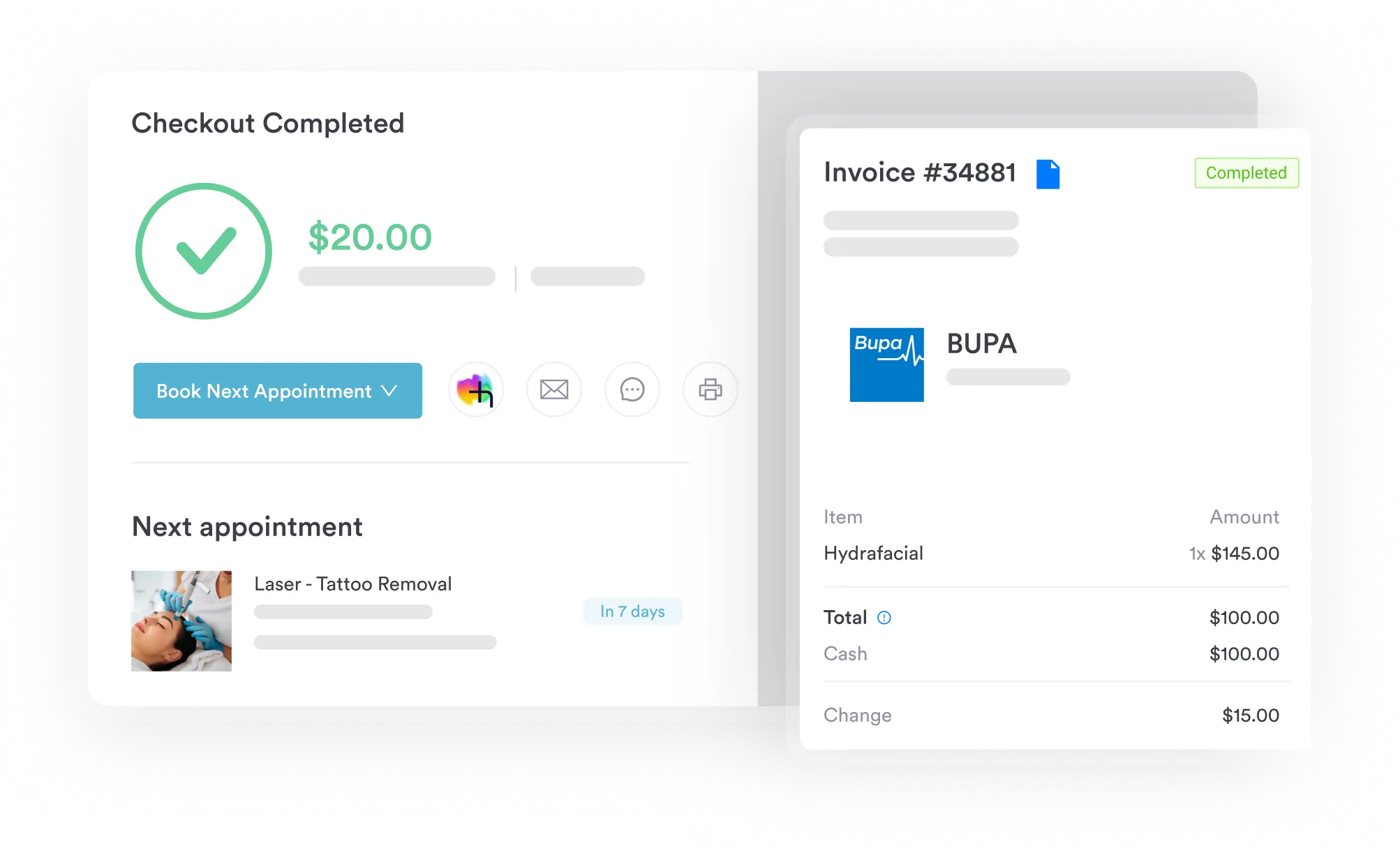
For practices administering subcutaneous immune globulin alongside other infusion therapies, Pabau connects clinical documentation directly to the billing workflow. Treatment records, administered doses, and prescribing physician details captured during the encounter feed straight into the claim.
That removes the manual transcription step where J-code mismatches usually start. Pabau’s IV therapy EMR software carries that trail end to end, from the physician order through to the submitted claim.
Practices building or scaling an infusion program need documentation and billing tools that stay joined up across multiple products. Pabau’s infusion center software keeps the order, the administration record, and the claim on one patient timeline.
Pabau’s prescription management software maintains the ordered-product trail that Medicare auditors look for when they review infusion claims.
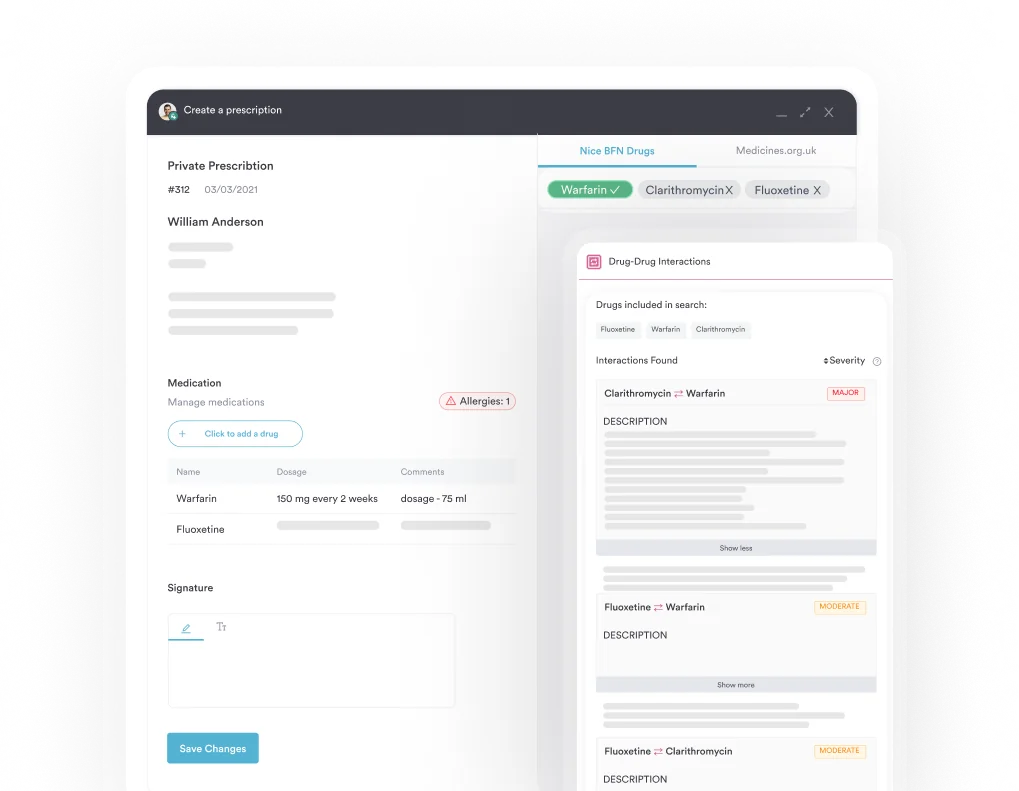

Pabau connects clinical documentation to HCPCS claim submission. Infusion practices make fewer coding errors and send cleaner claims for immune globulin and other injectable therapies.

The deleted code is the easy half of this problem. The harder half is the assumption that one replacement exists. Seven active codes cover subcutaneous immune globulin today, and the right one turns on the brand administered and the route used.
So the habit worth building is a small one. Read the product off the infusion record before you pick the code, then check that code against the current CMS release before you submit.
Those two steps catch the dual-route modifier, and they catch the crosswalks that still map J1563 and J1564 to the wrong products. Book a demo to see how Pabau ties administered-product documentation to J-code claim entry.

Billing another subcutaneous injectable? J1655 sets out the per-unit billing rules for tinzaparin sodium.
Coding a subcutaneous biologic instead? J1441 covers filgrastim dosing, unit conversion, and the documentation payers expect.
Working across the wider J-code range? J1631 applies the same product-to-code discipline to long-acting haloperidol decanoate.
Coding a torticollis diagnosis too? Torticollis coding guide covers the billable, specific code that needs no additional child code for claim submission.
Coding an ankylosing spondylitis case? Ankylosing spondylitis coding guide explains the documentation needed to confirm involvement across more than one vertebral region.
HCPCS Code J1562 is a deleted Level II code. It described the injection of immune globulin under the brand name Vivaglobin, billed per 100 mg. It covered subcutaneous administration of immunoglobulin G (IgG) in patients with primary immunodeficiency. The code has since been retired and is no longer valid for claim submission.
Yes. J1562 is listed as a deleted HCPCS code, with a termination date of December 31, 2025 in AAPC’s deleted-code index. Any claim carrying it for a service date on or after January 1, 2026 will be rejected. Use the active product-specific J-code for whichever immune globulin product was actually administered.
No single code replaced it. Seven active codes cover subcutaneous immune globulin: J1551 (Cutaquig), J1555 (Cuvitru), J1558 (Xembify), J1559 (Hizentra), J1561 (Gamunex-C/Gammaked), J1569 (Gammagard Liquid), and J1575 (HyQvia). The correct code depends on the brand administered. J1561 and J1569 also cover intravenous use, so they need modifier JA or JB.
No. J1563 is a deleted code that described intravenous immune globulin, 1 g. Medicare stopped paying it on April 1, 2005 and it was deleted effective January 1, 2006, superseded by Q9941 and Q9943. Gammagard S/D is a lyophilized intravenous product, so it bills under J1566 with the NDC reported alongside the code.
The primary ICD-10-CM codes include D80.0 (hereditary hypogammaglobulinemia) and D80.1 (nonfamilial hypogammaglobulinemia). Others are D80.3 (selective IgG deficiency), D80.6 (antibody deficiency with near-normal immunoglobulins), and D83.9 (common variable immunodeficiency, unspecified). Consult CMS Local Coverage Article A57778 for the full covered diagnosis list that applies in your MAC jurisdiction.
Documentation must include a confirmed diagnosis with supporting lab values such as serum IgG levels, and a signed physician order specifying product, dose, and route. You also need an infusion administration record with product name, lot number, dose in mg, and start and stop times, plus clinical monitoring notes. Units billed must match the milligrams administered divided by the code’s unit size.
J1562, now deleted, covered Vivaglobin, a subcutaneous immune globulin billed per 100 mg. J1561 is an active code covering Gamunex-C and Gammaked, non-lyophilized immune globulin billed per 500 mg. Gamunex-C can be given intravenously or subcutaneously, so J1561 requires modifier JA or JB. The two codes differ in product, unit size, and modifier rules, and are not interchangeable.



