

HCPCS code E0198: Water pressure pad billing guide
HCPCS code E0198 is a water pad for a standard mattress HCPCS code E0198 is the ...

Last Updated: Oct 13, 2026
J1460 is the HCPCS Level II code for injection, gamma globulin, intramuscular, 1 cc.
Denials on this code come from a short list of causes. Units get billed in milligrams instead of cc, or the NDC is missing from a Medicaid claim. Sometimes the diagnosis code does not match what the payer covers for immune globulin.
All three are settled at the point of care, before anyone opens a claim form. Claims management software that pulls the dose and NDC straight from the treatment note removes the retyping step where those errors start.
Let Pabau's smart automation suggest the right codes, reduce claim denials, and keep your practice compliant—effortlessly.
Automate repetitive tasks and focus on what matters most—your patients.
Reduce coding errors and ensure compliance with the latest regulations.
Clean claims, fewer denials, and faster reimbursements.
Powerful insights and reporting to help your practice thrive.
HIPAA compliant SOC 2 certified GDPR-compliant Trusted by 4,000+ clinics worldwide

HCPCS Code J1460 covers an injection of gamma globulin given intramuscularly, billed as one unit per 1 cc administered.
Gamastan is the immune globulin product billed under J1460 in almost every case. Grifols manufactures it, and the FDA has approved it for IM use.
Medicare Part B pays J1460 at ASP+6% under the buy-and-bill model. Rates change quarterly, so pull the figure from the current CMS ASP pricing file.
Practice management software like Pabau records the dose, lot number, and NDC at the point of care, which heads off the most common J1460 denials.
HCPCS Code J1460 is a Level II drug code maintained by the Centers for Medicare and Medicaid Services (CMS). It sits in the J-series of physician-administered drug codes.
The official descriptor reads: Injection, gamma globulin, intramuscular, 1 cc. The code covers immune globulin (IG) products delivered by the intramuscular route, billed per each 1 cc administered.
The route of administration is the coding distinction that decides everything else. J1460 covers only the intramuscular route.
If a provider gives immune globulin subcutaneously or intravenously, a different HCPCS code applies. Billing J1460 for an IV infusion is one of the most common errors in this drug class and a reliable denial trigger.
J1460 covers gamma globulin, also called immune globulin (IG) or immunoglobulin. Gamastan (immune globulin, human) from Grifols is the primary FDA-approved product billed under this code.
Gamastan S/D is a sterile, preservative-free solution drawn from large pools of human plasma. It provides passive immunity by transferring donor antibodies to the patient.
Practices administering Gamastan should confirm scope of practice and any state delegation rules that govern who can administer injections. The IM route keeps dosing simple, but every cc still has to reach the claim exactly as it was given.
The primary clinical indications for gamma globulin by the IM route include:
Post-exposure prophylaxis puts J1460 on claim lists well outside immunology, including primary care and travel medicine practices. Coverage criteria still vary by payer and by Medicare Administrative Contractor (MAC). Check the applicable Local Coverage Determination (LCD) before billing.
Medicare Part B covers J1460 when the service is medically necessary and documented according to CMS coverage policy.
Coverage sits in the LCDs and National Coverage Determinations (NCDs) maintained by individual MACs. Covered indications differ by contractor region, so pull the current LCD from your own MAC before submitting.
The following ICD-10-CM codes are commonly paired with J1460 claims. Treat them as guidance-level pairings, and verify the specific codes your MAC accepts before submission.
Diagnosis pairings for J1460 are payer-specific. A pairing one MAC accepts may not satisfy another, so verify against the current applicable LCD before submission.
The D80-D89 range for immunodeficiency disorders broadly supports immune globulin replacement claims. Which codes inside that range qualify still varies by contractor policy.
Billing errors on this code almost always trace back to a wrong unit count or thin documentation. Both are fixable before the claim reaches the payer. Injection intake documentation that records the dose while the patient is still in the chair makes the unit count self-evident.
J1460 is billed per 1 cc of immune globulin administered. Bill the number of units equal to the total volume injected. A 2 cc dose is 2 units. A 5 cc dose is 5 units. Do not round in either direction. Bill the exact cc volume documented in the clinical note.
Volume-based units are unusual in the J-series. Weight-based codes such as J1441 and J1120 count micrograms or milligrams of drug instead. A habit carried over from those codes produces the wrong number here.
Two CMS drug-waste modifiers apply to single-dose vial drugs billed under buy-and-bill arrangements. They are the same pair you append to other single-vial drug codes, such as such as J0895. Check current CMS transmittal guidance for effective dates and how each applies to J1460.
Not every payer recognizes JW and JZ the same way, so check individual payer policies. Submitting JW without waste documentation is a compliance risk. Submitting JZ when waste occurred is an error.
Every J1460 claim needs clinical documentation covering five points:
Digital intake forms that capture these details at the time of administration keep the note complete while the facts are still fresh. Anything reconstructed a week later tends to be the part a payer questions.
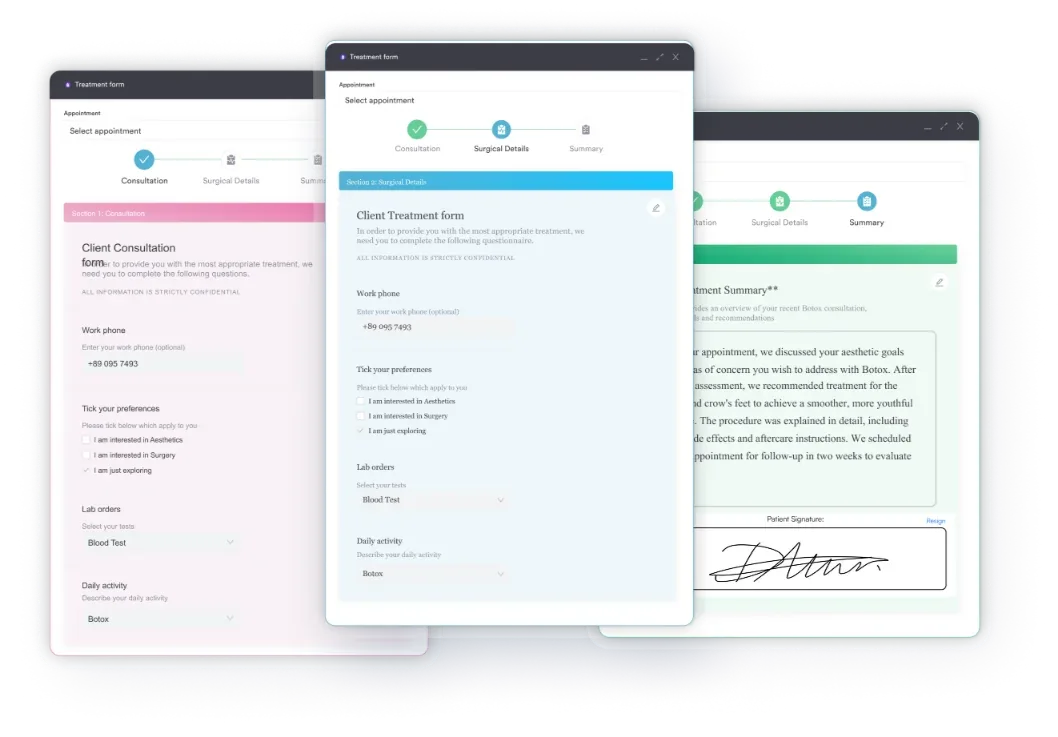
Document the Gamastan lot number and NDC at the point of administration, not after the fact. Claims without a traceable NDC are a leading Medicaid denial reason for J1460. Building NDC capture into the injection workflow is far less disruptive than chasing a denied claim weeks later.
Medicare Part B reimburses HCPCS Code J1460 under the Average Sales Price (ASP) methodology. The formula is ASP+6%, or 106% of the manufacturer’s average sales price.
CMS updates ASP-based rates quarterly, so any dollar figure printed here would be stale within months. Pull the current rate from the CMS Physician Fee Schedule lookup tool or the quarterly ASP drug pricing file.
The ASP+6% formula is built to cover acquisition cost plus a small margin. What you actually clear against acquisition cost depends on your purchase price and your contract. Present ASP+6% as the Medicare formula, and do not assume a fixed margin behind it.
The crosswalk links Gamastan’s National Drug Code numbers to HCPCS Code J1460. NDC reporting is mandatory for Medicaid and required by many commercial payers.
Medicare Part B usually does not require it on the claim form, though many MACs recommend it for audit defensibility. EMR platforms for injectables often carry NDC fields that populate as soon as the product is selected.
On a Medicaid claim, report the 11-digit NDC in 5-4-2 format on the claim line. The unit qualifier is ML, and 1 mL equals 1 cc for J1460 billing. Confirm the current Gamastan NDC numbers against the manufacturer or the FDA product label before submission, since they change with package updates.
J1460 follows the standard buy-and-bill model for physician-administered Part B drugs. The practice purchases the drug, administers it, and then bills the payer for reimbursement. That makes purchasing part of the billing chain.
Inventory management software that tracks vials by lot number keeps the acquisition record and the claim in step.
Prior authorization (PA) requirements for J1460 vary widely by payer. Traditional Medicare Part B does not universally require PA, though some MACs impose coverage criteria documentation. Medicare Advantage plans frequently require authorization where traditional Medicare does not.
Mobile injection services carry the same obligations as fixed sites, since the location of administration does not change the payer rule.
Medicaid programs and commercial insurers set their own PA policies. Some want clinical documentation before the first dose, others only for ongoing or high-dose administration. Verify with the individual payer before the administration date rather than after the denial.
J1460 covers IM-route immune globulin only. Several other HCPCS codes cover immune globulin products by different routes or formulations. Using the wrong one for the route given is an audit risk.
IV therapy EMR software that maps each protocol to the correct J-code by route removes that error class. For reference lookups, the AAPC HCPCS code search lists descriptors and related crosswalks.
Route and formulation are what separate these codes. Never pick a J-code from the drug name alone without checking that the descriptor matches the route given. Brand-specific codes such as J1561 and J1568 show how narrow the descriptors get once a product has its own entry.
Denied J1460 claims cluster around a handful of avoidable errors, and each one has a checkpoint that catches it before submission. Practices that run vaccine and injection workflows inside their practice management system capture those checkpoints during the visit instead of afterwards.
Run a five-point check on every J1460 claim before it goes out. Units must equal the cc administered, and the ICD-10 code must match the current MAC LCD. The NDC belongs on Medicaid claims, the PA number on file where required, and JW or JZ applied correctly. Those five checks prevent the bulk of J1460 denials.
In most practices the J1460 details are scattered by the time billing needs them. The dose sits in a clinical note. The lot number is on a sticker or a stock sheet, and the NDC is on the vial carton. A biller then reassembles all three from memory and email.
Pabau is practice management software that keeps those fields in one record. The injection is charted against the patient’s appointment, and the diagnosis is already on the encounter. The vial is drawn from tracked stock, with its lot number and NDC attached. Billing works from the note itself rather than from a reconstruction.
The result is a shorter path from administration to a clean claim, and a shorter list of denials to work later. Every subscription includes the full feature set, so charting, stock tracking, and invoicing arrive together rather than as separate purchases.

Pabau helps practices that administer injectable therapies document the dose, track lot numbers and NDCs, and send cleaner claims. Fewer details go missing between the treatment room and the claim form.

J1460 is a simple code with an unforgiving unit definition. Count the cc, match the route to the descriptor, and carry the NDC through to the claim line. Practices that get those three right rarely see this code denied.
The work that decides the outcome happens in the treatment room, not in the billing queue. Once the dose, lot number, and diagnosis are captured while the patient is still present, submission becomes a formality and appeals become rare.
Book a demo to see how Pabau captures those details at the point of care for injection billing.

Billing another buy-and-bill injectable? J1250 walks through units, documentation, and the denial patterns on a per-unit drug code.
Need the rules for another IM injection code? J0780 covers unit calculation and coverage criteria for an intramuscular drug billed under Part B.
Billing the administration alongside the drug? G0008 explains how administration codes are reported and what documentation Medicare expects.
Coding a lupus diagnosis on this claim? ICD-10 code for lupus explains when to use M32.9 as the fallback and when to code organ involvement instead.
HCPCS Code J1460 is used to bill an injection of gamma globulin administered by the intramuscular route, billed per 1 cc of product given. It covers Gamastan (immune globulin, human) for indications including primary immunodeficiency disorders, hepatitis A prophylaxis, and measles prophylaxis in susceptible patients.
Gamastan (immune globulin, human), manufactured by Grifols, is the primary drug billed under J1460. It is the FDA-approved intramuscular immune globulin product tied to this code. Immune globulin products given intravenously or subcutaneously are billed under different HCPCS codes, not J1460.
Bill one unit of J1460 for every 1 cc of gamma globulin administered. A 2 cc dose equals 2 units, and a 5 cc dose equals 5 units. Bill the exact volume documented in the clinical note. Never use the vial size or the dose in milligrams as the billing unit.
Prior authorization requirements for J1460 vary by payer. Traditional Medicare Part B generally does not require it, but Medicare Advantage plans, Medicaid programs, and commercial insurers frequently do. Verify prior authorization requirements with the individual payer before administering Gamastan, so a retroactive denial cannot follow.
Common ICD-10-CM codes paired with J1460 include D80.0 (hereditary hypogammaglobulinemia), D80.1 (nonfamilial hypogammaglobulinemia), D81.0 (severe combined immunodeficiency), Z20.5 (hepatitis A exposure), and B05.9 (measles). Which codes support coverage varies by payer and by MAC Local Coverage Determination, so verify against the current applicable LCD.
J1460 covers gamma globulin given by the intramuscular route only, billed per 1 cc. Other J-codes such as J1459, J1561, J1569, and J1572 cover immune globulin delivered intravenously or subcutaneously. Those codes usually carry higher doses per unit and brand-specific descriptors. Route is the primary differentiator, and using the wrong J-code for the route given is a common denial cause.



