

HCPCS code E0198: Water pressure pad billing guide
HCPCS code E0198 is a water pad for a standard mattress HCPCS code E0198 is the ...

Last Updated: Oct 13, 2026
J1631 is the HCPCS Level II code for injection, haloperidol decanoate, per 50 mg.
Let Pabau's smart automation suggest the right codes, reduce claim denials, and keep your practice compliant—effortlessly.
Automate repetitive tasks and focus on what matters most—your patients.
Reduce coding errors and ensure compliance with the latest regulations.
Clean claims, fewer denials, and faster reimbursements.
Powerful insights and reporting to help your practice thrive.
HIPAA compliant SOC 2 certified GDPR-compliant Trusted by 4,000+ clinics worldwide

HCPCS Code J1631 describes injection of haloperidol decanoate, per 50 mg, a long-acting injectable antipsychotic billed under Medicare Part B.
The billing unit is per 50 mg, so a 100 mg dose needs 2 units and a 150 mg dose needs 3.
J1631 differs from J1630, which covers short-acting haloperidol up to 5 mg. Confusing the two is a common audit trigger.
Pabau’s claims management software validates insurer details before submission and tracks every J1631 claim through to payment.
HCPCS Code J1631 describes the injection of haloperidol decanoate, per 50 mg. It is a Level II HCPCS J-code maintained by the Centers for Medicare and Medicaid Services (CMS), which publishes and updates the HCPCS code set.
J-codes cover drugs and biologicals administered in physician office and outpatient facility settings. J1631 captures the depot formulation of haloperidol, marketed as Haldol Decanoate. Generic haloperidol decanoate now supplies most of what practices buy, so the brand name rarely appears on the purchase order.
Haloperidol decanoate is not the same drug as immediate-release haloperidol. It is an esterified form designed for intramuscular depot injection, releasing the active drug slowly over 3 to 4 weeks.
Psychiatry practices use it for schizophrenia and schizoaffective disorder where oral adherence is a barrier. The extended dosing interval changes both the clinical workflow and the billing unit calculation.
The billing unit rule for J1631 is simple, but it is often misapplied. One unit equals 50 mg of haloperidol decanoate administered. Report the number of units based on the dose actually given, rounded to the nearest whole unit. Do not round down when drug is drawn and discarded. The JW modifier rules below cover wastage.
The most common billing error is submitting 1 unit when 100 mg was administered. That underbills the claim. It also creates a mismatch between the administered dose in the clinical record and the billed quantity, which can flag the claim during an audit.
Accurate psychiatric evaluation documentation that links the prescribed dose to the administered amount is your first defense against that discrepancy.
Wastage follows a separate rule. If a clinician draws 100 mg from a 100 mg/mL single-dose vial and administers only 75 mg, the remaining 25 mg is wasted. CMS guidance for the JW modifier lets you report the administered dose on one line and the discarded amount on a second line.
Check the current instruction in the Medicare Claims Processing Manual, Chapter 17, before applying JW to J1631 claims. Payer acceptance of the modifier varies. The same single-dose vial arithmetic applies to other buy-and-bill injectables, including buy-and-bill injectables, including J1441.
Run a monthly audit comparing the dose documented in the clinical note to the units submitted on J1631 claims. A pattern of 1-unit claims against 100 mg administration notes is the most common J1631 audit trigger. It is cheap to correct in-house before a payer flags it.
Many payers, including Medicare, require the National Drug Code (NDC) on outpatient drug claims alongside the HCPCS J-code. The NDC identifies the specific product dispensed, down to the manufacturer, concentration, and package size. For J1631, the relevant NDC codes map to two Haldol Decanoate concentrations: 50 mg/mL and 100 mg/mL.
Verify the current NDC against the CMS HCPCS quarterly update files before submitting. NDC codes change when a manufacturer updates packaging or a new generic enters the market.
When reporting the NDC on a CMS-1500 claim, use the 11-digit NDC format (5-4-2) in the shaded area of Box 24. Add the unit of measure qualifier ML and the quantity in milliliters dispensed.
On the UB-04 for outpatient hospital claims, the NDC appears in Form Locator 43, with the drug quantity in the adjacent qualifier field. The quantity you report must match what was drawn from the vial, not the vial size.
Medicare pays for J1631 under the Part B drug methodology, based on the Average Sales Price (ASP) of haloperidol decanoate. CMS calculates ASP quarterly, and the payment rate is ASP plus 6%. That covers acquisition cost plus an administration margin. Because ASP moves each quarter, the J1631 rate changes four times a year.
Check the current rate in the CMS Physician Fee Schedule lookup for the applicable quarter before quoting expected reimbursement. The same ASP plus 6% methodology governs other buy-and-bill injectables, such as J1250.
The administration fee for the injection is billed separately, usually with CPT code 96372 for a therapeutic subcutaneous or intramuscular injection. Practices often bill J1631 for the drug and forget the administration code, which leaves reimbursement on the table.
Every J1631 claim needs a supporting ICD-10-CM diagnosis code to establish medical necessity. Haloperidol decanoate is FDA-approved for schizophrenia. Its use for other psychotic disorders is supported by clinical guidelines, but it may need extra documentation depending on the payer.
Billers at mental health practices should confirm the treating clinician has documented a specific diagnosis, not a symptom-only code, before submitting.
List the primary psychotic disorder code first when comorbid conditions appear on the same claim. The ICD-10-CM sequencing rule for drug administration claims is that the condition requiring the treatment leads. Secondary diagnoses for depression, anxiety, or substance use follow the primary code.
When you bill F29 or another unspecified code, expect a higher chance of prior authorization requirements from commercial payers.
Practices treating patients with several coexisting psychiatric diagnoses should make sure the record shows which one drives the haloperidol decanoate prescription. Payers increasingly audit claims where a high-cost depot injection sits against an unspecified or non-primary diagnosis.
Coverage for J1631 is not uniform across payers. The Part B versus Part D split causes the most confusion for billing staff. Getting it wrong routes the claim to the wrong payer entirely.
Medicare Part B: When a qualified provider administers haloperidol decanoate in an office or outpatient setting, Part B covers the drug as a provider-administered injectable. The practice buys the drug, administers it, and bills J1631 on a CMS-1500.
Check the local coverage determinations for your jurisdiction with your Medicare Administrative Contractor (MAC).
Medicare Part D: Part D applies if a patient self-administers, or if a specialty pharmacy dispenses the drug for home administration. Neither is the intended delivery route for a depot injection. In practice, haloperidol decanoate is almost always a Part B claim.
Commercial payers: Prior authorization requirements for J1631 vary by plan and by formulary year. Many commercial plans require it for long-acting injectable antipsychotics, especially where step therapy applies. Documented trials of oral antipsychotics, billed in some settings under H0033, support that request.
Practices managing patient adherence to depot therapy need documentation that states the clinical rationale plainly. That means prior medication trials, adherence history, and the treating clinician’s assessment.
Medicaid: Medicaid coverage for J1631 varies by state. Most state programs cover long-acting injectable antipsychotics for schizophrenia, but prior authorization rules, quantity limits, and preferred drug list status differ. Confirm coverage with the state Medicaid agency before starting treatment.
Solid documentation requirements for practices treating Medicaid patients include keeping the prescribing rationale, the diagnosis, and the prior drug history in the record.
The place of service code, the claim form, and the billing pathway all interact. The wrong combination causes systematic denials, so settle all three before you submit.
For physician office buy-and-bill claims, the practice buys haloperidol decanoate from a wholesaler or manufacturer. It then administers the drug during the visit and bills J1631 with units matching the dose.
The specialty pharmacy pathway works a little differently. The pharmacy dispenses to the practice, the practice administers, and billing still follows buy-and-bill rules. If a specialty pharmacy ships directly to the patient for self-administration, Part D governs and the practice does not bill J1631.
Whichever pathway you use, the record should preserve the link between what was prescribed, what was administered, and what was billed. That chain supports both HIPAA compliance in billing and an audit defense years later.
Submit the administration CPT code 96372 on the same claim line date as J1631. Billing the drug code without the administration code is a systematic revenue leak. Most practice management systems let you bundle the two into a single encounter template, so neither is forgotten.
J1630 and J1631 both describe haloperidol injections, but they cover different formulations with different dosing intervals, billing units, and clinical contexts.
Using J1630 where J1631 applies, or the reverse, is one of the most audited coding errors in psychiatric injection billing. The table below separates the two codes across every dimension that affects the claim.
The audit risk row is the one worth memorizing. Bill a 100 mg depot dose as J1630 at up to 5 mg and it is likely denied for a dose mismatch. If it does process, it generates a significant underpayment. It also leaves a documentation mismatch on the record.
The reverse error carries more weight. Billing a 5 mg acute injection as J1631 overbills relative to the drug administered, which becomes a billing compliance issue. Match the code to the formulation, not to the drug name alone.
Most practices handle a J1631 claim in two places. The dose lands in the clinical note. Somebody then re-keys the units, the NDC, and the insurer details into a billing tool or a payer portal. Every hop is another chance for the 1-unit-instead-of-2 error to slip through.
Practice management software like Pabau keeps that chain inside one system. The patient’s insurer and policy live on the patient record, so each invoice routes to the correct third party without re-keying.
Pabau’s claims management software then runs validation checks before submission, holding the Send button until missing details are fixed.
From there, every claim shows its live status in a single dashboard, from submitted through processing to paid. US practices submit electronically to thousands of payers through a connected clearinghouse, run eligibility checks, and post remittances in the same place. When payment arrives, you record it against the right invoice without exporting to a separate finance tool. A clearinghouse submission report arrives before the payer remittance, and it is the first place a format problem shows. When a claim on this code comes back unpaid, the denial reason codes on the remittance name the cause.
So your billing team stops chasing claim status across portals, and the practice gets paid faster on injections it has already delivered.
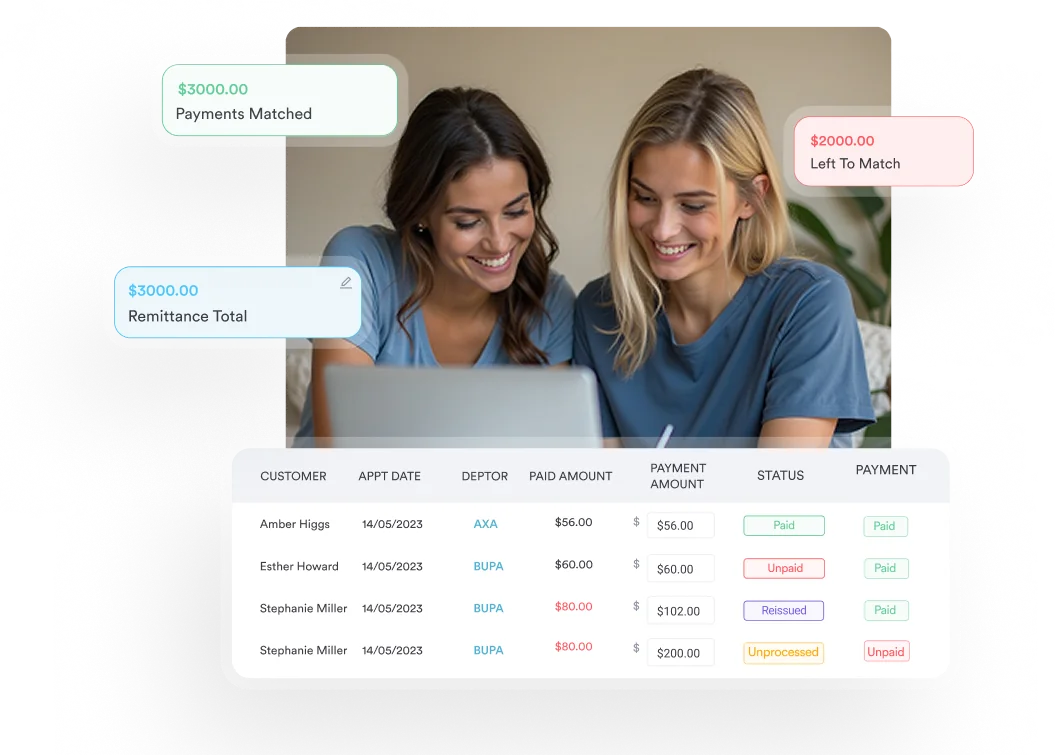

Pabau’s claims management software validates insurer details before you submit, tracks each claim through to payment, and records that payment against the invoice. So your team stops chasing claim status across portals.

If your practice bills J1631 regularly, the one control that pays for itself is a monthly reconciliation between administered doses and submitted units. Almost everything else on this page follows from getting that single number right.
Set it up as a standing check rather than a response to a denial. A 1-unit claim against a 100 mg note is cheap to fix in-house. It is expensive to explain to a payer two years later.
The trade-off is that tighter coding discipline costs staff time you may not have to spare. That is the argument for letting the software carry it. Book a demo to see how Pabau validates and tracks injection claims from the note to the payment.

Billing another injectable psychotropic? HCPCS code J0780 walks through the units, coverage rules, and denial traps for prochlorperazine injection.
Coding a thoracic disc degeneration claim? thoracic disc degeneration code explains the documentation that links imaging findings to the patient’s clinical presentation for a clean claim.
Coding a cervical dorsopathy diagnosis? cervical dorsopathy coding guide covers the choice coders face when a neck condition does not fit a specific ICD-10 category.
Coding vertebrogenic low back pain? vertebrogenic low back pain code explains why imaging showing structural endplate pathology calls for this code instead of an unspecified one.
Coding occipital neuralgia for a headache claim? occipital neuralgia diagnosis code gives the specific billable code so the diagnosis is not miscoded as a generic headache.
HCPCS Code J1631 is used to bill for the injection of haloperidol decanoate (Haldol Decanoate), a long-acting injectable antipsychotic, administered per 50 mg. It is reported on Medicare Part B claims when a provider administers the drug in an office or outpatient setting. The typical use is maintenance therapy for schizophrenia or schizoaffective disorder.
Bill 2 units of J1631 for a 100 mg dose. The billing unit is per 50 mg, so every 50 mg administered equals one unit. That makes 100 mg 2 units and 150 mg 3 units. Submitting 1 unit for a 100 mg dose is the most common J1631 billing error. It results in an underpayment or a documentation mismatch audit flag.
J1630 covers short-acting haloperidol injection up to 5 mg, used for acute situations such as agitation management. J1631 covers haloperidol decanoate, the long-acting depot formulation administered every 3 to 4 weeks for maintenance therapy in schizophrenia. They describe different drugs with different dosing intervals and billing units. Using the wrong code is a common audit trigger.
The most common ICD-10-CM codes paired with J1631 are F20.0 (paranoid schizophrenia) and F20.9 (schizophrenia, unspecified). The schizoaffective codes F25.0 (bipolar type) and F25.1 (depressive type) are also frequent. F29 (unspecified psychosis) is used when a specific diagnosis is not yet established, though this increases the likelihood of prior authorization requirements.
Medicare Part B generally does not require prior authorization for J1631 when the drug is provider-administered. Commercial payers frequently do require it for long-acting injectable antipsychotics, often mandating documented failure of oral antipsychotics first. Medicaid prior authorization requirements vary by state. Always verify with the specific payer before administering the drug to a new patient.
J1631 maps to NDC codes for Haldol Decanoate 50 (50 mg/mL) and Haldol Decanoate 100 (100 mg/mL), both 1 mL single-dose vials. Generic haloperidol decanoate products in the same two concentrations also map to J1631. Verify the current NDC against CMS crosswalk files before submitting, as NDC codes change when manufacturers update packaging.



