ICD-10 Code Y76.0: Diagnostic obstetric and gynecological devices
ICD-10 Code Y76.0: Definition and billable status ICD-10 Code Y76.0 is a valid, ...

Last Updated: Oct 23, 2026
Billable Code Specific Code
M45.0 is the billable ICD-10-CM code for ankylosing spondylitis of multiple sites in spine.
Most denied claims trace back to one recurring mistake. The coder selected M45.0 without confirming which spinal sites are affected, or used the non-billable parent code M45 instead of a subcode.
Let Pabau's smart automation suggest the right codes, reduce claim denials, and keep your practice compliant—effortlessly.
Automate repetitive tasks and focus on what matters most—your patients.
Reduce coding errors and ensure compliance with the latest regulations.
Clean claims, fewer denials, and faster reimbursements.
Powerful insights and reporting to help your practice thrive.
HIPAA compliant SOC 2 certified GDPR-compliant Trusted by 4,000+ clinics worldwide

ICD-10 code M45.0 is a billable FY2026 diagnosis code for ankylosing spondylitis of multiple sites in spine.
Documentation must specify multi-site spinal involvement, not a single vertebral region, to justify M45.0 over sibling subcodes M45.1 through M45.9.
Non-radiographic axial spondyloarthritis is coded under the M45.A family, such as M45.AB, not M45.0 or the older M46.80 guidance.
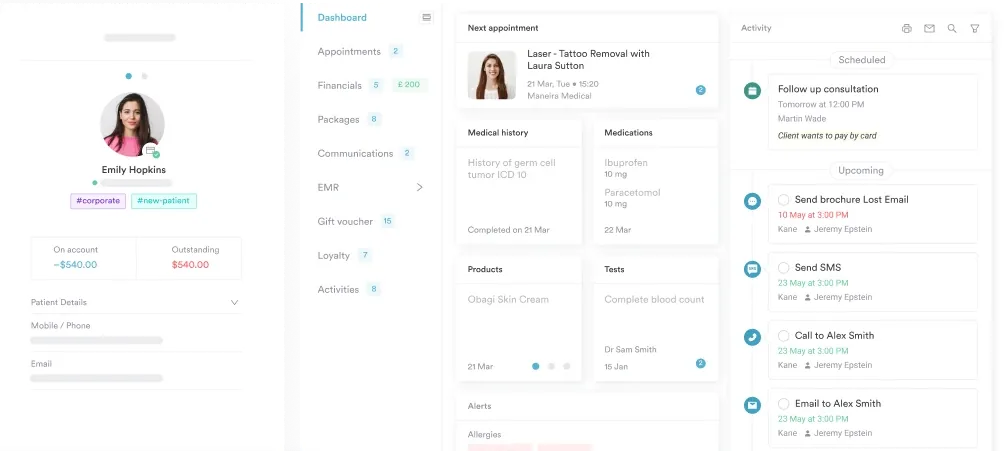
Practice management software like Pabau, with structured client records and digital forms, helps rheumatology practices capture the site-specific documentation M45.0 requires.
According to the CMS ICD-10-CM code set, the M45.0 diagnosis code is valid for FY2026. Its official long descriptor is Ankylosing spondylitis of multiple sites in spine. It belongs to category M45, within block M45-M49 (Spondylopathies), within chapter M00-M99 (Diseases of the Musculoskeletal System and Connective Tissue).
Some coders still search for a general ICD-10 ankylosing spondylitis entry rather than the specific multi-site subcode. Always confirm the full code before billing, since only a site-specific subcode satisfies ICD-10-CM billability rules.
M45.0 is one of ten site-specific subcodes within the M45 ankylosing spondylitis diagnosis code category. Each subcode maps to a distinct spinal region.
Selecting M45.0 requires documentation confirming involvement at more than one spinal region, not simply noting that the patient has ankylosing spondylitis (AS). Ankylosing spondylitis of the lumbar region uses M45.6, and ankylosing spondylitis of the lumbosacral region uses M45.7. M45.0 applies only when the physician documents at least two such regions together.
Coders who treat M45 and M45.0 as interchangeable generate a claim that fails ICD-10-CM billability standards, since M45 alone is a non-billable category-level code.
M45.9 (site unspecified) is technically billable but should be avoided when documentation allows specificity. Payers increasingly apply medical necessity criteria requiring site documentation. A claim submitted with M45.9 when the record clearly identifies multiple regions may be flagged for review.
Always verify the current year’s tabular list via the CDC/NCHS ICD-10-CM web tool before submitting.
Clinical notes rarely use the exact ICD-10 long descriptor. Physicians and clinical systems use several interchangeable terms for the same finding. These include a general spondyloarthropathy ICD-10 label, an ICD-10 code for spondyloarthritis, or an older spondyloarthritis ICD-10 entry. Understanding which alternate terms map to M45.0 helps coders locate the right code without ambiguity.
The following terms are recognised synonyms in the ICD-10-CM index:
An ICD-10 spondylitis entry without further detail is not specific enough to bill. A note that documents “axial spondyloarthritis” without specifying radiographic confirmation does not let the coder assign M45.0 automatically. The same applies to a note that uses an ICD-10 code for spondyloarthropathy generically. The radiographic versus non-radiographic distinction matters significantly here, and is addressed in the differential coding section below. Revenue cycle management reporting separates claims that were denied from claims nobody submitted. Patients who claim reimbursement themselves need an itemized receipt, which is what a superbill template sets out.
Sports injury clinics track these diagnoses alongside rehab plans in sports medicine software.
Denied claims for ICD-10 code M45.0 typically trace back to one of two documentation failures. Either the physician’s note does not specify which spinal regions are affected, or it lacks the clinical criteria supporting an AS diagnosis. Coders cannot infer multi-site involvement from a general AS diagnosis; the record must confirm it.
Maintaining structured client records that capture site-specific assessment findings reduces this risk substantially.
The following elements should appear in the clinical record to support M45.0:
Patients with early axial back pain often see a chiropractor or a physical therapy practice before a rheumatologist confirms AS. Practices running chiropractic practice software or physical therapy EMR software should flag inflammatory red flags early, so the referral happens before structural damage progresses.
Good EHR integration for clinical workflows makes it easier to standardise these documentation fields across encounters. When the chart captures imaging report summaries, symptom duration, and region-specific findings in structured fields, coding accuracy improves.
Audit your ankylosing spondylitis encounter notes for a single phrase: ‘multiple sites in spine.’ If the rheumatologist documents that phrase verbatim, M45.0 is strongly supported. If the note says ‘lumbar involvement only,’ M45.6 is the correct code. The documentation drives the subcode, not the diagnosis.
The M45 category generates a predictable set of coding mistakes. Three errors account for the majority of claim problems in rheumatology practices billing ankylosing spondylitis.
M45 is a non-billable category code. Submitting M45 without a subcode suffix results in a claim rejection. Always select from M45.0 through M45.9. Meeting medical office compliance requirements for documentation specificity applies here: the code must be as specific as the medical record supports.
Ankylosing spondylitis (M45.0) is an inflammatory seronegative spondyloarthropathy. Spondylosis (M47 series) is a degenerative condition. These are distinct diagnoses with different clinical presentations and different treatment pathways.
Coders sometimes encounter notes using the terms near each other, particularly in older patients with co-occurring conditions. When documentation is ambiguous, query the physician before selecting M45.0.
A physical exam finding such as the Waddell sign test can flag non-organic pain behavior that points away from an inflammatory diagnosis like AS. It does not replace imaging or lab criteria, but it helps a physician decide whether to pursue a rheumatology workup at all.
M45.9 (site unspecified) is a valid code but represents a documentation failure, not a preferred coding choice. If the physician’s note identifies specific spinal regions, the coder must use the site-specific subcode.
Practices searching for the ICD-10 code for ankylosing spondylitis unspecified, or an ICD-10 ankylosing spondylitis unspecified entry, land on M45.9. Defaulting to M45.9 when M45.0 or another site code is supported may trigger payer audits or medical necessity denials for biologics requiring site-specific justification.
Browse the full ICD-10-CM index for M45 subcodes through the AAPC Codify ICD-10-CM lookup to cross-check code descriptions and official coding notes.
Several ICD-10-CM codes overlap clinically with ankylosing spondylitis of multiple sites in spine. Coders working in rheumatology practices need to distinguish these carefully. The physician’s note may use terms like “spondyloarthritis,” “sacroiliitis,” an undifferentiated spondyloarthropathy ICD-10 label, or “axial SpA” without specifying whether radiographic criteria are met.
Inflammatory back pain ICD-10 codes (including M54.5x series) function as symptom-level codes. They must be replaced by M45.0 once a definitive AS diagnosis is documented. Submitting both M45.0 and M54.50 in the same encounter for the same presentation creates a redundancy that payers may flag.
Coders also see M06.4 and M35.9 turn up in rheumatology charts. Both describe inflammatory or connective-tissue involvement that must be ruled out before a coder confirms M45.0.
This distinction causes the most consequential coding errors, and it is the area where competing pages online are thinnest. Axial spondyloarthritis (axial SpA) encompasses two groups: radiographic axial SpA, which is ankylosing spondylitis, and non-radiographic axial SpA. They share clinical features, including HLA-B27 positivity, sacroiliac inflammation, and morning stiffness. They diverge on imaging.
Radiographic axial SpA meets the modified New York criteria: definitive sacroiliitis on plain X-ray (grade 2 bilateral or grade 3-4 unilateral). This is M45.0 territory when multiple spinal sites are involved. Non-radiographic axial SpA has sacroiliac inflammation visible only on MRI, without changes sufficient for plain X-ray grading.
Per ASAS (Assessment of SpondyloArthritis international Society) classification criteria, non-radiographic axial SpA does not map to M45.0. It codes under the M45.A family instead, detailed below.
M45.A0 is the ICD-10-CM code for non-radiographic axial spondyloarthritis of unspecified sites in spine. It has been in effect since October 2021 and remains current for FY2026. It sits in a separate M45.A family that mirrors the site structure of M45.0 through M45.9.
M45.AB covers non-radiographic axial spondyloarthritis of multiple sites in spine. It is the direct counterpart to M45.0 when imaging has not yet met the modified New York criteria. Coders select the site-specific M45.A subcode that matches the physician’s documented regions, the same rule that governs M45.0 through M45.9.
Older coding references still point to M46.80 for non-radiographic axial SpA. That guidance predates the M45.A family and no longer reflects the current ICD-10-CM structure.
When a rheumatologist’s note uses “axial SpA” without further qualification, query whether imaging meets modified New York criteria before assigning M45.0. Assigning M45.0 to a non-radiographic patient is an overcoding error that can affect prior-authorization approvals for biologics.
M45.0 commonly appears on claims alongside drug administration codes and prior-authorization requests for biologics. Understanding the treatment associations helps coders anticipate what supporting documentation payers may request.
NSAIDs are typically first-line for AS and do not usually require prior authorization. TNF inhibitors (adalimumab, etanercept, infliximab, certolizumab) and IL-17A inhibitors (secukinumab, ixekizumab) are biologics commonly approved for active AS when NSAID therapy has failed.
Payer prior-authorization requirements for these agents vary considerably. Most require documentation of confirmed AS diagnosis, evidence of inadequate NSAID response, and a record of disease activity scores. M45.0 on the claim supports the diagnosis component, but the authorization packet must also include clinical documentation.
Effective claims management software can help practices track prior-authorization status alongside encounter-level coding to reduce delays.
DMARDs such as sulfasalazine are sometimes used for peripheral joint involvement. Evidence for their efficacy in pure axial AS is more limited per rheumatology guidelines. Coders should not infer axial versus peripheral involvement from the drug class alone; that determination requires physician documentation.
Flag encounters where a biologic J-code appears alongside M45.0 for a prior-authorization review before submission. Payers frequently require step-therapy documentation showing NSAID failure. A missing step-therapy note is the most common reason biologic claims linked to M45.0 are initially denied.
Rheumatology practices often lose the M45.0 versus M45.A distinction somewhere between the exam room and the claim. The physician’s note may specify the spinal regions and imaging findings. That detail disappears if the chart does not capture it in a structured field.
Practice management software like Pabau gives rheumatology practices structured client records. These prompt for site-specific findings, imaging results, and symptom chronology at the point of care. Digital intake forms can require this detail before the encounter closes. That way, the documentation supporting M45.0 or the correct M45.A subcode is already in the chart when the claim goes out.
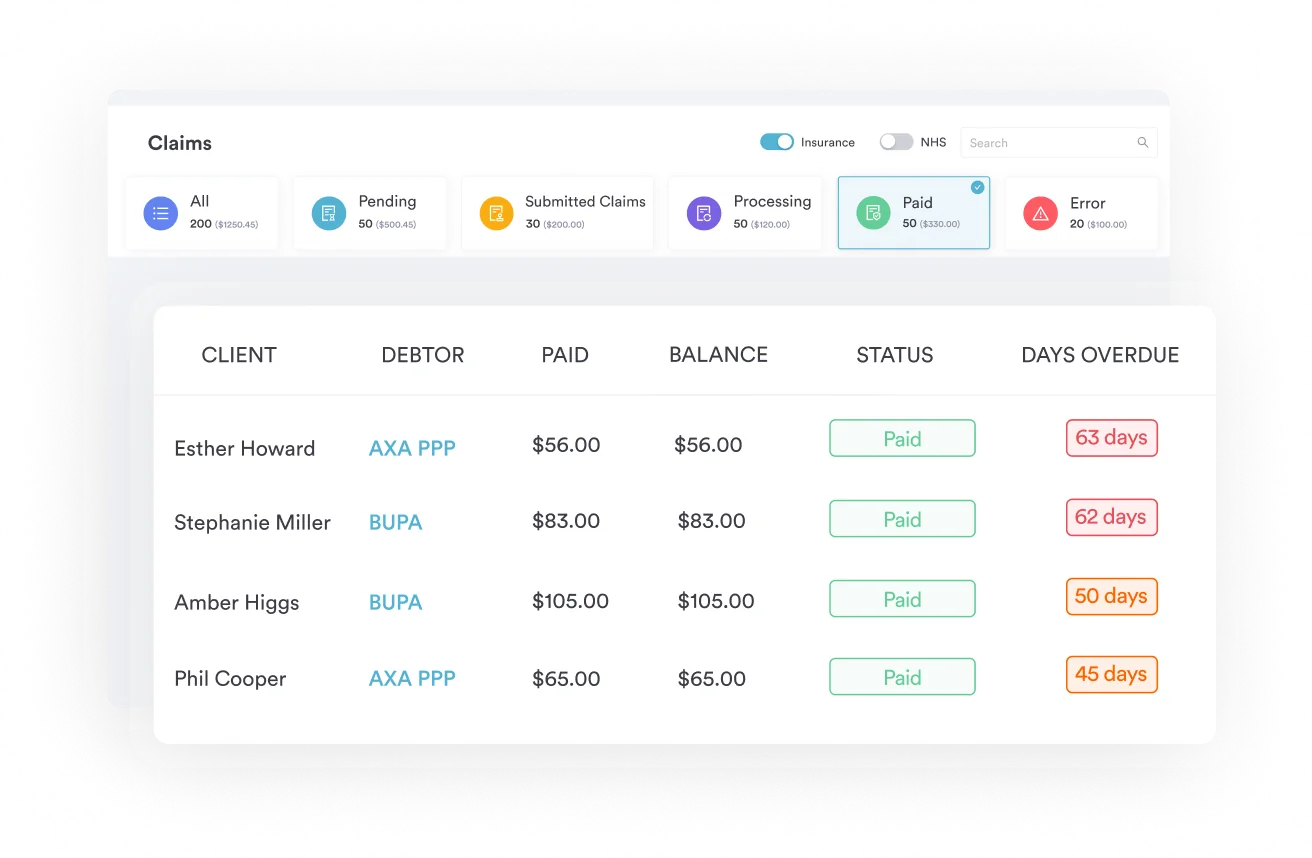
Pabau’s claims management tools track prior-authorization status alongside the encounter, so a missing step-therapy note surfaces before submission instead of after a denial.

Pabau helps rheumatology practices capture site-specific documentation, manage structured records, and streamline ICD-10 code selection across every encounter. See how it works in a live demo.

Coding ankylosing spondylitis accurately starts with one question: does the record confirm multiple spinal sites? If it does, and imaging shows radiographic AS, M45.0 is correct.
If the note says “axial SpA” without radiographic confirmation, the correct code sits in the M45.A family instead, not M45.0 and not the outdated M46.80. Getting this distinction right protects the claim from denial and keeps prior-authorization packages for biologics moving.
Book a demo to see how Pabau supports the site-specific documentation rheumatology practices need for accurate ICD-10 coding.

Need the code for bone density loss found during a workup? M85.9 covers disorders of bone density and structure when no more specific diagnosis is documented.
Billing for hip osteoarthritis following an old injury? M16.4 applies to bilateral post-traumatic osteoarthritis of the hip.
Coding a knee diagnosis tied to a past trauma? M17.2 covers bilateral post-traumatic osteoarthritis of the knee.
ICD-10 Code M45.0 is a billable ICD-10-CM diagnosis code for ankylosing spondylitis of multiple sites in spine, valid for FY2026. It belongs to category M45 (Ankylosing spondylitis) within the musculoskeletal chapter (M00-M99). Rheumatologists, orthopedic surgeons, and coders use it to document radiographically confirmed AS with involvement across more than one vertebral region.
Yes. M45.0 is a fully billable ICD-10-CM diagnosis code valid for FY2026. Unlike the parent code M45, which is a non-billable category header, M45.0 carries a specific site descriptor: multiple sites in spine. That descriptor satisfies ICD-10-CM billability requirements. Confirm validity annually using the CDC/NCHS ICD-10-CM tool at the start of each fiscal year.
M45.0 applies when ankylosing spondylitis involves multiple spinal regions simultaneously. Subcodes M45.1 through M45.8 each map to a single, specific vertebral region (such as M45.2 for the cervical region or M45.6 for the lumbar region). M45.9 indicates site unspecified and should only be used when documentation does not identify any region. Select the subcode that matches the sites documented by the treating physician.
The clinical record must confirm a definitive AS diagnosis, not merely inflammatory back pain. It also needs at least two distinct spinal regions and imaging findings supporting radiographic AS, typically sacroiliitis on X-ray meeting modified New York criteria. HLA-B27 status and symptom chronology support the clinical diagnosis but are not standalone coding criteria.
The ICD-10-CM code for sacroiliitis not elsewhere classified is M46.1. Use M46.1 when the physician documents sacroiliac joint inflammation but has not yet established a diagnosis of ankylosing spondylitis. Once AS is confirmed with radiographic criteria and multi-site involvement documented, transition to M45.0 for subsequent encounters.
M45.0 applies specifically to radiographic ankylosing spondylitis (sacroiliitis confirmed on plain X-ray per modified New York criteria). Non-radiographic axial spondyloarthritis, which shows only MRI-evident sacroiliac inflammation without X-ray changes, does not meet the clinical threshold for M45.0. It codes under the M45.A family instead, specifically M45.AB when multiple spinal sites are involved.
Common CPT pairings with M45.0 include office visit E/M codes, 99213 through 99215 for established patients. Drug administration codes apply when biologics are infused, such as 96413 for biologic infusion. Lab codes for HLA-B27 testing (86812) and inflammatory markers also appear often. Imaging CPT codes for sacroiliac joint X-ray (72202) or MRI pelvis (72197) frequently appear in the same claim set.
There are three common errors. First, submitting the non-billable parent code M45 without a subcode suffix. Second, assigning M45.0 when documentation supports only one spinal region, where a site-specific subcode like M45.6 would be correct. Third, using M45.0 for non-radiographic axial spondyloarthritis, which needs an M45.A subcode instead.
M45.9 covers ankylosing spondylitis when the physician’s note does not identify a specific spinal region. Coders should use M45.9 only as a last resort. Payers may flag it when the record actually supports a site-specific subcode like M45.0.