

HCPCS code E0198: Water pressure pad billing guide
HCPCS code E0198 is a water pad for a standard mattress HCPCS code E0198 is the ...

Last Updated: Oct 13, 2026
J1450 is the HCPCS Level II code for injection fluconazole, 200 mg.
Those are the NDC your payer expects, the waste modifier on the claim, and units that match the 200 mg descriptor. An EMR for IV therapy captures most of that at the point of care, though the billing rules still deserve a close read.
Let Pabau's smart automation suggest the right codes, reduce claim denials, and keep your practice compliant—effortlessly.
Automate repetitive tasks and focus on what matters most—your patients.
Reduce coding errors and ensure compliance with the latest regulations.
Clean claims, fewer denials, and faster reimbursements.
Powerful insights and reporting to help your practice thrive.
HIPAA compliant SOC 2 certified GDPR-compliant Trusted by 4,000+ clinics worldwide

HCPCS Code J1450 describes injection fluconazole, 200 mg, an IV antifungal billed under HCPCS Level II J-codes for physician-administered drugs.
NDC reporting is not a blanket Medicare Part B rule. Report the NDC on Medicaid and dual-eligible crossover claims, and wherever your MAC’s policy asks for it.
Medicare reimburses J1450 at ASP+6% in non-facility settings. Rates update quarterly, so verify the current figure in the CMS ASP Drug Pricing File before billing.
Every J1450 claim needs a waste modifier. Report JW for a discarded amount, or JZ to attest that none was discarded. JA and JB do not apply to this code.
Pabau’s claims management software streamlines HCPCS J-code billing by linking NDC codes to drug charges and supporting structured documentation for IV-administered drugs.
HCPCS Code J1450 is the Level II Healthcare Common Procedure Coding System code for injection of fluconazole at 200 mg per billing unit. It sits in the J-code category maintained by CMS, the Centers for Medicare and Medicaid Services.
That category covers drugs given by injection or infusion that are not classified under CPT. The code applies when fluconazole is delivered intravenously in a physician office, outpatient hospital department, or outpatient infusion center.
J1450 covers fluconazole, a triazole antifungal given by intravenous infusion. Fluconazole works by inhibiting lanosterol 14-alpha-demethylase, the enzyme fungi need to build their cell membranes.
The IV formulation is indicated for serious fungal infections where oral treatment is not appropriate. Those include candidemia, invasive candidiasis, oropharyngeal candidiasis, and cryptococcal meningitis. It is also used for antifungal prophylaxis in immunocompromised patients.
Commercially, IV fluconazole is sold under the brand name Diflucan IV. Generic versions from multiple manufacturers carry the same J1450 code. Practices getting ready to open an IV practice that administers antifungals should note that J1450 covers only the drug.
The infusion service is billed separately with CPT codes 96365 to 96368. Which code applies depends on the duration, and on whether fluconazole runs as the primary or a secondary infusion.
Medicare covers J1450 under Part B as a separately payable physician-administered drug. Coverage requires established medical necessity and a covered outpatient setting.
It is also subject to local coverage determinations (LCDs) issued by Medicare Administrative Contractors (MACs), which vary by jurisdiction. Always verify the applicable LCD for the patient’s MAC region before billing.
J1450 follows the buy-and-bill model. The practice purchases the drug, administers it, and then bills Medicare for both the drug and the administration service.
The administration code is CPT 96365 or 96366, depending on infusion time. The CMS fee schedule tool gives current payment rates by HCPCS code, MAC jurisdiction, and setting.
Medicare reimburses J1450 based on the Average Sales Price (ASP) methodology. The standard rate for physician office (non-facility) settings is ASP+6%.
Hospital outpatient rates follow the Outpatient Prospective Payment System (OPPS) and may differ. CMS updates ASP rates quarterly, so any dollar figure you find published may already be out of date.
Billing tip: For the current quarterly ASP rate, download the CMS ASP Drug Pricing File from the CMS website and filter for J1450. Third-party rate lookups often carry an outdated figure.
Whether a J1450 claim needs an NDC (National Drug Code) depends on the payer. Medicaid claims require one, and so do Medicare Part B claims that cross over to Medicaid for a dual-eligible patient. Some MACs ask for it under their own policy as well. Check the requirement before you build the claim, because it is not uniform across Part B. Electronic remittance files post payments automatically, and the adjustment codes explain what was reduced and why.
Where the NDC is required, the claim carries three pieces of data. Those are the 11-digit NDC of the product administered, the unit of measure, and the NDC quantity. The unit of measure is ML for IV bags and UN for vials. Omitting any one of the three causes the claim to fail front-end edits before it reaches the payer.
Multiple manufacturers produce IV fluconazole products that crosswalk to J1450. The NDC varies by manufacturer, package size, and concentration. The formats below are representative, so always verify the NDC printed on the vial or bag before billing.
Use the AAPC HCPCS reference to confirm which NDC codes are currently active for J1450, along with coverage notes and payer-specific restrictions. The FDA NDC Directory is the primary source for checking that a specific NDC is valid and active.
Every Medicare Part B claim for J1450 needs either the JW modifier or the JZ modifier. Fluconazole injection is supplied in single-dose containers, and CMS lists J1450 on its official discarded drug policy list.
JW reports an amount that was discarded. JZ attests that nothing was discarded. One of the two belongs on the claim every time.
JA and JB do not apply to J1450, and appending them is a common coding error. That pair exists only for drugs billed under a single code across two administration routes. An infused product that can also be given subcutaneously is the classic example.
Fluconazole injection is labeled for intravenous use only, so there is no second route to distinguish. The staff who administer IV therapy should still record the route, because it supports the infusion CPT code billed alongside J1450.
GY, KX, and 59 apply far less often and depend on payer policy. Check the current MAC LCD to see whether KX is required for specific indications in your jurisdiction. Modifier rules can differ between MACs, so confirm jurisdiction-specific policy before billing.
When nothing is discarded, the claim carries a single J1450 line with the units administered and the JZ modifier. When part of a container is discarded, the claim carries two lines instead.
The first line reports the units administered with no waste modifier. The second line repeats J1450 with the JW modifier and the discarded units. Both lines share the same date of service.
The 200 mg billing unit is where most J1450 waste claims go wrong. CMS does not pay fractional billing units, so a partial unit can never be reported as waste.
Say a 200 mg/100 mL container is opened and less than 200 mg reaches the patient. Bill the full unit with JZ rather than splitting the line with JW. JW earns its place only when a whole 200 mg unit is discarded. In practice that means a 400 mg/200 mL container was opened for a 200 mg dose.
Document the discarded amount in the patient’s medical record at the time of administration. CMS expects the record to support the units reported on the JW line. That documentation is the first thing an auditor asks for. Since October 1, 2023, MACs may return J1450 claims as unprocessable when neither modifier appears.
Clean J1450 claims share a consistent pattern. The units, the NDC, and the waste modifier all match the encounter, and the record establishes medical necessity.
IV therapy intake documentation should capture the drug, dose, route, indication, and administering provider at the point of care, not as a retrospective entry. Consistent medical billing workflows reduce the risk of front-end rejections and post-payment audits.
Audit your J1450 claims from the past 90 days for NDC completeness. Run a report filtered by J1450. Look for claims where the NDC field is blank, or where the unit of measure reads UN instead of ML. Both are common data-entry errors that cause claim rejections and can be fixed upstream with a billing workflow checkpoint.
The place of service (POS) code on a J1450 claim directly affects the Medicare reimbursement rate. Non-facility rates are higher and apply to physician offices and independent infusion centers. Facility rates are lower and apply when the service is rendered in a hospital outpatient department.
Licensing rules for IV practices vary by state, as Arizona’s requirements show, but POS assignment follows CMS billing rules regardless of location. Mobile IV therapy operations typically use POS 12 for the home or POS 11 for the office, depending on where the infusion occurs.
Most J1450 denials trace back to a short list of repeat mistakes. Each one is a workflow problem rather than a coding judgment call, so each one is preventable upstream. The table below pairs the error with the fix that stops it recurring.
J1450 covers the drug only. A complete fluconazole infusion claim also carries a CPT administration code. Which code applies depends on the infusion duration, and on whether fluconazole runs as the primary or a secondary drug.
The NDC discipline and the waste-modifier rules on this page are not specific to fluconazole. They carry across the J-code family, so the same claim build works for works for J1250 and J1441. Check each code’s own descriptor first, because the billing unit is what changes.
Most denials on injectable drugs are preventable at the moment of administration. Practice management software like Pabau connects the clinical encounter to the claim through its claims management software.
Drug charges link to NDC codes, modifier defaults are set per drug type, and incomplete billing fields are flagged before submission.
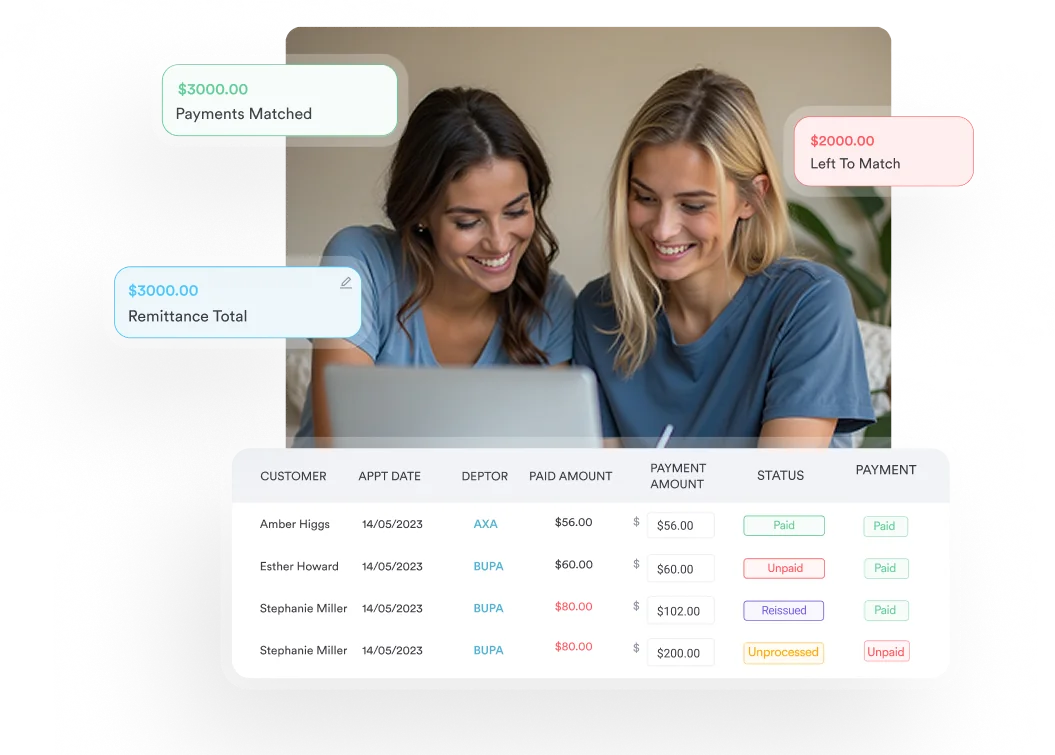
The IV therapy EMR built into Pabau handles the documentation layer too. Drug name, dose, route, lot number, and administering clinician are captured in the clinical record and flow straight into billing. That matters for J1450, because the NDC and unit data on the claim have to match the chart if an audit lands.
The same claim build applies wherever the infusion happens. Functional medicine practices that run IV programs bill the drug and the administration service separately, exactly as a dedicated infusion center does.
Running Pabau as your practice management platform also removes the manual re-entry between clinical notes and claims, which is where coding errors creep in. Automated workflows can trigger a billing review after each IV administration encounter.
Digital intake forms capture allergy and medical history data, which supports the medical necessity documentation behind an antifungal claim.

Pabau links drug charges to NDC codes, captures administration details at the clinical encounter, and routes claims with the correct modifiers. See how it works for IV therapy and infusion practices.

HCPCS Code J1450 has a simple descriptor but generates a disproportionate share of preventable denials. The causes are incomplete NDC data, unit miscalculation, and a missing waste modifier. Getting all three right on every claim takes a workflow that captures billing data at the point of care.
Pabau ties IV drug administration to the claim with NDC linking, modifier defaults, and documentation templates built for infusion practices. Book a demo to see how J-code billing runs end to end.

Billing another injectable under Medicare Part B? HCPCS Code J1460 walks through gamma globulin claims, from units to documentation.
Need the rules for a low molecular weight heparin? HCPCS Code J1655 covers tinzaparin billing, including units and payer requirements.
Coding a vague joint disorder note? Unspecified joint disorder code explains when M25.9 applies and why payers watch for that vagueness.
HCPCS Code J1450 is used to bill for an intravenous injection of fluconazole at 200 mg per unit. It is a Medicare Part B separately payable drug code. Physician offices, outpatient hospital departments, and independent infusion centers all bill it. Typical indications include candidiasis and cryptococcal meningitis.
J1450 covers fluconazole, an azole antifungal administered intravenously. The code descriptor is “Injection, fluconazole, 200 mg.” Both brand-name Diflucan IV and generic fluconazole IV products crosswalk to J1450, provided the specific NDC code is reported where the payer requires it.
Not on every claim. NDC reporting is required on Medicaid claims, and on Medicare Part B claims that cross over to Medicaid for a dual-eligible patient. Some MACs also ask for it under their own policy. Where it applies, report the 11-digit NDC, the NDC unit of measure, and the NDC quantity. The unit of measure is typically ML for IV bags. Check the payer’s requirement before you submit, because it is not uniform across Part B.
Every J1450 claim needs either JW or JZ, because fluconazole injection comes in single-dose containers. JW reports a discarded amount on a second claim line. JZ attests that nothing was discarded, and it has been required since July 1, 2023. JA and JB do not apply, since fluconazole injection has no subcutaneous route. KX may be required by certain MACs to confirm that LCD criteria are met, and GY applies to a non-covered indication.
Bill 2 units. The J1450 descriptor covers 200 mg per unit. A 400 mg dose equals 400 / 200 = 2 billable units. Billing 1 unit for a 400 mg dose leaves money on the table. A quantity that does not match the dose administered is also a documentation compliance risk.
J1450 is the specific, correct HCPCS code for fluconazole injection at 200 mg. J3490 is the unclassified drug code and should not be used when a specific J-code exists. Billing J3490 for fluconazole when J1450 applies will likely result in a denial or request for additional documentation, since payers expect the specific code.



