HCPCS code E0198: Water pressure pad billing guide
HCPCS code E0198 is a water pad for a standard mattress HCPCS code E0198 is the ...

Last Updated: Oct 13, 2026
H0044 is the HCPCS Level II code for supported housing, per month.
The per-month unit is what trips billers up. One claim line covers the whole month, however many contacts your team logged. Rates are set state by state, and most plans want a prior authorization on file before the first month of service.
Let Pabau's smart automation suggest the right codes, reduce claim denials, and keep your practice compliant—effortlessly.
Automate repetitive tasks and focus on what matters most—your patients.
Reduce coding errors and ensure compliance with the latest regulations.
Clean claims, fewer denials, and faster reimbursements.
Powerful insights and reporting to help your practice thrive.
HIPAA compliant SOC 2 certified GDPR-compliant Trusted by 4,000+ clinics worldwide

HCPCS Code H0044 covers supported housing services, billed once per calendar month rather than per visit.
Medicaid and its contracted managed care plans are the payers, and each state sets its own rate.
Traditional Medicare does not cover H0044, and commercial plans rarely recognize it.
Missing prior authorization and mismatched modifiers cause most H0044 denials.
A monthly progress note dated inside the billing period is the first thing a Medicaid auditor looks for.
HCPCS Code H0044 is a HCPCS Level II code maintained by the Centers for Medicare and Medicaid Services (CMS). Its official descriptor is “Supported housing, per month.”
The code sits in the H-code range of HCPCS Level II. That range covers behavioral health, substance use, and mental health services that CPT codes do not capture. The billing unit is one month of supported housing services, submitted once per calendar month per eligible client.
H0044 covers the bundle of services that help people with behavioral health needs find, secure, and keep stable housing. These are not residential treatment services. The code pays for community-based support delivered alongside a housing placement, not inside one.
Community health workers, social workers, and care coordinators are the people who usually deliver these services inside Medicaid-funded programs. Teams running care management workflows across a large caseload tend to bill H0044 in monthly batches.
In California, the code is named in the Department of Health Care Services (DHCS) Enhanced Care Management and Community Supports coding framework.
Provider eligibility varies by state Medicaid program. Most states that cover the code recognize the provider types below, subject to enrollment and credentialing with the relevant Medicaid managed care organization (MCO):
Confirm your enrollment status with the MCO before you bill. State provider qualification rules differ from the general guidance above. A behavioral health practice billing across state lines will meet more than one rule set.
Traditional Medicare does not typically cover H0044. H-codes fall outside standard Medicare Part B coverage, and supported housing is not a Medicare benefit. Some Medicare Advantage plans carry limited housing-related supplemental benefits, so check each plan rather than assuming.
Medicaid is the primary payer. Coverage, rates, and program structures vary by state. The table below summarizes the payer landscape:
There is no national Medicare fee schedule rate for H0044, because traditional Medicare does not cover the service. State Medicaid programs and their contracted MCOs set the rates, so what you are paid can differ sharply from one state to the next.
Four factors move the number on your remittance:
Verify the applicable rate with your state Medicaid program or MCO billing manual before you submit. Published national code data will confirm that H0044 is active and payable, but it will never tell you what your plan pays.
Request a copy of your MCO’s H0044 fee schedule addendum at contract renewal. Rates in the same state can vary widely between MCOs. The addendum often lists prior authorization thresholds and unit limits that the general billing manual leaves out.
Modifier use varies by payer and state, and incorrect modifiers are a leading denial cause. Confirm what your MCO or Medicaid program requires before you apply any of them. The table below lists the modifiers most commonly reported with this code:
Not every payer accepts all of these. Check modifier requirements against your payer’s billing manual first. The AAPC HCPCS code lookup is a reasonable starting reference for modifier compatibility.
Medicaid audits of supported housing claims focus on documentation completeness. Vague or missing records are the fastest route to a retroactive denial or a recoupment demand. Set up the documentation routine before services start, not at month’s end.
Capturing the required fields at the point of service beats reconstructing them later. That is why many teams move to digital documentation forms. Here is what payers expect to see behind an H0044 claim:
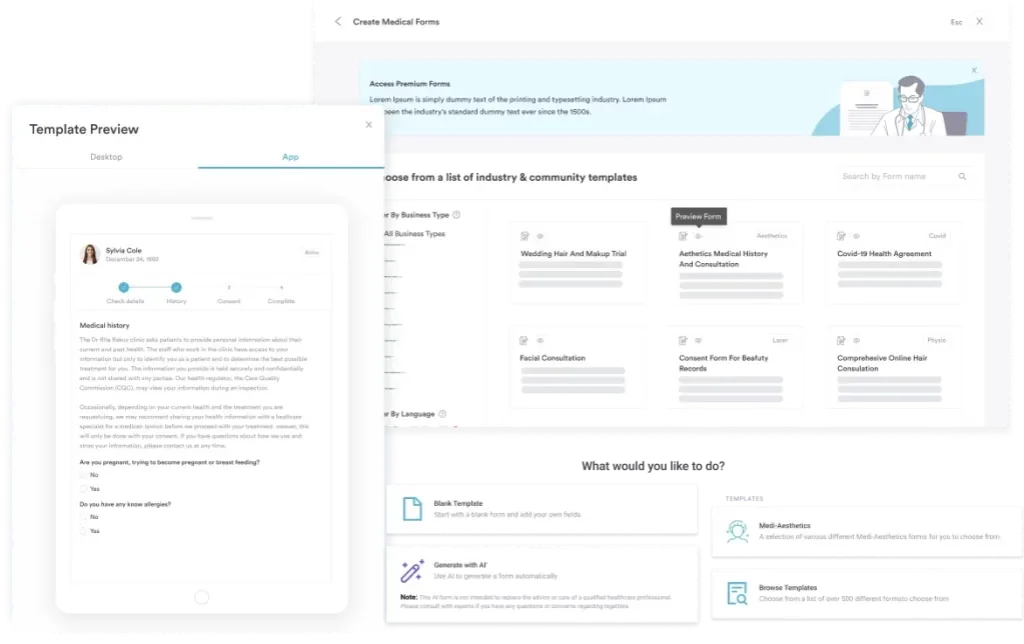
Payer rules often extend that baseline. Some MCOs want contact logs showing the number of contacts per month, supervisor signatures on notes, or a named assessment tool. Confirm the details in your plan’s billing manual.
Retention matters as much as completeness. Keep records for the period your state Medicaid program requires, which is typically a minimum of six years.
The difference is the billing unit. H0043 bills per diem, meaning per day, while H0044 bills per month. The clinical service behind both codes is the same kind of community-based housing support for people with behavioral health needs.
Use whichever code your payer specifies. Billing H0044 where the payer wants H0043 will bounce the claim regardless of how good the documentation is. Your MCO contract or state Medicaid fee schedule will say which code your program uses.
H0044 is often billed alongside, or cross-referenced with, a small set of related codes. Knowing what each one actually describes stops you reaching for the wrong one when a payer pushes back:
Check that billing H0044 alongside another code does not trigger an unbundling edit with your payer. Some MCOs restrict specific code combinations inside the same month.
California publishes the clearest guidance on this code. Its DHCS coding guidance covers Enhanced Care Management (ECM) and Community Supports. That guidance names H0044 for community-based supported housing delivered on a monthly basis.
In that framework, supported housing sits inside the Community Supports benefit. Community Supports is a set of managed care-funded services aimed at the social conditions that drive health outcomes. Providers working under it follow DHCS coding guidance plus their own MCO’s billing rules.
Tracking monthly billing cycles and documentation deadlines for a full ECM caseload is where claims quietly go missing.
Other states run similar programs under different names and billing structures. Some cover housing support through 1915(c) waiver programs with their own code sets. If you bill outside California, confirm H0044 acceptance with your MCO or state Medicaid agency before you build a workflow around it.
Supported housing claims are denied more often than the behavioral health average. Four patterns account for most of those rejections:
Every one of these is caught by a pre-submission check rather than an appeal. The teams with the lowest H0044 denial rates run that check as a fixed step in the monthly close. Waiting for a remittance to prompt it is already too late.
Audit your H0044 claims before you submit them. Check each one for an authorization number, a progress note dated inside the billing period, and a modifier matching the provider’s credential level. Five minutes per claim beats months of appeals.
In most community health teams, the H0044 evidence lives in three places at once. Service plans sit in one system, progress notes in another, and authorization numbers in a spreadsheet a coordinator keeps. At month end, someone stitches them together and hopes nothing is missing.
Practice management software like Pabau keeps all of it against one client record. The service plan, the monthly note, the consent, and the authorization number sit in the same place your biller works from. Pabau’s claims management software then pulls the HCPCS code, modifier, and authorization straight onto the claim.
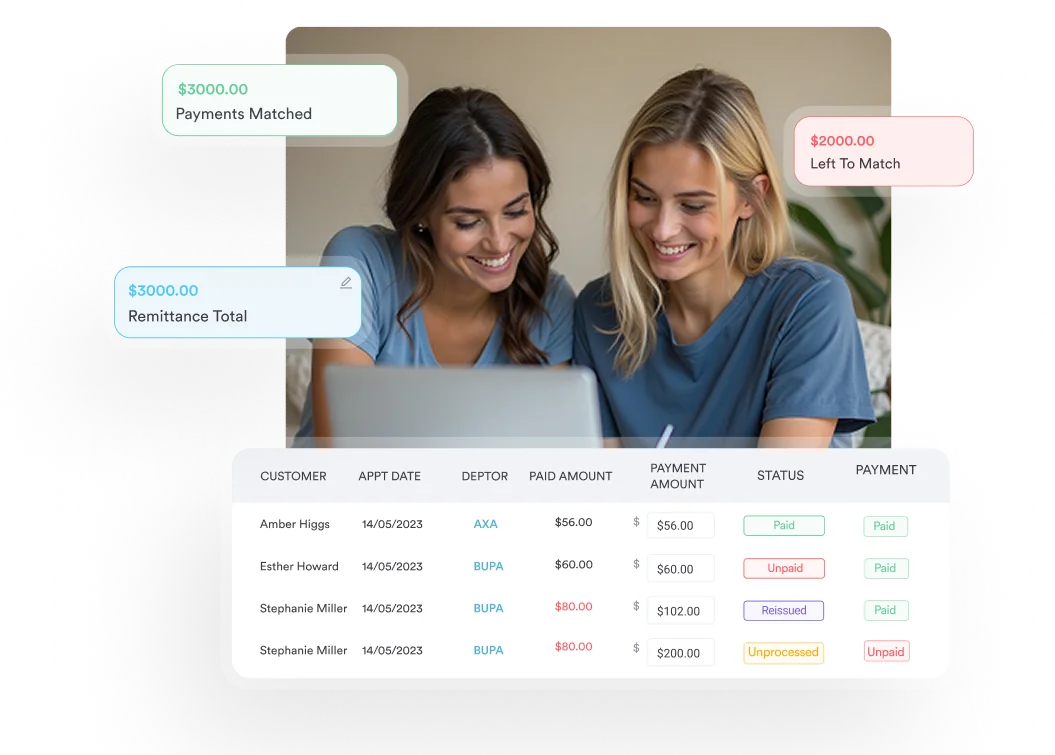
The outcome is a shorter month-end close and fewer claims held back for missing paperwork. Teams comparing behavioral health software usually find that documentation and billing living apart is what slows revenue cycle management down.

Pabau keeps service plans, monthly progress notes, and authorization numbers on one client record, then feeds them straight into the claim. Your team closes the month faster and sends cleaner H0044 claims.

Almost nothing about H0044 goes wrong at the coding stage. The descriptor is unambiguous and the code has been active for years. What goes wrong is everything wrapped around it: the authorization nobody renewed, the note written in generalities, the modifier that outran the provider’s credential.
So treat H0044 as a monthly process rather than a code. Pin down your MCO’s authorization rules and rate before the first claim, then run the same three-item check every month. Practices that do this stop appealing claims and start collecting on them.
The trade-off worth remembering is that the per-month unit rewards consistency far more than volume. One well-documented monthly claim beats a dozen contacts nobody wrote down. Book a demo to see how Pabau keeps that monthly evidence in one place.

Billing another behavioral health H-code? H0003 carries its own documentation and payer rules for laboratory alcohol and drug testing.
Coding a different psychotic disorder? ICD-10 code F21 covers schizotypal disorder, including its documentation requirements and related billing codes.
Documenting a delusional disorder instead? ICD-10 code F22 covers delusional disorders involving non-bizarre delusions lasting a month or longer.
Coding a brief psychotic episode? ICD-10 code F23 covers brief psychotic disorder, a sudden episode with a full return to prior functioning.
Documenting a schizoaffective disorder diagnosis? Schizoaffective disorder, bipolar type explains when F25.0 is the correct code instead of schizophrenia or bipolar codes.
HCPCS Code H0044 is a Level II code that describes “Supported housing, per month.” It bills Medicaid and contracted managed care organizations for community-based housing support delivered to people with behavioral health needs. The unit is one calendar month, not one visit.
Traditional Medicare (Parts A and B) does not typically cover H0044, because H-codes fall outside the standard Medicare Part B fee schedule. Some Medicare Advantage plans include supplemental housing benefits, but that is not standard. Verify coverage with each individual plan before billing.
There is no single national reimbursement rate for H0044. Individual state Medicaid programs and MCOs set the rates, so the amount varies by state and by payer contract. Check your state Medicaid fee schedule or MCO billing manual for the applicable 2026 rate.
H0043 bills supported housing per diem, meaning per day, while H0044 bills per month. The underlying service is the same kind of community-based housing support for behavioral health populations. Use the code your payer or program requires, since the wrong unit will bounce the claim.
You typically need an individualized service plan, a housing needs assessment, and monthly progress notes dated within the billing period. Payers also want prior authorization documentation where required, plus evidence of provider credential eligibility. Payers may also ask for contact logs, supervisor signatures, or a named assessment tool. Check your MCO billing manual.
Yes. California DHCS names H0044 as the supported housing billing code within its Enhanced Care Management (ECM) and Community Supports program. Other states run similar Medicaid-funded housing support programs, though some designate different codes. Confirm the designated code with your state’s program guidance.