CPT code 93503: Swan-Ganz catheter billing and modifiers
CPT code 93503: Official descriptor and procedure overview In the AMA CPT code s...

Last Updated: Oct 23, 2026
H0045 is the HCPCS Level II code for respite care services, not in the home, per diem.
HCPCS code H0045 sits in the HCPCS Level II code set maintained by the Centers for Medicare and Medicaid Services (CMS). Its official descriptor reads: Respite care services, not in the home, per diem. The code covers temporary relief for caregivers of people with behavioral health or developmental needs. That relief is delivered away from the patient's home, in a group home, residential facility, or adult day program.
The per diem unit means one unit equals one full day of service, whatever the hour count inside that day. Providers submit one unit per calendar day of respite delivered outside the home. H0045 sits in the H0000-H2037 behavioral health services range of HCPCS Level II.
Let Pabau's smart automation suggest the right codes, reduce claim denials, and keep your practice compliant—effortlessly.
Automate repetitive tasks and focus on what matters most—your patients.
Reduce coding errors and ensure compliance with the latest regulations.
Clean claims, fewer denials, and faster reimbursements.
Powerful insights and reporting to help your practice thrive.
HIPAA compliant SOC 2 certified GDPR-compliant Trusted by 4,000+ clinics worldwide

HCPCS code H0045 covers respite care delivered outside the patient’s home, billed as one unit per calendar day.
Medicaid is the primary payer for H0045. Medicare does not cover it as a standalone benefit, and commercial coverage is rare.
Never report H0045 when skilled nursing care runs during the same service period. The code pays for caregiver relief, not clinical treatment.
Most state Medicaid programs require prior authorization before the respite day is delivered, and there is no appeal path without it.
Practice management software like Pabau keeps the plan of care, the authorization record, and the service log in one patient file.
H0045 covers temporary out-of-home respite that gives a primary caregiver a break. The recipient is someone with behavioral health, developmental, or intellectual disability needs. The code applies only when that relief happens in a structured setting away from the patient’s residence. Clear care coordination documentation is what proves the service met that definition.
Provider settings that typically qualify under H0045 include:
A day program only bills H0045 when the purpose is caregiver relief. When the same setting delivers skills training under a Medicaid waiver, day habilitation code T2020 is the per diem to use.
The service period is one calendar day. The code does not distinguish between a daytime stay and an overnight stay inside that day. Providers billing consecutive days submit one unit per day.
Document the caregiver relief rationale, not only the recipient’s diagnosis. Payers check whether the day was needed to prevent caregiver burnout, rather than to deliver clinical treatment to the recipient.
Structured relief programs matter clinically. That context is what supports the medical necessity statement on an H0045 claim.
Reimbursement for H0045 is set entirely at the state Medicaid level. There is no national Medicare rate, because Medicare does not routinely cover the code. Per diem rates vary by state, by Medicaid managed care organization (MCO) contract, and by fiscal year update cycle.
The figures below reflect published state Medicaid fee schedule benchmarks. Always check your state’s current Medicaid billing manual before you submit a claim. The AAPC HCPCS code lookup and state Medicaid portals carry the most current rates.
Important: These are benchmark ranges drawn from published Medicaid fee schedule data, and they move with annual state budget cycles. Commercial coverage for H0045 is rare, since most private insurers leave out-of-home respite out of their standard benefit structures.
Get a coverage verification before you render the service. That matters most under MCO contracts, which may negotiate rates separately from the state plan. You can cross-reference current code status with the PGM Billing HCPCS lookup tool.
Medicare does not cover H0045 as a standalone respite benefit outside of hospice. Traditional Medicare does pay for hospice respite under Part A, but that benefit uses different coding and billing rules. Submit H0045 to Medicare fee-for-service and you will usually get a non-covered service denial.
Check Medicare coverage status each year in the CMS HCPCS files, since coverage determinations change. Practices running a mental health EMR should flag H0045 as Medicaid-primary in the billing workflow configuration.
The best medical practice management tools let you standardize how unlisted and miscellaneous codes get documented.
Modifiers tell the payer about the nature of the service, the provider’s qualifications, or the setting. For H0045 the common ones fall into two groups. National behavioral health modifiers come first, then state-specific U-modifiers.
States do not all want the same modifier stack, so confirm yours in the Medicaid billing manual or with the relevant MCO. The NLM Clinical Table HCPCS API gives programmatic access to current modifier data for verification.
Note on U-modifiers: The U1-U9 range is state-defined. A U2 modifier in California means something different from U2 in Ohio. Never carry modifier conventions from one state billing environment into another without checking. The wrong state modifier is a common denial cause, and many Medicaid systems will not let you correct it on the original claim.
Before you submit H0045 claims with modifiers, run a test claim through your state’s Medicaid provider portal. You can also ask your MCO’s billing department which modifier stack it requires. Some states mandate HQ even for individual settings under certain waiver programs. A single wrong modifier can trigger a denial that needs a formal appeal rather than a simple resubmission.
Place of service (POS) codes tell payers where the service happened. For H0045, the right POS code depends on the facility type where the out-of-home respite took place.
POS 11 (office) and POS 12 (home) both contradict the code’s “not in the home” descriptor, so either one triggers a payer edit. Check POS requirements with your state Medicaid program, because some states restrict H0045 to certain approved setting types.
Documentation deficiencies are the top reason Medicaid auditors recover money on H0045 claims. The burden is twofold. You have to establish that the recipient qualifies for out-of-home respite, and that the caregiver needs relief. Neither element on its own is enough.
Storing that paperwork to HIPAA compliance standards also keeps it accessible when a reviewer asks.
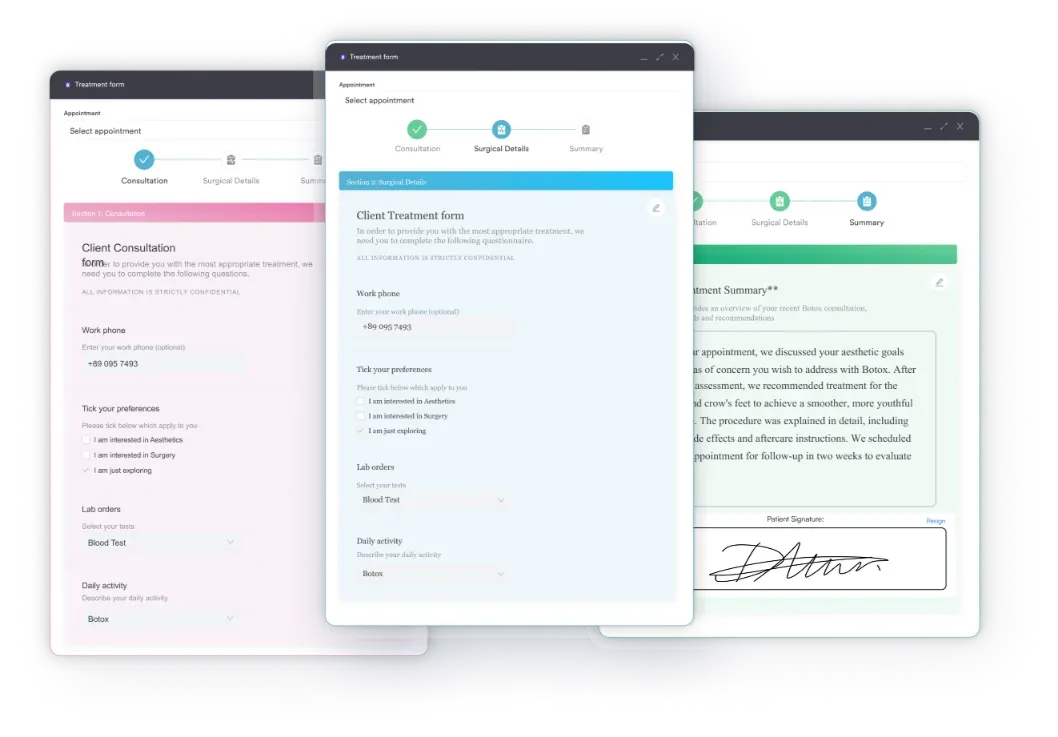
Required documentation elements for H0045 claims usually include:
A structured caregiver care plan makes the relief element easy to evidence, because it records who normally provides the care and when. The recipient’s diagnosis usually traces back to the intake assessment.
Capture all of this at the time of service rather than reconstructing it later. Purpose-built medical forms are how practices manage that. Strong documentation compliance habits also protect you from retrospective recovery, which some states pursue up to five years after the date of service.
H0045 has a narrow scope and clear exclusions. Billing it outside that definition generates denials, and a pattern of incorrect use can trigger a wider Medicaid audit. These are the common errors:
Pediatric medical day programs fall outside H0045 as well. A medically fragile child attending a licensed Prescribed Pediatric Extended Care program is billed under HCPCS code T1025, the Medicaid per diem. That day is clinical care rather than caregiver relief.
Choosing the wrong respite code produces a denial that needs a payer-level correction rather than a quick resubmission. H0045 is for out-of-home respite billed per diem. The codes below cover in-home or per-hour alternatives.
Picking between them means knowing the service setting and the payer’s preferred billing convention. That is core work for any organization running several waiver programs on one practice management software setup.
Key distinction: H0045 names both the setting and the unit. T1005 names neither, so it can cover respite in any setting, billed in 15-minute increments. Some states use one code, some the other, and some use both for different program types. When a state Medicaid program only accepts T1005 for a waiver, an H0045 claim will deny however accurate the service was. Check the preferred respite code for each waiver program before you configure billing. When a claim on this code comes back unpaid, the denial reason codes on the remittance name the cause. Where a payer still requires a paper claim, the practice needs the current revision of the form.
HCPCS code H0045 sits inside a behavioral health H-code block covering crisis and support services. Knowing the neighbors helps billing staff decide quickly whether a service belongs under H0045 or the code beside it. Screening and eligibility work sits further up the same block.
The Medicare Informatics HCPCS tables hold a searchable reference for the full range. For teams billing several behavioral health codes at once.
Out-of-home respite documentation usually lives in three places. The plan of care sits in a clinical file, the authorization number in a spreadsheet, and the daily service log on a paper sheet. At audit, someone has to reassemble all three for every claim.
Practice management software like Pabau holds them in one patient record instead. Intake forms capture the caregiver relief rationale, treatment notes carry the service log.
Every entry is timestamped against the record, so the audit trail builds itself while your team works. The same setup covers behavioral health and therapy practice teams running several waiver programs at once, with no second spreadsheet to reconcile.
So you spend less time hunting for paperwork after a recovery letter lands, and fewer claims deny for a missing authorization number.

Pabau brings the plan of care, the authorization record, and the daily service log into one patient file. Your team bills H0045 from documentation that is already complete.

H0045 is a narrow code, and the discipline it asks for is nearly all front-loaded. Get the authorization and the caregiver relief rationale on file before the respite day happens, and the claim itself becomes routine.
The trade-off worth remembering is that state variation outweighs the code. The same service, documentation, and modifier stack can pay in one state and deny in the next. Treat your state’s billing manual as the authority and this page as the map.
Book a demo to see how Pabau keeps respite documentation and authorization records together for behavioral health billing.

Coding an unspecified psychiatric diagnosis? Schizoaffective disorder coding guide This guide covers the fallback code for schizoaffective disorder, used when documentation cannot support a more specific diagnosis.
Coding an unnamed psychotic disorder? Other psychotic disorder coding guide This guide covers billing for psychotic disorders that don’t match schizophrenia or schizoaffective disorder but show a distinct symptom pattern.
Billing longer residential stays as well as respite? H0019 covers the long-term residential side of the same behavioral health block.
Working with a community behavioral health clinic? T1040 sets out the Medicaid clinic encounter rules that sit alongside respite billing.
Coding a bipolar disorder diagnosis? Bipolar disorder coding guide This guide covers the F31 code family, and how accurate selection depends on identifying the current episode type.
HCPCS code H0045 is used to bill respite care services provided outside the patient’s home on a per diem basis. It covers temporary caregiver relief for people with behavioral health, intellectual, or developmental disabilities. The service is delivered in settings such as group homes, residential facilities, or community day programs. Medicaid is the primary payer.
H0045 is covered by Medicaid in most states, including under HCBS waiver programs for developmental disabilities and behavioral health populations. Medicare does not typically cover H0045 as a standalone benefit outside of hospice. Commercial payer coverage is rare, so verify benefits before providing the service.
Per diem rates for H0045 vary by state Medicaid program, running roughly from $55 to $145 per day. There is no national standard rate. MCO-contracted rates may differ again from state plan rates. Always verify the current figure in your state’s Medicaid fee schedule or MCO contract before billing.
Common modifiers for H0045 include HQ for a group setting, HN for a bachelor’s level provider, and HO for a master’s level provider. Many state Medicaid programs also require state-specific U1-U9 modifiers. Requirements vary by state and by MCO, so confirm the stack in your state’s billing manual before submitting claims.
H0045 covers out-of-home respite billed per diem. S5150 covers unskilled respite billed in 15-minute increments, and it is typically used for in-home or community-based settings. If the service happens inside the recipient’s own home, S5150 or S5151 usually fit better than H0045. Always confirm which code your state Medicaid program accepts for each setting type.
You need a current signed plan of care that authorizes out-of-home respite. You also need a medical necessity justification naming both the recipient’s diagnosis and the caregiver’s relief needs. Add the prior authorization record and a service delivery log with dates and staff credentials. Finally, keep evidence that the primary caregiver was relieved during the service period. Missing any one of these is a common audit finding.