CPT code 93503: Swan-Ganz catheter billing and modifiers
CPT code 93503: Official descriptor and procedure overview In the AMA CPT code s...

Last Updated: Oct 23, 2026
H0002 is the HCPCS Level II code for behavioral health screening to determine eligibility for admission to treatment program.
Let Pabau's smart automation suggest the right codes, reduce claim denials, and keep your practice compliant—effortlessly.
Automate repetitive tasks and focus on what matters most—your patients.
Reduce coding errors and ensure compliance with the latest regulations.
Clean claims, fewer denials, and faster reimbursements.
Powerful insights and reporting to help your practice thrive.
HIPAA compliant SOC 2 certified GDPR-compliant Trusted by 4,000+ clinics worldwide

HCPCS Code H0002 covers behavioral health screening that determines whether a patient qualifies for admission to a substance use or mental health treatment program.
H0002 is a Medicaid code. Traditional Medicare does not cover it, and reimbursement varies widely from one state plan to the next.
Thin documentation is the leading cause of H0002 denials, especially a missing screening tool name, provider credentials, or clinical findings.
Pabau’s digital intake forms capture every H0002 documentation element during the screening, so the clinical record stays audit-ready.
HCPCS Code H0002 covers behavioral health screening to determine a patient’s eligibility for admission to a substance use disorder or mental health treatment program. According to CMS, it is a Level II HCPCS code maintained for Medicaid and certain state or local programs.
The official CMS descriptor reads: Behavioral health screening to determine eligibility for admission to treatment program; alcohol and/or drug assessment. H0002 belongs to the H-code series, which CMS created for behavioral health and substance use services that CPT codes do not describe.
The bigger variable sits inside each state. A state publishes one fee-for-service rate for H0002, but every Medicaid managed care plan negotiates its own rate and modifier set on top of that. Two practices in the same city can be paid differently for the same screening.
The clinical scope of H0002 goes well beyond a brief conversation. The service establishes whether a patient meets clinical criteria for admission to a structured program. That program might be residential, intensive outpatient, or partial hospitalization. It is the assessment that happens before a level-of-care decision.
In practice the screening covers three components. These line up with the level-of-care principles published by the American Society of Addiction Medicine, known as ASAM, and with standard Medicaid billing expectations.
H0002 pays for the eligibility screening rather than ongoing counseling or treatment. Once a patient enrolls, later services move to other codes, such as H0004 for individual counseling. Billing H0002 again across several visits without a clinical reason to re-screen is a recognized audit trigger.
State Medicaid decides who may bill HCPCS Code H0002, and there is no universal federal credential requirement. Most state programs restrict billing to licensed or certified behavioral health professionals. Billing the code under an unqualified staff member’s NPI is a common denial reason in behavioral health audits.
Providers who commonly bill H0002 across most state programs include:
H0002 is typically billable in outpatient behavioral health practices, community mental health centers, and substance abuse treatment facilities. Telehealth is increasingly included, wherever the state Medicaid program has extended coverage to remote services.
A mental health EMR that tracks provider credentials alongside scheduling shows which clinician’s NPI belongs on the claim. Practices that also see psychiatry patients can track both provider types in psychiatry EMR software. Either way, verify credential rules with your state Medicaid managed care organization, or MCO, since they shift with annual contract renewals. Self-pay patients submitting to their own insurer need the code and the charge on one patient receipt template.
Submitting these codes through a claims management tool keeps the inevitable payer queries organized and answerable.
Reimbursement for H0002 varies considerably by state Medicaid plan. There is no national rate, because H-codes sit outside the Medicare Physician Fee Schedule. Each state sets its own fee schedule within broad CMS guidelines.
The CMS fee schedule lookup is useful for context on neighboring codes. For H0002 itself, the number you need sits in your state Medicaid provider manual.
The table below shows reported Medicaid rates across selected states. Treat the figures as directional. Check your state’s current published fee schedule before you submit anything.
Managed care plans often pay differently from fee-for-service Medicaid. If your practice contracts with MCOs, confirm the H0002 rate in each MCO contract addendum. The state’s published schedule is not the number you will be paid.
Check your state Medicaid fee schedule every year, since H0002 rates usually update with the fiscal year. Then compare it against each MCO contract addendum you hold. Contracted rates can sit 5 to 25 percent away from the fee-for-service figure.
Coverage for H0002 is narrow, and knowing the boundaries prevents wasted submissions.
The H-code series exists because Medicaid programs needed a way to bill behavioral health services that CPT does not describe. Traditional Medicare does not recognize these codes for payment, and most commercial payers follow suit. The S-code series works the same way.
For dually eligible patients, H0002 is typically billed to Medicaid after Medicare has denied it. Check with your billing team whether crossover claims apply in your state.
Inadequate documentation is the primary reason H0002 claims are denied on audit. OIG work plans have consistently flagged substance use disorder codes as high risk for improper payments. Every claim needs a record a Medicaid auditor could verify independently.
Each H0002 encounter needs all of the following in the clinical record.
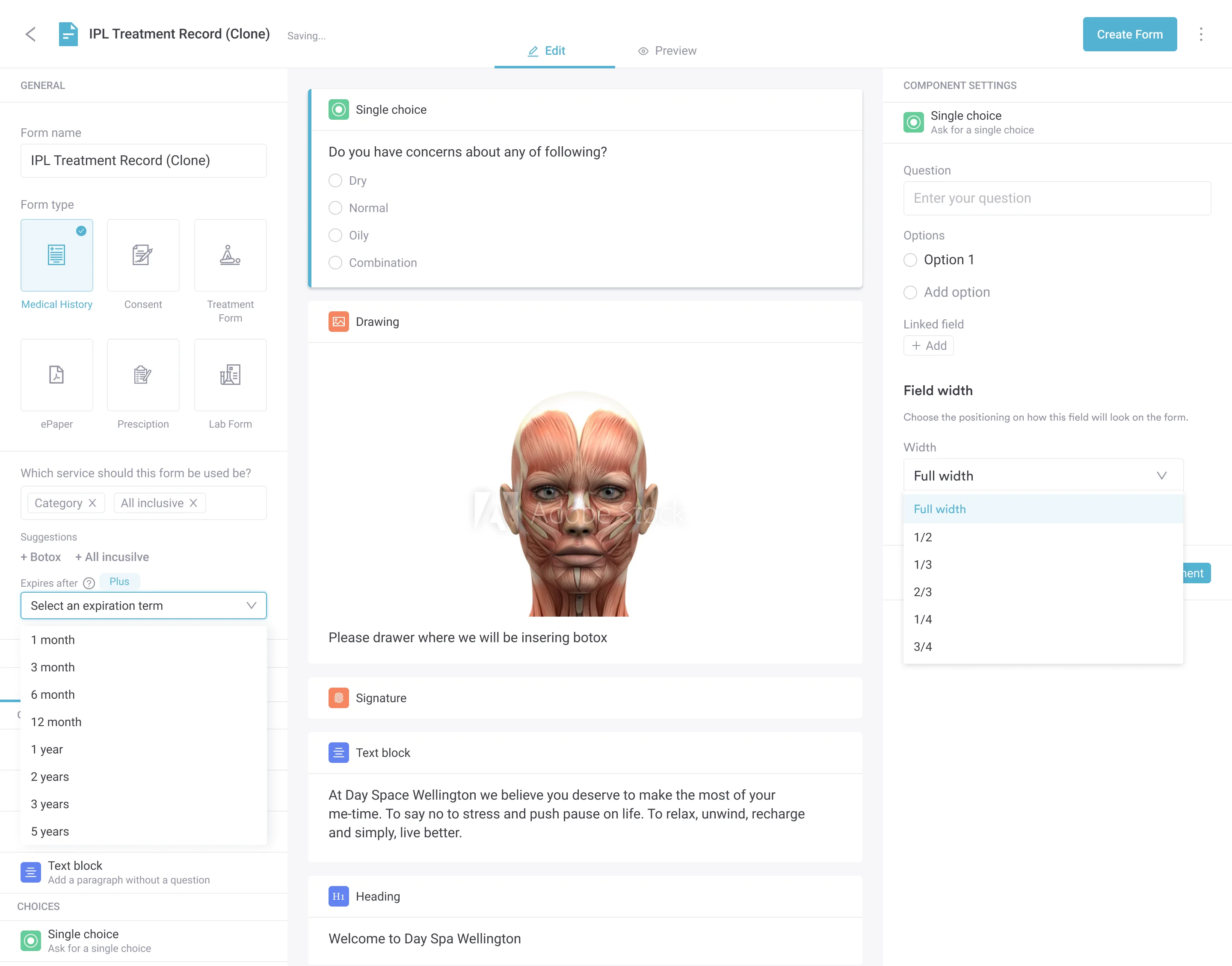
The same principles that shape any good medical form apply: fixed fields, required answers, and no section that relies on free text alone.
Modifier requirements for H0002 are payer and state specific, and no single set applies everywhere. The table below lists the modifiers most often referenced in state Medicaid manuals and MCO claim guides. Treat them as examples, then verify against your own program.
Some states require a modifier on every H0002 claim. Others require none at all. A missing required modifier produces an automatic denial, and an unrecognized one produces a different error. Pull the modifier table from your state Medicaid provider manual before your first submission, then build that logic into your billing workflow.
Billing H0002 correctly means the clinical encounter and the claim workflow stay in step. Skipping a step at either end raises denial risk. The sequence below reflects standard Medicaid practice for behavioral health screening.
Connecting that to your claim preparation removes manual steps, along with the copying errors that come with them.
Most H0002 denials trace back to a short list of mistakes.
Reviewing denial patterns monthly against this list shows which error keeps recurring in your practice. Fixing one recurring error usually recovers more revenue than a broad billing review.
H0002 sits inside a family of behavioral health H-codes. Knowing the neighboring codes prevents upcoding and helps you pick the right one for each service. The AAPC code lookup and the NLM HCPCS API are free ways to verify descriptors.
The distinction is timing. H0001 and H0002 come before program enrollment, while H0004 and H0005 come after it. Practices assessing a mental health presentation rather than substance use may need H0031 instead. The code has to describe what happened in the encounter, not what the provider set out to deliver.
Behavioral health practices billing H0002 carry a specific administrative load. Medicaid rules vary by state, modifier requirements shift, and documentation standards are strict enough to create standing audit exposure. Practice management software like Pabau moves that work off paper and out of spreadsheets.
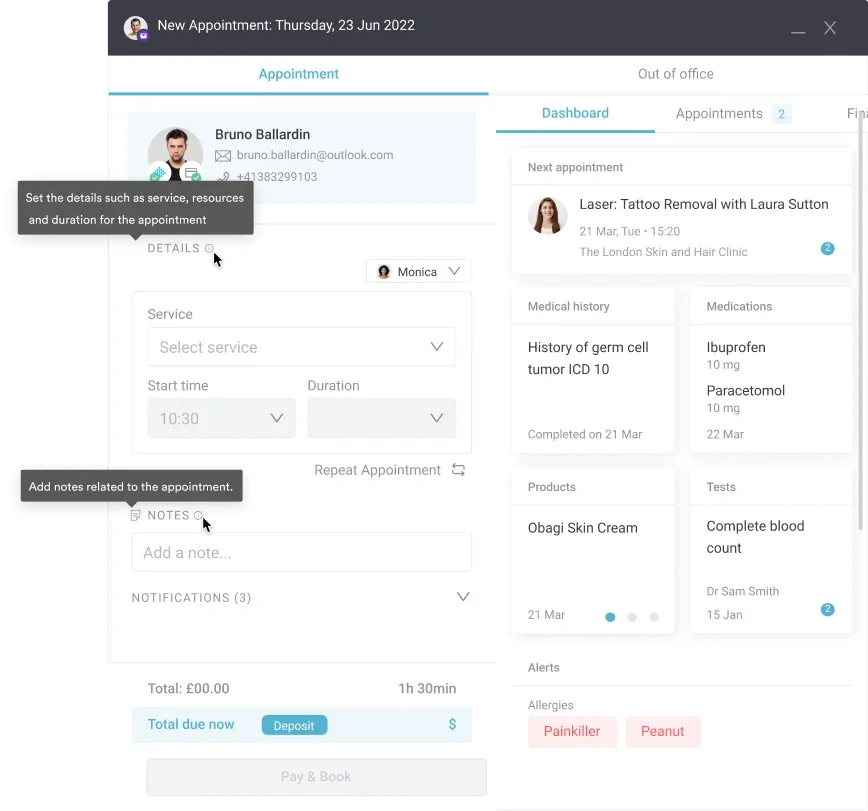
Today the screening form is often filled in on paper, then typed up later that evening. With digital forms, the form is the encounter record. You build one H0002 template carrying every required field, and the completed form lands in the patient’s file as soon as it is signed.
Provider credentials, service dates, screening scores, and clinical notes all carry timestamps. An auditor can follow the encounter without your team hunting through folders.
Behavioral health practices use Pabau to:
Scheduling, payments. For behavioral health teams, the form builder maps cleanly to the psychosocial history and eligibility conclusion H0002 requires.
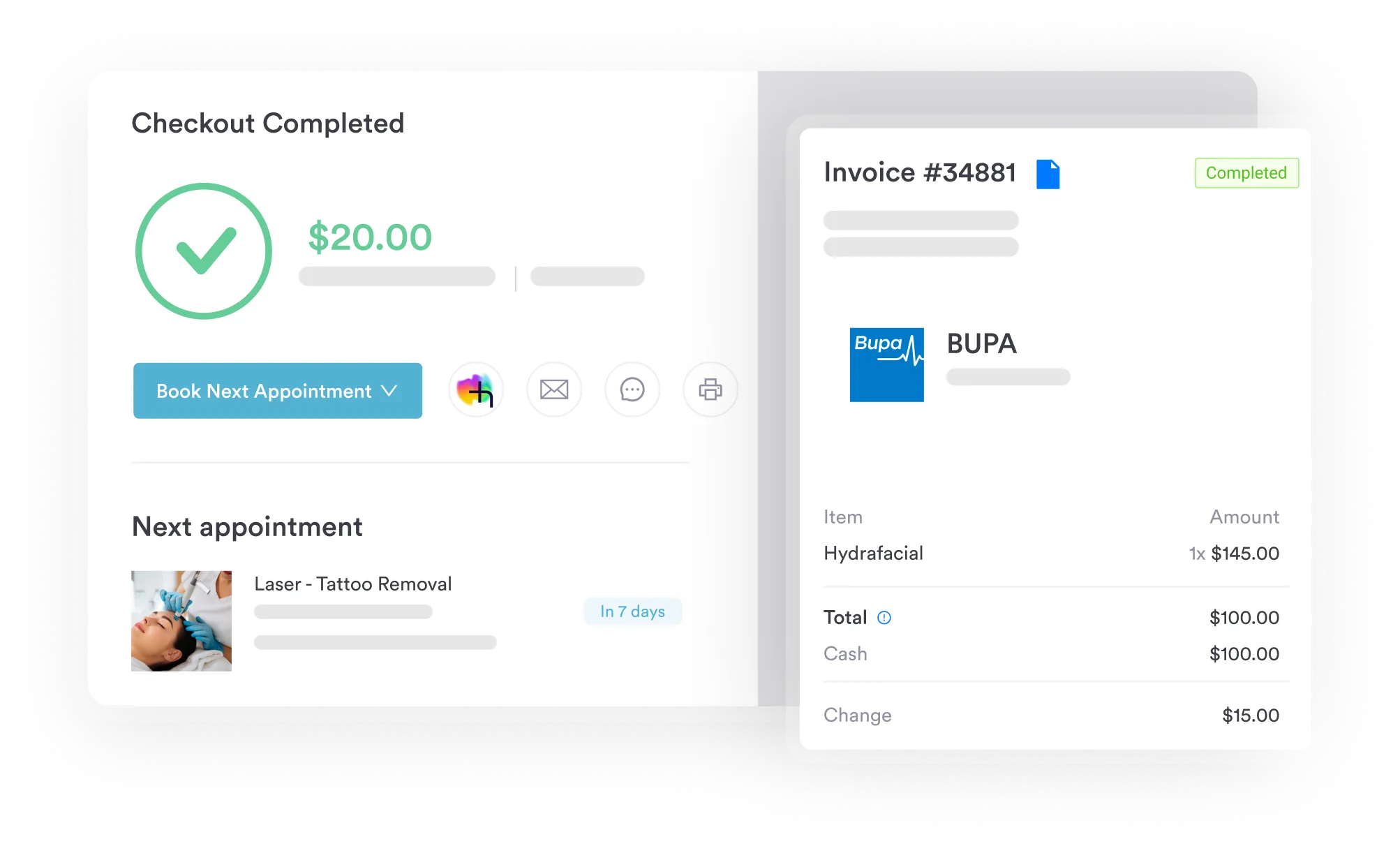

Pabau’s digital intake forms and client records capture every H0002 documentation element while the screening is happening. Your team keeps a timestamped clinical trail without the after-hours write-up.

H0002 pays reliably once two things are true. The record proves a screening actually took place, and the claim carries the modifier your specific plan expects. Both are administrative, which is why they are usually fixable in a week rather than a quarter.
The practices that stop losing H0002 revenue are the ones that stop treating documentation as paperwork for after the visit. Build the required fields into the screening form and the audit trail writes itself.
Keep one habit if you keep nothing else. Re-read each MCO contract addendum when it renews, because that is where the rate and modifier surprises live. Book a demo to see how Pabau captures H0002 documentation during the screening itself.

Coding a scabies diagnosis instead? Scabies diagnosis and billing guide This guide covers the single billable code that applies to every scabies presentation, including crusted Norwegian scabies.
Coding lasting effects of a past infection? Sequelae of poliomyelitis coding guide This guide covers the billable code for lasting effects, such as paralysis, after a prior polio infection.
Coding a resolved leprosy case? Sequelae of leprosy coding guide This guide covers the code for lasting effects of a resolved leprosy infection, rather than active disease.
Coding a salivary gland tumor? Parotid gland malignancy coding guide This guide covers the billable code for malignant neoplasm of the parotid gland, the most common tumor site.
Coding a nearby throat malignancy? Epiglottis malignancy coding guide This guide covers code C10.1 for malignancy on the anterior epiglottis, and how it differs from the adjacent C32.1 code.
HCPCS Code H0002 is a Level II HCPCS code for behavioral health screening. It determines whether a patient qualifies for admission to a substance use disorder or mental health treatment program, and it includes alcohol and/or drug assessment. It is billed to Medicaid rather than traditional Medicare.
No. Traditional Medicare Parts A and B do not cover H0002. HCPCS H-codes are Medicaid-specific codes for behavioral health and substance use disorder services. Some Medicare Advantage plans cover supplemental behavioral health benefits, but traditional Medicare does not reimburse H0002.
It varies by state, and typically runs from about $30 to $100 or more per encounter. The exact figure depends on the state program, the provider type, and whether you bill fee-for-service or through an MCO. Verify it against your state’s published fee schedule.
Modifier requirements vary by state Medicaid program. Common ones include HF for a substance abuse program, HO for master’s level, HP for doctoral level, and GT for telehealth. SA covers a nurse practitioner collaborating with a physician, and U1 to U9 are state-defined. Check your state manual or MCO before submitting.
That depends on your state Medicaid program. Some payers treat the two codes as mutually exclusive on one date of service. Others allow both when each is clinically justified and separately documented. Check your state manual or MCO contract before submitting them together.
The most common errors are missing documentation, an incorrect or absent modifier, and submitting the code to Medicare instead of Medicaid. Practices also bill H0002 for ongoing counseling that belongs under H0004 or H0005. Credentialing mismatches are the fourth pattern, where the rendering provider is not enrolled in state Medicaid.