CPT Code 62284: Injection procedure for myelography
CPT Code 62284: official descriptor and procedure overview The American Medical ...

Last Updated: Oct 19, 2026
E0117 is the HCPCS Level II code for crutch, underarm, articulating, spring assisted, each.
According to CMS's HCPCS overview, Level II HCPCS codes like E0117 form the backbone of Medicare DME billing. Getting the code selection right matters on every claim.
Use it alongside your claims management software workflow for a clean claim every time.
Let Pabau's smart automation suggest the right codes, reduce claim denials, and keep your practice compliant—effortlessly.
Automate repetitive tasks and focus on what matters most—your patients.
Reduce coding errors and ensure compliance with the latest regulations.
Clean claims, fewer denials, and faster reimbursements.
Powerful insights and reporting to help your practice thrive.
HIPAA compliant SOC 2 certified GDPR-compliant Trusted by 4,000+ clinics worldwide

HCPCS Code E0117 (crutch, underarm, articulating, spring assisted, each) is denied outright by traditional Medicare Part B under LCD L33733. That LCD rules that medical necessity for the device has not been established.
CMS Policy Article A52459 limits Medicare-covered crutch codes to E0110 through E0116. E0117 sits outside that covered range, so no amount of documentation makes it payable.
Billers most often miscode E0117 against E0114 and E0116, the other two underarm crutch codes. E0110 is not part of that mix-up; despite the similar number, it is actually a forearm crutch code billed as a pair.
The VA reimburses E0117 under its own Prosthetic and Sensory Aids Service fee schedule, a separate program from Medicare. Pabau’s claims management software helps billers flag an E0117 order before it reaches a doomed Medicare claim.
HCPCS Code E0117 is a Level II HCPCS code maintained by CMS. The official descriptor is: Crutch, underarm, articulating, spring assisted, each.
Three elements define the device this code covers. First, it is an underarm (axillary) crutch, meaning it provides support at the axilla and hand grip, not at the forearm.
Second, it is articulating, with a hinged joint that allows controlled flexion during the gait cycle.
Third, it is spring assisted, using an internal spring mechanism to return the crutch to its upright position between steps. All three features must be present for E0117 to apply.
The code is billed per unit (“each”), so a bilateral dispensing generates two line items. It falls within the E0100-E0199 HCPCS range covering canes, crutches, and related ambulatory aids. It is also classified as durable medical equipment (DME) under HCPCS Level II.
That classification is a coding category, not a coverage guarantee: as the next section covers, traditional Medicare Part B does not reimburse this specific code.
Local Coverage Determination (LCD) L33733 (“Canes and Crutches”) is explicit: medical necessity for an underarm, articulating, spring-assisted crutch (E0117) has not been established. If E0117 is ordered, it will be denied as not reasonable and necessary.
That denial happens at claim adjudication and applies regardless of how complete the Standard Written Order (SWO) or supporting clinical documentation is. CMS Policy Article A52459 (Canes and Crutches) reinforces the same limit from the coverage-policy side. It lists E0110 through E0116 as the crutch codes Medicare Part B actually reimburses, and E0117 is not among them.
A nominal fee-schedule price for E0117 (around $27.55 per unit as of 2026) does still appear in CMS’s national pricing files. That figure is a paper valuation used for administrative pricing calculations, not evidence of coverage. The LCD-level denial overrides it at claim adjudication, so submitted Medicare claims for E0117 are rejected regardless of the amount attached to the code.
For the codes Medicare does reimburse (E0110 through E0116), payment is administered through the DME Medicare Administrative Contractor (DME MAC) for the supplier’s jurisdiction. Rates vary by region under that MAC’s published fee schedule. See the CMS fee schedule lookup for current allowed amounts by location.
DMEPOS fee schedule rates below apply to the crutch codes Medicare Part B actually reimburses: E0110 through E0116. They reflect regional pricing variation across DME MAC jurisdictions. E0117 does not receive these rates in practice.
It carries only the nominal $27.55 paper valuation described above, which is never paid out because LCD L33733 denies the claim first. The figures below are illustrative of the national average for the covered codes, and actual allowed amounts depend on the supplier’s geographic area.
Verify current rates through the PGM HCPCS lookup tool or your DME MAC’s published fee schedule.
Important: Fee schedule rates for the covered codes change annually. None of them apply to E0117, which traditional Medicare does not pay regardless of the rate on file. Always confirm current rates directly with your DME MAC before billing.
Coverage is never automatic for any crutch code. CMS Policy Article A52459 sets the medical necessity criteria for the crutch codes Medicare Part B does reimburse: E0110 through E0116. E0117 is deliberately excluded from that covered list. The criteria below apply when a covered code, not E0117, is the one being billed. Suppliers and billing staff must confirm all of the following before submitting the claim.
For the covered codes, incomplete documentation is the leading cause of a denial on review. For E0117, documentation is not the issue: the code itself is excluded from coverage, so no checklist fixes it.
Billers handling physical therapy EMR workflows should route any E0117 order back to the prescriber before submission. They should reserve the pre-claim documentation checklist for confirming E0110-E0116 orders instead.
With built-in stock tracking, every brace or device billed under these codes is deducted from inventory automatically.
These requirements apply once a covered code — E0110 through E0116 — is the one on the claim. No documentation makes E0117 payable under traditional Medicare. Missing paperwork is the single most common cause of denials for the codes Medicare does cover. CMS Policy Article A52459 specifies three core requirements that must be in the file before the claim is submitted.
Keeping these documents in a standardized format reduces audit exposure. See also medical forms management for broader documentation workflow guidance.
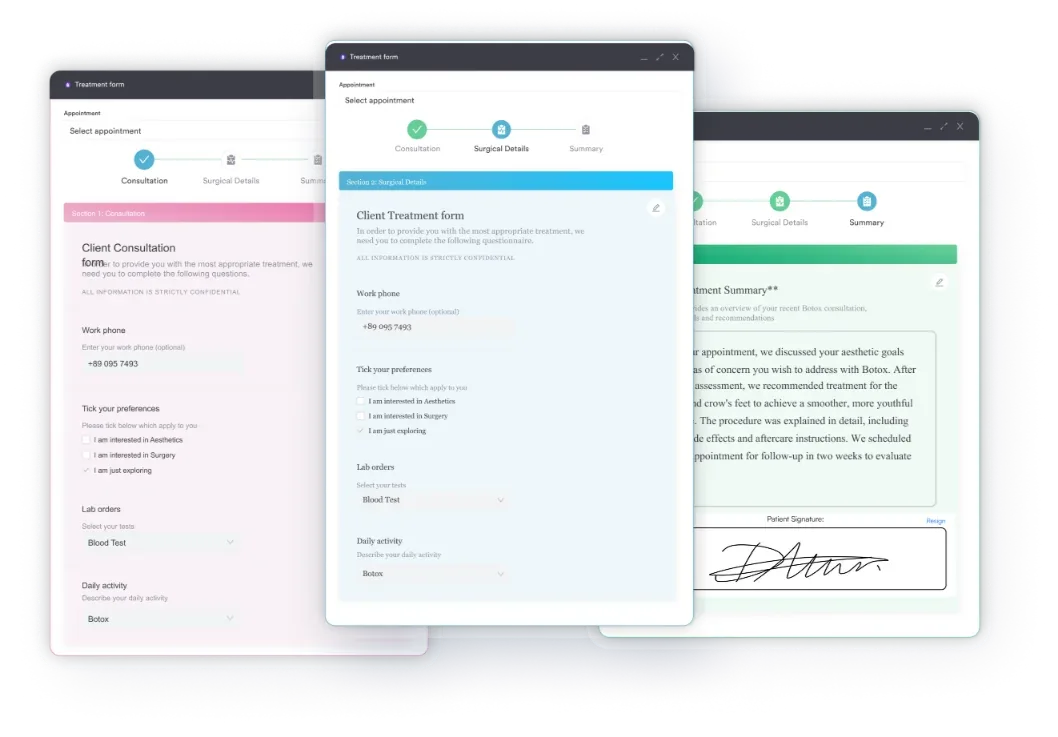
Before submitting any Medicare claim for an underarm crutch, confirm the code matches E0110-E0116, not E0117. LCD L33733 denies E0117 automatically, no matter how complete the file is. For the covered codes, build a pre-submission checklist: SWO received before delivery, face-to-face notes on file, delivery receipt signed, and device matched to the code.
In practice, E0117 gets miscoded against E0114 and E0116, not E0110. E0110 is actually a forearm crutch code billed as a pair, so it is not an underarm code at all. E0114 and E0116 are the two HCPCS codes that describe the underarm crutches Medicare does cover.
Confusing either one with E0117 turns a payable claim into a denied one. The difference comes down to device design and coverage status, not patient condition.
Billing note: E0114 is billed per pair, and E0116 per unit. Mixing the two up produces a unit-count error, even when the coverage decision is otherwise correct. Billing E0117 in place of either, regardless of unit count, results in an automatic LCD-level denial, not a simple claim adjustment.
There is no documentation fix for an E0117 claim submitted to traditional Medicare. The fix is confirming the dispensed device against the code before the order goes out.
E0117 sits within a broader range of ambulatory aid codes. When the dispensed device does not match the E0117 descriptor, verify the correct code from the table below. The AAPC Codify HCPCS lookup provides full descriptors and crosswalk information for each.
For broader context on the E0114 billing guide and its documentation overlaps with E0117, reviewing adjacent code guides helps reduce coding errors across the range.
Two adjacent walker codes worth checking during code selection are E0158 and E0144, which cover walker accessories rather than crutches.
HCPCS Code E0117 is used across multiple payer types, but coverage rules differ meaningfully from Medicare.
Veterans Affairs (VA): Unlike traditional Medicare, the VA does reimburse E0117. The device is priced under the VA’s own Prosthetic and Sensory Aids Service (PSAS) fee schedule, at roughly $382 per unit as of 2026. That is a separate program from Medicare Part B, with its own coverage rules and pricing.
Coverage for specific devices is still determined at the Veterans Integrated Service Network (VISN) and facility level. Formulary status and documentation requirements may also differ from Medicare. Always verify E0117 coverage directly with the relevant VA facility before submitting a claim.
For patient compliance documentation best practices in VA contexts, maintain device-specific records per facility guidance.
Medicaid: State Medicaid programs vary considerably. Most states cover crutches as DME, and many use HCPCS Level II codes for billing, including E0117. Coverage criteria, prior authorization requirements, and reimbursement rates are state-specific.
Do not apply Medicare coverage rules to Medicaid claims without verifying the state’s DME benefit and applicable fee schedule. Some states require prior authorization for spring-assisted crutches specifically because of their higher cost relative to standard underarm crutches billed under E0114 or E0116.
Most E0117 denials fall into a small number of repeating patterns. Fixing these at the workflow level eliminates the majority of avoidable rejections. Denial management works backwards from the remittance to the step that caused it.
Track how many E0117 claims your practice submits to traditional Medicare each quarter. The target is zero, since LCD L33733 denies every one regardless of documentation. If E0117 orders keep reaching the claims queue, the fix is upstream: confirm the dispensed device against the code before the order goes out. Route any genuine spring-assisted crutch need toward the VA or the patient’s state Medicaid program instead, where it may actually be reimbursed.
DME billing for HCPCS Code E0117 involves multiple documentation checkpoints across intake, ordering, delivery, and submission. When these steps run through disconnected paper forms or manual processes, errors accumulate at each handoff.
Pabau’s automated billing workflows flag incomplete documentation before a claim is submitted, reducing the cost of post-denial corrections. Staff across sports medicine, physical therapy, or DME supplier workflows can configure pre-submission alerts.
Those alerts flag an E0117 order before it reaches a doomed Medicare claim. The same checklists confirm the SWO, face-to-face encounter, device match, and delivery receipt are all on file. That catch-before-submission approach reduces avoidable denials compared to manual review.
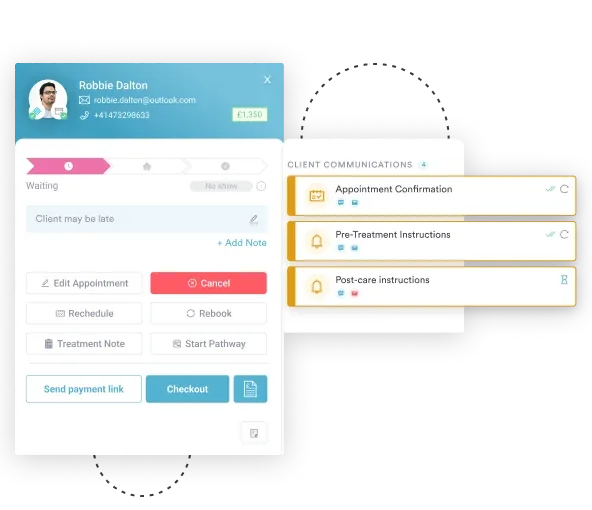
For practices that combine clinical care with DME supply, the value compounds. The physician’s order and the supplier’s claim then reference the same documentation, rather than requiring manual re-entry.
Learn more about how medical practice management software supports DME billing workflows in a clinical setting.

Pabau’s automated workflows and claims management tools help DME suppliers and clinic billers catch missing documentation before submission. See how Pabau handles HCPCS billing from order to clean claim.

HCPCS Code E0117 denials are not a documentation problem. They are a coverage problem. LCD L33733 rules that medical necessity for the spring-assisted, articulating crutch has not been established. A claim billed under E0117 to traditional Medicare is denied as not reasonable and necessary, no matter how complete the file is.
CMS Policy Article A52459 confirms the same limit from the coverage-policy side. The Medicare-covered crutch code range stops at E0116, and E0117 sits outside it entirely.
Suppliers who need a Medicare-payable underarm crutch should confirm the dispensed device against the E0110-E0116 range before the order goes out.
Suppliers with a genuine E0117 need should look to the VA’s own Prosthetic and Sensory Aids Service fee schedule instead. Or they can turn to the patient’s state Medicaid program. Both are separate from Medicare Part B, and both can reimburse it under their own rules.
Pabau’s claims management software and paperless clinical workflows help DME suppliers and clinic billing teams catch a miscoded E0117 order. That keeps it from reaching a claims queue.
They also keep the SWO, face-to-face notes, and delivery documentation in order for the codes Medicare does pay. To see how Pabau handles DME documentation from order to submission, book a demo.

Coding a poisoning case tied to self-harm? ICD-10 code T38.802D covers a subsequent encounter for poisoning by unspecified hormones recorded as intentional self-harm.
Coding a radiation exposure encounter? ICD-10 code W90.1XXA covers what determines whether an infrared radiation exposure claim processes cleanly.
Coding a well-child visit with no findings? ICD-10 code Z00.129 covers the diagnosis code for a well-child visit that found no problems.
HCPCS Code E0117 is a Level II HCPCS code that describes a crutch, underarm, articulating, spring assisted, billed per unit (each). It describes an underarm crutch design with a hinged articulating joint and a spring mechanism that returns the crutch to position between steps. Traditional Medicare Part B denies this code outright. LCD L33733 states that medical necessity for E0117 has not been established, so it is billed as not reasonable and necessary regardless of documentation. CMS Policy Article A52459 lists E0110 through E0116 as the Medicare-covered crutch codes, and E0117 is not on that list.
E0117 describes an underarm crutch with an articulating, spring-assisted mechanism, billed per unit (each), and traditional Medicare denies it outright under LCD L33733. E0114 and E0116 describe the underarm crutches Medicare does cover under CMS Policy Article A52459. E0114 is billed per pair, and E0116 is billed each as a single replacement crutch. E0110, despite the similar number, is actually a forearm crutch code and is not part of this underarm comparison at all.
Three items are required. First, a Standard Written Order (SWO) signed by the treating physician and received by the supplier before delivery. Second, clinical documentation supporting medical necessity from a face-to-face encounter. Third, a signed proof-of-delivery receipt. These requirements apply to the crutch codes Medicare actually covers. No amount of documentation makes E0117 payable, since LCD L33733 denies it as not reasonable and necessary.
No. LCD L33733 (“Canes and Crutches”) states that medical necessity for the spring-assisted, articulating underarm crutch (E0117) has not been established. A claim billed under E0117 is therefore denied as not reasonable and necessary, regardless of documentation. CMS Policy Article A52459 confirms this by limiting Medicare-covered crutch codes to E0110 through E0116. E0117 is not on that list. A nominal fee-schedule price for E0117 does exist in CMS’s national pricing files, but that figure is a paper valuation, not evidence of coverage.
Yes. Unlike traditional Medicare, the VA reimburses E0117. It uses its own Prosthetic and Sensory Aids Service (PSAS) fee schedule, at roughly $382 per unit as of 2026. Coverage eligibility, prior authorization, and documentation requirements are still determined at the facility or VISN level. Verify with the specific VA facility before dispensing and billing.
Traditional Medicare does not reimburse E0117 in practice. LCD L33733 denies it as not reasonable and necessary at claim adjudication, regardless of the fee schedule figure attached to the code. CMS’s national pricing files carry a nominal valuation for E0117, around $27.55 per unit as of 2026. That number is a paper price used for administrative purposes, and it is never actually paid, because the claim is denied before reimbursement occurs. Suppliers billing a Medicare-covered underarm crutch should use E0114 or E0116 instead, which fall in the $30-$45 per-unit range under the standard fee schedule.