

HCPCS code E0198: Water pressure pad billing guide
HCPCS code E0198 is a water pad for a standard mattress HCPCS code E0198 is the ...

Last Updated: Oct 13, 2026
E0130 is the HCPCS Level II code for walker, rigid (pickup), adjustable or fixed height.
Rigid pickup walker claims are denied more often than expected, and it's almost always for one of the same three reasons:
Let Pabau's smart automation suggest the right codes, reduce claim denials, and keep your practice compliant—effortlessly.
Automate repetitive tasks and focus on what matters most—your patients.
Reduce coding errors and ensure compliance with the latest regulations.
Clean claims, fewer denials, and faster reimbursements.
Powerful insights and reporting to help your practice thrive.
HIPAA compliant SOC 2 certified GDPR-compliant Trusted by 4,000+ clinics worldwide

HCPCS code E0130 describes a walker, rigid (pickup), adjustable or fixed height, a standard non-wheeled ambulatory aid classified as durable medical equipment (DME) under Medicare Part B
Medicare covers E0130 when a physician order and certificate of medical necessity (CMN) document that the patient has an ambulatory limitation requiring a walker
Modifier errors are the top denial trigger: Append KX when LCD criteria are met, GA when the patient has signed an ABN, and NU or RR to indicate purchase vs. rental
Practice management software like Pabau keeps physician orders, supporting documentation, and delivery confirmations organized in one patient record, so billing teams can verify E0130 paperwork is complete before a claim goes out
HCPCS code E0130 is the Level II code maintained by the Centers for Medicare and Medicaid Services (CMS) for a walker, rigid (pickup), adjustable or fixed height. It sits within the E-code series of HCPCS, which covers durable medical equipment, orthotics, and prosthetics.
The “rigid (pickup)” designation is what distinguishes E0130 from wheeled walker codes. A pickup walker has no wheels; the patient lifts it forward with each step. This distinction matters because selecting the wrong code based on device type is a frequent denial trigger.
Medicare Part B covers E0130 as durable medical equipment when specific medical necessity conditions are documented. Coverage is not automatic based on the physician’s preference for the device. The patient must have a qualifying ambulatory limitation, and that limitation must be supported in the medical record. Other systems, such as the Medicare Benefits Schedule, pack eligibility, referral status and time thresholds into the item descriptor itself.
Coverage criteria typically required under applicable Local Coverage Determinations (LCDs) from the patient’s Medicare Administrative Contractor (MAC) include the following:
LCD requirements vary by MAC jurisdiction. Noridian Healthcare Solutions covers Jurisdiction D (western states); CGS Administrators covers Jurisdiction C. Billing teams should always reference the LCD published by the MAC that processes their claims, as criteria can differ slightly between jurisdictions.
The DME supplier billing E0130 must also be Medicare-enrolled and accredited by a CMS-recognized accreditation organization through the National Supplier Clearinghouse (NSC). Billing under a non-accredited supplier number is grounds for automatic denial and potential recoupment.
The 2026 Medicare fee schedule rate for HCPCS code E0130 varies by geographic locality. CMS publishes annual DMEPOS fee schedule files that list the allowable amount for each code by MAC jurisdiction and state. Specific dollar figures should be verified directly against the CMS fee schedule lookup tool for the applicable year and locality, as rates are updated each January.
Two factors significantly affect the payment amount received for E0130 claims:
Billing teams providing walkers across multiple locations should confirm fee schedule rates specific to each locality and verify competitive bidding status for each service area. You can check whether a ZIP code falls within a CBA using the CMS DMEPOS Competitive Bidding Program locator.

Pabau helps DME suppliers and practice billing teams keep physician orders, supporting documentation, and delivery confirmations organized in one patient record, so nothing is missing when a claim goes out.

Practices supplying equipment directly rely on inventory management software to know what’s in stock before promising it.
Modifier errors are the top denial trigger for E0130 claims. Each modifier signals a specific billing circumstance to the payer, and incorrect or missing modifiers result in automatic claim rejection or a request for additional documentation.
KX is the most critical modifier to get right. Appending KX without having the required LCD documentation in the record is a false attestation, which can trigger a Medicare audit. Conversely, omitting KX on an otherwise compliant claim will result in automatic denial.
Proper documentation before claim submission prevents most E0130 denials. Billing teams relying on claims management software to track documentation status can build pre-submission checklists that catch missing paperwork before the claim goes out.
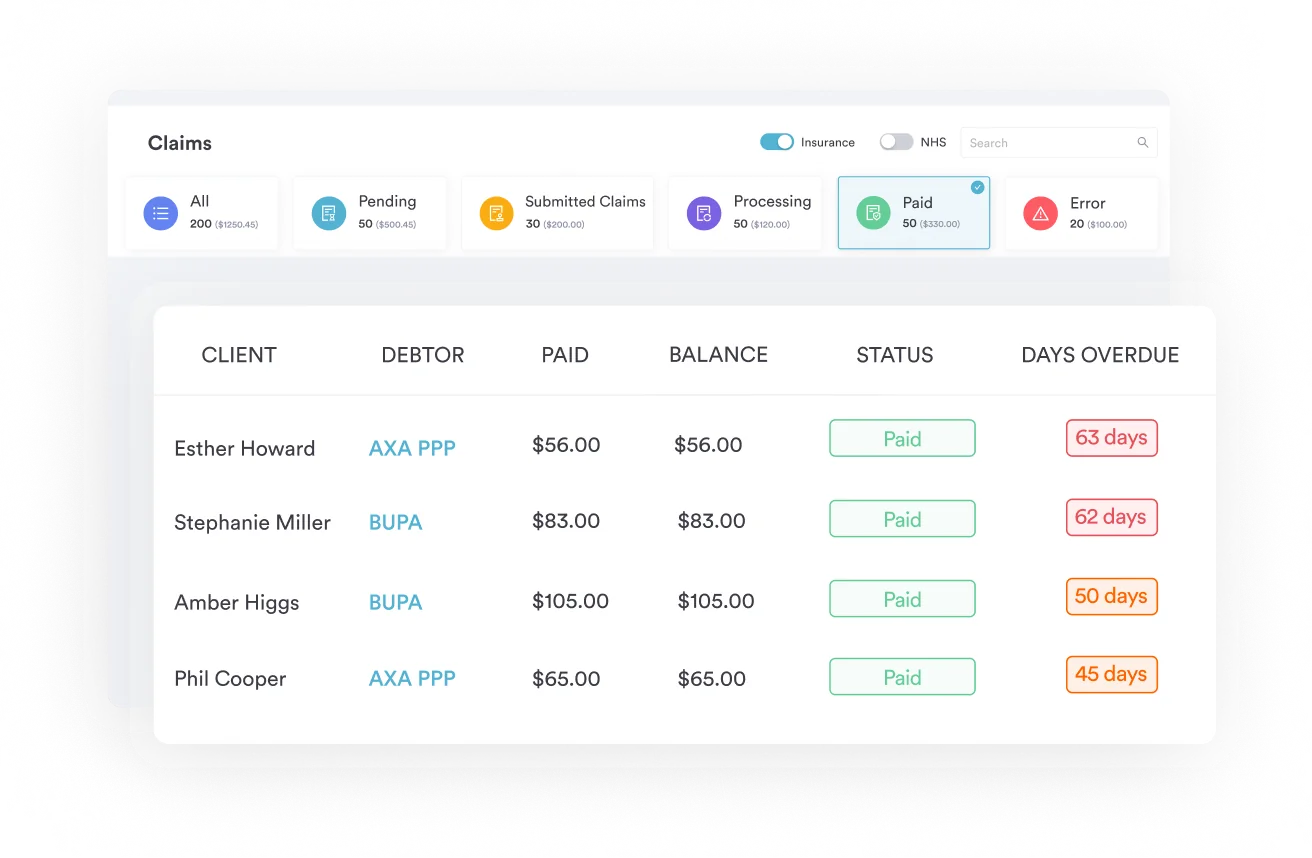
Required documentation for a compliant E0130 claim includes:
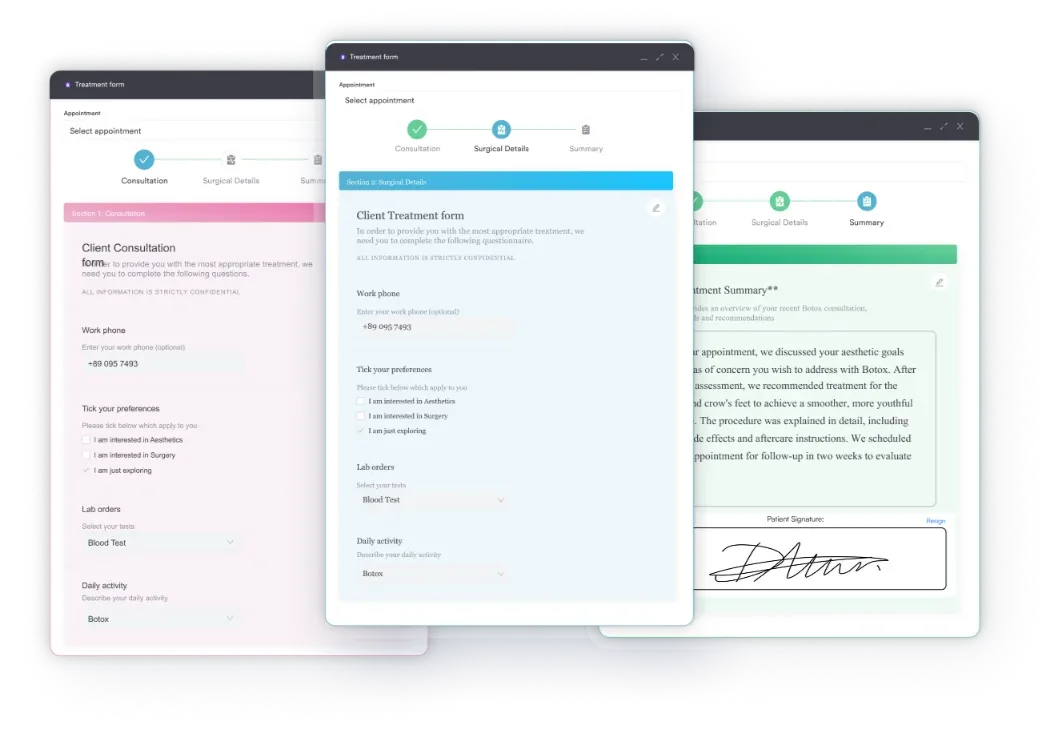
Using digital intake forms to capture patient consent and delivery confirmation at the point of service reduces the missing paperwork that generates documentation request letters post-claim. Storing CMN documentation in a structured patient record management system also makes responding to audits faster and more defensible.
Claims for HCPCS code E0130 should be submitted on the CMS-1500 form (for professional/supplier claims) or its electronic equivalent (837P). Place of service code 12 (patient’s home) is the standard for walkers delivered to the patient’s residence. Nursing facility claims use place of service 31 or 32 depending on facility type.
All billing practices should maintain HIPAA-compliant billing practices when transmitting DME claims electronically, including proper handling of protected health information in the 837P transaction set.
Not every mobility-related ICD-10 code automatically supports E0130 medical necessity. The diagnosis code on the claim must reflect the specific ambulatory limitation documented in the treating physician’s notes, and it must be clinically consistent with a walker-level ambulatory aid rather than a cane or no aid at all.
Commonly accepted ICD-10 codes supporting E0130 medical necessity span neurological, musculoskeletal, and post-surgical diagnoses, including:
Always verify ICD-10 code acceptability against the applicable LCD’s covered diagnosis list. Some MACs publish an Appendix to their LCD listing specific covered and non-covered ICD-10 codes for walker codes.
Medicare fee-for-service does not generally require prior authorization for HCPCS code E0130, but this varies by payer and program. Medicare Advantage plans, Medicaid managed care organizations, and commercial insurers frequently require prior authorization before the walker is dispensed. Submitting without PA when it is required results in denial regardless of how well-documented the medical necessity is.
For the DMEPOS Competitive Bidding Program, whether a supplier can bill E0130 at all depends on geography. In competitive bidding areas (CBAs), only suppliers who won a CMS contract for the walker category may bill Medicare for E0130.
Non-contract suppliers in a CBA cannot bill Medicare for this item, even if they are otherwise enrolled and accredited. Outside CBAs, any enrolled, accredited supplier may bill at the standard fee schedule rate.
Check competitive bidding area status before accepting a patient order for E0130. If your ZIP code falls within an active CBA and your organization does not hold a contract, you cannot bill Medicare for this item. Referring the patient to a contract supplier in that scenario protects both the patient and your organization from a billing compliance issue.
Selecting the wrong walker code is a preventable denial. The walker HCPCS family spans several codes that describe meaningfully different devices, and confirming the official descriptor against the specific device dispensed is the safest way to code it correctly.
The most common coding confusion is between E0130 and E0135. Both are pickup walkers with no wheels; the only difference is that E0135 folds. If the patient received a folding model, E0135 is correct. Billing E0130 when the device folds is an accuracy error, even if the clinical indication is identical.
Medicaid coverage for E0130 varies significantly by state. Unlike Medicare, which applies a single national framework (subject to MAC-level LCD variation), each state Medicaid program sets its own coverage rules, prior authorization thresholds, and fee schedule amounts for DME items including walker codes.
Several patterns are consistent across most state programs, however, including how Medicaid documentation expectations mirror the same medical-necessity logic behind codes like R54:
For dual-eligible patients (Medicare and Medicaid), Medicare is the primary payer. Medicaid typically covers the Medicare cost-sharing (20% copay and deductible) as a secondary payer, subject to state Medicaid rules on crossover claims.
Most E0130 denials are preventable. A review of common denial patterns shows the same five errors recurring across DME supplier audits.
Denial management is easier when billing teams have a structured audit trail for each claim. Keeping physician orders, delivery confirmations, and other supporting paperwork in a single patient record reduces the time spent reconstructing documentation during the appeals process. Practice management software like Pabau keeps HIPAA-compliant records accessible without manual file retrieval.
Build a five-point pre-submission checklist for every E0130 claim: (1) physician order signed and pre-dated to delivery, (2) CMN completed and retained, (3) KX modifier appended where applicable, (4) ICD-10 code verified against LCD covered list, (5) supplier accreditation confirmed for the billing NPI. Claims that pass all five checks have a significantly lower denial rate.
E0130 denials rarely come from clinical disputes. They come from missing documentation, the wrong modifier, and supplier eligibility issues that could be caught before submission with the right workflow in place.
Pabau keeps physician orders, delivery confirmations, and other supporting paperwork organized alongside the patient record, so billing teams can confirm documentation is complete before a claim goes out. For practices managing DME documentation alongside clinical scheduling. To see how Pabau keeps billing documentation organized, book a demo.

Coding an observation stay that ruled out disease? ICD-10 code Z03.89 covers the code for an observation encounter where a suspected condition was ruled out.
Want to see how one specific subcode changes an entire claim? M79.4 walks through the same precise-subcode logic that separates billable and non-billable diagnosis codes.
Coding a diagnosis of iron deficiency anemia? ICD-11 code 3A00 covers the WHO classification code that standardizes documentation of iron deficiency anemia.
HCPCS code E0130 is the Level II code for a walker, rigid (pickup), adjustable or fixed height. It is a durable medical equipment code used to bill Medicare Part B and Medicaid for a standard non-wheeled pickup walker provided to a patient with an ambulatory limitation. CMS maintains the HCPCS Level II code set, which is updated annually.
Yes. Medicare Part B covers E0130 when medical necessity is established through a physician order, a certificate of medical necessity (CMN), and clinical documentation of an ambulatory limitation. The supplier must be Medicare-enrolled and DMEPOS-accredited. In competitive bidding areas, only contract suppliers may bill Medicare for E0130.
E0130 is a rigid pickup walker (does not fold); E0135 is a folding pickup walker. Both are non-wheeled and require the patient to lift the walker forward with each step. The clinical indication is usually identical, but the correct code depends on whether the specific device dispensed folds. Billing E0130 when a folding model was provided is a coding accuracy error.
KX is required on Medicare claims where LCD coverage criteria are documented. NU (new purchase) or RR (rental) must also be appended to indicate the transaction type. GA is used when an ABN is on file and criteria are not met; GZ when criteria are not met and no ABN was obtained. Omitting KX on a compliant claim is the most common modifier-related denial for E0130.
Medicare fee-for-service generally does not require prior authorization for E0130, but Medicare Advantage plans, Medicaid managed care organizations, and commercial insurers frequently do. Always verify PA requirements with the specific payer before dispensing the walker, as submitting without required PA will result in denial regardless of medical necessity documentation.
Commonly accepted ICD-10 codes include R26.89 (gait abnormality), G20.A1 (Parkinson’s disease, a billable subcode since bare G20 stopped being accepted in October 2023), G35 (multiple sclerosis), S72.001A (femoral neck fracture, initial encounter), and post-arthroplasty codes such as Z96.641. The diagnosis must specifically document an ambulatory limitation requiring walker-level support. Always verify against the applicable MAC LCD’s covered diagnosis appendix before billing.
E0130 is subject to competitive bidding in active competitive bidding areas (CBAs). In those areas, only CMS-contracted suppliers may bill Medicare for E0130. Outside CBAs, any enrolled and accredited DME supplier may bill at the standard fee schedule rate. Use the CMS DMEPOS Competitive Bidding Program locator to check whether a service ZIP code falls within a CBA before accepting a Medicare walker order.



