HCPCS code C1731: Catheter billing, OPPS reimbursement, and denial guide
HCPCS code C1731: Official descriptor and code series context HCPCS code C1731 i...

Last Updated: Oct 8, 2026
C1732 is the HCPCS Level II code for catheter, electrophysiology, diagnostic/ablation, 3d or vector mapping.
Let Pabau's smart automation suggest the right codes, reduce claim denials, and keep your practice compliant—effortlessly.
Automate repetitive tasks and focus on what matters most—your patients.
Reduce coding errors and ensure compliance with the latest regulations.
Clean claims, fewer denials, and faster reimbursements.
Powerful insights and reporting to help your practice thrive.
HIPAA compliant SOC 2 certified GDPR-compliant Trusted by 4,000+ clinics worldwide

HCPCS Code C1732 describes an electrophysiology catheter with diagnostic, ablation, and 3D or vector mapping capability.
The facility reports C1732 on the UB-04 claim, while the physician bills the ablation CPT code separately.
The code applies in hospital outpatient departments and in ambulatory surgery centers.
Supplier modifiers such as EY, GK, and GL belong on DMEPOS claims, not on a hospital outpatient C1732 line.
Payment rates come from the OPPS and ASC addenda rather than the Medicare Physician Fee Schedule.
HCPCS Code C1732 covers a catheter, electrophysiology, diagnostic/ablation, 3D or vector mapping. The facility reports it to capture the cost of the mapping catheter used during a cardiac ablation or an electrophysiology study.
C1732 is a Healthcare Common Procedure Coding System (HCPCS) Level II code maintained by the Centers for Medicare and Medicaid Services (CMS). According to the CMS HCPCS overview, Level II codes cover products and supplies that CPT codes do not describe. That includes the specialized devices used in interventional cardiology and electrophysiology labs. Missing a provider identifier or a diagnosis code sends a reimbursement claim straight back, so a reimbursement receipt lists both.
Check the descriptor before you bill. Descriptors and status indicators move with each quarterly HCPCS file, and third-party lookup tools often lag behind those updates. Verify the active long description against the CMS quarterly HCPCS update before the claim goes out.
The catheter described by C1732 combines diagnostic and ablation capability with 3D or vector mapping. That combination makes it the workhorse of a modern electrophysiology lab, where mapping accuracy shapes the outcome of the case.
Three arrhythmia types account for most C1732 use:
Deflectable catheters reach anatomy that stiffer tools cannot, such as the posterior wall of the left atrium and the papillary muscles. Payers reviewing a C1732 claim may ask for a note naming the catheter used and confirming that mapping took place.
C1732 is billed by the facility, not by the performing physician. The physician bills the ablation CPT code separately, such as 93656 for atrial fibrillation or 93653 for SVT. The device line stays on the facility claim.
One case often produces more than one device line. Access, pacing, and retrieval each carry their own C code, and each is reported when the item is actually used:
C1732 sits on a facility claim, so the modifiers that matter are the ones CMS recognizes under the outpatient payment systems. Supplier modifiers such as EY, GK, and GL belong on Part B DMEPOS claims and have no place on a C1732 line.
The supplier modifiers are worth understanding, because they turn up on HCPCS lookup tools and get copied across by mistake. GK, for example, identifies a reasonable and necessary item associated with a GA or GZ modifier on a DMEPOS claim. A facility uses GA and GZ directly instead.
Device credits are not reported with a modifier at all. Modifiers FB and FC were discontinued in 2014. A facility that receives a credit for a replaced device now reports condition code 49 or 50. The credit amount itself goes in value code FD.
Overusing -59 without documented clinical justification remains one of the main triggers for a post-payment audit on device codes. The AAPC HCPCS lookup is a quick way to check a descriptor between quarterly files.
Document the catheter model and mapping system in the procedure note before billing C1732. A note that says only EP catheter used will not survive a medical necessity review. Record the manufacturer, the model number, and confirmation that 3D or vector mapping was performed.
Medicare covers C1732 when it is billed with a supported ablation CPT code for a covered indication. Coverage depends on the Medicare Administrative Contractor (MAC) jurisdiction and on whether a Local Coverage Determination (LCD) applies to cardiac electrophysiology there.
Four coverage considerations decide most C1732 claims:
Rates are not quoted here, because device and APC payment amounts change with every annual update. Look up the current amount for C1732 in the OPPS Addendum B file. For a case performed in an ASC, use the ASC addenda instead. The Medicare Physician Fee Schedule does not price this code.
C1732 claims fail for a predictable set of reasons. Almost all of them are avoidable with tighter documentation and more disciplined modifier use.
HCPCS Level II codes are maintained by CMS and sit in the public domain. The companion CPT codes are copyrighted by the American Medical Association (AMA), which licenses their use. Keep full CPT descriptors inside licensed billing and compliance workflows rather than in public-facing material.
Build an EP charge capture checklist with three prompts before submission. Confirm the device label is scanned to the chart. Confirm the companion CPT code is selected. Confirm the indication is documented against the applicable LCD. That gate catches most C1732 denial triggers before the claim leaves the building.
Most C1732 denials start in the chart rather than in the billing system. The catheter model, the mapping system, and the indication end up in three places, then get reassembled by a coder hours later. Practice management software like Pabau, with claims management built in, holds those details on one record.
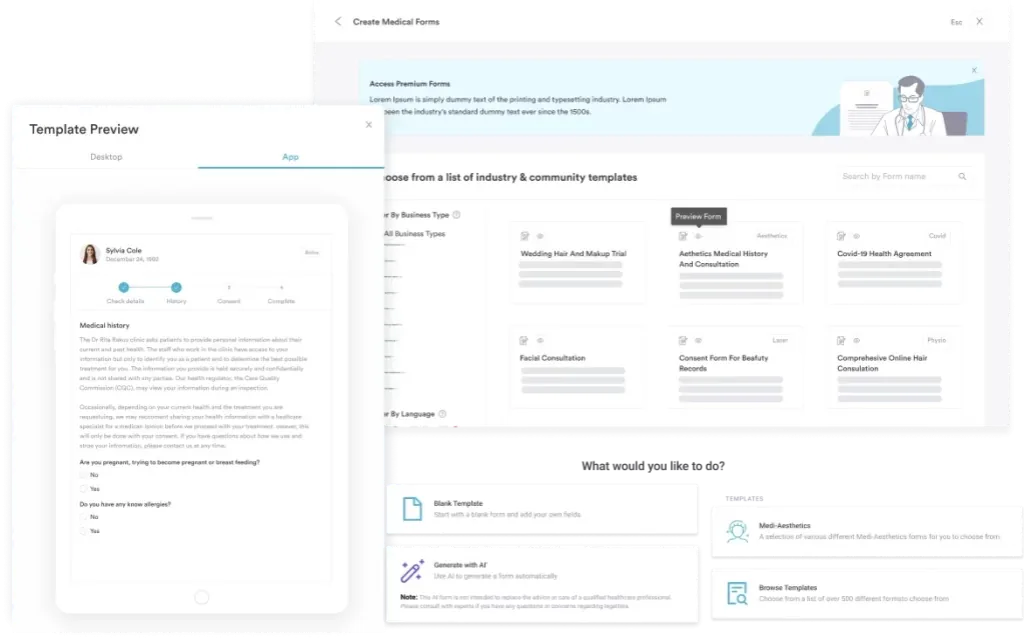
Pabau’s digital forms let you build a procedure template with mandatory device fields. The practitioner records the manufacturer, the model, and the mapping system while the case is still in front of them.
Your coder opens a complete record instead of calling the lab to ask which catheter was used.
The same pattern shows up well outside cardiology. A metabolic health practice bills for monitors and supplies. A longevity practice bills for diagnostic panels. Both lose claims to the same missing device and order detail.
Pabau’s EHR integration means anything logged during the procedure reaches the billing module without re-keying. Fewer hand-offs mean fewer chances for a device line to disappear between two systems.
Keeping documentation and charge capture in one auditable trail also shortens a payer review. That single trail is what separates practice management software from a standalone billing tool, and it is worth testing before you buy.
The HIPAA compliance checklist written for primary care applies here too. Structured medical forms are what make a device record retrievable months later.

Pabau’s digital forms and automated workflows capture device details at the point of care, so the chart is complete before your team prepares the claim.

C1732 is an easy code to describe and an easy one to lose money on. The descriptor is stable, but the claim rests on evidence that lives in the procedure note. Facilities that capture that evidence during the case rarely argue about it with a payer afterwards.
So the habit worth building is a small one. Record the catheter, the mapping system, and the indication while the case is live. Then price the line from the current OPPS or ASC addendum rather than a figure someone saved last year.
Book a demo to see how Pabau keeps that documentation attached to the record your billing team works from.

Billing a hearing aid fitting? hearing aid fitting billing guide covers billing HCPCS code V5011 for the single session that fits and verifies a hearing aid.
Coding a hearing aid conformity check? hearing aid conformity evaluation guide explains how HCPCS code V5020 verifies a hearing aid meets its prescribed targets.
Billing a pair of hearing aids? binaural hearing aid billing guide explains why Medicare Part B attaches no payment to this binaural code.
Coding a binaural dispensing fee? binaural dispensing fee billing guide explains when HCPCS code V5160 replaces the monaural code V5241 for same-encounter fittings.
HCPCS Code C1732 is a Level II Healthcare Common Procedure Coding System code. It describes a catheter, electrophysiology, diagnostic/ablation, 3D or vector mapping. CMS maintains it, and facilities use it to capture the cost of the mapping catheter used in cardiac arrhythmia procedures.
C1732 goes on the facility claim, the UB-04, paired with the CPT ablation code that matches the arrhythmia treated. It is not reported on the physician CMS-1500 claim. The documentation has to confirm that the catheter used had 3D or vector mapping capability.
Medicare covers C1732 when it is billed with a supported ablation CPT code for a covered indication. Coverage criteria sit in Local Coverage Determinations that vary by MAC jurisdiction. Check the LCD that applies in your region before assuming the case is covered.
Modifier 59, or one of the X modifiers, applies when an outpatient edit would otherwise bundle the line. Modifiers GA and GZ apply when liability may shift to the patient. Modifiers PO and PN identify an off-campus provider-based department. Supplier modifiers such as EY, GK, and GL belong on DMEPOS claims, not on a facility line.
Level I codes are the CPT codes maintained by the American Medical Association, covering physician services and procedures. Level II codes such as C1732 are maintained by CMS. They cover products, supplies, and services that CPT does not describe, including devices and facility supply codes. A complete claim often uses both.
It can, but treat the result as a starting point rather than the source. Lookup tools republish CMS data on their own schedule, so a descriptor or status indicator can be out of date. Check the current quarterly HCPCS file from CMS before you submit the claim.