HCPCS Code A4562: Reusable non-rubber pessary
HCPCS Code A4562: official descriptor and classification HCPCS Code A4562 is one...

Last Updated: Oct 16, 2026
V5160 is the HCPCS Level II code for dispensing fee, binaural.
Let Pabau's smart automation suggest the right codes, reduce claim denials, and keep your practice compliant—effortlessly.
Automate repetitive tasks and focus on what matters most—your patients.
Reduce coding errors and ensure compliance with the latest regulations.
Clean claims, fewer denials, and faster reimbursements.
Powerful insights and reporting to help your practice thrive.
HIPAA compliant SOC 2 certified GDPR-compliant Trusted by 4,000+ clinics worldwide

HCPCS Code V5160 is the billing code for the professional dispensing fee when fitting bilateral (both-ear) hearing aids.
Traditional Medicare Part B excludes hearing aids and their dispensing fees; some Medicare Advantage plans may cover them, but coverage varies by plan.
Always pair V5160 with the appropriate ICD-10-CM diagnosis code (such as H90.3 for bilateral sensorineural hearing loss) to establish medical necessity.
Pabau’s claims management software helps audiology practices automate HCPCS code entry, reduce claim errors, and track V5160 reimbursements across payers.
HCPCS Code V5160 is a Level II Healthcare Common Procedure Coding System (HCPCS) code with the official descriptor: Dispensing fee, binaural. It captures the professional fee charged by an audiologist or hearing instrument specialist when fitting and dispensing hearing aids in both ears during the same encounter.
This code does not represent the hearing aid devices themselves. Device costs are reported with separate HCPCS codes in the V5000-V5299 range. V5160 covers only the clinical service of assessment, selection, fitting, and initial patient instruction for bilateral devices.
The table below summarizes the key administrative attributes of HCPCS Code V5160 as maintained by the Centers for Medicare and Medicaid Services (CMS).
Binaural means both ears. When an audiologist fits hearing aids in the right and left ear during a single encounter, the correct dispensing fee code is V5160. For a single-ear fitting, use V5241. Choosing the wrong code is one of the most cited errors in audiology claim reviews.
The dispensing fee itself covers the clinical judgment and professional time involved in the fitting. It does not bundle the device cost, which is reported separately.
Practices that see a mix of unilateral and bilateral fittings need clear internal workflows to prevent mismatch. The table below shows the key differences.
Do not bill two units of V5241 for a bilateral fitting. That constitutes a coding error. One unit of V5160 is the correct approach for a binaural encounter. The device line follows the same rule. A digital pair fitted completely in the canal bills as V5258, not as two monaural device lines.
HCPCS Code V5160 sits within the broader hearing aid services range. Knowing the neighboring codes prevents unbundling errors and helps practices build complete, accurate claims. The AAPC HCPCS code lookup is a useful reference for exploring the full range. Key codes in this cluster include:
These device codes and the dispensing fee codes serve different purposes on the claim. The device code captures the hardware cost. V5160 captures the professional service. Both may appear on the same claim line for the same encounter. A binaural in-the-ear fitting, for example, pairs the device code V5130 with one unit of V5160.
Payers require a supporting diagnosis code to establish medical necessity for a hearing aid dispensing fee. The diagnosis must reflect a documented hearing loss condition. Common ICD-10-CM codes paired with V5160 include the following.
Select the diagnosis code that matches the patient’s audiometric findings and clinical documentation. For a binaural fitting, a bilateral hearing loss diagnosis is typically the most appropriate supporting code.
Submitting a clean claim for V5160 requires attention to unit count, claim placement, and payer-specific instructions. The claims management software your practice uses should flag coding mismatches before submission. Here are the key rules.
Incomplete documentation is the second leading cause of V5160 denials after incorrect code selection. Referrals often come from a primary care or GP practice, so keeping that referral on file matters as much as the audiogram. Good medical forms ensure the right fields are captured at the point of care. Required documentation includes:
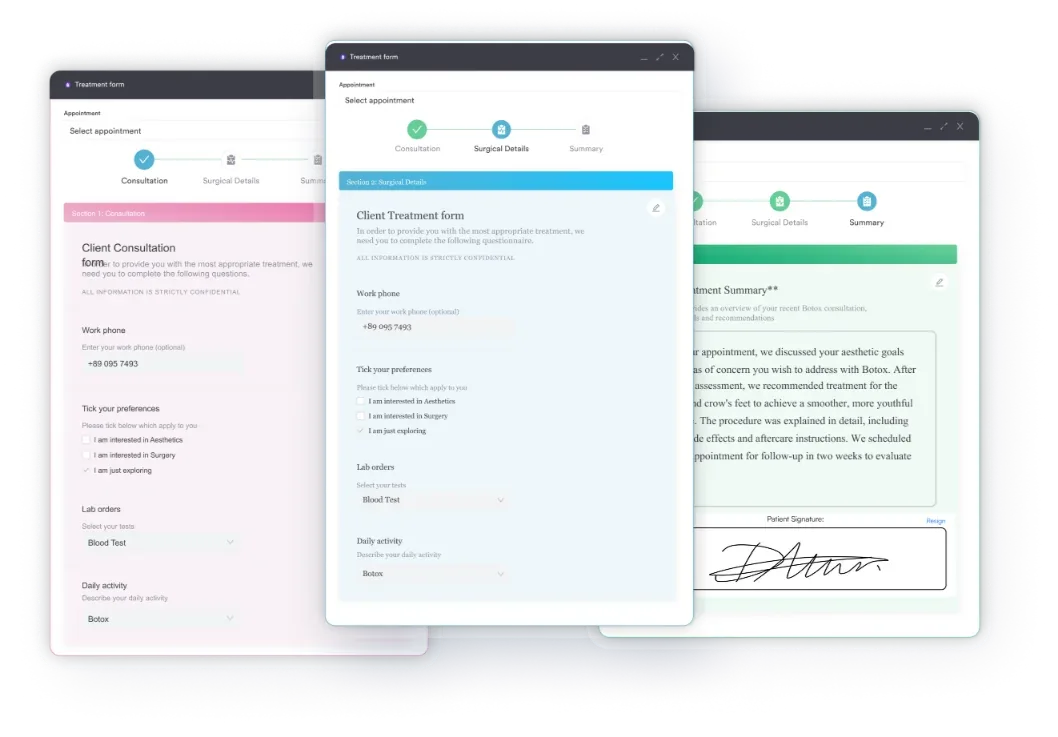
Using digital intake forms that mirror these requirements reduces the chance of missing a field before a claim is submitted. Practices using paper forms often discover missing fields only after a denial arrives.
Run a monthly audit of V5160 claims that were denied or reduced. Sort by denial reason code. If CO-4 (incorrect procedure code) or CO-97 (service included in another) appears frequently, review whether staff are confusing V5241 and V5160 or bundling the device code with the dispensing fee.
Traditional Medicare Part B does not cover hearing aids or their dispensing fees. This is a statutory exclusion under the Medicare Benefit Policy Manual, Chapter 16, §100 (Hearing Aids and Auditory Implants).
Submitting V5160 to traditional Medicare Part B will result in a denial. Practices should inform patients of this limitation before fitting so they are not surprised by an out-of-pocket bill.
Some Medicare Advantage (Part C) plans do provide hearing aid benefits, including dispensing fees. Coverage, prior authorization requirements, and reimbursement amounts vary significantly by plan and contract year. Always verify a patient’s specific Medicare Advantage plan benefits before the fitting encounter. Using compliance management software to track payer-specific coverage rules for each patient can prevent billing surprises. Common claim denial codes repeat by specialty, so the pattern is worth reading before reworking.
Medicaid coverage for V5160 varies significantly by state. Some state Medicaid programs include hearing aid services as a covered benefit for adults. Others limit coverage to pediatric populations or require prior authorization. Reimbursement rates also differ by state and locality.
Before billing V5160 to state Medicaid, confirm the following:
Check your state Medicaid agency’s fee schedule or provider manual for current rates. The CMS fee schedule tool provides federal reference rates, while individual state portals publish Medicaid-specific amounts.
Reimbursement for V5160 is not uniform. Rates depend on payer type, geographic locality, and contract terms. The table below provides general guidance on what to expect by payer category.
For current Medicaid rates by state, contact your state Medicaid office or consult the PGM HCPCS lookup tool which references CMS data. Specific dollar amounts are not published here because they change with annual updates and vary by locality.
Several common errors account for most V5160 claim rejections. Addressing these in your internal workflow protects revenue and reduces compliance risk. Practices looking at time-saving features often find that automated code validation catches these before submission.
Audiology practices billing V5160 across multiple payers face a heavy administrative load: tracking which Medicare Advantage plans cover hearing aids, maintaining state Medicaid fee schedule data, and ensuring every claim carries the correct diagnosis code pairing.
Many audiology practices share a roof with speech therapy services, adding a second specialty’s billing rules to track. Manual workflows leave more room for missed steps. Using medical practice management software purpose-built for clinical environments addresses this directly.
Pabau’s claims management software helps audiology and specialist practices reduce claim errors by automating HCPCS code entry against documented services. When a fitting encounter is recorded in the system, the correct procedure code can be mapped automatically, reducing the chance of a V5241/V5160 mismatch.
The platform also supports structured documentation workflows, so the audiogram, fitting notes, and patient consent are captured in a consistent format before the claim is generated. For practices managing both private pay and insured patients.
Connecting clinical records to billing through a unified system also supports EHR integration across the care encounter, reducing duplicate data entry and improving audit trail integrity. Practices that want to see how this applies to their specific billing volume can book a demo to review the claims management workflow in context.

Pabau helps audiology and specialist practices automate HCPCS code entry, reduce V5160 claim denials, and track reimbursements across payers from a single platform.

Getting HCPCS Code V5160 right comes down to three things: using it only for binaural fittings, pairing it with a matching bilateral diagnosis code, and meeting documentation requirements before the claim goes out. Traditional Medicare remains a non-coverage situation for most practices, while Medicaid and Medicare Advantage eligibility must be verified at the encounter level.
Pabau’s claims management tools help audiology and specialist practices build this verification and documentation discipline into the appointment workflow itself, reducing the number of denials that require manual follow-up.

Billing for spinal orthoses alongside hearing services? L0457 covers flexible TLSO billing, coverage rules, and fee schedule details.
Need the billing code for a related injection encounter? J1050 walks through the medroxyprogesterone acetate injection billing guide.
Also billing for respiratory equipment? E0471 explains the billing guide for BiPAP devices with a backup rate.
HCPCS Code V5160 is the billing code for the professional dispensing fee charged when an audiologist or hearing instrument specialist fits bilateral (both-ear) hearing aids during a single encounter. It covers the clinical service of assessment, device selection, fitting, programming, and patient instruction for binaural devices, and is billed separately from the hearing aid device codes.
V5241 is the dispensing fee for a monaural (single-ear) hearing aid fitting. V5160 is the dispensing fee for a binaural (both-ear) fitting. If only one ear is fitted, use V5241. If both ears are fitted in the same encounter, use one unit of V5160. Billing two units of V5241 for a bilateral fitting is a coding error.
No. Traditional Medicare Part B does not cover hearing aids or dispensing fees. This is a statutory exclusion. Some Medicare Advantage (Part C) plans may include hearing aid benefits, but coverage varies by plan. Always verify a patient’s Medicare Advantage plan benefits before the fitting encounter.
Required documentation typically includes a current audiogram confirming bilateral hearing loss, a physician or audiologist prescription recommending bilateral amplification, fitting notes with device serial numbers for both ears, programming records, and signed patient consent. Missing any of these elements is a common cause of claim denials.
Medicaid coverage for V5160 varies by state. Some states cover hearing aid dispensing fees for both adults and children; others limit coverage to pediatric patients or require prior authorization. Reimbursement rates differ by state. Contact your state Medicaid agency or consult the state provider manual for current coverage rules and fee schedule amounts.
V5160 is typically billed by licensed audiologists and hearing instrument specialists who perform the binaural fitting service. Scope of practice and billing eligibility vary by state licensure rules and individual payer contracts. Confirm provider type eligibility with each payer before submitting claims.