

CCSD code G5100: Bypass of duodenum billing guide
CCSD code G5100 bills a bypass that leaves the duodenum in place CCSD code G5100...

Last Updated: Oct 16, 2026
C1733 is the HCPCS Level II code for catheter, electrophysiology, diagnostic/ablation, other than 3d or vector mapping, other than cool-tip.
It is a temporary Level II HCPCS C-code, billed only on hospital outpatient claims under Medicare’s Outpatient Prospective Payment System (OPPS).
Let Pabau's smart automation suggest the right codes, reduce claim denials, and keep your practice compliant—effortlessly.
Automate repetitive tasks and focus on what matters most—your patients.
Reduce coding errors and ensure compliance with the latest regulations.
Clean claims, fewer denials, and faster reimbursements.
Powerful insights and reporting to help your practice thrive.
HIPAA compliant SOC 2 certified GDPR-compliant Trusted by 4,000+ clinics worldwide

HCPCS Code C1733 describes a catheter used in electrophysiology diagnostic or ablation procedures, excluding 3D/vector mapping and cool-tip catheter types.
C1733 is a temporary C-code restricted to outpatient hospital claims billed under the Medicare Outpatient Prospective Payment System (OPPS).
Miscoding C1733 in physician office or ASC settings is a common audit risk. The code is not valid outside OPPS hospital outpatient claims.
Pabau’s claims management software helps outpatient billing teams link procedure documentation directly to HCPCS codes, reducing manual lookup errors.
HCPCS Code C1733 is active in 2026. Its official descriptor reads: Catheter, electrophysiology, diagnostic/ablation, other than 3D or vector mapping, other than cool-tip. CMS classifies it as a Level II HCPCS C-code, meaning it is a temporary code maintained by the Centers for Medicare and Medicaid Services, or CMS, for use in hospital outpatient settings.
C-codes do not appear in physician fee schedule lookups or ASC grouper lists. They exist exclusively within the OPPS framework.
The “other than” qualifiers are the key to correct code selection. C1733 applies only when the EP catheter used is neither a 3D/vector mapping catheter nor a cool-tip (irrigated-tip) catheter. If either of those features is present, a different code applies.
Electrode count can also change the code. Where the catheter is diagnostic-only and carries 20 or more electrodes, HCPCS Code C1731 is the code to report.
The table below consolidates the core code metadata. Verify current year status against the CMS fee schedule lookup before billing, as C-code status can change with each annual OPPS final rule.
The catheter covered by C1733 is used in cardiac electrophysiology (EP) studies and ablation procedures. During an EP study, the physician maps the heart’s electrical pathways to identify arrhythmia sources.
In ablation procedures, the catheter delivers energy to destroy the tissue causing the abnormal rhythm. C1733 covers the standard diagnostic and ablation catheters used in these procedures when neither of the following applies.
Accurate clinical documentation in the patient record must identify the catheter type used. The operative report should name the specific catheter model, and coders cross-reference that against the device’s classification to confirm C1733 applies rather than a mapping or cool-tip code.
Solid practice management software for medical teams means every miscellaneous code carries the notes a payer will ask for.
EP catheter coding is one of the areas where HCPCS specificity matters most. Three distinct catheter types each carry their own code, and the differences hinge on device features that coders cannot verify without the operative report and device log.
HCPCS Code C1732 is the most commonly confused adjacent code. It covers the same procedure context but specifically for catheters that integrate with 3D or vector mapping systems. Billing C1733 when a 3D mapping catheter was used is a misrepresentation of the device supplied, and it can result in either underpayment or a claim audit.
The structured documentation practices used for device tracking are the primary safeguard against this error. The same discipline keeps non-cardiac devices off EP claims, since HCPCS Code C1754 covers an intradiscal catheter that gets mislabeled as an EP device.
HCPCS Code C1733 is billed exclusively in the hospital outpatient setting under the Medicare Outpatient Prospective Payment System. C-codes are not valid on professional claims (CMS-1500), ASC facility claims, or Part B physician office claims. Submitting C1733 on any claim type other than a UB-04 outpatient hospital claim will result in rejection.
Under OPPS, C1733 may be paid through one of two mechanisms, depending on its current CMS determination for the applicable calendar year.
Pass-through status changes annually. Always verify C1733’s current payment status in the CMS OPPS fee schedule lookup or the annual OPPS Addendum B before billing. Outpatient EHR integration with billing systems helps teams flag these annual changes automatically rather than relying on manual updates to code libraries.
Check CMS OPPS Addendum B each October when the annual final rule publishes. C-code pass-through status, device offsets, and APC assignments can all shift. A code library that updates once at year-start and never again will be wrong by Q4 in years with mid-cycle CMS corrections.
Medicare does not publish a single line-item fee for C1733 the way it does for CPT codes on the Physician Fee Schedule. Payment depends on whether C1733 carries pass-through status for the claim year, the APC the associated procedure falls into, and the hospital’s specific OPPS payment rate.
For current rates, use the AAPC HCPCS code lookup or the CMS OPPS Addendum B published with the final rule. The table below outlines the rate variables coders need to track. Never use hardcoded payment amounts from a prior year’s reference guide as a substitute for the live schedule.
Insufficient documentation is the most common reason C1733 claims face post-payment audit risk. The device is high-cost, the procedure is invasive, and Medicare contractors pay close attention to EP device claims. These four documentation elements are required for a defensible C1733 claim.
Teams using digital intake forms for procedure documentation can embed device selection fields into the EP procedure workflow, ensuring the catheter model is captured at the point of care rather than reconstructed from memory at billing time.
The HIPAA-compliant documentation standards that govern patient record retention also apply to device logs used in OPPS billing.
Hospital billing teams often route this documentation through claims management software that flags incomplete device fields before a claim reaches the payer.
Standardized documentation templates help elsewhere in healthcare too.
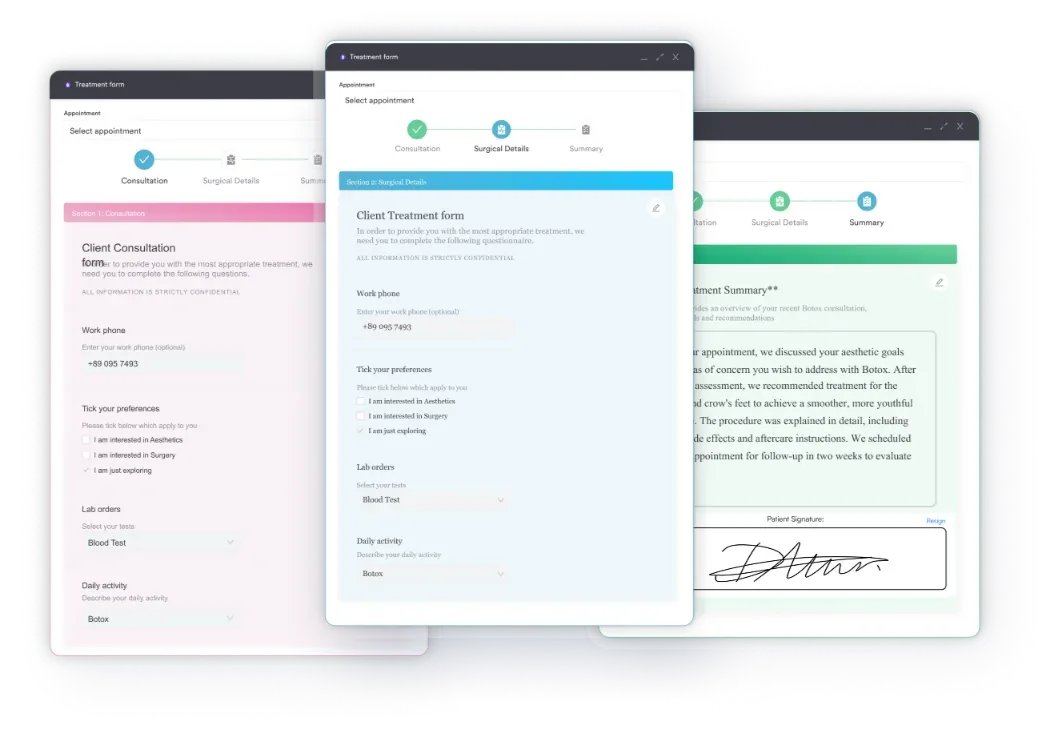

Pabau connects clinical procedure documentation directly to billing workflows, reducing the manual steps between device selection and claim submission for outpatient hospital teams.

HCPCS Code C1733 sits within a family of EP catheter and cardiac device codes. Coders working on electrophysiology claims regularly encounter the following codes alongside C1733 on the same claim or within the same procedure group. The PGM Billing HCPCS lookup provides free access to current descriptors for all of these codes.
The practice management workflows that work well for outpatient cardiology teams map each device in the procedure to its corresponding HCPCS code before the claim is assembled, rather than relying on coder memory for device classification.
Coders frequently cross-reference these same claims against other outpatient supply codes.
Electrophysiology catheter billing generates a disproportionate share of OPPS audit findings because the device cost is high, the code selection is specific, and the documentation chain from procedure room to UB-04 has multiple points of failure. These are the four errors that appear most frequently. Denials on this code repeat until someone reads the pattern rather than reworking each claim.
Accurate automated billing workflow tools can flag HCPCS C-codes that appear on non-OPPS claim types before submission, catching setting-related errors at the pre-bill review stage rather than after rejection. When a claim on this code comes back unpaid, the denial reason codes on the remittance name the cause.
The same documentation-first coding discipline shows up well beyond cardiac EP procedures. IV therapy practices and regenerative medicine practices face similar device- and product-specific coding decisions whenever a treatment involves a billable consumable or biologic.
Build a device crosswalk into your EP procedure charging workflow. Map each catheter model number in the hospital’s implant log to its correct HCPCS code. Review and update the crosswalk each January when the new OPPS final rule takes effect. This eliminates the manual lookup step that causes most C1733 vs C1732 selection errors.
C1733 billing errors are almost always documentation failures, not coding failures. When the procedure record identifies the catheter model, the device log confirms it, and the coder has a crosswalk that maps models to codes, the correct selection between C1733, C1732, and cool-tip codes is straightforward.
The same documentation-first logic applies across HCPCS supply codes, CPT procedures.
Pabau’s EHR and billing integration connects clinical documentation directly to the charge capture workflow, so the device details recorded in the procedure note flow through to billing without manual re-entry.
For outpatient hospital teams handling high-volume EP procedures, that connection reduces the missing documentation that drives audit risk. To see how Pabau supports outpatient billing documentation, book a demo.

Coding anesthesia alongside a cardiac EP procedure? 01924 is the related anesthesia code hospital billing teams often reference on the same claim.
Need another HCPCS supply code for an outpatient claim? A4423 follows the same documentation-first selection rules coders apply to C1733.
Billing a separate outpatient anesthesia service? 00932 covers a distinct anesthesia scenario worth having on hand.
HCPCS Code C1733 is a temporary Level II HCPCS C-code that describes a catheter used in cardiac electrophysiology diagnostic or ablation procedures, specifically one that is neither a 3D or vector mapping catheter nor a cool-tip (irrigated-tip) catheter. It is billed by hospital outpatient facilities under the Medicare Outpatient Prospective Payment System.
Yes, C1733 is active in 2026 based on current HCPCS listings. C-code status can change with each annual OPPS final rule, so coders should verify current year status against the CMS OPPS Addendum B published each fall before billing.
C1732 covers electrophysiology catheters that integrate with 3D or vector mapping systems (such as CARTO or EnSite). C1733 covers standard EP diagnostic and ablation catheters that do not have 3D mapping capability. The operative report and device log must identify the catheter model to determine which code applies. Using C1733 when a 3D mapping catheter was used misrepresents the device billed.
C1733 is billed exclusively under the Medicare Outpatient Prospective Payment System (OPPS) on hospital outpatient UB-04 claims. It is not valid on CMS-1500 professional claims, ASC facility claims, or any non-OPPS claim type.
Required documentation includes an operative or procedure report naming the specific catheter model, a device invoice or implant log matching the HCPCS code to the catheter supplied, ICD-10 diagnosis codes establishing medical necessity, and the appropriate revenue code on the UB-04. Generic descriptions such as “EP catheter used” are insufficient to support C1733 over C1732 in a post-payment audit.
Cool-tip (irrigated-tip) catheters circulate saline through the catheter tip during ablation to prevent char formation. They carry a separate HCPCS code distinct from C1733. If an irrigated-tip catheter was used, C1733 does not apply. The catheter model in the device log will identify whether the tip is irrigated.



