

CCSD code G5100: Bypass of duodenum billing guide
CCSD code G5100 bills a bypass that leaves the duodenum in place CCSD code G5100...

Last Updated: Oct 16, 2026
A4652 is the HCPCS Level II code for microcapillary tube sealant.
Let Pabau's smart automation suggest the right codes, reduce claim denials, and keep your practice compliant—effortlessly.
Automate repetitive tasks and focus on what matters most—your patients.
Reduce coding errors and ensure compliance with the latest regulations.
Clean claims, fewer denials, and faster reimbursements.
Powerful insights and reporting to help your practice thrive.
HIPAA compliant SOC 2 certified GDPR-compliant Trusted by 4,000+ clinics worldwide

HCPCS code A4652 is a Level II supply code describing a microcapillary tube sealant, classified under the Other Supplies category within the A4648-A4652 range.
Medicare fee schedule rates for A4652 vary by MAC jurisdiction. Always verify current allowed amounts with your local Medicare Administrative Contractor before billing.
A4652 carries no inherent modifier requirement, but payers may apply coverage criteria tied to medical necessity and place of service.
A4652 is on CMS’s ESRD PPS Consolidated Billing List, so practices billing for dialysis patients cannot bill it separately from the ESRD PPS payment.
Practice management software like Pabau validates insurer-submission fields and gates claim sending, catching errors before an A4652 claim goes out.
HCPCS code A4652 describes a microcapillary tube sealant, the wax or clay compound that seals a hematocrit tube before it goes into the centrifuge. It’s the last of five codes in the A4648-A4652 range, all within the Other Supplies section of HCPCS Level II.
Confusion about what A4652 itself covers is rare. What trips people up is knowing exactly where it sits among five similar-looking codes in CMS’s HCPCS Level II system.
HCPCS code A4652 is assigned and maintained by the Centers for Medicare and Medicaid Services (CMS), the governing authority for all HCPCS Level II codes. Unlike CPT codes, which describe procedures and services, Level II HCPCS codes cover supplies and equipment billed to Medicare and other federal payers.
That range stretches from infusion sets like A4231 to lab consumables such as A4652. Billers working with claims management software should map A4652 under the Other Supplies category to ensure accurate claim routing.
A microcapillary tube sealant is a wax or clay-based compound. It closes the open end of a microcapillary, or hematocrit, tube once it’s filled with a blood sample.
The sealed tube is then centrifuged to separate blood components for hematocrit measurement. Without a proper sealant, the sample leaks during centrifugation and the test result is invalid.
This supply is a consumable used in clinical laboratory settings. You’ll find it most often in point-of-care testing at physician office labs, urgent care centers, and hospital outpatient departments.
Because it’s a discrete, billable supply item tied to a specific procedure, CMS gave it its own HCPCS Level II code. That lets payers track and reimburse the cost separately.
Providers billing for this supply should maintain documentation linking the use of the sealant to the specific patient encounter and laboratory test performed.
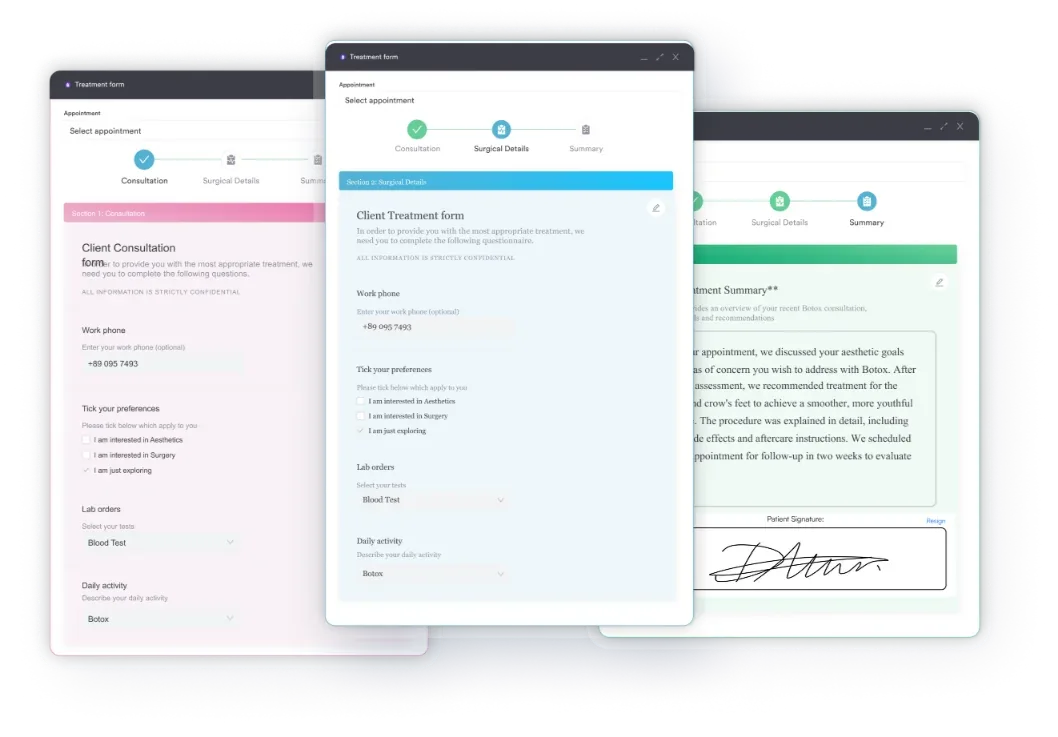
Good medical forms and documentation workflows reduce audit exposure when billing consumable supply codes like A4652. Clinics using digital forms for laboratory intake can streamline this documentation step directly within their patient record workflow.
Always document the specific test performed alongside any supply code claim. For A4652, your documentation should show the hematocrit or blood test that required the microcapillary tube sealant, the date of service, and the quantity used. This chain of documentation is your first line of defense in a payer audit.
Medicare coverage for HCPCS code A4652 depends on medical necessity criteria and place-of-service determinations made by your local Medicare Administrative Contractor (MAC). Coverage is not uniform across all MAC jurisdictions.
Payers may apply local coverage determinations (LCDs) that affect whether A4652 is separately reimbursable or bundled into a broader lab procedure payment. This matters most for high-volume settings like IV therapy clinics, where a hematocrit check often precedes every infusion.
Before submitting a claim for A4652, confirm coverage with your MAC. The CMS fee schedule tool provides current allowed amounts by HCPCS code and geographic region.
Maintaining HIPAA-compliant billing practices and thorough claim documentation is essential for supply codes, which face higher scrutiny than procedure-level codes.
One bundling rule deserves special attention. CMS’s ESRD PPS Consolidated Billing List includes A4652, so practices billing for dialysis patients cannot claim it separately from the ESRD PPS payment.
The same applies to companion supplies like A4772 test strips and A4725 dialysate solution. A dialysis-heavy practice should check its whole supply list against that CMS list before billing.
Practices running multi-payer billing should build a payer-specific policy note for A4652 inside their billing system. Confirming coverage before service prevents the most common denial scenario for supply codes. Secondary payers often allow a shorter window than the primary, so the filing deadline differs by claim.
That scenario is billing a separately payable item that the payer already bundled into the procedure fee.
With built-in inventory tracking, every dressing or catheter billed under these codes matches recorded stock movement.
HCPCS code A4652 reimbursement rates vary by Medicare Administrative Contractor jurisdiction. CMS doesn’t publish a single national allowed amount for every HCPCS supply code.
Instead, MACs apply local fee schedules that reflect regional cost variation. The rates below represent general guidance based on publicly available fee schedule data. Verify current 2026 rates directly with your local MAC, or use the fee schedule tool referenced above, before submitting claims.
Commercial payers and Medicaid managed care plans typically maintain their own fee schedules that are separate from Medicare rates.
For practices billing multiple payer types, the AAPC Codify HCPCS lookup provides a useful reference alongside your MAC’s published fee schedule. Strong practice management software features can automate part of that rate comparison, flagging potential underpayments sooner.
A4652 is the last code in a five-code cluster within the Other Supplies section of HCPCS Level II. Each code in this range covers a distinct supply item.
Selecting the wrong code from this group is one of the most common upcoding and undercoding errors on laboratory supply claims. The table below outlines each code for quick reference and accurate code selection. You can verify all five codes via the PGM Billing lookup tool, which pulls directly from CMS data.
A4649 is the most frequently misused code in this range. Some billers default to it when they’re unsure which supply code applies, because it functions as a miscellaneous catch-all. For a microcapillary tube sealant, A4652 is the correct and specific code.
Using A4649 instead counts as undercoding. It can trigger a lower payment or a flat denial once the payer’s system flags a more specific code. The companion code.
Run a quarterly audit of any A4649 claims in your system. If any of those claims involved laboratory supply items, check whether a more specific HCPCS code in the A4648-A4652 range applies. Systematic use of A4649 as a catch-all for supplies with specific codes is a common audit trigger.
Embedding A4652 into your practice management system is where billing accuracy starts. Get this right, and the code gets billed consistently every time a clinician uses the sealant, without anyone re-entering it by hand. These steps work whether you run a standalone billing platform or an EHR with built-in coding support.
Pabau’s claims management software plugs into this workflow at the validation step. It checks the insurer-submission fields on every A4652 claim and won’t let it go out until those fields are complete. That catches the kind of manual-entry slip step one is designed to prevent.
Most practices catch a bad A4652 claim the same way. A remittance advice lands two or three weeks after submission, showing a denial for a missing field or an unbundled charge. The CARC denial code list is short enough to learn, and most rework traces to a handful of entries.
By then, staff have to track down the original encounter, fix the claim, and resubmit. That delays payment and adds a manual step to an already busy billing day.
Practice management software like Pabau checks the insurer-submission fields on a claim before it leaves your system, not after a payer rejects it.
If a required field for an A4652 claim is missing or doesn’t match what the payer expects, the claim stays gated until it’s fixed. A status dashboard then shows exactly where every claim sits. Front-desk and billing staff can spot a stuck claim without digging through a separate report.
That single checkpoint won’t choose the right code for you, and it won’t apply a payer’s specific coverage rules. What it does catch is the kind of entry mistake that turns into a denial further down the line.
For a practice billing several supply codes a day, that’s often the difference between a clean claim run and a stack of rework at month-end.

Pabau validates the insurer-submission fields on every claim before it’s sent. A status dashboard then shows exactly where each claim stands.

Supply code denials on lab items like A4652 come down to a short list of causes. Usually it’s the wrong code from the range, missing medical necessity documentation, or a bundling rule nobody caught before the claim went out.
If your lab supply billing keeps generating denials, a validation step before submission usually helps more than another round of coding training. Book a demo to see how Pabau validates A4652 claims and keeps them moving without a two-week surprise.

Billing another Other Supplies code? A4640 walks through the same MAC-by-MAC fee schedule lookup used for alternating pressure pads.
Coding a home health PT visit? G0157 covers the per-diem billing rules for physical therapy assistants in home health.
Need fee schedule guidance for a nutrition supply? B4154 shows how MAC-specific rates work for special metabolic enteral formula.
Billing a small DME consumable? E0190 explains the coverage rules for positioning cushions, another low-cost supply code with its own quirks.
Looking for another supply code reference? A6242 covers the 2026 billing guide for hydrogel wound dressings.
A4652 is typically billed alongside CPT code 85013, the spun microhematocrit blood count, since the sealant is what makes that spin test possible. Confirm the pairing on your claim form before submission.
Yes. CPT 85013, the spun microhematocrit test, holds CLIA-waived status. A physician office lab can run it under a Certificate of Waiver rather than pursuing full CLIA certification.
A4652 rarely needs prior authorization on its own since it’s a low-cost consumable. Some commercial and Medicare Advantage plans manage it under broader DME authorization rules, so check your payer’s list before billing.
Bill one unit of A4652 per sealed tube used, since the descriptor is per-item, not per-panel. A hematocrit draw that seals two tubes for a duplicate reading supports two units on the claim.



