

HCPCS code E0198: Water pressure pad billing guide
HCPCS code E0198 is a water pad for a standard mattress HCPCS code E0198 is the ...

Last Updated: Oct 13, 2026
A4672 is the HCPCS Level II code for drainage extension line, sterile, for dialysis, each.
The "each" billing unit is built into the description, meaning claims must reflect the actual quantity of lines dispensed rather than a per-session or per-day aggregate.
The code sits in the Medical and Surgical Supplies section of the HCPCS A-series, alongside other dialysis consumables running from A4670 through A4690. It has no termination date in the current CMS file, confirming active status for fiscal year 2026.
Let Pabau's smart automation suggest the right codes, reduce claim denials, and keep your practice compliant—effortlessly.
Automate repetitive tasks and focus on what matters most—your patients.
Reduce coding errors and ensure compliance with the latest regulations.
Clean claims, fewer denials, and faster reimbursements.
Powerful insights and reporting to help your practice thrive.
HIPAA compliant SOC 2 certified GDPR-compliant Trusted by 4,000+ clinics worldwide

HCPCS Code A4672 describes a drainage extension line, sterile, for dialysis, billed per each unit.
A4672 is an active HCPCS Level II code maintained by CMS under the Medical and Surgical Supplies section.
Medicare covers A4672 under the DME benefit when medical necessity is established; Medicaid coverage varies by state.
Pabau’s claims management software helps DME suppliers track A4672 billing, document medical necessity, and reduce claim denials.
A sterile drainage extension line is a flexible tubing component used to extend the drainage pathway within a dialysis circuit. In hemodialysis, these lines connect access points on the bloodline circuit to allow controlled fluid removal without breaking the sterile field.
In peritoneal dialysis, extension lines are used in drain phase connections to maintain a closed system and reduce infection risk.
The “sterile” designation in the A4672 description is clinically significant. It indicates the line meets the contamination-control standards required for connection to a patient’s vascular or peritoneal access. Non-sterile tubing components bill under different codes. Billing staff who confuse sterile and non-sterile supply codes risk both undercoding and claim denials.
Because the line is consumed per dialysis session and cannot be reused, it qualifies as a disposable DME supply under Medicare’s benefit framework. The “each” unit of service reflects this single-use nature. Good medical forms documentation at the point of supply is essential to support the quantity billed.
Medicare covers HCPCS Code A4672 under the durable medical equipment benefit when the supply is medically necessary for a beneficiary with a qualifying dialysis diagnosis. Coverage is not automatic. The Medicare Administrative Contractor (MAC) for the supplier’s jurisdiction evaluates each claim against the applicable Local Coverage Determination (LCD) for dialysis supplies.
The two primary DME MACs handling dialysis supply claims are Noridian Healthcare Solutions (Jurisdictions A and D) and CGS Administrators (Jurisdictions B and C). Each issues coding verification guidance and local coverage articles that define which HCPCS codes are covered for specific clinical scenarios.
Suppliers must verify that A4672 is listed as a covered code under their jurisdiction’s current LCD before submitting a claim.
Medicaid coverage for A4672 varies by state. Some state Medicaid plans follow Medicare’s LCD requirements closely; others apply different quantity limits or require prior authorization.
Billing teams serving Medicaid beneficiaries should review the applicable state Medicaid fee schedule and coverage rules separately from Medicare guidance, as billing A4672 to both programs simultaneously requires coordination of benefits procedures.
Medicare reimburses A4672 under the DMEPOS fee schedule, which CMS updates annually. The 2026 national payment amount reflects the base rate before geographic adjustment. The actual amount paid varies depending on the supplier’s location, since a geographic payment locality modifier is applied to the base rate by the MAC.
Because the annual HCPCS code list published by CMS contains payment amounts subject to mid-year adjustment, billing teams should verify the current rate directly from the official CMS DMEPOS fee schedule file rather than relying on third-party aggregators.
Rates cited by commercial code lookup tools may reflect prior-year data or un-adjusted national averages.
A4672 is not subject to Medicare’s DMEPOS Competitive Bidding Program. Dialysis supplies have never been a competitive bidding category, and CMS has not operated active CBP contracts since December 31, 2023. Suppliers bill A4672 under the standard DMEPOS fee schedule, with the payment amount adjusted for the supplier’s payment locality.
Verify A4672 payment rates directly from the CMS DMEPOS fee schedule ZIP file, available on cms.gov. Download the rate file for your specific payment locality code rather than using the national average. Rates vary meaningfully by locality, so check the payment locality file for the exact adjustment that applies to your service area rather than assuming the national average is what you’ll be paid.
Correct submission of A4672 claims requires attention to claim form selection, modifiers, quantity reporting, and place of service codes. Errors in any of these fields are among the most common reasons dialysis supply claims are returned without payment.
The same quantity-reporting discipline applies to other DME supply codes.

Pabau helps dialysis suppliers and DME practices manage HCPCS claim documentation, track supply quantities, and reduce first-pass denial rates. See how our claims management tools handle the administrative side of DME billing.

Medicare’s DME benefit requires specific documentation before and at the time of delivery. Missing a single required element gives the MAC grounds to deny the claim on audit, even if the supply was clinically appropriate. Maintain the following in the patient’s file before billing A4672:
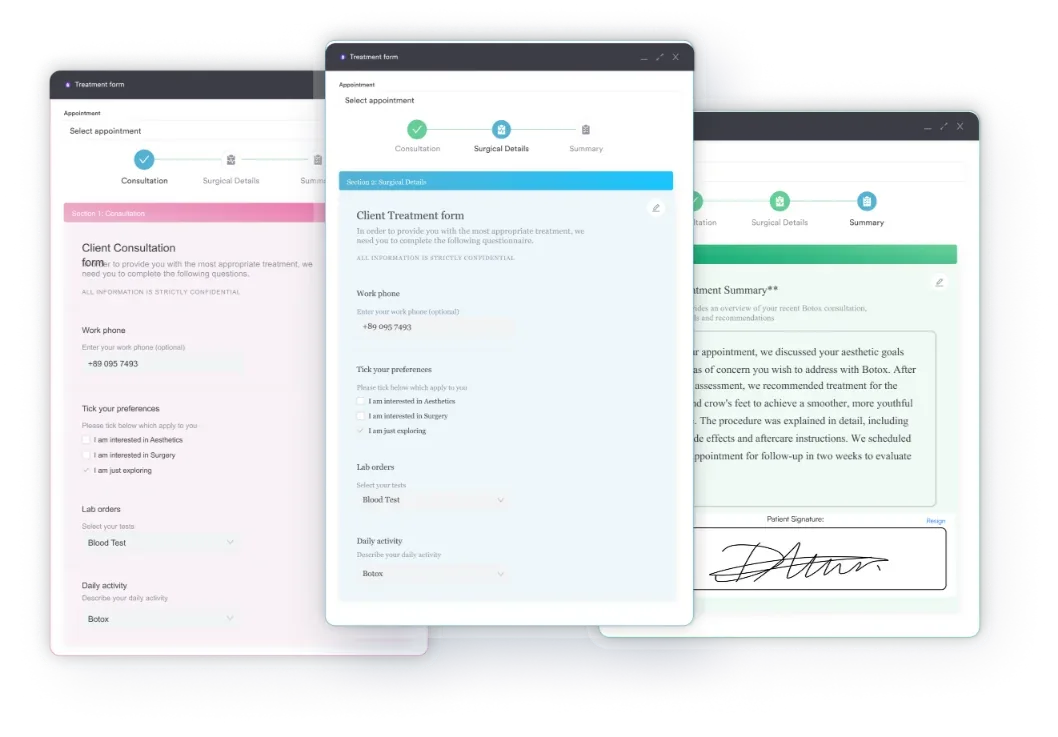
Using digital intake forms to capture physician orders, delivery confirmations, and medical necessity documentation at the point of care reduces the risk of incomplete files when a MAC audit arrives.
Paper-based workflows are more likely to have missing or incomplete records, especially when orders are received by phone and written confirmations are filed manually. Well-structured HIPAA-compliant documentation practices also protect the supplier in post-payment review.
Run a quarterly internal audit on A4672 claims: pull 20 random claims and confirm each has a signed physician order, delivery receipt with matching quantity, a valid ICD-10 dialysis diagnosis, and a supplier number that matches the order. This routine check catches missing documentation before a MAC auditor does.
Most A4672 denials fall into four categories. Recognizing them ahead of submission is far less costly than recovering payment after the fact.
A4672 sits within a block of HCPCS Level II codes covering dialysis circuit components. Selecting the wrong adjacent code creates upcoding or downcoding exposure. The AAPC’s HCPCS Level II code lookup tool is a useful reference for reviewing full descriptions before claim submission.
The most common coding error in this range is billing A4672 when A4673 is the correct code. If the drainage extension line supplied to the patient has easy lock connectors, A4673 applies. Billing A4672 for an easy-lock line misrepresents the product and may be flagged on post-payment review.
Review the product’s specification sheet before selecting between the two codes. You can search the complete adjacent range through the NLM clinical terminology resources and confirm product-code alignment with your MAC’s coding verification tool. Other single-use DME supply codes.
HCPCS Code A4672 billing involves more moving parts than most supply codes: per-unit quantity tracking, physician order management, delivery receipt matching, and jurisdiction-specific LCD compliance.
Practices across specialties, including physical therapy and occupational therapy, handle similar durable equipment and supply billing workflows, and practice management software that manages these tasks in one place reduces the administrative burden on billing staff.
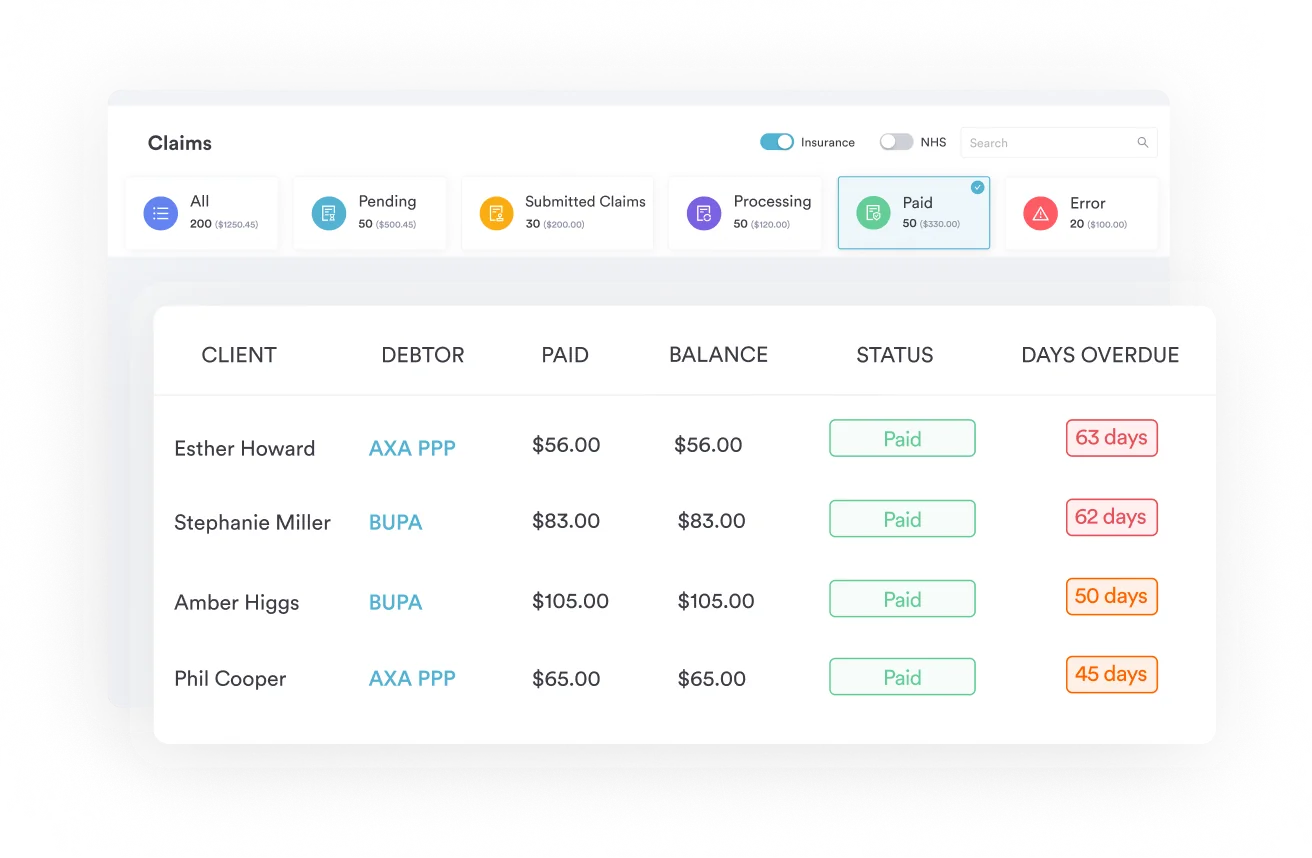
Pabau’s claims management software gives DME suppliers a centralized space to attach physician orders and delivery documents to patient records, track quantity-billed against quantity-delivered, and flag claims that are missing required documentation before submission.
The platform also supports structured practice management workflows that reduce the manual steps between supply delivery and claim creation.
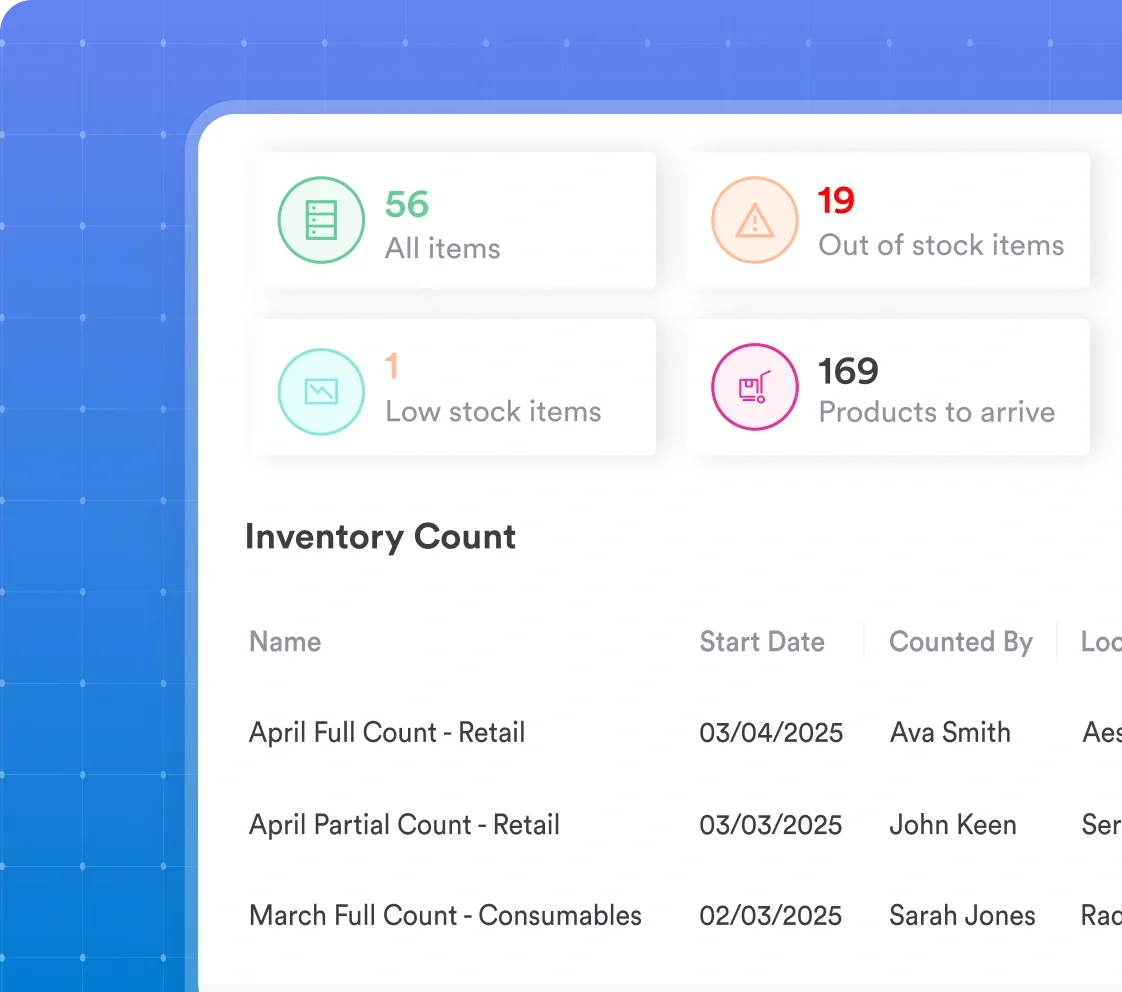
For teams managing high volumes of dialysis supply claims across multiple patients, Pabau’s inventory management software tracks stock levels against delivered quantities, making it easier to reconcile supply logs with billing records at the end of each period.
Teams looking to strengthen the front-end documentation side of DME claims can also use digital forms to capture physician orders and patient acknowledgments in a format that integrates directly with the patient’s record, rather than relying on paper files that can go missing between delivery and audit.
For practices managing broader medical billing documentation workflows across multiple code sets and payer types, Pabau provides reporting and compliance tools designed to surface patterns in claim denials and support corrective action before they escalate.
HCPCS Code A4672 is a straightforward supply code on the surface. In practice, getting it right means tracking per-unit quantities precisely, maintaining complete documentation files before submitting, understanding your MAC’s jurisdiction-specific LCD, and distinguishing A4672 from A4673 when easy-lock connectors are involved. These details matter because DME auditors look at dialysis supply billing closely.
Pabau’s claims management tools help dialysis suppliers and DME practices keep documentation complete, track delivered quantities, and manage the billing lifecycle from physician order through reimbursement. To see how the platform handles DME billing workflows, book a demo.

Worried about billing a deleted or replaced code? J1030 covers the crosswalk from a discontinued J-code to its active replacement, the same coding-accuracy check billers run when choosing between A4672 and A4673.
Billing non-emergency ambulance transport alongside DME claims? A0426 breaks down ALS1 non-emergency transport billing rules that often intersect with home-dialysis logistics.
Need a billing guide for a biologic infusion drug? J0129 walks through billing requirements for another code set where documentation precision determines reimbursement.
HCPCS Code A4672 is used to bill for a sterile drainage extension line used in dialysis, with reimbursement requested per each unit dispensed. It applies to home dialysis patients whose physician has ordered the supply and who meet Medicare’s DME benefit criteria.
Medicare reimburses A4672 under the DMEPOS fee schedule, with rates updated each January 1. The exact 2026 payment amount varies by geographic payment locality; A4672 is not part of the DMEPOS Competitive Bidding Program. Verify the current rate for your jurisdiction using the official CMS DMEPOS fee schedule file available on cms.gov rather than third-party aggregators, which may show prior-year or un-adjusted figures.
Yes, Medicare covers A4672 under the DME benefit when the beneficiary has a qualifying dialysis diagnosis (typically ESRD), the supply is used in a home-dialysis setting, and the claim meets the MAC’s LCD requirements. Medicaid coverage varies by state and may require prior authorization or apply different quantity limits.
A4671 covers a disposable cycler set used with a cycler dialysis machine, billed per each unit, like A4672. The key distinction is what’s being supplied: A4671 is the cycler-set component, while A4672 is the sterile drainage extension line.
A4672 bills per each unit dispensed, not per session or per patient per month. If a patient receives three sterile drainage extension lines in a month, the claim reports a quantity of three. Reporting a flat quantity of one regardless of actual delivery understates the service and leaves reimbursement on the table.
Required documentation includes a signed physician’s order specifying the supply, a valid ICD-10 dialysis diagnosis on the claim, a delivery receipt signed by the beneficiary with a quantity that matches the units billed, and confirmation that the supplier holds a valid DMEPOS supplier number. CMS discontinued certificates of medical necessity (CMNs) for all dates of service on or after January 1, 2023, so no jurisdiction can require a standalone CMN. The medical-necessity details now live in the physician’s order and clinical notes instead.
A4673 applies when the drainage extension line has easy lock connectors. If the product supplied to the patient includes this specific connector type, bill A4673 rather than A4672. Using the wrong code misrepresents the product delivered and creates post-payment audit exposure. Review the manufacturer’s product specification sheet to confirm the connector type before selecting between the two codes.



