

HCPCS code E0198: Water pressure pad billing guide
HCPCS code E0198 is a water pad for a standard mattress HCPCS code E0198 is the ...

Last Updated: Oct 13, 2026
A4673 is the HCPCS Level II code for extension line with easy lock connectors, used with dialysis.
A DME supplier submits it on a Part B claim expecting separate reimbursement, and Medicare denies it because the extension line is already priced into the dialysis facility's bundled ESRD PPS payment.
Medical practice management systems that lack structured billing workflows make this mismatch harder to catch.
Let Pabau's smart automation suggest the right codes, reduce claim denials, and keep your practice compliant—effortlessly.
Automate repetitive tasks and focus on what matters most—your patients.
Reduce coding errors and ensure compliance with the latest regulations.
Clean claims, fewer denials, and faster reimbursements.
Powerful insights and reporting to help your practice thrive.
HIPAA compliant SOC 2 certified GDPR-compliant Trusted by 4,000+ clinics worldwide

HCPCS Code A4673 describes an extension line with easy lock connectors, used with dialysis – a HCPCS Level II code in the Dialysis Equipment and Supplies category, not a urological supply.
A4673 sits on CMS’s ESRD PPS Consolidated Billing List. Medicare bundles it into the dialysis facility’s per-treatment payment, so a separate DME supplier generally cannot bill it directly to Part B.
Separate payment is only available with the AY modifier, and only when the item is furnished for a reason unrelated to the treatment of ESRD – a narrow exception, not the default billing path.
Pabau’s claims management software helps billing teams flag consolidated-billing supply codes like A4673 before they’re submitted the wrong way, reducing avoidable denials.
HCPCS Code A4673 belongs to the Level II Healthcare Common Procedure Coding System, maintained by the Centers for Medicare and Medicaid Services (CMS). Level II HCPCS codes cover products, supplies, and services not described by CPT codes, primarily durable medical equipment, prosthetics, orthotics, and supplies (DMEPOS).
A-series codes (A0000-A9999) represent transportation services, medical and surgical supplies, and related accessory items. Within that range, A4673 sits specifically in the Dialysis Equipment and Supplies group (A4653-A4932). The official descriptor and classification details appear in the table below.
A4673 is not a urological accessory, despite the similar-sounding “extension line” naming pattern that also appears in urinary catheter supply codes. Practices billing or tracking this code should confirm the item matches the dialysis-specific descriptor precisely.
Always verify the exact descriptor against an official HCPCS code lookup tool before relying on it in a claim or internal supply record.
Medicare doesn’t cover A4673 as a standalone, separately payable supply the way it covers many other DMEPOS A-series codes. Since January 1, 2011, CMS has paid renal dialysis facilities a single bundled rate under the End-Stage Renal Disease Prospective Payment System (ESRD PPS).
That rate covers all the equipment and supplies used to furnish outpatient dialysis, whether the treatment happens in the facility or at the patient’s home.
A4673 appears on CMS’s ESRD PPS Consolidated Billing List, which means its cost is already priced into that per-treatment payment. A DME supplier or other outside provider that bills Medicare separately for it will not get paid. The ESRD facility, not the supplier, is responsible for furnishing or arranging the item.
This wasn’t always the rule. Before the ESRD PPS bundle, home dialysis patients could choose “Method II,” dealing directly with a DME supplier who billed the DME MAC separately for home dialysis equipment and supplies. The Medicare Improvements for Patients and Providers Act eliminated that option when the bundled PPS took effect.
Supplies like A4673 furnished for home dialysis are now billed by the renal dialysis facility on a 72X type of bill, alongside the dialysis modality’s revenue code (082X for hemodialysis, 083X for peritoneal dialysis).
The general criteria that support A4673 being furnished as part of a covered episode of dialysis care include:
Coverage for A4673 isn’t confirmed diagnosis-code by diagnosis-code the way a typical DMEPOS supply is. It runs through the ESRD facility’s obligations under the Medicare Claims Processing Manual, Chapter 8.
Billing A4673 as though it were a separately payable Part B supply code will very likely trigger a consolidated billing edit, with the claim denied and instructions to bill the ESRD facility instead.
They support the underlying dialysis plan of care and modality documentation that the ESRD facility’s claim depends on.
For the most current coverage policy, review CMS’s ESRD PPS consolidated billing guidance and cross-reference the current-year Consolidated Billing List before assuming any dialysis supply code is payable outside the bundle.
Because A4673 is a consolidated-billing item, there is no standalone DMEPOS fee schedule allowable to look up for it the way there is for many other A-series supplies. Unlike drug codes reimbursed under the Average Sales Price methodology.
Its cost is folded into the ESRD PPS base rate instead, which CMS updates every calendar year and publishes in the ESRD PPS proposed and final rules in the Federal Register.
Facilities don’t submit A4673 expecting a discrete per-unit payment on the claim. The code identifies the supply for internal tracking and cost-reporting purposes, while the Medicare payment itself arrives as part of the bundled per-treatment rate.
Because the ESRD PPS base rate and the consolidated billing list both change annually, confirm current-year status directly against CMS’s published sources rather than assuming a dialysis supply code’s bundle status from a prior year. The table below describes how the rate structure applies to A4673 rather than listing a static dollar figure.
Before submitting A4673 on any claim, confirm the entity billing is the ESRD facility responsible for the patient’s dialysis care. If a different provider or supplier is billing, verify whether the AY modifier and unrelated-to-ESRD documentation genuinely apply – most supply items in the A4671-A4674 range don’t qualify for that exception.
Billing A4673 correctly starts with confirming who is submitting the claim, not with the code itself. Because A4673 sits on CMS’s ESRD PPS Consolidated Billing List, it should appear on the renal dialysis facility’s own claim in nearly every scenario, not on a separate DME supplier’s Part B claim. The steps below apply to the standard ESRD facility billing workflow.
Practices that have moved to claims management software with built-in denial tracking catch consolidated-billing mismatches early, often before a full denial cycle completes. The same billing team can monitor multiple HCPCS supply codes across the practice’s full DMEPOS portfolio from one dashboard. A clearinghouse submission report arrives before the payer remittance, and it is the first place a format problem shows.
For practices coordinating documentation between a nephrology practice and a dialysis facility.
General practices and metabolic health practices that monitor patients through chronic kidney disease progression won’t typically bill A4673 themselves, but understanding the consolidated billing rule still helps with referral coordination.
Practice management software built for general practice or for metabolic health practices that tracks referral status keeps the hand-off clean when a patient moves from CKD monitoring to active ESRD care.

Because A4673 is a consolidated-billing item, only a narrow set of modifiers change how the claim behaves. Using the wrong one, or expecting a modifier to unlock separate payment when it doesn’t apply, is a common source of confusion for this code.
Confirm modifier applicability against the current Medicare Claims Processing Manual, Chapter 8, before submission. Adding KX, GA, or GZ to a claim doesn’t change the underlying consolidated billing rule – only the AY modifier, paired with the right documentation, does that.
The documentation package behind an A4673 claim needs to establish the patient’s dialysis care and the billing entity’s role in it – not just medical necessity for a single supply item. Keep the following on file:
Structured digital clinical forms help capture and retain this documentation at the point of care. When the physician order, dialysis modality, and training records flow through a single system, the billing team can verify the facility’s consolidated billing position before a claim leaves the practice.
You can also review medical forms best practices to tighten the intake process and documentation habits.
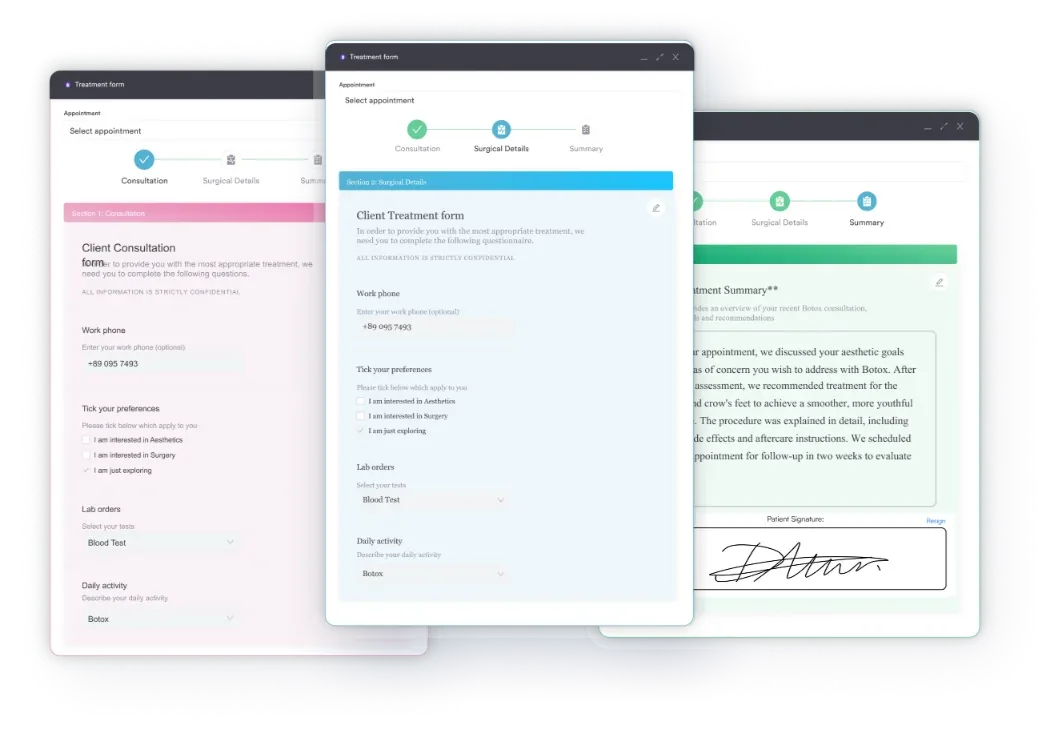

Pabau’s claims management tools help billing teams track ESRD PPS consolidated billing rules, flag supply codes that shouldn’t be billed separately, and monitor denial patterns before they become write-offs.

Denials for HCPCS A4673 cluster around a small number of root causes, and most of them trace back to who is billing rather than what’s documented. The table below maps the most common denial reasons to their corrective actions.
Most A4673 denials reflect the ESRD PPS consolidated billing edit working exactly as designed, redirecting payment responsibility to the dialysis facility rather than signaling a weak claim worth appealing. Correcting who submits the claim, and confirming the revenue code and dialysis modality documentation line up before submission, resolves most of these denials without an appeal.
Reviewing HIPAA-compliant practice software features can also help practices build audit-ready documentation habits that support the underlying dialysis plan of care. For broader HIPAA security rule requirements that affect how billing records are stored and transmitted, consult your compliance officer before making workflow changes.
Billers researching HCPCS Code A4673 often need to compare it against the other dialysis supply codes in the same A4653-A4932 range. The table below cross-references the peer codes that appear most frequently in the same billing context.
A4672 (drainage extension line) is the code most easily confused with A4673, since both describe extension line tubing used with dialysis. The differentiator is the connector design: A4673 specifies “easy lock connectors,” while A4672 describes a plain sterile drainage extension line.
Submitting the wrong one of the two, or expecting either to be separately payable outside the ESRD PPS bundle, creates the same consolidated billing mismatch described above. Practices managing multiple billing code categories benefit from keeping a dialysis-specific code reference alongside their general HCPCS lookup process.
Similar billing-party issues show up across other DMEPOS codes.
For CPT and HCPCS billing reference guides covering adjacent code families, review the Pabau procedure codes library.
The NLM Clinical Table Search API also provides a free programmatic HCPCS Level II lookup if you need to verify peer codes in bulk. CMS’s Consolidated Billing List remains the authoritative source for confirming which dialysis supply codes are bundled in a given year.
When comparing A4673 to A4672, remember both are billed by the ESRD facility under the same consolidated billing rules – neither is a code a standalone DME supplier should expect to bill separately to Part B.
HCPCS Code A4673 claims succeed or fail based on who submits them, not just what’s documented behind them. The code describes a dialysis extension line with easy lock connectors, and it sits on CMS’s ESRD PPS Consolidated Billing List.
That means the ESRD facility responsible for a patient’s dialysis care is virtually always the correct party to bill it, rather than a separate DME supplier working outside that relationship.
Pabau’s claims management software gives billing teams a structured workflow to track DMEPOS and ESRD supply submissions, flag consolidated-billing codes before claims leave the practice, and monitor denial patterns across HCPCS code batches. If your team is still managing supply code claims through manual spreadsheets or disconnected billing tools, book a demo to see how Pabau consolidates the workflow.

List Item #1
List Item #2
HCPCS Code A4673 is a Level II Healthcare Common Procedure Coding System code that describes an extension line with easy lock connectors, used with dialysis. It’s a CMS-maintained code within the Dialysis Equipment and Supplies category, used to identify the supply as part of a patient’s end-stage renal disease (ESRD) dialysis care – most often peritoneal dialysis or home hemodialysis.
Medicare covers A4673 as part of the End-Stage Renal Disease Prospective Payment System (ESRD PPS) bundled payment made to the renal dialysis facility responsible for the patient’s care – it is not typically paid as a separate line item. The code appears on CMS’s ESRD PPS Consolidated Billing List, so a DME supplier or other outside provider generally cannot bill it separately to Medicare Part B; the ESRD facility bills for it as part of the per-treatment rate instead.
Because A4673 is a consolidated-billing item, the AY modifier matters most – it’s required when a provider other than the ESRD facility bills separately for a reason unrelated to ESRD treatment. KX, GA, and GZ may apply in the narrow circumstances where that separate billing is appropriate, but none of them override the underlying consolidated billing rule that routes payment to the dialysis facility.
There isn’t a standalone DMEPOS fee schedule rate to look up for A4673, because CMS bundles the cost of this supply into the ESRD facility’s per-treatment payment under the ESRD PPS. That bundled base rate updates annually and is published in the CMS ESRD PPS final rule; verify the current rate and the Consolidated Billing List status directly with CMS rather than relying on a standalone per-unit figure.
CPT codes are Level I codes maintained by the American Medical Association and describe physician services and procedures. HCPCS Level II codes, maintained by CMS, cover products, supplies, and non-physician services not described in CPT, including durable medical equipment, prosthetics, and dialysis supply items like A4673.



