

CCSD code G5100: Bypass of duodenum billing guide
CCSD code G5100 bills a bypass that leaves the duodenum in place CCSD code G5100...

Last Updated: Oct 16, 2026
A4670 is the HCPCS Level II code for automatic blood pressure monitor.
Let Pabau's smart automation suggest the right codes, reduce claim denials, and keep your practice compliant—effortlessly.
Automate repetitive tasks and focus on what matters most—your patients.
Reduce coding errors and ensure compliance with the latest regulations.
Clean claims, fewer denials, and faster reimbursements.
Powerful insights and reporting to help your practice thrive.
HIPAA compliant SOC 2 certified GDPR-compliant Trusted by 4,000+ clinics worldwide

HCPCS Code A4670 describes an automatic blood pressure monitor, priced through the DMEPOS fee schedule under the Dialysis Equipment and Supplies group, not general medical and surgical supplies.
Medicare generally does not cover automatic blood pressure monitors for routine hypertension management; an essential hypertension diagnosis (I10) does not by itself establish coverage.
Where coverage exists at all, it is narrow and tied to ESRD or home dialysis, and the ESRD PPS typically bundles the equipment into the dialysis facility’s payment rather than billing it as a standalone DME claim.
For most patients, the correct path is an Advance Beneficiary Notice (ABN) with modifier GA or GY, not the KX modifier, which only applies when the claim genuinely meets coverage criteria.
Pabau’s digital forms and compliance tools help practices keep physician orders, ABNs, and delivery records organized and audit-ready for A4670 claims.
Billing teams reach for HCPCS Code A4670 whenever a practice dispenses an automatic blood pressure monitor to a patient. Because the device looks like a routine supply, practices often bill it the way they’d bill any other DME item – but A4670 carries a narrower coverage pathway than most Level II codes, which makes it one of the more commonly over-billed items in the A-series.
According to the Centers for Medicare and Medicaid Services (CMS) HCPCS code set, A4670 sits in the Dialysis Equipment and Supplies group of the HCPCS A-series – not general medical and surgical supplies.
That placement is a signal in itself: CMS ties this code to the ESRD/dialysis benefit, and the DMEPOS fee schedule reimburses it rather than the Medicare Physician Fee Schedule.
The same logic applies to other supplies in that group. HCPCS Code A4671, the disposable cycler set, is paid inside the ESRD PPS base rate rather than as a separate DME claim.
A4670 covers an automatic (self-inflating) blood pressure monitor – the device pumps and releases the cuff on its own, without the user or clinician operating a hand bulb.
The short and long descriptors are identical: “Automatic blood pressure monitor.” CMS does not attach a digital-display or home-use qualifier to the code itself, though in practice, practices dispense these devices for patients to use outside a clinical setting.
What the code does not cover is equally important for billers to know. Bill manual sphygmomanometers (which require manual pumping) separately under A4660. A4663 covers a standalone blood pressure cuff without the monitor unit.
Just as important: getting the code right does not mean Medicare will pay the claim. Coverage is a separate question, covered in the next section.
Here’s the short answer: Medicare generally does not cover automatic blood pressure monitors for routine hypertension management. This is not a code you can bill with a physician order and an I10 diagnosis and expect to get paid.
Per medical spa compliance requirements and broader healthcare billing standards, assuming coverage without checking the benefit category is one of the most common (and expensive) mistakes in DME billing.
Where coverage exists at all, it’s narrow and tied to a specific circumstance: home dialysis.
Under Medicare’s ESRD Prospective Payment System, the ESRD PPS typically bundles a home dialysis patient’s blood pressure monitoring equipment into the dialysis facility’s per-treatment payment rather than billing it as a standalone DME claim through A4670. That means even the “covered” scenario usually isn’t a separate A4670 line item on a DME claim – it’s already paid for inside the facility’s bundle. Revenue cycle management treats coding, submission and collection as one process rather than three handoffs.
For every other scenario – including the most common one, a patient managing essential hypertension at home – suppliers should expect Medicare to deny the claim as non-covered.
The correct response is not to chase a KX modifier or dig up a supporting ICD-10 code. It’s to have the patient sign an Advance Beneficiary Notice (ABN) before the practice dispenses the device, so the practice can bill the patient directly if Medicare denies the claim.
Commercial payers and state Medicaid programs set their own coverage rules for A4670 and may cover it more broadly than Medicare, sometimes with prior authorization. Always verify the specific payer’s policy – and don’t assume Medicare’s non-coverage stance applies elsewhere, or that a commercial payer’s coverage applies to Medicare.
Good practice management software for medical practices turns supplies used in a visit into billed line items automatically.
Essential hypertension (I10) does not, by itself, establish Medicare coverage for A4670. A well-documented hypertension diagnosis makes for a clean claim, but it doesn’t change the underlying coverage answer – routine hypertension management is a non-covered indication. Primary care and family medicine practices.
The diagnoses that actually connect to A4670’s narrow coverage pathway are ESRD-related, and even those don’t guarantee a separately payable DME claim (see the bundled-payment note above). Always verify against the applicable LCD from your Medicare Administrative Contractor (MAC) before assuming any diagnosis supports coverage.
Don’t read this table as a list of “covered diagnoses” – it’s a map of what each diagnosis actually does for the claim. Only the ESRD-related codes connect to a genuine (if usually bundled) coverage pathway. I10 and R03.0 support medical necessity for the device clinically, but neither one turns A4670 into a covered Medicare benefit.
When A4670 is separately payable at all, it’s priced through the CMS DMEPOS fee schedule, not the Medicare Physician Fee Schedule – A4670 has no RVU-based pricing. Rates vary by locality (non-rural vs. rural) and by whether the device is a purchase or a rental.
If you need to confirm that A4670 is the correct code for a specific product, that’s a job for the Pricing, Data Analysis and Coding (PDAC) contractor’s product classification list – PDAC verifies coding, it does not set the price.
Rates change each January 1. Always pull the current CMS DMEPOS fee schedule file before quoting a reimbursement amount to a patient – and confirm whether the claim is even separately payable before you get that far. Commercial and Medicaid rates differ from Medicare, and billers must verify them directly with those payers.
Because A4670 is routinely non-covered, the documentation checklist looks a little different from a standard DME item. Maintaining a paperless, HIPAA-compliant practice makes it easier to track and retrieve these records if a payer questions a claim. The following covers what most payers expect:
Using digital forms to capture and store physician orders, signed ABNs, and delivery confirmations reduces the risk of missing paperwork if Medicare denies a claim and the practice needs to bill the patient directly.
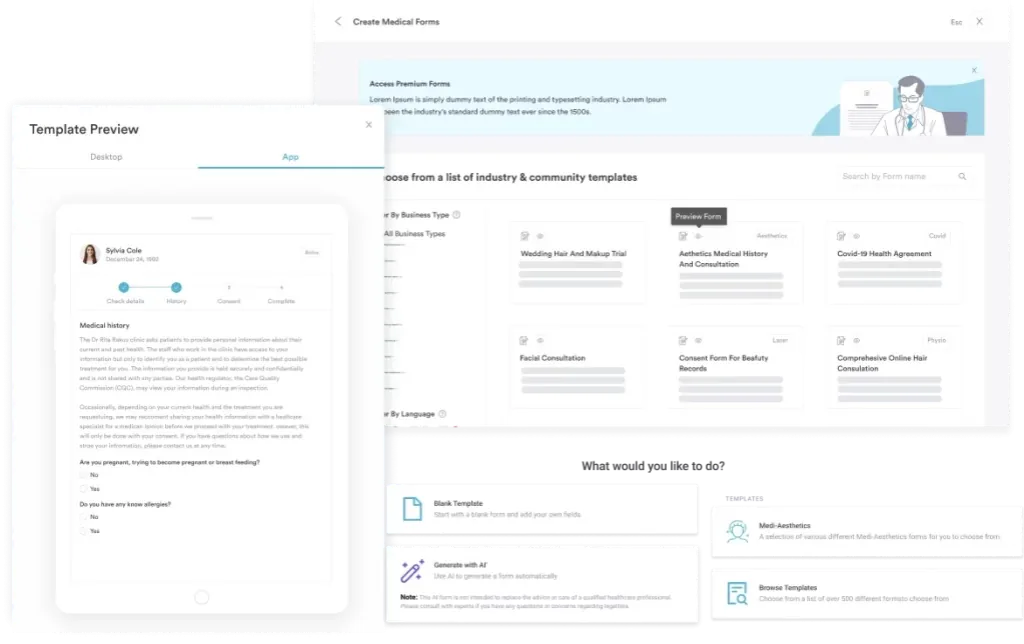
Before dispensing an automatic blood pressure monitor, check whether the patient’s context is routine hypertension management or ESRD/home dialysis. If it’s the former, default to an ABN and modifier GA or GY – don’t reach for KX on the assumption that a physician order and an I10 diagnosis are enough to secure payment.
Billing A4670 correctly starts with getting the coverage expectation right, not just the paperwork. Each step below maps to a specific failure point that billers commonly encounter.
Keeping the ABN, physician order, and delivery confirmation attached to the same patient record makes it far easier to produce the complete file if a claim is denied – or if the patient disputes a bill after a Medicare denial.
Modifier selection is where many A4670 claims go wrong – mostly because teams default to KX out of habit, when GA or GY is almost always the right call for this item.
Verify modifier allowances with your specific MAC before submitting – rules can vary by jurisdiction. The AAPC HCPCS code lookup provides modifier allowance details by code and payer type.
A4670 denials follow predictable patterns, and most of them trace back to a single wrong assumption: that this is a routinely covered item. Reviewing your practice’s HIPAA compliance checklist and claim preparation workflow against these common errors prevents the most avoidable rejections.
Several adjacent codes in the HCPCS A-series cover blood pressure monitoring supplies and equipment. Selecting the wrong code from this group is one of the leading causes of claim review requests. The table below maps each code to its correct use case, including when to choose it over A4670.
Practices that also bill for medical spa software and wellness monitoring services should be familiar with the full group – and remember that code accuracy and Medicare coverage are two separate questions.
A4670’s biggest billing risk is missing paperwork on an item Medicare is likely to deny, requiring a re-bill to the patient.
The ABN, the physician order, the clinical notes, and the delivery confirmation all need to be in one place and easy to produce if a patient disputes the bill or a claim gets appealed. Managing that across a paper or disconnected workflow means something gets missed.
Practice management software like Pabau centralizes this process.
The practice management software features that matter most here – structured intake, digital consent, and document tracking – live in one place rather than across three separate systems.
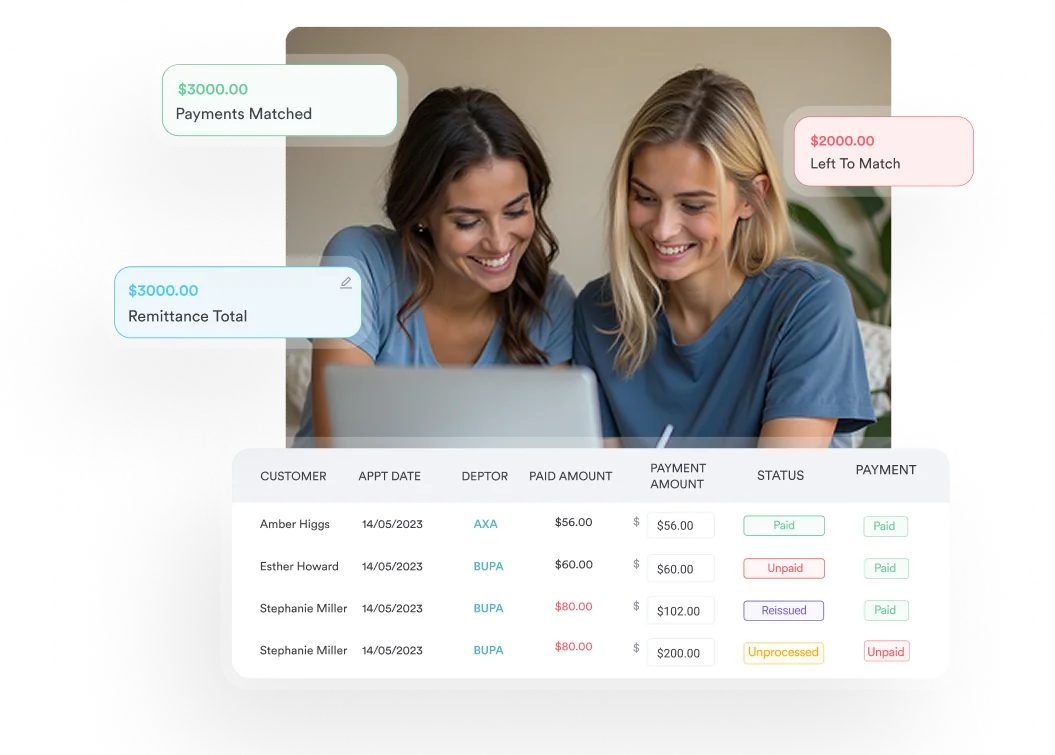
For practices managing patient data security, Pabau’s HIPAA-aligned architecture stores ABNs and physician orders securely and keeps them retrievable on demand – which matters for DME items like A4670 that carry a higher denial and audit rate than routine Part B services.
Practices using patient management software that ties documentation to the patient record reduce the manual handoffs where paperwork goes missing.

Pabau’s digital forms and compliance tools store physician orders, signed ABNs, and delivery confirmations against the patient record, so your team can produce the full file the moment a claim is questioned or appealed.

Most A4670 denials trace back to a coverage assumption, not missing paperwork. Treat this code the way its own classification suggests: a Dialysis Equipment and Supplies item that Medicare bundles or excludes far more often than it pays separately.
Default to an ABN and GA or GY, save KX for the rare case where the claim genuinely meets ESRD/home dialysis criteria, and don’t let an I10 diagnosis stand in for a coverage check.
Get that default right, and the documentation side becomes straightforward: an ABN, a physician order, and a delivery confirmation, organized by encounter so nothing is missing if a payer questions a claim. Book a demo to see how Pabau keeps DME documentation like this organized and audit-ready.

Billing a TENS or apnea monitor lead wire replacement? HCPCS Code A4557 covers the coverage rules and documentation for lead wires billed alongside home monitoring equipment.
Need the code for conductive gel supplies? HCPCS Code A4558 explains billing and coverage for conductive gel used with home monitoring and stimulation devices.
Dispensing a replacement sleeve for a DME device? HCPCS Code A4600 walks through the billing guide for sleeve replacements in the same A-series group as A4670.
HCPCS Code A4670 is a Level II HCPCS code that describes an automatic blood pressure monitor. It sits in the Dialysis Equipment and Supplies group of the HCPCS A-series, and the CMS DMEPOS fee schedule prices it rather than the Medicare Physician Fee Schedule.
Generally, no. Medicare does not routinely cover automatic blood pressure monitors for managing hypertension at home. The narrow exception is home dialysis, where the ESRD Prospective Payment System typically bundles blood pressure monitoring equipment into its per-treatment payment to the dialysis facility rather than billing it as a separate DME claim. Outside that context, expect a denial and issue an Advance Beneficiary Notice (ABN) before dispensing.
Essential hypertension (I10) does not, by itself, establish Medicare coverage for A4670 – routine hypertension management is a non-covered indication for this item. The diagnoses that are relevant to A4670’s narrow coverage pathway are ESRD-related, such as N18.6 (end stage renal disease) and Z99.2 (dependence on renal dialysis), and even then the ESRD PPS usually bundles the equipment into the dialysis facility’s payment rather than billing it separately.
Because A4670 is routinely non-covered, GA (waiver of liability, ABN on file) and GY (statutorily excluded or not a Medicare benefit) are the modifiers suppliers use most often. KX (medical policy requirements met) only applies in the rare circumstance where a claim genuinely meets coverage criteria – it does not turn a non-covered device into a covered one. RR applies only if the patient rents the device rather than purchasing it.



