CCSD code G5100: Bypass of duodenum billing guide
CCSD code G5100 bills a bypass that leaves the duodenum in place CCSD code G5100...

Last Updated: Oct 16, 2026
A4640 is the HCPCS Level II code for replacement pad for use with medically necessary alternating pressure pad owned by patient.
That narrow scope is where claims go wrong most often. The descriptor requires the primary device to be patient-owned, not rented or leased. Miss that detail, and it becomes the single most common reason A4640 gets denied.
Let Pabau's smart automation suggest the right codes, reduce claim denials, and keep your practice compliant—effortlessly.
Automate repetitive tasks and focus on what matters most—your patients.
Reduce coding errors and ensure compliance with the latest regulations.
Clean claims, fewer denials, and faster reimbursements.
Powerful insights and reporting to help your practice thrive.
HIPAA compliant SOC 2 certified GDPR-compliant Trusted by 4,000+ clinics worldwide

HCPCS code A4640 covers a replacement pad for a medically necessary, patient-owned alternating pressure pad, and is used mainly for Medicare DME billing.
Patient ownership of the primary alternating pressure pad is written into the code descriptor. Billing A4640 when the patient rents the device results in a denial.
Medical necessity documentation, a physician order, and proof of patient ownership are all required before submitting an A4640 claim.
Pabau, practice management software with claims management tools, validates required claim fields and blocks submission until they’re complete. It doesn’t verify code or modifier selection.
HCPCS code A4640 has the official descriptor: Replacement pad for use with medically necessary alternating pressure pad owned by patient. It’s a HCPCS Level II supply code maintained by CMS, the Centers for Medicare and Medicaid Services. CMS publishes annual updates to the full HCPCS code set.
A4640 is the final code in the A4630-A4640 replacement parts subsection. All codes in this range cover supply items that accompany durable medical equipment, not the primary device.
Alternating pressure pads prevent pressure injuries by cycling air through internal cells. That redistributes pressure across the patient’s body, so no point stays under constant contact. They’re also called alternating pressure mattresses or pressure relief pads, and they reduce risk for patients who are bedridden or have limited mobility. Australian MBS billing changes descriptors and fees periodically, so last year printout is not a safe reference.
When prevention fails, treatment often shifts to a dressing billed under A6242, a separate supply code from the pad.
A4640 does not cover the full alternating pressure system. It covers only the replacement pad, the surface component that needs periodic replacement due to wear, soiling, or clinical need. The motor and pump unit is billed separately under E0181 or E0182, covered in the code comparison below.
Two clinical conditions are built directly into the code descriptor and cannot be ignored:
Providers billing for patients in long-term care or those who receive their equipment through a DME rental program should not use A4640. It applies only when the patient has purchased and owns the alternating pressure pad outright.
A physician evaluation that documents mobility limits and pressure-injury risk, matched against your MAC’s Local Coverage Determination (LCD), proves medical necessity for A4640. Medicare and most payers won’t cover a replacement pad without it.
Coverage criteria for alternating pressure pads live in the LCD issued by each Medicare Administrative Contractor (MAC). Criteria vary slightly by jurisdiction, so confirm the exact requirements with your MAC before you submit.
Generally, the patient must meet qualifying conditions such as:
A physical therapist or occupational therapist frequently performs the mobility assessment behind these criteria. Practices running physical therapy EMR or occupational therapy software often originate the referral that leads to an A4640 order.
The rule is simple. If the primary device is covered, you can bill the replacement pad under A4640 once ownership is confirmed and the need for replacement is documented. Always check the MAC’s LCD for exact indications, since national guidance and local policy can differ.
Check your MAC’s specific LCD for alternating pressure pad coverage before billing A4640. Noridian Healthcare Solutions and CGS Administrators, the current DME MACs, each publish LCD criteria that may add conditions beyond the national standard. Reviewing the LCD before your first claim often avoids a medical-necessity denial.
Supply billing leaks revenue quietly, and medical practice management software catches unbilled items before they’re written off.
Incomplete documentation is the leading cause of A4640 claim denials. Payers require a clear paper trail that supports both medical necessity and the patient-ownership condition. Keep these records on file before submitting the claim:
A nursing review of systems captures the mobility and skin-integrity findings that back up this documentation. Wound care notes and DME orders should point to the same clinical picture.
Practices managing high volumes of DME-adjacent supply billing benefit from structured medical forms workflows that standardize what gets collected at each visit. A checklist-driven documentation approach reduces the risk of missing a required item and streamlines audit responses when payers request supporting records.
Medicare reimburses A4640 under the DMEPOS (Durable Medical Equipment, Prosthetics, Orthotics, and Supplies) fee schedule. Rates are set nationally and then adjusted by geographic locality using a fee schedule adjustment factor.
DMEPOS rates update annually and vary by Medicare Administrative Contractor jurisdiction, so no single dollar figure applies nationwide. Verify the current 2026 rate using the CMS fee schedule lookup tool, or the DMEPOS fee schedule tool at cms.gov.
The DMEPOS Competitive Bidding Program has been in a lapsed contract period since January 1, 2024. Support surfaces, the category that includes A4640, E0181, and E0182, were slated for the Round 2021 bidding cycle before CMS pulled that round in 2020, ahead of implementation.
The category is not currently subject to competitive bidding, so billers can rely on the standard DMEPOS fee schedule for this code.
Billing A4640 correctly means confirming eligibility at every step before you submit the claim. Miss a step, and it typically ends in a denial rather than a request for more information.
Practices handling a steady volume of supply-code claims benefit from attaching documentation to the claim record at the time of service. Fixing missing paperwork after the fact costs far more time than attaching it up front.
Build a pre-submission checklist for A4640 claims: signed and dated physician order, ownership proof, supporting ICD-10 codes, and delivery confirmation. Run every claim through it before submission. Practices that bill supply codes often should attach documentation at the time of service, not the night before. That one habit change fixes more denials than anything else here.
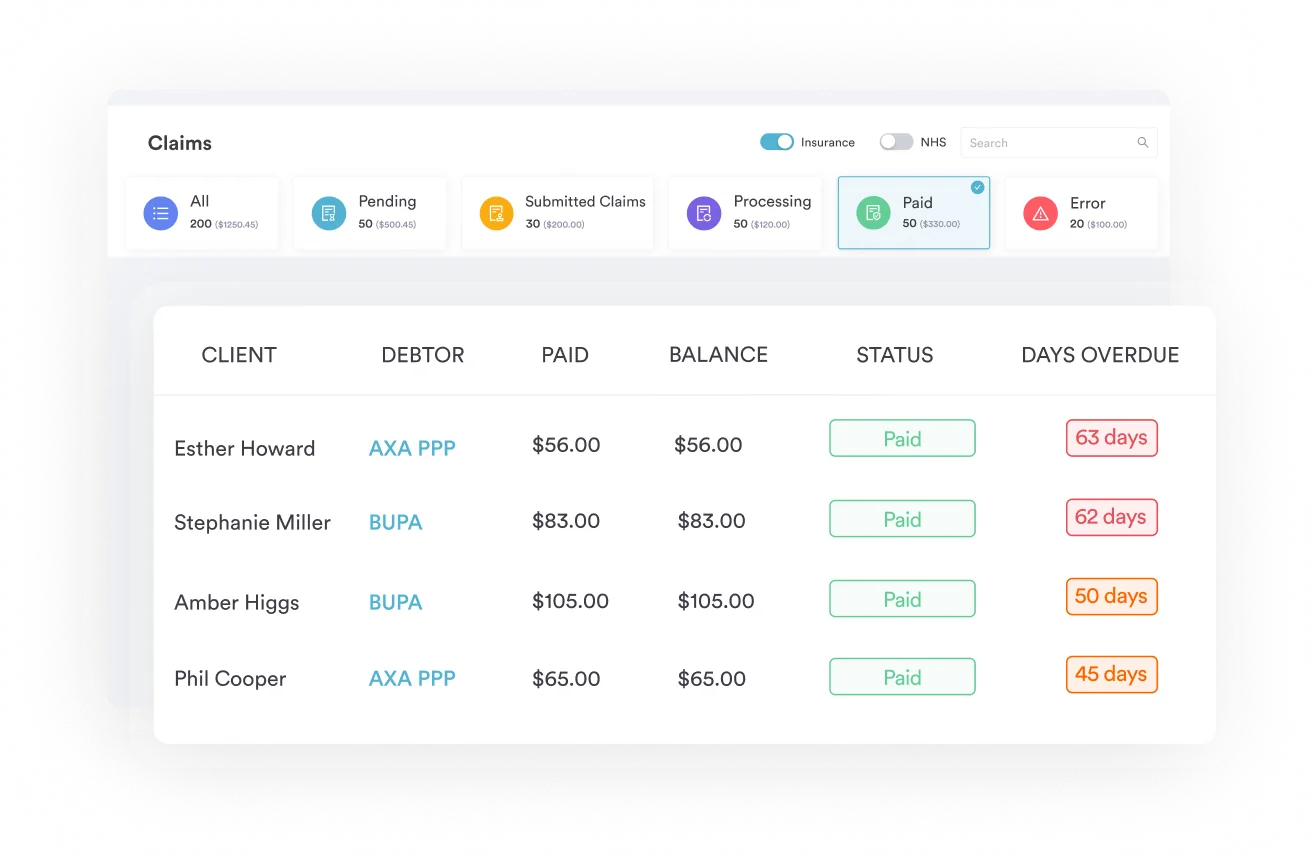

Pabau’s claims management software validates required fields before a claim goes out. It also tracks submission status across every payer, so incomplete DME supply claims don’t slip through.

A4640 denials cluster around a handful of recurring mistakes. Knowing them in advance is the cheapest form of billing education.
Structured pre-submission checklists. Retroactive corrections take significantly more time than upfront verification.
Selecting the wrong code in this range is a common coder mistake. The device descriptions look similar, but the covered items differ a lot.
Other DME accessories. Sitting close together in the code set doesn’t mean the billing rules match.
A4640 covers only the surface pad component. The full alternating pressure system involves additional codes that billers must not mix up:
The practical rule is simple. If you’re replacing the pump, use E0182. If you’re replacing the pad surface on a patient-owned system, use A4640. If you’re providing the full initial system, use E0181. Billing A4640 when only the pump failed, or billing E0181 for a repeat pad replacement, gets the claim denied for a code mismatch.
DME-adjacent practices face a documentation burden that grows with patient volume. Each A4640 claim needs a physician order, medical necessity evidence, ownership confirmation, and a delivery record, all retrievable when a payer audits.
Managing that across dozens of active patients is where EHR and billing integration starts to matter. It links patient records to claims, so clinical and billing staff stop chasing the same paperwork twice.
Pabau’s claims management software validates required fields on every claim and won’t let it go out until they’re complete. A cross-payer status dashboard shows exactly where each claim stands, and Pabau attaches the invoice automatically when you send it.
Practices with complex billing needs, such as multiple payers or high audit exposure. It captures ownership declarations, physician orders, and delivery confirmations electronically, linking them directly to the patient record.
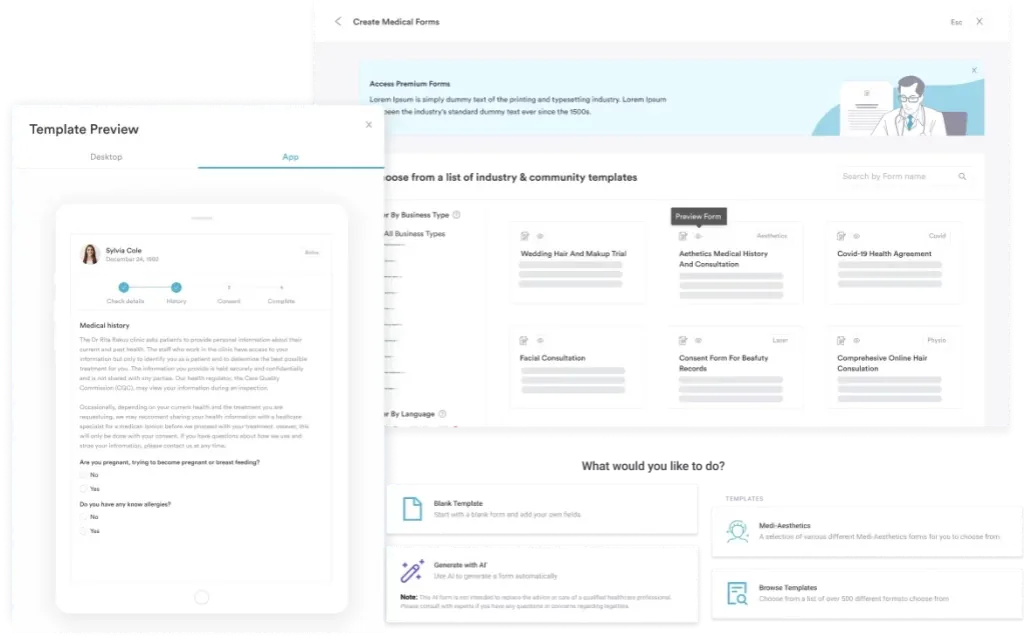
Pabau’s digital forms can capture physician orders, ownership proof, and delivery confirmations tied to each patient record. Claims management then tracks the claim through to payment.
A4640 only pays out when both descriptor conditions hold. The primary pad must be medically necessary, and the patient must own it outright. Skip either one, and the claim comes back denied regardless of how clean the rest of the paperwork looks.
The practices with the fewest denials treat documentation as part of the order, not an afterthought before submission. Book a demo to see how Pabau keeps DME supply-code billing audit-ready.

Need to bill another overlooked DME supply code correctly? A4608 covers the ownership and medical necessity rules for transtracheal oxygen supplies.
Handling dialysis supply billing on the same caseload? A4725 walks through dialysate solution coverage and the 2026 fee schedule.
Billing for tube-fed patients too? B4197 breaks down parenteral nutrition billing requirements.
Yes. Medicare replaced the Certificate of Medical Necessity with the Standard Written Order for DMEPOS claims on January 1, 2023. Get the SWO signed and dated before the pad ships, not a CMN or a verbal order.
L89 pressure ulcer codes, billed with the correct stage and site, pair most often with A4640. Mobility-limiting diagnoses like G82 paraplegia or quadriplegia work too, as long as the diagnosis matches what the physician documented.
Part B. Medicare covers durable medical equipment and supplies, including A4640, under Part B, even for a homebound patient. Part A only applies during a covered inpatient stay, which rules out routine DME billing at home.
There’s no fixed calendar limit. Medicare pays for a new pad once the existing one shows documented wear, soiling, or lost function. The supplier’s records must support the replacement.