

HCPCS code E0198: Water pressure pad billing guide
HCPCS code E0198 is a water pad for a standard mattress HCPCS code E0198 is the ...

Last Updated: Oct 13, 2026
A4210 is the HCPCS Level II code for needle-free injection device, each.
Let Pabau's smart automation suggest the right codes, reduce claim denials, and keep your practice compliant—effortlessly.
Automate repetitive tasks and focus on what matters most—your patients.
Reduce coding errors and ensure compliance with the latest regulations.
Clean claims, fewer denials, and faster reimbursements.
Powerful insights and reporting to help your practice thrive.
HIPAA compliant SOC 2 certified GDPR-compliant Trusted by 4,000+ clinics worldwide

HCPCS code A4210 is the Level II supply code for a needle-free injection device, billed per unit (each)
A4210 falls within the injection and infusion supplies category (A4206-A4232) and requires DME MAC submission for Medicare claims
Missing or incorrect modifiers (KX, GA, GY, GZ, NU, RR, UE) are the most common reason A4210 claims are denied
Pabau’s claims management software helps DME suppliers track modifiers, documentation, and submission status in one workflow
HCPCS code A4210 describes a needle-free injection device, billed per individual unit. The short description used on claims is “nonneedle injection device.” It belongs to HCPCS Level II, the coding system maintained by the Centers for Medicare and Medicaid Services, or CMS, for supplies, equipment, and non-physician services not captured by CPT codes.
The billing unit is always “each.” Every device dispensed to a beneficiary constitutes one billable unit under A4210. Bundling multiple devices into a single claim line without accurate unit counts triggers audits and recoupment.
Quantity rules sit on the diagnosis side too, though they work differently. Diagnosis codes are not repeated per unit, so a single entry like S82.461N covers the whole date of service.
A needle-free injection device delivers medication subcutaneously using high-pressure air or a spring mechanism, eliminating the puncture associated with conventional needles. The device is reusable, though the individual injection cartridges are single-use consumables billed under different HCPCS codes (see the related codes section below).
Clinical applications most commonly include insulin administration for patients with needle phobia, certain vaccine delivery settings, and other subcutaneous injection therapies where the prescribing physician documents medical necessity for the needle-free route. Insurers require that the patient’s diagnosis and care plan support the use of this device rather than a standard syringe.
A4210 carries a “by report” pricing indicator, meaning the reimbursement rate is not set by a single national fee schedule amount in the same way E&M codes are. Instead, the DME MAC reviews documentation and determines allowable amounts based on submitted cost data and applicable coverage policies. Rates also vary by MAC jurisdiction.
For current published rates, consult the CMS Physician Fee Schedule lookup and filter by HCPCS supply codes, or contact your regional DME MAC directly. The table below reflects the rate structure applicable to A4210 claims as understood from publicly available 2026 fee schedule data. Confirm figures against the official CMS fee schedule file before submitting claims.
The best medical practice management systems tie supply usage to invoices, so dressing changes stop being free.
Medicare Part B covers HCPCS code A4210 when a physician documents that the needle-free device is medically necessary for the beneficiary’s treatment. Coverage is not automatic based on diagnosis alone. The applicable Local Coverage Determination (LCD) from the beneficiary’s DME MAC defines the specific coverage criteria, and these criteria can differ across MAC jurisdictions.
Maintaining solid HIPAA compliance requirements around patient documentation is essential here: the medical record must link the physician’s order to the patient’s qualifying diagnosis and the clinical rationale for the needle-free route specifically. General references to insulin use without documentation of why a standard syringe is contraindicated or not preferred are frequently cited in audit findings.
Medical necessity for a supply is only as strong as the diagnosis code carrying it. Specific fracture codes such as S82.252G show the level of detail reviewers expect on that line.
Check the applicable LCD for A4210 through the CMS Medicare Coverage Database before dispensing a device. LCD criteria vary by DME MAC region. Filing without confirming coverage criteria for your jurisdiction is the single fastest route to a denial that cannot be appealed on medical necessity grounds.
Modifiers signal the circumstances of the claim to the payer. The wrong modifier, or no modifier at all, is the leading cause of A4210 denials. Each modifier carries a specific meaning and appending an incorrect one is treated as a billing error, not a minor variance. Cross-check modifier applicability against your DME MAC’s policy articles before submission.
KX is the modifier billers apply most frequently when coverage criteria are met and documented. GA is appropriate only when a valid ABN has been executed before dispensing. Never append both GA and KX to the same claim line, as these modifiers are mutually exclusive.
Audit exposure for DME claims concentrates heavily on missing or incomplete documentation. The physician order, medical necessity rationale, and the supporting patient record must each be retrievable in a compliant format.
Implementing structured medical forms and documentation workflows for your DME operation reduces the risk of missing elements at the point of claim submission. Using digital forms keeps records searchable and audit-ready without paper handling delays.
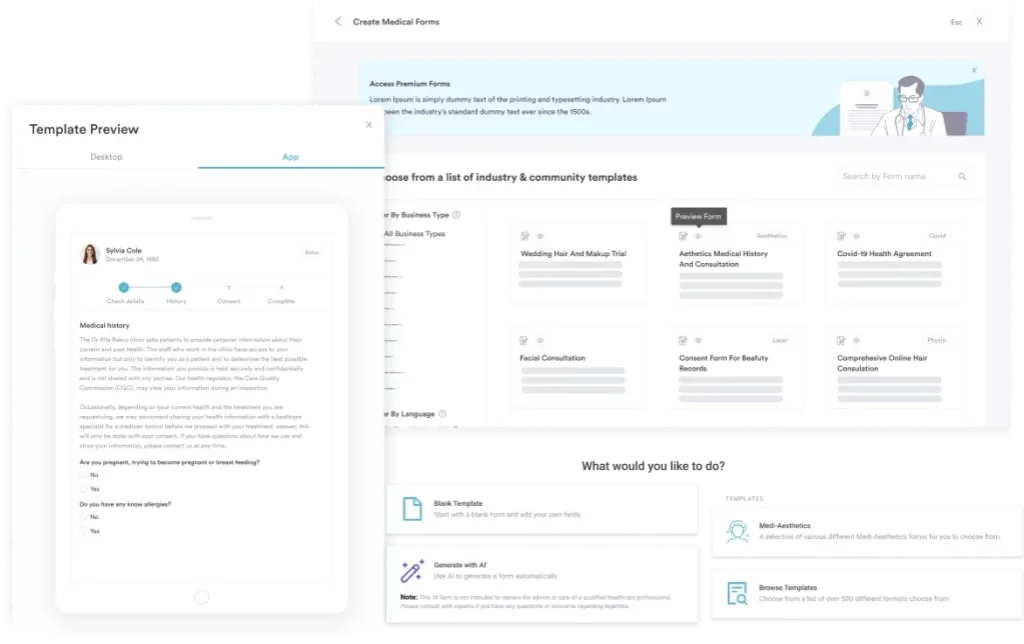
Maintaining secure billing compliance workflows means every document above should be stored in the patient record and retrievable within 2 business days of an audit request. Delayed or incomplete responses during post-payment review result in recoupment regardless of whether the original claim was clinically appropriate. And solid patient data security tools protect that documentation from unauthorized access or breach exposure.
Chart notes decide which diagnosis code the coder can defend. A code like S82.302K needs the note to record nonunion in those words.
A4210 sits within the A4206-A4232 injection and infusion supplies category, spanning insulin therapy. Selecting the wrong adjacent code is a common error.
The table below helps coders distinguish between the most frequently confused codes in this range. Verify current descriptions using the AAPC Codify HCPCS lookup or the PGM Billing HCPCS lookup.
DME suppliers billing A4210 often handle related supply codes in the same claim cycle.
The key distinction between A4210 and A4206-A4209 is the absence of a needle. Coders sometimes default to A4211 (self-administered injection supplies) for needle-free device billing, but A4210 is the specific, correct code when the device itself is being dispensed.
Supply codes and drug codes never share a claim line, so an A-code and a J-code bill separately. Both lines still point to one diagnosis, which might be as precise as S82.465C.

Pabau’s claims management software tracks modifiers, documentation requirements, and submission status in a single workflow so your DME billing team catches errors before claims go out the door.

Billing A4210 correctly requires a defined workflow from physician order through submission. Each step below maps to a specific point where errors commonly enter the claim.
Good EHR integration connects the clinical record to the claim automatically, so required fields pull through without manual re-entry.
Box 21 accepts up to twelve diagnosis codes, each pointed at a service line. Entries there carry full specificity, down to laterality and healing status in a code like S82.432J.
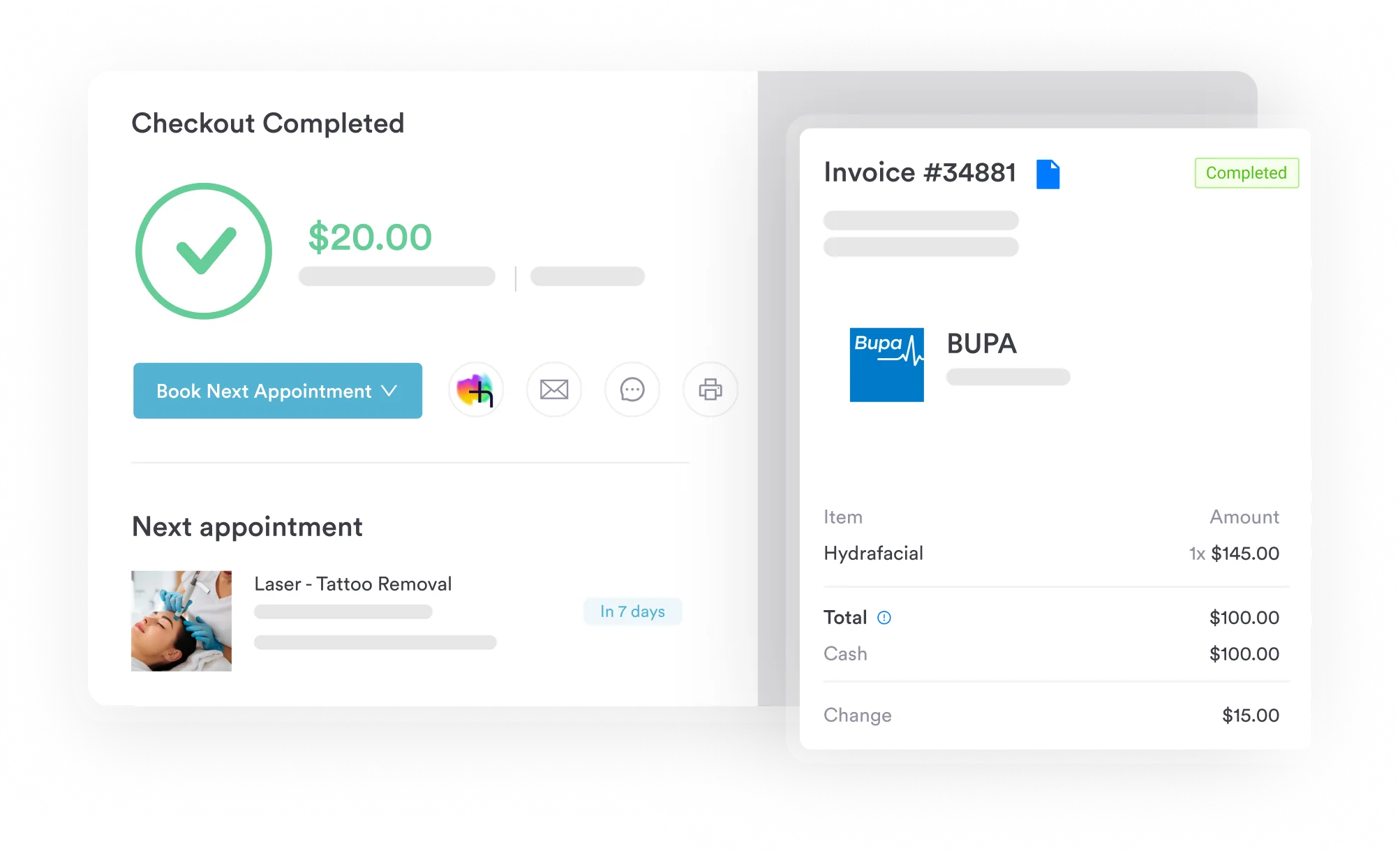
Post-payment audits and pre-payment edits on A4210 cluster around a predictable set of errors. Recognizing these patterns before submission prevents the most avoidable denials. A resubmission does not restart the clock, so the original filing limit still governs.
The same logic governs denials tied to the diagnosis line. Auditors sample claims where a vague code was chosen over a precise one such as S82.456C.
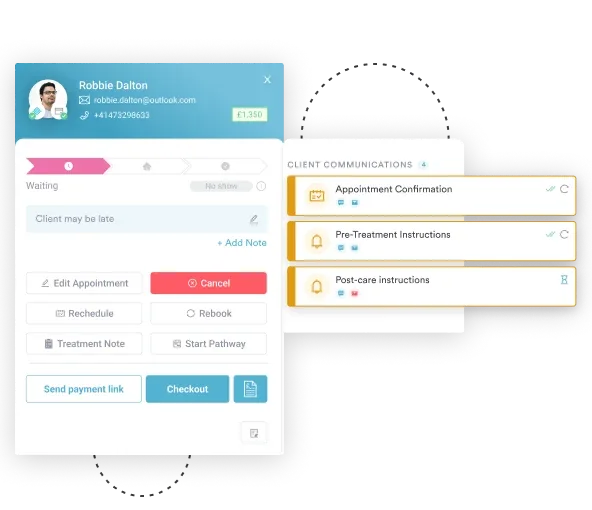
Run a monthly claims audit on all A4210 submissions. Pull the five most recent denials, identify the error type from the remittance advice remark code, and cross-reference against the checklist above. Patterns in denial codes point directly to the step in your workflow that needs a process fix.
HCPCS code A4210 is a focused DME supply code with clear billing rules, but the claims that fail almost always fail on documentation or modifier selection rather than code identity. Getting those two elements right, before the claim leaves your system, is where the work lives.
Pabau’s billing software gives DME billing teams the workflow structure to track modifier requirements, link documentation to claims, and catch submission errors before they reach the MAC. If you want to see how it works in a DME billing context, book a demo with the team.

Billing a related injection supply code? A4246 walks through the fee schedule, modifiers, and documentation rules for that code.
Also handling DME equipment claims? E0260 covers Medicare coverage criteria and common denial reasons for hospital bed billing.
Billing oxygen equipment too? E1390 breaks down the modifier and documentation requirements for that code.
HCPCS code A4210 is the Level II supply code for a needle-free injection device, billed per unit (each). It is used by DME suppliers billing Medicare and other payers for devices that deliver subcutaneous medication, such as insulin, without a conventional needle. The code falls within the A4206-A4232 injection and infusion supplies range.
A4206 is a standard syringe with needle (sterile, 1 cc or less, each), while A4210 is a needle-free injection device. A4206 is for conventional needle-and-syringe delivery; A4210 is the only needle-free device code in the A4206-A4232 range. Billing A4206 for a needle-free device, or vice versa, constitutes a miscoding error.
The most common modifiers for A4210 are KX (LCD requirements met), GA (ABN on file), GY (item excluded from Medicare), GZ (item likely denied, no ABN), NU (new equipment), RR (rental), and UE (used equipment). KX is required when all coverage criteria are documented and met. KX and GA are mutually exclusive and must not appear on the same claim line.
Medicare Part B covers A4210 when a physician documents medical necessity for the needle-free device. Coverage is subject to the applicable Local Coverage Determination from the beneficiary’s DME MAC region. Without a valid physician order, a qualifying diagnosis, and documented medical necessity rationale, the claim will be denied.
Required documentation includes a physician order dated before dispensing, a medical necessity letter or Certificate of Medical Necessity explaining why the needle-free route is required, the beneficiary’s supporting diagnosis in the medical record, a delivery confirmation, and an ABN if coverage is uncertain. All records must be retained for a minimum of seven years.
Yes, A4210 is a HCPCS Level II DME supply code. Claims must be submitted to the DME Medicare Administrative Contractor for the beneficiary’s region, not to the physician MAC. Submitting to the wrong MAC generates a technical denial regardless of whether the underlying claim is medically appropriate.
A4210 uses a “by report” pricing indicator, meaning the allowable amount is reviewed by the DME MAC rather than fixed in a single national rate. For current 2026 rates, verify against the official CMS DMEPOS fee schedule file or contact your regional DME MAC directly. Rates vary by jurisdiction.



