

HCPCS Code Q4185: Cellesta flowable amnion billing guide
HCPCS Code Q4185: definition and official descriptor HCPCS Code Q4185 is the Lev...

Last Updated: Nov 20, 2026
58350 is the CPT code for chromotubation of oviduct, including materials.
CPT code 58350 describes injecting dye into the fallopian tubes to test whether they are open. The dye and other materials are included in the code, and the test usually runs during a hysteroscopy or laparoscopy. Claims turn on whether the operative note records the dye injection and the spill result for each tube.
Let Pabau's smart automation suggest the right codes, reduce claim denials, and keep your practice compliant—effortlessly.
Automate repetitive tasks and focus on what matters most—your patients.
Reduce coding errors and ensure compliance with the latest regulations.
Clean claims, fewer denials, and faster reimbursements.
Powerful insights and reporting to help your practice thrive.
HIPAA compliant SOC 2 certified GDPR-compliant Trusted by 4,000+ clinics worldwide

CPT 58350 covers chromotubation of the oviduct: injecting dye to test tubal patency, including the materials.
The global period is 0 days, so a significant, separately identifiable E&M on the same day needs modifier -25 only.
Check the current NCCI PTP edits at cms.gov before billing 58350 with 58558. If an edit applies, use -59 only when the services are distinct.
Pabau, our practice management platform, runs eligibility checks, tracks prior authorization and submits 837P claims through Claim.MD.
CPT code 58350 is the American Medical Association’s code for chromotubation of oviduct, including materials. In plain terms,
AAPC’s 58350 code summary says the provider injects dye into the fallopian tube to see whether it is open. The dye and supplies are part of the code, and the test usually runs alongside a hysteroscopy or laparoscopy.
The code sits in the Introduction Procedures on the Corpus Uteri subsection of the Female Genital System. It captures the dye injection itself. Coders sometimes confuse 58350 with CPT 58345. That code covers transcervical introduction of a fallopian tube catheter for diagnosis or re-establishing patency, by any method, with or without hysterosalpingography. The same subsection holds the open hysterectomy codes, such as code 58200 for a total abdominal hysterectomy with partial vaginectomy.
Both services can appear on one operative note, so code from what was performed and documented. Per the AMA’s CPT code set overview, coders must select the code that most accurately reflects the work performed. The comparison below sets the three neighboring codes side by side.
Tap a code to compare
Match the code to what the operative note documents
CPT 58350
Chromotubation of oviduct, including materials.
The note documents
Dye injected to test tubal patency, and whether spill was seen or absent on each side.
Usually performed with
A hysteroscopy or laparoscopy in the same session. Check the NCCI edits before billing both.
CPT 58345
Transcervical introduction of fallopian tube catheter for diagnosis and/or re-establishing patency (any method), with or without hysterosalpingography.
The note documents
A catheter introduced through the cervix into the tube to diagnose or restore patency.
How it differs
The service is the catheter work, with or without imaging, not a dye patency test.
CPT 58340
Catheterization and introduction of saline or contrast material for saline infusion sonohysterography (SIS) or hysterosalpingography.
The note documents
Saline or contrast instilled into the uterus so the cavity and tubes can be imaged.
How it differs
The material supports an imaging study rather than a direct dye test of patency.
Descriptors from the AMA CPT code set as cited in this guide. Pick the code by the service the operative note documents.
Knowing the clinical steps helps coders check that an operative note supports the code billed. Each step below has a documentation counterpart.
When the service is a dye test of tubal patency, 58350 is the correct code. When a catheter is introduced into the tube to diagnose or re-establish patency, check whether 58345 better captures the documented service. The medical billing workflows that catch this distinction at charge entry prevent downstream denials.
An operative note that lacks specific elements will not support the code at audit. The payer’s medical reviewers look for each of these in sequence.
Pairing the right ICD-10 diagnosis code matters for clean claim submission. Payers run medical necessity checks against the linked diagnosis, and an unsupported pairing triggers automatic denial.
Several codes share the same anatomical territory, and operative reports that describe multiple steps in one session create coding ambiguity. One frequent mix-up is 58340, the saline or contrast instillation code used for SIS and HSG. The table below lists the most common sources of confusion.
Before billing 58350 with 58558 on the same date, check the current NCCI procedure-to-procedure edits on cms.gov. If an edit applies and the services were distinct, append modifier -59 and describe each service separately in the operative report. If they were one integrated service, the edit stands. CMS updates the PTP tables quarterly, so recheck them each quarter.
Modifier selection determines whether a claim clears or is denied. Each modifier below carries a specific use case for CPT 58350.
Bilateral coding for tubal procedures is a known payer-policy variable. Some Medicare Administrative Contractors (MACs) accept -50 and reimburse at 150%; others require two line items with -LT and -RT. Contact your MAC or review its Local Coverage Determination before billing bilateral sessions to avoid automatic reduction.
Before billing 58350 bilaterally, pull your MAC’s Local Coverage Determination. Check whether it accepts modifier -50 or requires separate -LT and -RT line items. This one step prevents the most common bilateral denial on tubal procedures.
Medicare reimbursement for CPT code 58350 is calculated from Relative Value Units (RVUs) assigned in the Medicare Physician Fee Schedule (MPFS). The place of service changes the payment. Facility rates (hospital outpatient, ASC) are lower than non-facility rates (office), because the facility receives a separate payment for overhead.
RVU values and the Medicare conversion factor change every calendar year. Confirm specific dollar amounts through the CMS Physician Fee Schedule search tool before billing. The FastRVU 2026 lookup tool provides a quick reference for work, practice expense, and malpractice RVU values by code and location. Commercial payer rates for CPT 58350 are negotiated separately and are not published publicly; check your payer contracts or the payer’s online fee schedule portal.
OB/GYN practices that submit electronic claims through Claim.MD can run eligibility checks before the procedure date. That confirms whether the patient’s plan covers CPT 58350 at the intended place of service.
CPT code 58350 carries a 0-day global period, confirmed in the CMS MPFS data files. A 0-day global means no routine post-operative care is bundled beyond the day of the procedure itself.
With a 0-day global rather than 10 or 90 days, an office visit on a later date falls outside it. That visit can be billed separately. A same-day E&M service needs modifier -25 (significant, separately identifiable E&M on the same day as a minor procedure). Without it, the E&M denies as included in the procedure payment.
Prior authorization requirements for CPT 58350 vary by payer. Medicare fee-for-service does not generally require prior authorization for this code, but Medicare Advantage plans frequently do. Large commercial insurers (Aetna, Cigna, UnitedHealthcare) each maintain separate prior-authorization lists that are updated periodically.
When authorization is required, the criteria are payer-specific, so confirm them with the plan as part of your prior authorization process. A request typically carries the following.
An authorization denial is not the same as a medical necessity denial. Authorization denial means the payer’s prior-approval process was not completed correctly. Medical necessity denial means the payer reviewed the clinical criteria and found them unmet. The appeal pathways differ too. An authorization appeal requires resubmission with the missing clinical documents. A medical necessity appeal requires a physician-to-physician peer review. Tracking both through a structured denial management workflow prevents the two from being confused and appealed incorrectly.
Most CPT 58350 denials trace back to a small set of repeating root causes. Addressing each one at the charge-entry stage eliminates the rework cycle. A structured approach to denial management workflows and familiarity with denial codes in medical billing reduces the cycle time from submission to payment.
OB/GYN and fertility software that joins scheduling, documentation, and claim submission cuts the manual checks coders run at every step. The bottlenecks behind 58350 denials sit between the clinical and billing sides of the practice. Missing laterality, an unchecked NCCI edit and a lapsed authorization all start there.
Pabau’s claims management software connects charge capture to claim submission in one workflow. The authorization code, dates and sessions sit on the case, and Pabau warns when an authorization is missing. Custom note templates capture laterality, approach and the dye result at documentation, so nobody reconstructs them after a denial.
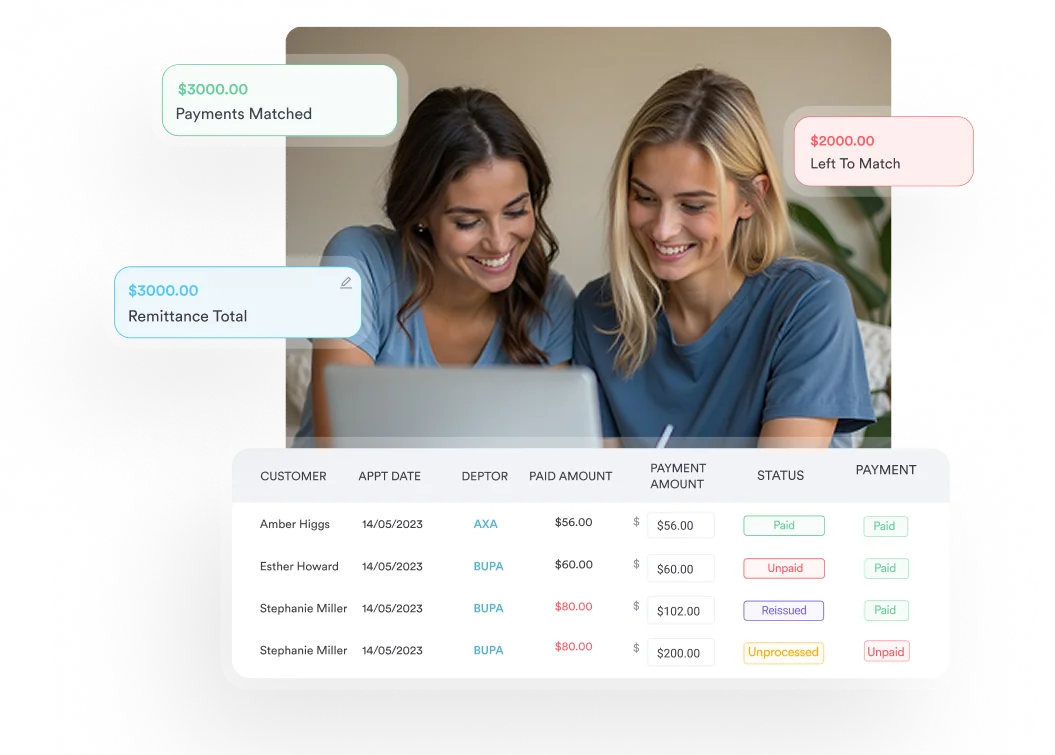
On the submission side, Pabau sends US claims through Claim.MD, and payer lists come from Claim.MD. The integration handles 837P electronic submission and returns ERA remittances, so denial reason codes come back against each claim. Practices can then track 58350 denials across payers and see whether the cause is documentation, a modifier error, or a payer coverage exclusion.

Pabau connects OB/GYN documentation to claim submission in one platform. Eligibility checks and prior auth tracking happen before the claim goes out through Claim.MD.

Bill 58350 when the operative note shows dye injected to test patency and records the spill result for each tube. Where the note describes catheter work instead, 58345 is the better match, so settle the code before the claim leaves the practice.
Two checks then carry most of the weight: the current NCCI PTP edits for any same-day hysteroscopy, and the payer’s prior authorization rules. Fixing either at charge entry takes minutes, while an appeal adds another round trip with the payer.
Pabau keeps eligibility checks, prior auth tracking and Claim.MD submission in one workflow. Book a demo to see how it keeps your gynecology procedure claims clean from the operative note onward.

Need help managing claim denials systematically? Denial management in healthcare covers the full workflow for tracking, appealing, and preventing recurring denials across procedure codes.
Want a clearinghouse overview before connecting? Claim.MD clearinghouse guide explains payer coverage, 837P submission, and ERA remittance reconciliation.
Does the plan require authorization first? Medical prior authorization form gives you a ready template for the clinical details payers ask for.
Billing a gynecologic procedure no code describes? CPT code 58999 explains when the unlisted female genital system code applies and what documentation it needs.
CPT code 58350 covers chromotubation of oviduct, including materials. The provider injects dye into the fallopian tubes to check whether they are open, and the dye and supplies are included. It is usually performed during a hysteroscopy or laparoscopy.
CPT 58350 has a 0-day global period per the CMS Medicare Physician Fee Schedule. No post-operative care is bundled beyond the day of the procedure. Office visits on later dates can be billed separately without a modifier. Same-day E&M services require modifier -25 to avoid denial as included in the procedure payment.
It can be, but the modifier approach varies by payer. Some MACs accept modifier -50 and reimburse at 150% of the single-tube rate. Others require two separate line items with -LT and -RT. Check your MAC’s Local Coverage Determination and the MPFS bilateral indicator before billing.
CPT 58345 covers transcervical introduction of a fallopian tube catheter for diagnosis or re-establishing patency, by any method, with or without hysterosalpingography. CPT 58350 is chromotubation, a dye injection to test patency that includes the materials. Code 58345 when the note documents catheter work in the tube, and 58350 when it documents a dye patency test.
Check the current NCCI procedure-to-procedure edits at cms.gov first. If an edit pairs the two codes, append modifier -59 only when the services were distinct and the operative report documents each one. If they were one integrated service, the edit stands and only one code is paid.
Medicare fee-for-service generally does not require prior authorization for CPT 58350, but Medicare Advantage plans and commercial insurers may. Criteria are payer-specific, so confirm them with the plan before scheduling the procedure.
The operative note should state the clinical indication, the primary procedure and approach, and the tubes tested (laterality). It should also record the dye injected and the patency result (spill present or absent) for each tube. Without the dye result, the note does not support chromotubation at all.





