



HCPCS code E0198: Water pressure pad billing guide
HCPCS code E0198 is a water pad for a standard mattress HCPCS code E0198 is the ...

Last Updated: Oct 13, 2026

CPT Code 43361 describes gastrointestinal reconstruction after a previous esophagectomy, using colon interposition or small intestine reconstruction.
The descriptor already includes intestine mobilization, preparation, and the anastomoses, so those steps are never billed separately.
The code carries a 90-day global period, which bundles routine post-operative care into the procedure payment.
Medicare payment varies by place of service, so verify current facility and non-facility rates in the CMS Physician Fee Schedule lookup tool.
The operative note decides whether 43361 or 43360 is correct, because the difference between them is the bowel segment used.
CPT Code 43361 is the billable code for gastrointestinal reconstruction after a previous esophagectomy, an obstructing esophageal lesion, a fistula, or a prior esophageal exclusion. What sets it apart is the technique: colon interposition or small intestine reconstruction, including intestine mobilization, preparation, and anastomosis(es).
It is a major surgical code with a 90-day global period and a high RVU value. This guide covers the descriptor, Medicare reimbursement, RVU components, modifiers, global period rules, paired ICD-10 codes, NCCI edits, and how 43361 differs from 43360.
The full AMA descriptor covers reconstruction after a previous esophagectomy, an obstructing esophageal lesion or fistula, or a previous esophageal exclusion. It then specifies the technique: with colon interposition or small intestine reconstruction, including intestine mobilization, preparation, and anastomosis(es).
The code sits in the Repair Procedures on the Esophagus section of the CPT code set. The set is maintained and published by the American Medical Association (AMA), which revises it each year.
The procedure is complex by nature. Colon interposition means mobilizing a segment of colon on its vascular pedicle and routing it to replace the esophagus. Small intestine reconstruction applies the same principle using jejunum. Both need multiple anastomoses and long operative times, which is why the code carries a high RVU value and a 90-day global period.
Payment for 43361 is substantial, and it varies by place of service and geographic location. The Centers for Medicare and Medicaid Services (CMS) updates the Medicare Physician Fee Schedule (MPFS) annually, and rates change each January. Verify current values in the CMS Physician Fee Schedule lookup tool before you submit claims or quote figures in contract negotiations.
Relative Value Units (RVUs) set the base payment before CMS applies the geographic practice cost index (GPCI). The three components are Work RVU, Practice Expense RVU, and Malpractice RVU. The FastRVU lookup tool retrieves current values for this code.
The place of service (POS) code on the claim decides which payment rate applies. In a hospital inpatient or outpatient setting (POS 21 or 22), or an ambulatory surgical center (POS 24), CMS applies the facility rate. That rate uses a lower Practice Expense RVU, because the facility bills separately for overhead.
In a non-facility setting the physician rate is higher, since the practice carries the overhead itself. Given the complexity of this reconstruction, almost every 43361 claim is billed at facility rates from a hospital operating room.
Confirm that your place of service code matches where the surgery was actually performed. A POS mismatch between the facility claim and the physician claim is a common audit trigger for high-value surgical codes.
Modifiers explain circumstances that change how a service is reported or paid. On a reconstruction of this size, modifier selection can move a claim from paid to pended. Check modifier applicability against individual payer policies, because local coverage determinations (LCDs) and contracts often differ from Medicare rules.
CPT 43361 carries a 90-day global surgical period. CMS bundles routine post-operative care into the procedure payment for 90 days after the date of surgery. Billing a routine follow-up visit inside that window without an applicable modifier will be denied.
Included in the global package: normal follow-up visits, staple and suture removal, wound checks, and standard post-operative management tied to the procedure.
Billable separately: treatment of complications that require a return to the operating room, management of unrelated conditions, and care beyond routine post-operative management. Use modifier 24 for unrelated evaluation and management during the post-operative period, or modifier 78 for an unplanned return to the OR. Align the documentation with the CMS Medicare Claims Processing Manual before billing inside the global window. Self-pay patients submitting to their own insurer need the code and the charge on one patient receipt template.
Linking 43361 to the correct ICD-10-CM diagnosis is what establishes medical necessity on review. The diagnosis has to support the indication described in the operative note. Esophageal cancer resections usually pair with C15.8, while stricture and obstruction cases often report K22.6.
Coverage is payer-specific, so check medical necessity criteria against the relevant LCDs and NCDs before submission. The AAPC CPT-to-ICD-10 crosswalk is a useful second opinion on pairings.
Medical necessity documentation note: The diagnosis code alone is not enough. The operative note has to show how the clinical findings justify the technique chosen, including colon versus small intestine and the number of anastomoses. Payers apply clinical criteria to high-cost surgical codes, so the record has to tell the whole clinical story.
The National Correct Coding Initiative (NCCI) defines which codes cannot be reported together without a modifier, and which are mutually exclusive. Bundling matters here because GI reconstructions involve preparatory steps and anastomosis work that are separately coded in other contexts. Adjacent endoscopic codes such as endoscopic codes such as 43233 and 43273 have their own edit pairs, so check each session as a whole.
Intestine mobilization, preparation, and anastomosis(es) all sit inside the 43361 descriptor, so they are bundled. Billing them separately triggers a column 1 / column 2 edit rejection. Compliance management tools can flag these conflicts before the claim leaves the practice.
43360 and 43361 are adjacent codes in the same family, and they cover the same indications. The only distinction is the reconstructive technique. Choosing the wrong one pays at the wrong rate, or draws a medical necessity denial when the note and the code disagree. Other gastric surgical codes such as 43653 follow the same principle: the documented technique picks the code.
Coding decision rule: If the operative note describes colon or small intestine mobilization, preparation, and anastomosis as part of the esophageal reconstruction, bill 43361. If the technique uses no bowel segment, 43360 applies. The note must name the technique, the segment selected, and the anastomotic construction.
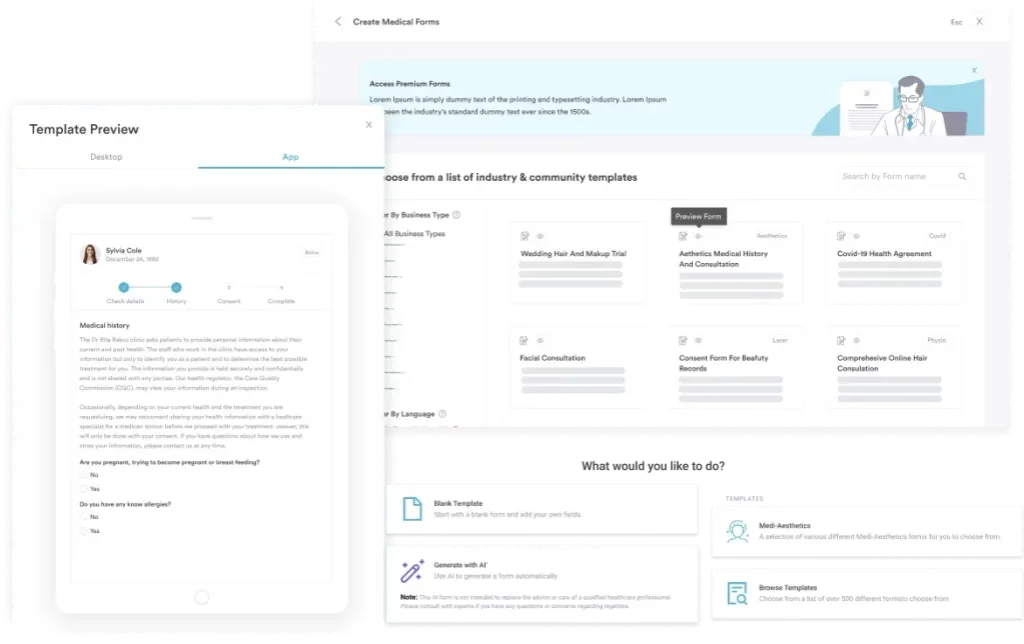
Strong operative documentation is the best audit defense available for this code. Payers and CMS contractors review high-value GI surgical claims regularly, and vague notes are the usual reason for a post-payment recoupment demand. Practices that combine structured medical forms with standardized operative note templates produce more defensible records than free-form dictation alone.
The operative note for 43361 should address each of the following elements:
A structured gastrointestinal assessment in the pre-operative record also helps, because it evidences the clinical picture the reconstruction was chosen to address. Surgical teams working alongside referring primary care practices should make sure that referral history reaches the chart before surgery.
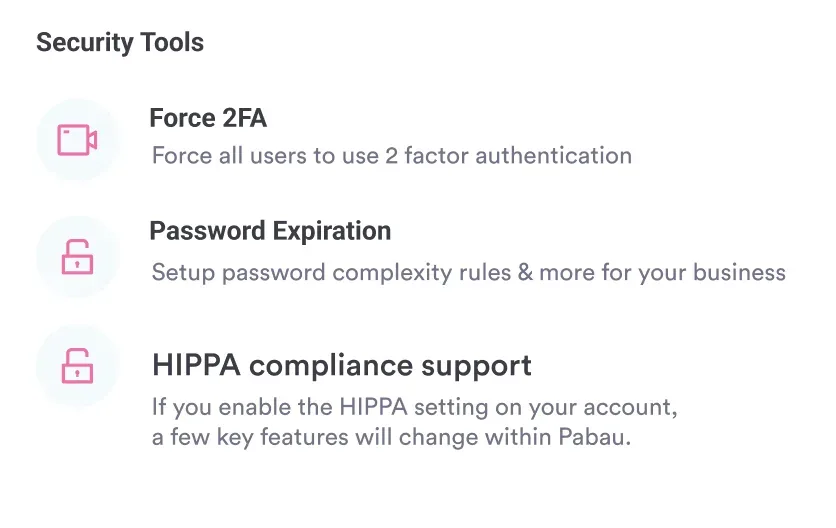
Practices using paperless documentation workflows can attach operative notes and supporting records to the claim at submission. That cuts documentation request turnaround from weeks to hours. Digital templates also standardize the capture of procedure-specific data points at the point of care, which keeps HIPAA-compliant record keeping consistent across the surgical team.
Audit your own 43361 claims once a year. Pull five to ten operative notes and check that each documents bowel segment, mobilization, preparation, and anastomosis detail. Update the note template before the next submission cycle if anything is missing.
Reference tools tell you what a code means. Practice management software like Pabau handles what happens after you know the code. For a high-scrutiny procedure like 43361, the distance between picking the right code and submitting a clean claim is where revenue is won or lost.
Pabau’s claims management software lets coders attach operative notes and supporting records to a claim before it leaves the practice. That matters for 43361, because payers often request additional documentation on complex GI surgical codes before they pay. Sending it up front removes a round trip from the denial-to-resubmission cycle.
Pabau Scribe, our AI scribe, supports clinical documentation during or after the procedure. It helps the surgeon capture bowel segment, mobilization, and anastomosis detail in a structured note rather than a block of dictation. With EHR integration pulling prior procedure records automatically, coders spend their time reviewing claim accuracy instead of reassembling context.
Reporting closes the loop. Procedure-level revenue, denial patterns, and reimbursement by code are all visible. A billing team can see that 43361 is underperforming before the problem spreads across hundreds of claims. Surgical specialty practices get the same audit trail for every other high-value code they bill.

Pabau links clinical documentation directly to CPT submissions, so operative notes, records, and medical necessity evidence travel with the claim. Billing teams answer payer requests faster and see denial patterns by code.

Getting paid for 43361 comes down to one habit. The surgeon writes the technique down in enough detail that a reviewer can see the bowel segment, the mobilization, and every anastomosis without guessing. Fix the operative note template once and the code choice between 43361 and 43360 stops being a judgment call.
The trade-off is time at the point of care. A structured note takes slightly longer to complete than free dictation, and it saves far more time later during a post-payment review. On a code of this value, that exchange is worth making on every case.
Book a demo to see how Pabau ties operative documentation to claim submission for complex surgical codes.

Coding the anesthesia side of the case? CPT 00500 covers anesthesia for esophageal procedures and its base unit rules.
Need the diagnosis side documented? K23 explains how esophageal disorders in diseases classified elsewhere are reported.
Billing post-operative enteral feeding? HCPCS B4087 sets out how gastrostomy tube supplies are coded and paid.
Coding a diaphragm rupture repair? CCSD code T1500 covers billing for diaphragm repair across thoracic and general surgery insurer pathways.
Coding an open hernia repair? CCSD code T2000 is the standardized UK billing code for open inguinal hernia repair with mesh reinforcement.
CPT Code 43361 describes gastrointestinal reconstruction after a previous esophagectomy, an obstructing esophageal lesion or fistula, or a previous esophageal exclusion. The reconstruction uses colon interposition or small intestine reconstruction, including intestine mobilization, preparation, and anastomosis(es). It is classified under Repair Procedures on the Esophagus in the AMA CPT code set.
CPT 43361 has a 90-day global surgical period. Routine post-operative care within 90 days of the surgery date is bundled into the procedure payment and cannot be billed separately. Services unrelated to the surgery, or complications requiring a return to the operating room, may be billed separately with the appropriate modifier (24 or 78).
Commonly paired ICD-10-CM codes include C15.x for malignant neoplasm of esophagus, K22.2 for esophageal obstruction, and K22.8 for other specified diseases of esophagus. J86.0 covers pyothorax with fistula, and Q39.x covers congenital malformations of esophagus. Coverage is payer-specific; verify against applicable LCDs before submission, as medical necessity criteria vary by payer.
The operative note must record the clinical indication for reconstruction and the bowel segment selected. It must also describe the mobilization technique, the preparation steps, and each anastomosis by location and method. Any intraoperative findings supporting increased complexity (for modifier 22) should also be included. Generic dictation without these specific elements is the most common documentation deficiency identified in post-payment audits for this code.



