



HCPCS code E0198: Water pressure pad billing guide
HCPCS code E0198 is a water pad for a standard mattress HCPCS code E0198 is the ...

Last Updated: Oct 13, 2026

CPT Code 43233 describes an EGD with esophageal balloon dilation using a balloon 30 mm in diameter or larger. The size threshold separates it from CPT 43249.
The 30 mm balloon diameter must be explicitly documented in the operative note. Missing that detail is the most common audit trigger for 43233 claims.
CMS flags 43233 as NA in the non-facility column, so Medicare pays about $204 nationally in every setting. There is no separate office rate.
Pabau’s claims management software supports claim submission, validation, tracking, and reconciliation for GI endoscopy codes like 43233.
CPT Code 43233 covers an esophagogastroduodenoscopy with dilation of the esophagus using a balloon 30 mm in diameter or larger. Balloon size decides the code. Anything under 30 mm bills as CPT 43249 instead. The American Medical Association updates the CPT code set every year, so confirm the descriptor annually. This reference covers the official descriptor, CY2026 RVU values, Medicare payment, modifiers, ICD-10 diagnosis codes, documentation requirements, common billing errors, and the related EGD codes. Before you choose software for a practice that also performs self-pay aesthetic procedures, compare the options in our roundup of medical spa systems.
The AMA defines CPT Code 43233 as follows. Esophagogastroduodenoscopy, flexible, transoral; with dilation of esophagus with balloon (30 mm diameter or larger) (includes fluoroscopic guidance, when performed). This is a stand-alone surgical code in the Digestive System Surgery chapter, within the esophagogastroduodenoscopy subsection (codes 43235-43270). It is reported as a primary procedure code for the whole EGD encounter when large-caliber balloon dilation is the main therapeutic intervention. The descriptor also bundles fluoroscopic guidance, so guidance is never billed separately with this code.
The critical coding element is the balloon diameter. The AMA descriptor states “30 mm diameter or larger.” That threshold is the only criterion separating CPT Code 43233 from CPT 43249, which covers balloons smaller than 30 mm. Misidentifying the balloon size, or failing to document it, is the most common reason these claims are downcoded or denied. Gastroenterology billing staff should treat the balloon diameter as a mandatory data element in every EGD encounter that involves dilation.
CPT Code 43233 describes a flexible, transoral upper endoscopy. During it, the physician dilates a narrowed esophageal segment with a large-caliber balloon. The clinical workflow follows these steps:
CPT Code 43233 covers the full upper GI endoscopy encounter, including the diagnostic inspection of the esophagus, stomach, and duodenum that precedes the dilation. The esophageal dilation is the principal service here. The diagnostic EGD is bundled into the code, so it may not be reported separately as CPT 43235.
Relative value units (RVUs) determine how Medicare calculates physician payment. Three components make up the total: work, practice expense, and malpractice. The figures below are the CY2026 national values from the CMS national physician fee schedule relative value file. Check the CMS Physician Fee Schedule lookup for your locality, and verify them again each January.
CMS marks the non-facility practice expense for 43233 as NA. In plain terms, the code has no separate office rate. It is priced at facility values in every setting, so an in-office dilation earns no practice expense premium. That makes 43233 unusual among procedure codes, where the office rate is normally the higher of the two.
Medicare payment equals the total RVU multiplied by the CMS conversion factor. For CY2026 that factor is $33.4009 for clinicians outside a qualifying alternative payment model. A total of 6.11 RVUs therefore pays about $204.08 nationally. Geographic adjustment moves that figure, so confirm the amount for your MAC jurisdiction before billing.
Commercial reimbursement for CPT Code 43233 usually exceeds the Medicare amount, but it varies widely by contract. Use the $204 national figure as your floor in negotiations, since there is no higher office rate to reference. Some payers also require prior authorization for esophageal dilation. Check that requirement before the procedure is scheduled.
Check 43233 payment each January in the CMS Physician Fee Schedule lookup for your own MAC locality. Geographic adjustment can move your payment well away from the $204 national amount.
Correct modifier usage is essential for clean claims on CPT Code 43233. Several modifiers apply depending on the clinical circumstances and the payer. Using the wrong modifier, or omitting a required one, is a leading cause of denials in the EGD code family.
Modifier 59 deserves particular attention. CMS NCCI policy allows modifier 59 when two EGD codes are medically necessary and clinically distinct within the same session. Payer rules may differ from CMS defaults, so verify current NCCI edits before you apply modifier 59. Checking AAPC Codify for active edit pairs involving 43233 takes minutes and prevents an unbundling audit.
Snare removal of a polyp in the same session is reported as 43251, a different therapeutic modality from dilation. Check the NCCI edit pair before you bill it alongside 43233.
Every CPT Code 43233 claim must be supported by an ICD-10-CM diagnosis code that establishes medical necessity. Local Coverage Determinations issued by individual MACs govern which diagnosis codes are accepted, so verify coverage in your jurisdiction. Motility and reflux diagnoses often reach the endoscopy list from gastroenterology and functional medicine caseloads. The diagnosis codes below are commonly accepted as support for esophageal balloon dilation.
Always use the most specific ICD-10-CM code available and confirm coverage under your MAC’s LCD before billing. An unspecified esophageal diagnosis weakens medical necessity support even when the operative note is complete.
Incomplete procedure notes are the primary reason CPT Code 43233 claims fail on audit. The balloon size threshold is non-negotiable. If the note omits a diameter of 30 mm or larger, coders must default to CPT 43249, whatever was performed. Digital procedure note templates that make balloon diameter a mandatory field capture the number at the point of care. The prompt belongs in whatever gastroenterology or general practice software your endoscopy team already documents in.
Consistent note standards also serve HIPAA-compliant documentation during a payer audit or a regulatory review. A pre-procedure safety pause is worth the same treatment, and a surgical safety checklist gives that step a fixed structure.
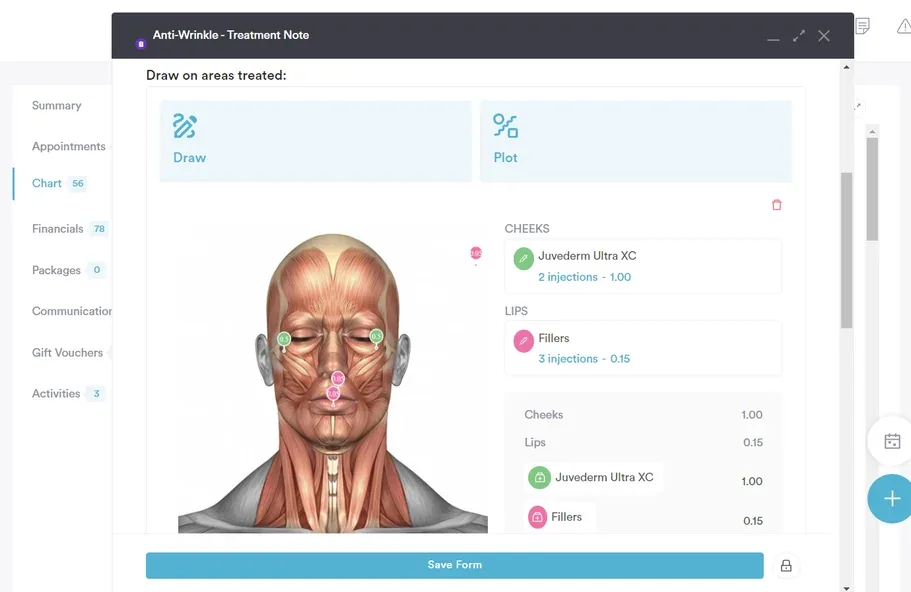
Every CPT Code 43233 operative note must include all of the following elements:
Denials and downcoding for CPT Code 43233 cluster around a small set of avoidable errors. Most of them trace back to what the operative note left out rather than to a genuine coding disagreement.

Pabau’s claims management tools help gastroenterology practices capture balloon diameter at the point of care. Each claim is then validated, submitted, and tracked to reconciliation, so your billing team reworks fewer EGD claims.

Selecting the right code from the EGD dilation family depends on the balloon size and the dilation method used. The 43233 versus 43249 distinction causes the most errors. Both describe balloon dilation during EGD, and only the 30 mm threshold separates them. Consulting the AMA CPT coding resources provides authoritative guidance on the full EGD code family hierarchy.
The EGD code family spans CPT 43235 through 43270. CPT 43235 is the base diagnostic EGD code – it describes a flexible transoral upper endoscopy performed for diagnostic purposes without any therapeutic intervention. All other codes in this range describe a therapeutic EGD, where an additional procedure happens during the same encounter. The base diagnostic code is never separately reportable alongside a therapeutic variant such as 43233. Neighboring upper GI codes follow the same logic, including CPT 43273 and CPT 43653.
CPT Code 43233 sits alongside CPT 43249 as one of two balloon dilation variants. The code family decision tree runs as follows: if dilation is performed, determine the method – balloon or guidewire. If balloon, determine the size – 30 mm or larger (43233) or less than 30 mm (43249). If guidewire-assisted dilation, use 43248. Applied consistently, that three-step logic removes most EGD dilation coding errors. Some codes in the family may be billed together when clinically distinct procedures occur in one session. Check active NCCI edits first, and apply modifier 59 where it is required. Dilation outside the esophagus falls to other code families, such as CPT 43361. Downcoding is as common as upcoding, and both trace back to how the decision-making level was recorded. Front-desk data entry and back-office coding both feed cash collection, so errors compound downstream.
Most CPT Code 43233 denials start in the operative note, long before the claim reaches a payer. Practice management software like Pabau connects that note to the claim, and its claims management software submits and tracks the result. Procedure note templates can require balloon diameter as a mandatory field, so the 30 mm threshold is recorded at the point of care. Nobody has to reconstruct it from memory during coding review.
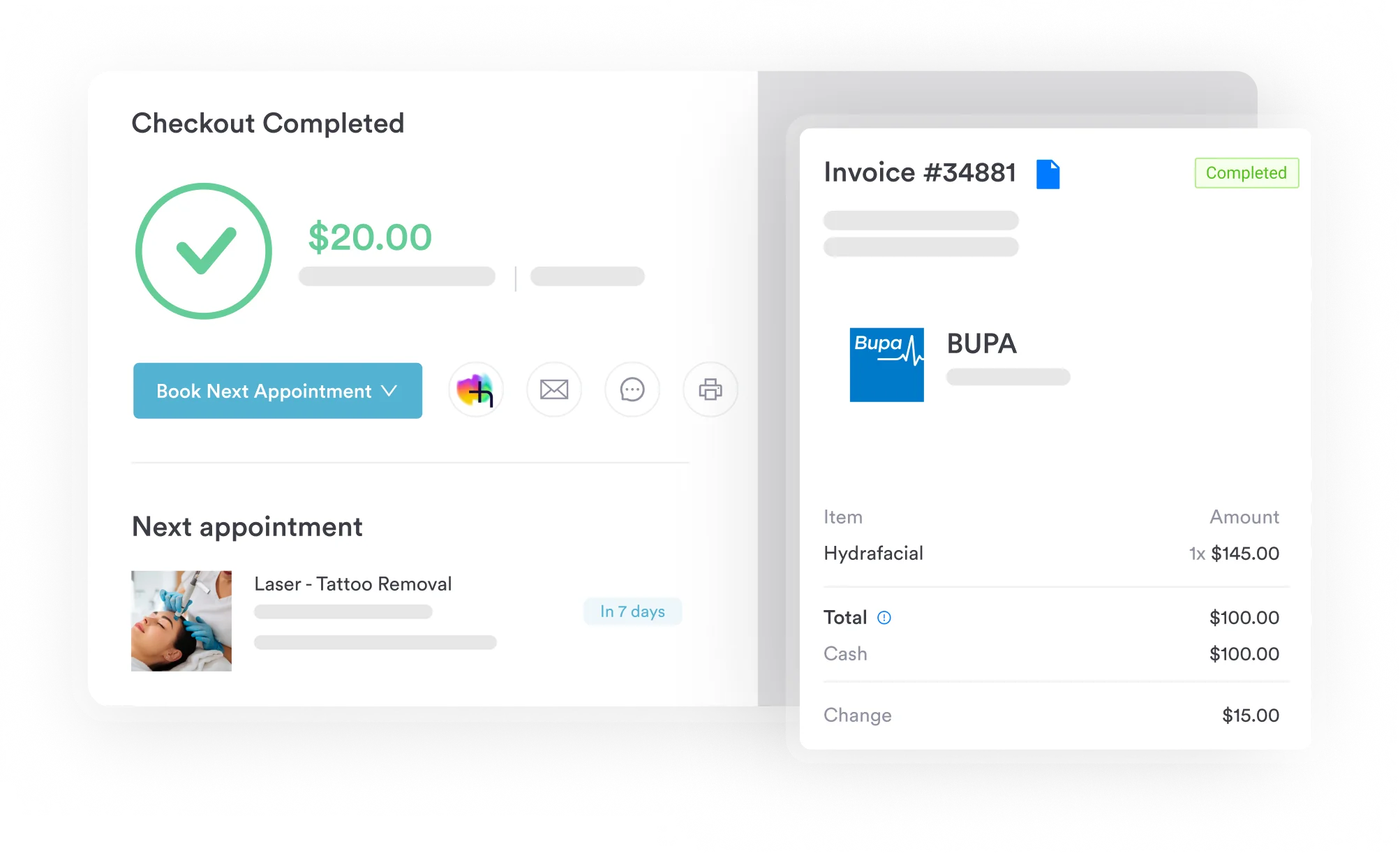
On the billing side, Pabau’s automated workflows cut the manual handoffs between a finished note and a submitted claim. Claims management validates each claim before it goes out, then tracks its status through to reconciliation. Your billing team can see where every 43233 claim stands without opening a separate portal.
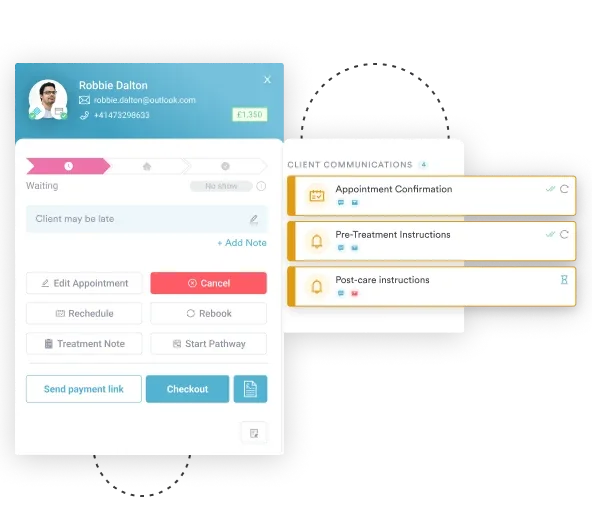
For practices billing several EGD codes in one session, structured templates and claim validation together lower the rework rate on complex endoscopy claims. The payoff shows up as fewer resubmissions and a shorter wait between the procedure and the payment.
The 30 mm balloon threshold is the billing criterion that decides whether an encounter pays as CPT Code 43233 or drops to CPT 43249. Recording the diameter in the note protects the claim before it reaches a payer. Modifier 59 discipline and ICD-10 specificity close the other two denial routes for this code. Since there is no separate office rate, the setting you perform it in changes nothing about the payment.
Build the balloon diameter prompt into the template your endoscopists already use, and the coding decision stops being a judgment call. Book a demo to see how Pabau captures EGD documentation and tracks every claim through to payment.

Billing another upper GI endoscopy this week? CPT 43273 covers the endoscopic add-on service that most often appears alongside a dilation claim.
Coding a surgical gastric procedure instead? CPT 43653 sets out the documentation and payment rules for the laparoscopic gastrostomy code.
Need the vascular dilation equivalent? CPT 43361 explains how coding shifts once the procedure moves outside the esophagus.
Coding a trunk or limb wound repair? CCSD code S4213 covers billing for debridement and primary suture of skin and subcutaneous fat on the trunk and limbs.
Coding an ingrown toenail procedure? CCSD code S6400 covers billing for nail bed excision, most often performed as Zadek’s procedure for ingrown toenail.
CPT Code 43233 is an esophagogastroduodenoscopy (EGD), flexible, transoral, with dilation of the esophagus using a balloon 30 mm in diameter or larger. It is a stand-alone surgical code that covers the entire upper GI endoscopy encounter when large-caliber balloon dilation is the primary therapeutic intervention performed.
Medicare pays about $204.08 nationally for CPT 43233 in CY2026, which is 6.11 total RVUs at the $33.4009 conversion factor. The amount is the same in facility and office settings, because CMS flags the code NA in the non-facility column. Geographic adjustment shifts the figure, so check the CMS Physician Fee Schedule lookup for your MAC jurisdiction.
The operative note must record the clinical indication and an explicit balloon diameter of 30 mm or larger. It also needs the balloon type, the number of dilation passes, and the endoscopic findings before and after dilation. Complications or their absence, sedation details, and patient tolerance complete the note. Missing the balloon diameter is the most common audit trigger for this code.
Yes, CPT Code 43233 is billable in a facility and in an office. Medicare pays the same amount either way, because CMS assigns the code NA status in the non-facility column and prices it at facility values everywhere. There is no office premium for practice expense on this code.



