



HCPCS code E0198: Water pressure pad billing guide
HCPCS code E0198 is a water pad for a standard mattress HCPCS code E0198 is the ...

Last Updated: Oct 13, 2026

CPT Code 31528 covers direct laryngoscopy with or without tracheoscopy, with dilation, initial.
Use 31528 for the first dilation only, and CPT 31529 for every repeat session.
Under the 2026 fee schedule, 31529 pays more than 31528, so mislabeling a repeat session costs money.
Missing documentation of the dilation method or the clinical indication is the leading cause of denial.
Practice management software like Pabau submits and tracks ENT claims, links each invoice to the payer, and runs validation checks before submission.
CPT Code 31528 is the code for direct laryngoscopy with or without tracheoscopy, with dilation, initial. It reports the first dilation of a narrowed airway at or below the larynx, performed under direct visualization.
According to the AMA CPT code set, the full descriptor reads: Laryngoscopy, direct, with or without tracheoscopy; with dilation, initial. Specifically, it sits in the Larynx subsection of CPT’s Surgery section, inside the endoscopy grouping that runs from 31505 to 31579.
The code covers direct visualization of the larynx, with or without concurrent tracheoscopy, plus dilation of a narrowed airway segment. Specifically, the qualifier “initial” restricts it to the first dilation session. Subsequent sessions instead use CPT 31529.
Below you’ll find the billing guidelines, modifier rules, 2026 Medicare rates, ICD-10 pairings, and the documentation an operative note needs. Coders working the same family will also reach for also reach for 31541 when an operating microscope is used.
CPT 31528 is used when narrowing of the airway at or below the larynx causes symptomatic obstruction. As a result, most adult cases need general anesthesia, and otolaryngologists perform the procedure in a hospital or ambulatory surgery center.
Common clinical indications include:
Voice and swallowing symptoms often persist after the airway is opened, so ENT teams co-manage these patients with speech therapy practices. In turn, their notes are useful evidence of the impairment that existed before treatment.
Payer LCDs, or Local Coverage Determinations, govern medical necessity here. Therefore, confirm the indication is covered under the applicable MAC’s LCD before submission, because clinical plausibility alone does not guarantee coverage.
The most common billing error for laryngeal dilation is using 31528 for every session. The AMA CPT code set separates initial from subsequent procedures, and payers enforce that split. As a result, using 31528 when 31529 applies risks upcoding scrutiny and denial.
Note the direction of payment, because it runs against the usual assumption. The subsequent code is the better-paying one, so labeling a repeat session as initial underpays the practice by roughly $13 per case.
“Initial” refers to the intervention’s place in the course of treatment, not the patient’s first-ever laryngoscopy. For example, a patient who had a diagnostic laryngoscopy previously and now needs a first dilation is coded 31528. Therefore, document that rationale in the operative note so a coder or auditor can follow it.
Every claim for CPT Code 31528 needs a supporting ICD-10 diagnosis that establishes medical necessity. In other words, a procedure code submitted without a linked, payer-accepted diagnosis is a direct path to denial. The table below shows the most common pairings, which coders can cross-reference using the AAPC crosswalk.
Laryngoscopy dilation codes sit under strict LCD medical necessity criteria, so payer acceptance is narrower than the crosswalk suggests. Therefore, verify the exact ICD-10 code against the relevant MAC’s policy before submitting.
Applying the wrong modifier to CPT Code 31528, or omitting a required one, is a fast route to a claim edit or denial. The table below covers the modifiers that apply to laryngoscopy with dilation.
Modifier -50 for a bilateral procedure does not apply to CPT Code 31528, because the larynx and trachea are midline, unpaired structures. Consequently, applying -50 here will trigger a payer edit. Likewise, the -RT and -LT laterality modifiers are wrong for the same reason.
Attach a separate written justification whenever you use modifier -22 on a laryngoscopy with dilation. Specifically, name the specific complications, such as dense scarring, difficult visualization, or extended operative time. Without them the payer has no basis to override the standard fee, and the claim will likely be denied.
Medicare pays the same amount for CPT Code 31528 in either setting, which is unusual for a surgical code. For reference, the Medicare Physician Fee Schedule, or MPFS, publishes facility and non-facility rates each year.
Those figures move with every CMS rule-making cycle. Therefore, verify current-year rates in the CMS fee schedule tool before you submit.
For payment by ZIP code, use the FastRVU lookup tool, which pulls from CMS data. In practice, Geographic Practice Cost Index adjustments mean a Manhattan practice and a rural Mississippi practice collect different amounts for the same code.
CPT Code 31528 is usually performed in a hospital operating room or an ambulatory surgery center. As a result, the non-facility rate rarely comes into play, though it can apply when dilation happens in an office procedure room.
The National Correct Coding Initiative, or NCCI, governs which codes bundle into CPT Code 31528. A bundled code cannot be billed separately on the same date without a modifier. Consequently, violating an NCCI edit triggers automatic rejection, and a pattern of them invites audit scrutiny.
Key bundling considerations include:
The same principle runs through the rest of the ENT code set. In other words, component services named inside a procedure’s descriptor cannot be unbundled, whether you are coding 31528 or 30310.
Inadequate operative documentation is the primary trigger for CPT Code 31528 denials and post-payment audits. The operative note must support every element of the descriptor. Therefore, query the physician before submission whenever one of the items below is missing.
A complete operative note for CPT Code 31528 should include:
The clinical indication rarely originates in the operating room. Instead, it is usually first recorded at a primary care practice or an earlier ENT visit. Therefore, pull that note into the chart before the claim goes out.
Structured digital intake forms capture the pre-operative history that supports medical necessity. As a result, that cuts the back-and-forth between billing staff and clinicians after the procedure. In addition, pairing them with HIPAA-compliant documentation keeps operative records audit-ready.
CPT Code 31528 sits within a group of laryngoscopy codes running from 31505 to 31579. Therefore, picking the right one means knowing what distinguishes each. The table below covers the codes most often encountered next to 31528.
Selection mistakes cluster around the pairs whose descriptors differ by one word. As a result, a printable medical coding cheat sheet at the front desk keeps those pairs straight for staff who only code occasionally.
CPT Code 31528 errors cluster around three failure points: code selection, documentation, and modifier usage. Consequently, catching them before submission prevents the denial-and-resubmission cycle that costs ENT billing teams hours of rework each month.
Error 1: Using 31528 for subsequent sessions. A patient with idiopathic subglottic stenosis may need dilation every 6 to 12 months. The first session is 31528 and every later session is 31529.
Flag the initial date of service in the patient record, then default to 31529 for all later encounters. The exception is a documented break in treatment followed by a restart of the dilation series.
Error 2: Missing dilation documentation. An operative note that describes laryngoscopy without documenting dilation cannot support CPT Code 31528. If the surgeon scoped diagnostically and then added balloon dilation, both steps belong in the note. “Laryngoscopy performed, findings unremarkable” supports nothing beyond a diagnostic laryngoscopy code. A payer audit samples claims and extrapolates, so one repeated error becomes a large repayment.
Error 3: Unbundling component procedures. Billing 31525 and 31528 on the same date for the same session is an NCCI violation. Indeed, the dilation code already includes the diagnostic component. Separate the codes only when the record documents a genuinely distinct encounter.
Error 4: Applying laterality modifiers. The larynx and trachea are midline, so -RT and -LT do not apply. Adding them raises an edit flag without adding any clinical justification.
ENT billing for laryngoscopy codes is detail-intensive. For example, one missing field in the operative note, a wrong modifier, or an ICD-10 code outside the payer’s LCD flips a clean claim into a denial. Most of that risk sits in the handoff between the clinical record and the claim.
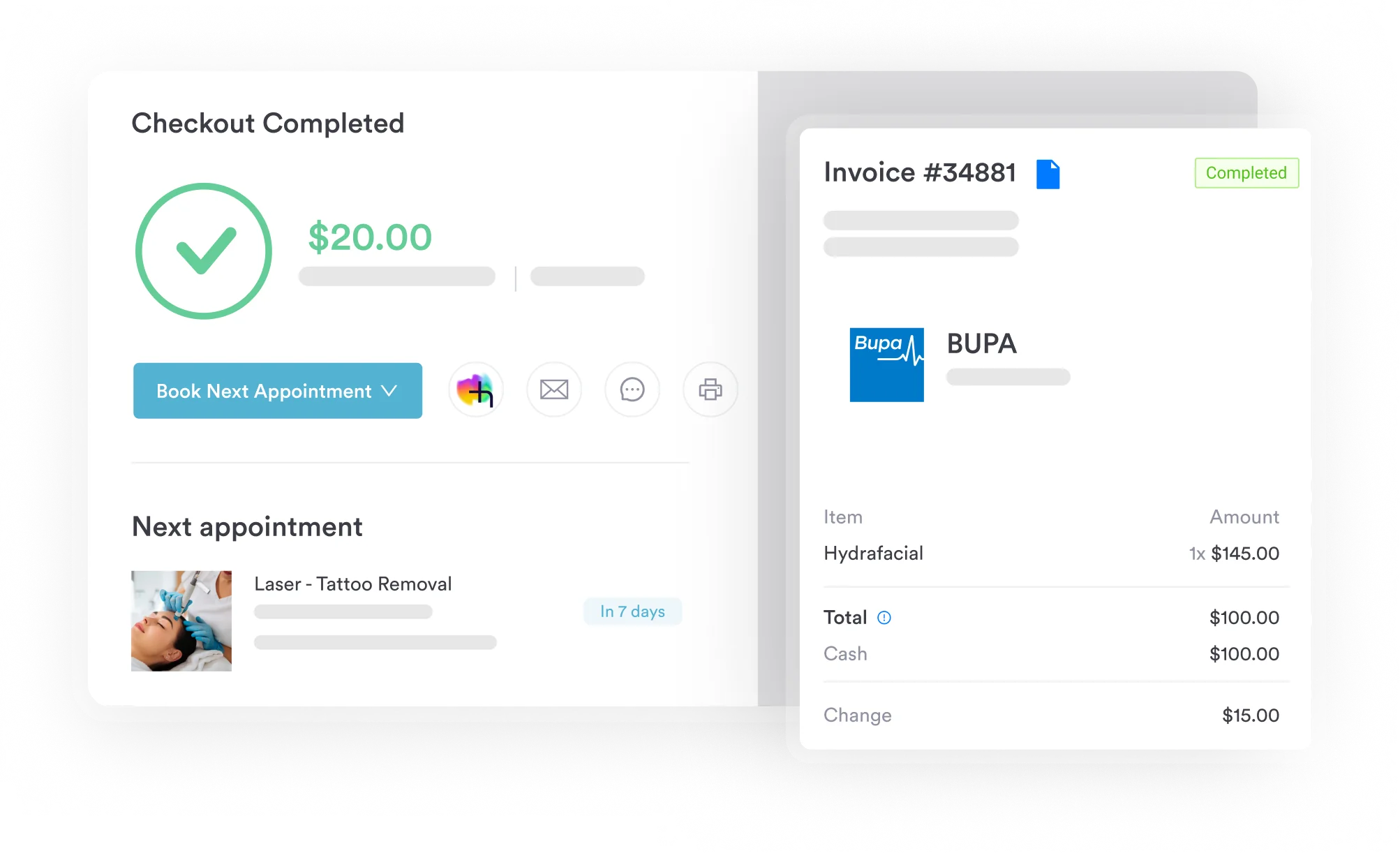
Practice management software like Pabau keeps both sides in one place. Specifically, Pabau’s claims management software submits claims from the data already held in the patient file. It links each invoice to the right insurer and policy, then tracks the claim through to payment.
Validation checks run before submission, so an incomplete claim gets caught in-house rather than by the payer. Meanwhile, coding decisions stay with your coders. Pabau handles the submission, the payer linkage, and the follow-up.
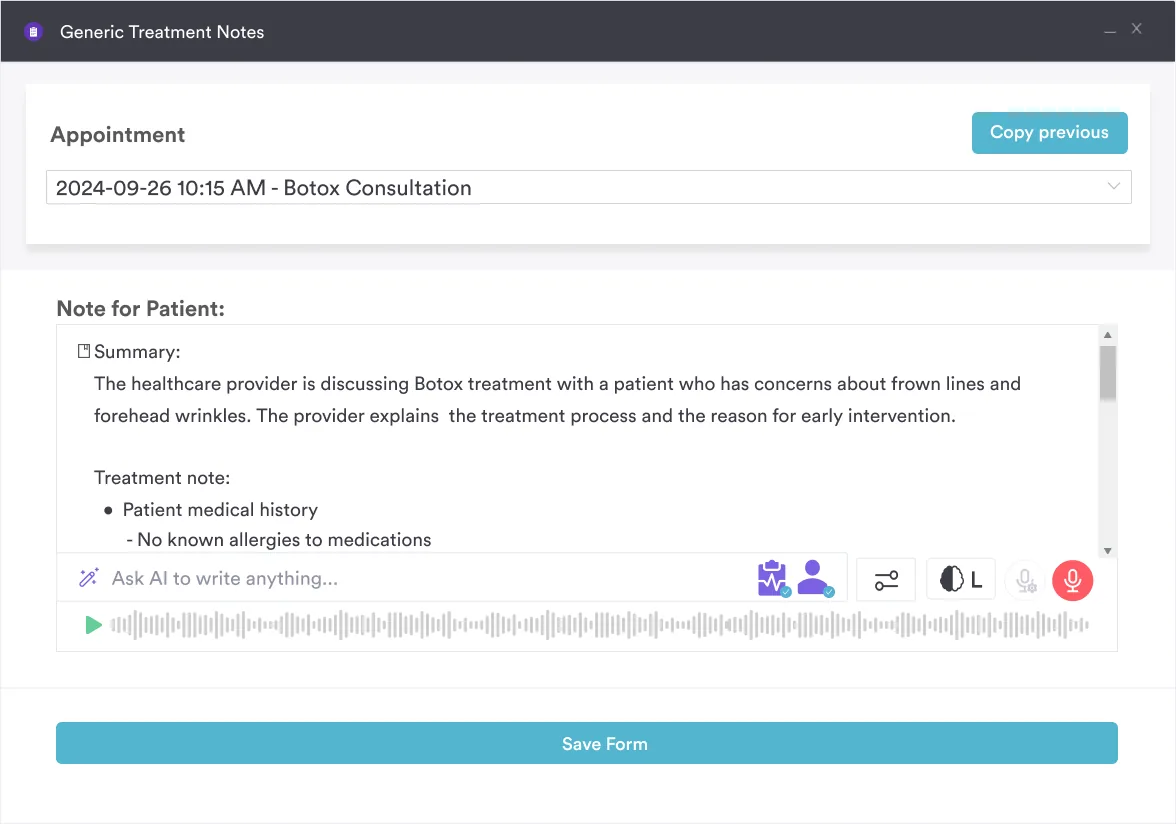
Documentation is the other half of the job. With AI-powered clinical documentation, the operative note can be captured in a structure that maps to what the claim needs. Specifically, Pabau Scribe, our AI scribe, drafts the note from the recording, including the dilation technique and the initial-versus-subsequent distinction.
Structured medical forms built around procedure-specific requirements cut the query cycles between billing staff and physicians. EHR integration then connects the finished documentation to claim submission inside one system.

Pabau’s claims management tools submit and track ENT claims from the data already in the patient record. Validation checks run before anything reaches the payer, so incomplete claims never leave the practice.

In short, the whole code turns on one word in the descriptor. Get “initial” right and 31528 is a straightforward claim. Get it wrong, however, and you are left with an upcoding flag, or with money on the table, since 31529 is the better-paying code of the pair.
So the practical move is to track the dilation series rather than the single encounter. A patient’s stenosis history decides the code, and that history lives in the chart, not in the operative note in front of you. As a result, practices that flag the initial date of service stop guessing at the second visit.
Ultimately, that is a workflow decision more than a coding one. Book a demo to see how Pabau submits and tracks ENT claims from the record your clinicians already keep.

Billing a sublingual gland excision? CCSD code F4450 billing guide covers the code used to bill removal of the sublingual salivary gland under the CCSD schedule.
Billing an oesophageal rupture repair? CCSD code G0740 billing guide covers this technically demanding upper gastrointestinal surgery code and what billing it correctly requires.
Coding other ENT procedures this week? CPT Code 30210 covers displacement therapy for the ethmoid or sphenoid sinus.
Billing oesophageal varices treatment? CCSD code G1440 billing guide explains when to use this sclerotherapy code and how an incorrect entry can trigger rejection.
Billing an open hiatus hernia repair? CCSD code G2330 billing guide covers the open hiatus hernia repair code and the open-versus-laparoscopic mix-up that affects reimbursement.
CPT Code 31528 reports direct laryngoscopy with or without tracheoscopy, with dilation, performed for the first time. Specifically, it covers procedures where a surgeon visualizes the larynx under general anesthesia and dilates a narrowed segment of the airway. The most common indications are subglottic stenosis (J38.6) and postprocedural airway narrowing (J95.5).
Modifier -22 applies when the procedure took substantially more work than typical, such as severe fibrotic stenosis needing extended operative time. In addition, modifier -51 applies to a secondary procedure billed on the same date. Similarly, modifier -59, or an X-modifier, bypasses an NCCI edit when a distinct separate service is documented. However, modifier -50 and the laterality modifiers do not apply, because the larynx is midline.
The operative note must confirm direct rather than indirect laryngoscopy technique. In addition, it must document that dilation was performed and name the method, whether balloon, bougie, or rigid dilator. It also has to establish the clinical indication matching the ICD-10 code and confirm this is the initial dilation in the treatment course. As a result, missing any element gives payers grounds for denial or audit recovery.
CPT Code 31528 is the correct code for initial direct laryngoscopy with dilation for subglottic stenosis. The diagnosis is supported by ICD-10 J38.6, or J95.5 for post-intubation stenosis. Instead, use CPT 31529 with the same ICD-10 pairing for repeat dilation sessions.



