



HCPCS code E0198: Water pressure pad billing guide
HCPCS code E0198 is a water pad for a standard mattress HCPCS code E0198 is the ...

Last Updated: Oct 13, 2026

CPT code 30310 covers intranasal foreign body removal that requires general anesthesia, which is what separates it from office removal under 30300.
Billing 30310 without general anesthesia documented in the operative note is upcoding, and payers downgrade or deny the claim.
The common modifiers are -22 for increased complexity and -50 for bilateral removal, while the anesthesia provider bills separately.
Medicare pays one national rate for 30310 in both facility and non-facility settings, because the practice expense RVUs are identical.
Practice management software like Pabau keeps the operative note, laterality, and diagnosis on one patient record, so coders stop chasing details.
CPT code 30310 covers removal of a foreign body from the nasal cavity when general anesthesia is required. Its sister code, 30300, covers the same removal performed awake in an office. Whether anesthesia was documented decides which one goes on the claim.
Most 30310 cases are pediatric. Young children rarely tolerate awake nasal instrumentation, so the object comes out in an operating room instead of a treatment chair. That single fact drives the code choice, the place of service, and the anesthesia claim that goes with it.
The American Medical Association (AMA) maintains the CPT code set. It defines the full descriptor as: Removal foreign body, intranasal; requiring general anesthesia. General anesthesia, abbreviated GA below, is the element that makes the code valid.
The code sits in the Nose subsection of the CPT Surgery chapter, alongside the other nasal foreign body and polyp codes. It is unilateral by default, so bilateral removal needs modifier -50.
General anesthesia is the only variable that separates these two codes. Bill 30300 for a simple office removal, and 30310 once the case moves to an operating room under GA. Reversing the two produces undercoding in one direction and upcoding in the other.
Most children with a nasal foreign body are seen first by primary care practices, where 30300 applies if forceps or positive pressure work. Referral to an ENT surgeon follows when that fails.
The operative record has to say why an awake attempt was not feasible. Payers read that reason as the medical necessity for anesthesia. A vague note is the most common reason a 30310 claim gets questioned.
Clinical findings that typically justify general anesthesia include:
Button batteries deserve a note of their own. They cause progressive liquefactive necrosis through electrical current and have to come out as a surgical emergency. In a child that means general anesthesia, and the urgency supports 30310 on its own.
Document the specific clinical reason GA was required in every 30310 operative note. Wording such as patient unable to cooperate with awake removal answers the payer’s medical necessity question directly. So does foreign body deeply embedded after a failed office attempt. Vague documentation is the most common reason 30310 gets denied.
Modifier choice on a 30310 claim affects both payment and claim integrity. The place-of-service code matters too, since the procedure happens in an operating room or ambulatory surgery center. Verify modifier rules against each payer’s policy, because Medicare and commercial payers differ.
Modifier -47 covers only the unusual case where the operating surgeon personally provides the anesthesia. In the typical 30310 encounter an anesthesia provider is present and bills separately, so -47 does not apply.
Every 30310 claim needs a supporting ICD-10-CM diagnosis to establish medical necessity. Category T17 covers foreign body in the respiratory tract, and intranasal objects fall under T17.1. The seventh character records the episode: A for initial, D for subsequent, S for sequela.
The codes most often paired with 30310 are below.
T17.1XXA is the standard primary diagnosis on most 30310 claims. Some payers also want an external cause code from the W44 category, which is never billable at the category level. Check your payer’s Local Coverage Determinations, and per the CMS ICD-10-CM coding guidelines, make the seventh character match the episode of care. Claim accuracy is cheaper to build at entry than to repair in an appeal. Electronic remittance files post payments automatically, and the adjustment codes explain what was reduced and why.
Reimbursement varies by locality and payer. The Centers for Medicare and Medicaid Services (CMS) publishes annual Medicare Physician Fee Schedule (MPFS) updates. The geographic practice cost index then adjusts every rate to the local market.
CPT code 30310 pays the same in either place of service. CMS sets the non-facility practice expense relative value unit (RVU) equal to the facility value, so this code has no two-tier split. Confirm the current-year amount in the CMS Physician Fee Schedule lookup tool for your locality.
Treat the $190 as a benchmark rather than a quote. MPFS rates change every year, and Medicare Advantage plans negotiate their own. Practices that track expected against paid amounts as part of revenue cycle management catch underpayments on codes like this one.
The surgeon and the anesthesia provider bill separately. CPT code 30310 is the surgeon’s code and covers the surgical service only. The anesthesia component goes on its own claim, priced from base units plus time units.
For procedures on the nose and accessory sinuses, the anesthesia code is usually 00160. The billing mechanics worth knowing:
Surgical practices benefit from keeping the operative note, the anesthesia record, and the diagnosis on one patient record. All three can then be checked before the claim goes out. A mismatch between the two claims takes far longer to sort out than a missing modifier.
Anesthesia documentation is the first thing an auditor checks on a 30310 claim. A handful of other errors produce most of the denials that ENT practices see on this code. Each one is a documentation habit rather than a coding puzzle.
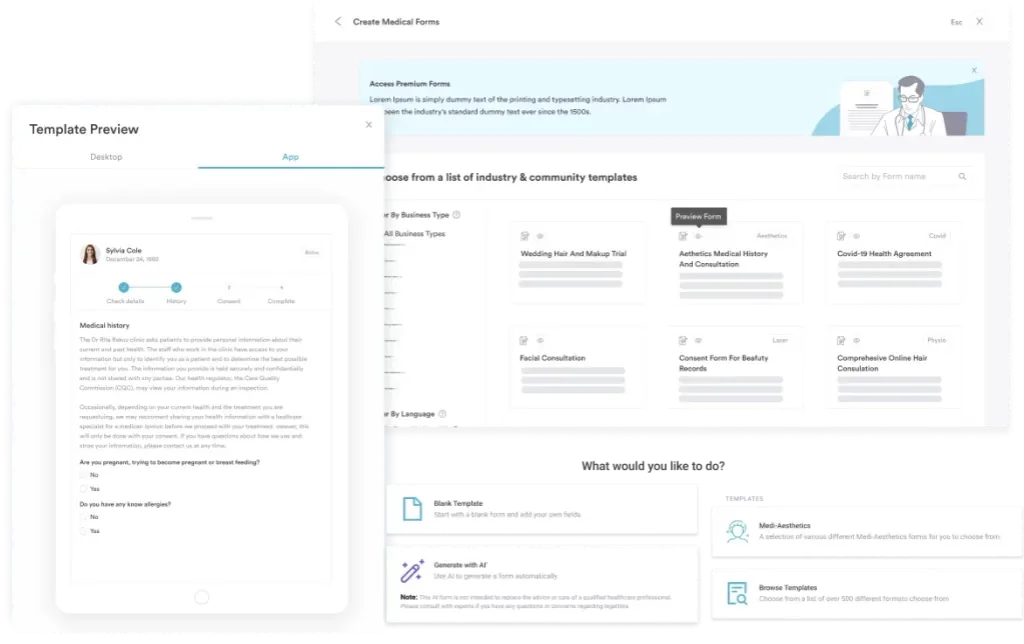
Practices can build digital intake forms around a 30310 encounter. The form prompts for the anesthesia reason, laterality, and complexity notes while the surgeon is still in the room. Those records also have to satisfy HIPAA compliance rules on storage and access.
Coders in otolaryngology meet the adjacent codes below regularly. The 30300, 30310, and 30320 series escalates with the access needed to reach the object.
Neighboring ENT codes follow the same logic, where the anesthesia and the access route decide the code. Nasal displacement therapy is reported with reported with 30210.
Direct laryngoscopy has its own pair. Use 31528 when the airway is dilated, and 31541 when the work is done with an operating microscope.
Code 30320 is the escalation path when a foreign body cannot be retrieved endoscopically and needs a formal incision. It carries a higher work RVU than 30310 and asks for more specific operative documentation. The AMA’s CPT coding resources hold the authoritative descriptors for the 30000 to 30999 range.
Run a quarterly audit of the 30310 claims you billed. Check three things on each one. Anesthesia has to be documented in the operative note. The diagnosis needs a T17.1 code with the right seventh character. A matching anesthesia claim should exist from a separate provider on the same date. Five minutes per claim catches systemic errors before a payer does.
In most practices the anesthesia record sits with the anesthesia provider and the operative note sits in the chart. The coder reconciles the two after the fact, which is where 30310 claims stall.
Practice management software like Pabau keeps the treatment note, the consent, and the diagnosis on one patient record. Digital forms capture the anesthesia reason and the side treated while the case is still in front of you.
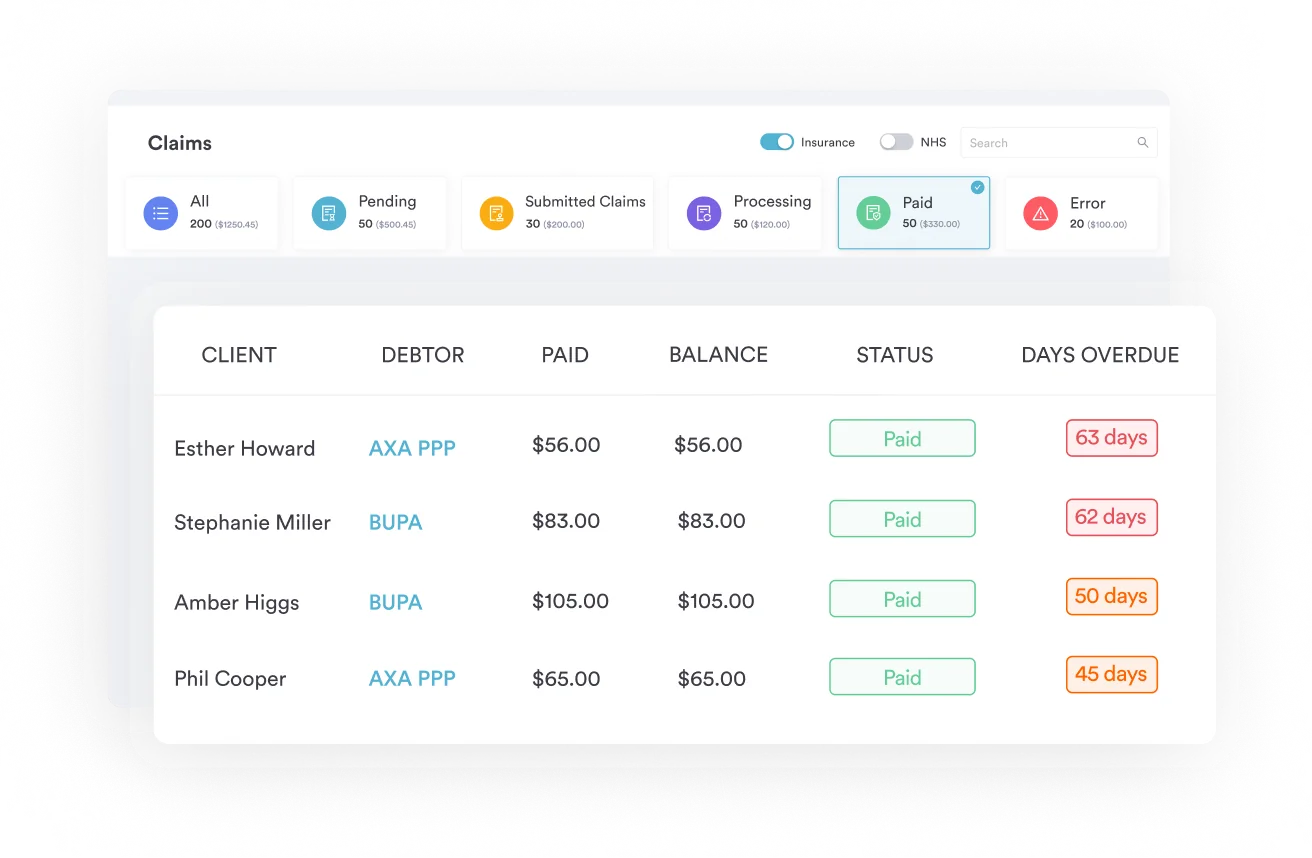
Pabau’s claims management software then pulls what is already on that record into a pre-filled claim and submits it through Claim.MD in the US. Status and remittance come back into the same system, so nobody re-keys a 30310 claim into a separate portal.
Where clinical records live in another system, EHR integration connects them, so documentation and billing stop drifting apart. The outcome is fewer post-encounter emails asking whether the child was under anesthesia.

Pabau keeps operative notes, consents, and diagnoses on one patient record, then submits and tracks the claim from the same place. Your coders stop chasing paperwork after the fact.

The 30300 versus 30310 decision rests on one line in the operative note. If general anesthesia is documented and the reason for it is stated, 30310 holds up. If it is not, no modifier will rescue the claim.
So the work worth doing sits upstream of billing. Fix the note template, and the modifier, the diagnosis, and the anesthesia claim fall into place behind it. Fix the claim instead and you will be fixing it again next month.
Book a demo to see how Pabau keeps 30310 documentation, coding detail, and claim status in one place for an ENT practice.

Billing an endoscopic pharyngeal pouch procedure? CCSD code E2480 billing guide covers the designated code ENT and upper GI surgeons use for this procedure.
Coding another nasal procedure under anesthesia? 21330 walks through open treatment of a nasal fracture and the documentation it needs.
Billing an office-based ENT removal instead? G0268 covers impacted cerumen removal by a physician and the same-day rules around it.
Billing a diagnostic nasolaryngopharyngoscopy claim? CCSD code E2500 billing guide explains the sole procedure rule and code pairing mistakes that cause rejections.
Billing a tracheal examination claim? CCSD code E4510 billing guide covers the distinction between this code and adjacent bronchoscopy codes that causes coding errors.
CPT code 30310 covers surgical removal of a foreign body from the intranasal cavity when general anesthesia is required. It applies when the patient cannot cooperate with an awake procedure. It also applies when the object is too deeply embedded for office removal.
No. General anesthesia is a required clinical element of CPT code 30310. Billing this code without documented general anesthesia is upcoding under CMS fraud and abuse guidance. Procedures done awake or under local anesthesia are reported with CPT 30300 instead.
CPT 30300 covers simple intranasal foreign body removal in an office setting without general anesthesia. CPT 30310 applies when general anesthesia is required, usually in an operating room or ambulatory surgery center. The two codes differ in anesthesia, setting, complexity, and payment.
No, although pediatric cases are the most common. Young children frequently cannot cooperate with awake intranasal foreign body removal, which makes general anesthesia necessary. The code itself is not age-restricted. What decides it is documentation of why general anesthesia was required.
The common modifiers are -22 for documented increased complexity and -50 for a bilateral procedure. Some payers want -LT and -RT for side designation instead. Modifier -47 applies only when the surgeon personally gives the anesthesia. Verify each payer policy before applying any modifier.
The primary ICD-10-CM code on most 30310 claims is T17.1XXA, foreign body in nostril, initial encounter. Use T17.1XXD for a subsequent encounter. Some payers also require an external cause code from the W44 category, such as W44.9XXA. Confirm your payer Local Coverage Determination requirements.
Medicare pays roughly $190 nationally for CPT code 30310, and the rate is the same in facility and non-facility settings. Total RVUs are 5.70. Confirm the current-year amount for your locality in the CMS Physician Fee Schedule lookup tool.



