



HCPCS code E0198: Water pressure pad billing guide
HCPCS code E0198 is a water pad for a standard mattress HCPCS code E0198 is the ...

Last Updated: Oct 13, 2026

CPT code 22853 covers insertion of an interbody biomechanical device, such as a synthetic cage, into a prepared intervertebral disc space during interbody arthrodesis.
The code is reported once for each interspace. Cages at two disc levels are billed as 22853 x 2, never as 22853 plus 22854.
CPT 22854 is defined by anatomic site rather than level count. It applies only when the device fills a vertebral corpectomy defect.
CPT 22859 is a defined add-on code for a device placed without interbody arthrodesis. The unlisted spine procedure code is 22899.
22853 is an add-on code. It cannot be billed alone, and modifier 51 never applies to it.
A cage with an integrated anterior plate is reported with 22853 alone. Billing an anterior instrumentation code on top of it is a misuse.
Pabau’s claims management software flags add-on pairing rules and NCCI edit conflicts before submission, so spinal claims go out clean.
CPT code 22853 reports the insertion of an interbody biomechanical device into an intervertebral disc space during interbody fusion. It is billed once for each interspace treated. Its two siblings are separated by anatomy, not by level count. CPT 22854 covers a device placed in a vertebral corpectomy defect, and CPT 22859 covers a device placed without interbody arthrodesis.
According to the American Medical Association (AMA) CPT code set, the official descriptor for CPT code 22853 runs element by element as follows.
The phrase “List separately in addition to code for primary procedure” confirms this is an add-on code. It cannot stand alone.
During spinal fusion surgery, the surgeon removes disc material from the intervertebral space and prepares the endplates. A biomechanical cage, synthetic or mesh, is then inserted into that cleared space. It maintains disc height, supports the fusion mass, and encourages bone growth across the vertebral segment. The cage may include integrated anchoring hardware such as screws or flanges that secure it in position. A clean claim carries the code, the modifiers and the diagnosis in agreement, and needs no rework before payment.
CPT code 22853 reports that specific device-insertion step. The primary fusion code covers the arthrodesis itself, and which one applies depends on the approach. An anterior cervical fusion is reported with 22551, while a transoral or extraoral approach at the top of the cervical spine is reported with 22548. Together the primary code and 22853 reflect the full surgical encounter.
Because 22853 is an add-on code, four rules apply without exception.
AMA CPT guidelines identify the following primary spinal fusion codes as valid pairings with 22853. The CMS National Correct Coding Initiative edits govern which pairs a payer will accept. Verify against the current edit tables before submitting.
Additional disc levels do not get a different device code. Report another unit of 22853 for each further interspace, alongside whichever additional-interspace add-on belongs to the primary procedure. Those are 22552 for 22551, and 22585 for 22554 and 22558.
Posterior instrumentation is reported separately with 22840 through 22844. CPT 22852 covers removal of posterior segmental instrumentation, so it has no role in reporting device insertion.
These three codes describe related but distinct scenarios, and confusing them is the most common error in interbody device billing. Two questions separate them. Where was the device placed, and was interbody arthrodesis performed at that site? Level count plays no part in the choice.
Practical rule: For a two-level TLIF with cages at L4-L5 and L5-S1, report 22633 for the first interspace and 22634 for the second. Add 22853 x 2 for the two devices. Billing 22854 for the second cage claims a corpectomy defect that was never created. Reserve 22859 for a device placed where no arthrodesis was performed, and 22899 for a spine procedure with no listed code at all.
The Centers for Medicare and Medicaid Services (CMS) National Correct Coding Initiative (NCCI) maintains edit pairs that govern which procedure codes can be billed together. For CPT code 22853, the key bundling principles are as follows.
NCCI edits stop 22853 from being reported with certain instrumentation and bone graft codes in ways that constitute unbundling. Coders sometimes report 22853 alongside work already captured in the primary fusion code, which triggers automatic denial. Knowing which pairings are permitted, and which need a modifier, is what keeps a spinal claim clean.
Deformity cases add another layer. A lumbar osteotomy such as 22224 can appear on the same claim as 22853. The operative note has to separate the osteotomy from the interspace preparation. Where it does not, the edit tables treat the two as one piece of work.
NCCI edit files are updated quarterly by CMS. Always verify the current edit tables rather than relying on prior-year knowledge. The AAPC Codify CPT lookup gives you current edit pairs alongside code descriptors.
Because 22853 is an add-on code, its modifier profile is narrower than a standalone procedure code. The most common modifier errors are applying 51, which is exempt, and using 59 without documenting a distinct procedure.
Review your payer contracts before applying modifier 59 to 22853. Routine use of -59 without documented clinical justification is an audit trigger. Document specifically why the procedure was distinct from others reported on the same date of service.
Medicare reimbursement for CPT code 22853 varies by geographic locality, practice setting, and annual fee schedule updates. The figures below reflect approximate 2025 national averages for reference only. Rates change every year and differ by contractor jurisdiction, so consult the CMS Physician Fee Schedule lookup tool for current locality-specific figures.
Treat these estimates as directional benchmarks. Private payer contracts vary considerably from Medicare rates. Neighboring spine codes follow the same locality-adjustment logic. The fee schedule breakdown for 22318 shows how far one jurisdiction can sit from the national average.
Coverage is a separate question from payment. Some commercial insurers treat biomechanical cages as investigational in certain clinical scenarios, so verify payer-specific policy before assuming the device is covered.
Incomplete operative reports are the leading cause of 22853 claim denials on audit. The operative note must support every element of the code descriptor. Missing a single required element gives a Medicare Administrative Contractor (MAC) grounds to recoup the payment.
Required operative report elements for a complete 22853 claim:
Revision surgery raises the documentation bar again. A second fusion attempt at a previously operated level is usually supported by a diagnosis of pseudarthrosis, coded as M96.0. Reviewers then check that the operative findings match it.
Spine surgery billing generates a disproportionate share of claim denials, largely because of add-on code complexity and multi-code encounters. These are the most frequent 22853 errors seen on audit and in denial queues.
CPT code 22853 rarely appears in isolation. Spinal fusion encounters typically involve several add-on codes for instrumentation, bone grafting, and additional levels. The table below covers the most commonly co-reported codes.
Graft codes deserve particular attention, because their unit rules differ from 22853. Morselized autograft harvested through a separate incision is reported once per procedure with 20937, no matter how many interspaces receive it. Bone marrow aspirated to seed the graft is reported with 20939.
Manual add-on code management is error-prone, particularly for spine practices running multi-level fusions several times a week. Most 22853 errors happen between code lookup and claim submission. A coder finds the right code in a reference tool, then makes a pairing or modifier slip while building the claim by hand.
Practice management software like Pabau closes that distance by building add-on code logic into the billing workflow itself. Its claims management software prompts the coder in real time. Alerts fire when an add-on code needs a primary code, when an NCCI pair conflicts, or when a modifier is missing. Nobody has to hold the 22853 rules in their head.
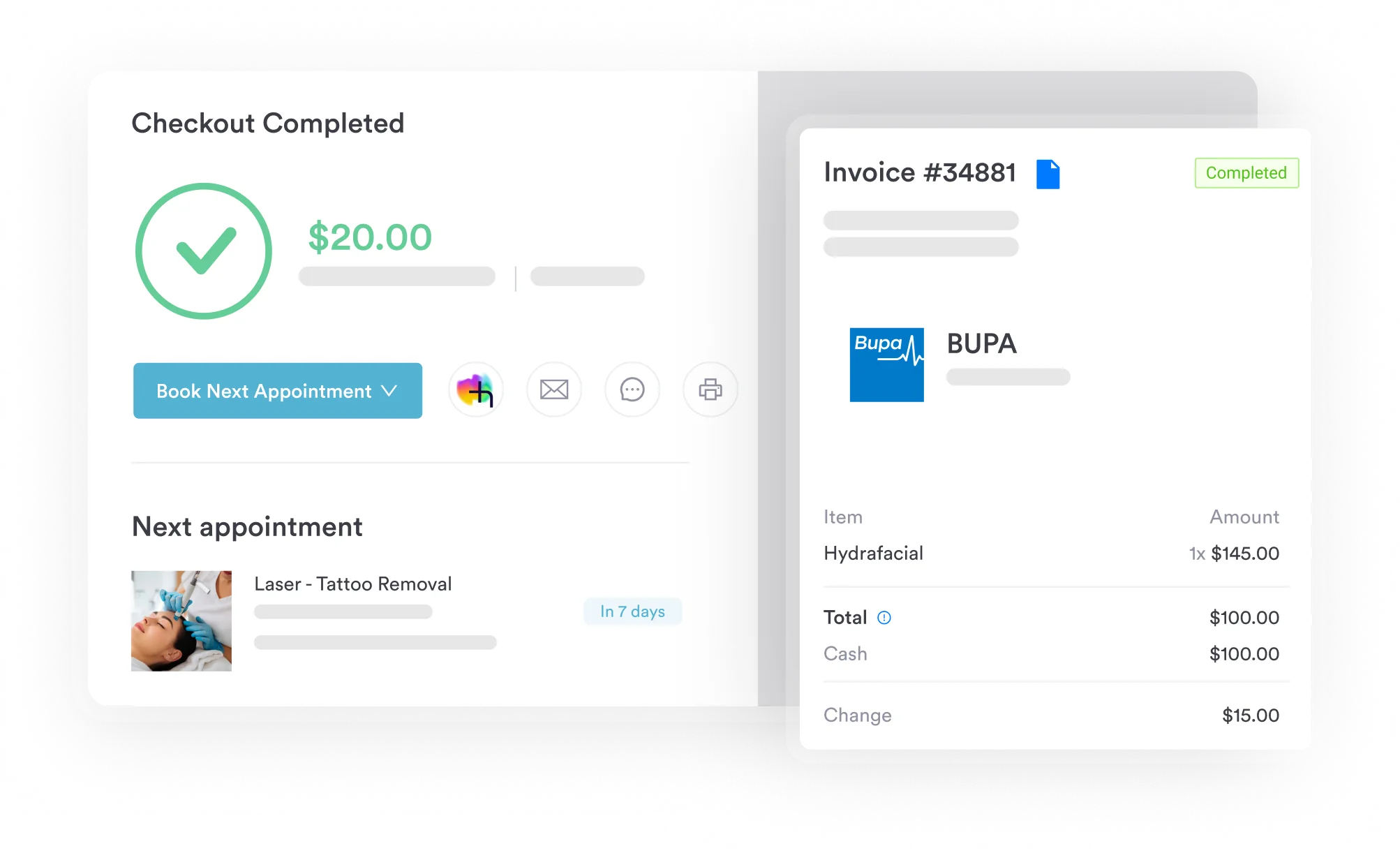
Automated billing workflows can also route claims through a pre-submission scrub. That scrub looks for four things:
Catching those inside the practice costs a coder a minute. Catching them after a denial costs an appeal, and the money often never arrives.
The same alerts help the rest of the pathway. Post-fusion rehabilitation runs on its own codes, and physical therapy EMR keeps those visits attached to the same patient record as the surgery.
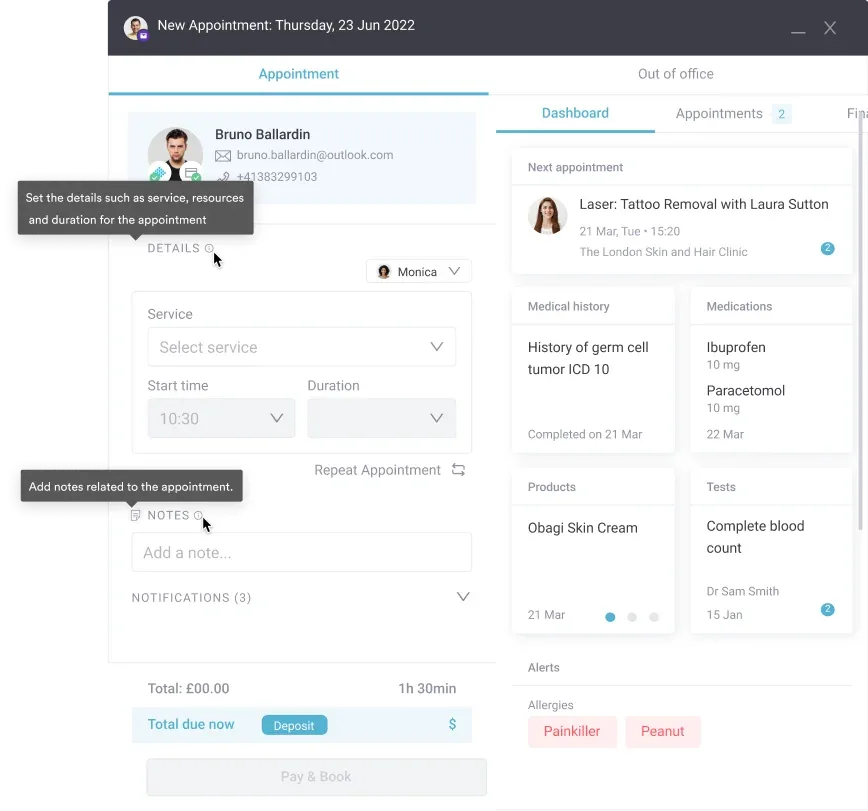
Orthopedic groups have similar needs across their service lines. That is why sports medicine software and general practice management software now surface coding alerts at the point of billing, not after submission. Every Pabau subscription includes the full billing toolset, so nothing here sits behind a higher tier.
Run a monthly audit of all 22853 claims against your denial queue. Filter by denial reason codes CO-4 and CO-97. CO-4 means the procedure code is inconsistent with the modifier used, or a required modifier is missing. CO-97 means the service was bundled into another payment. Together they surface the two biggest 22853 problems: modifier errors and unbundling. Fix the pattern, not just the individual claim.

Pabau’s claims management software validates add-on code pairings and flags NCCI edit conflicts in real time, so 22853 claims go out clean the first time. See how it works for orthopedic and spine surgery practices.

CPT code 22853 is straightforward in concept and unforgiving in execution. One question decides almost every claim. Did a device go into a prepared disc space where fusion was performed, and how many of those interspaces were there?
Answer that in the operative note, level by level, and the coding follows on its own. The trade-off is where the effort lands. Capturing device, level, and approach in the room takes minutes, while reconstructing them for an appeal takes hours and often fails.
So build the check into the workflow instead of the review cycle. Book a demo to see how Pabau validates add-on pairings and NCCI edits before a spinal claim is submitted.

Billing a cage placed without a fusion? CPT code 22527 covers percutaneous intradiscal annuloplasty, another disc procedure with strict single-session unit rules.
Working on vertebral body procedures rather than interspaces? CPT code 22510 walks through percutaneous vertebroplasty billing and its imaging guidance rules.
Need the excision codes that sit beside a lumbar fusion? CPT code 22102 explains partial excision of a posterior vertebral component and when it is separately reportable.
Sourcing structural graft for an interbody construct? CPT code 20931 covers structural allograft for spine surgery and how its single-unit rule works.
Billing a device for a fusion that failed to take? HCPCS code E0748 covers spinal osteogenesis stimulators and the documentation payers expect with them.
CPT code 22853 is an add-on code for inserting an interbody biomechanical device into an intervertebral disc space. The device is usually a synthetic cage or mesh, and it may carry integral anterior instrumentation. The code applies when interbody arthrodesis is performed at that interspace. It must be reported alongside a valid primary spinal fusion code, never on its own.
Yes. CPT 22853 is explicitly classified as an add-on code by the AMA. The official descriptor carries the instruction “List separately in addition to code for primary procedure.” That means it is billable only when a valid primary spinal fusion code appears on the same claim.
The difference is anatomic site, not level count. CPT 22853 covers a device inserted into an intervertebral disc space, reported once for each interspace. CPT 22854 covers a device inserted into the defect left by a vertebral corpectomy, reported once for each contiguous defect. A two-level disc fusion with cages at both interspaces is billed as 22853 x 2.
Yes. The descriptor reads “each intervertebral disc space,” so one unit is reported for every interspace that received a device. A three-level interbody fusion with cages at all three interspaces supports 22853 x 3. Name each level in the operative note, because payers match units to documented interspaces.
No. Integral anterior instrumentation that anchors the device is already included in 22853. A stand-alone or low-profile cage with a built-in plate is reported with 22853 alone. Reporting 22845 through 22847 for that same hardware is a misuse of the anterior instrumentation codes. Use them only when separate anterior hardware was placed.
Modifier 51 does not apply, because add-on codes are exempt. Modifier 59 may apply when a distinct procedure must be separated from a bundled code under NCCI edits. The operative report has to support that distinction. Modifier 62 applies when two surgeons each perform a separate portion of the procedure.
Medicare reimbursement for CPT 22853 varies by geographic locality and is updated annually. The physician component in a facility setting is roughly $350 to $450 based on 2025 national averages. Actual payment depends on the locality conversion factor. Use the CMS Physician Fee Schedule lookup tool for current, locality-specific rates.
Not for the same site. CPT 22859 describes an interbody device placed without interbody arthrodesis, so it applies where no fusion was performed at that defect. CPT 22853 requires arthrodesis at the interspace it reports. Both can appear on one claim only when separate sites each meet their own definition. CPT 22859 is a defined add-on code with its own descriptor, and the unlisted spine procedure code is 22899.



