ICD-10 Code S42.444P: Medial epicondyle fracture, right humerus
ICD-10 Code S42.444P: full descriptor and code validity ICD-10 Code S42.444P car...

Last Updated: Oct 13, 2026
Billable Code Specific Code
R55 is the billable ICD-10-CM code for syncope and collapse.
Let Pabau's smart automation suggest the right codes, reduce claim denials, and keep your practice compliant—effortlessly.
Automate repetitive tasks and focus on what matters most—your patients.
Reduce coding errors and ensure compliance with the latest regulations.
Clean claims, fewer denials, and faster reimbursements.
Powerful insights and reporting to help your practice thrive.
HIPAA compliant SOC 2 certified GDPR-compliant Trusted by 4,000+ clinics worldwide

ICD-10 Code R55 (Syncope and collapse) is a billable ICD-10-CM code effective October 1, 2025 for FY2026, covering fainting, blackout, and vasovagal attack
R55 carries nine Excludes1 conditions including orthostatic hypotension (I95.1) and cardiogenic shock (R57.0), which cannot be coded alongside R55
Near syncope and presyncope map to R55 when no more specific code applies, but documentation must capture onset, precipitating factors, and workup findings
Pabau’s claims management software and digital forms help practices capture the structured documentation needed to support R55 coding and reduce claim denials
Most syncope presentations in primary care and the ED arrive without a confirmed cardiac or neurological cause. That uncertainty is exactly what ICD-10 Code R55 is designed to handle. R55 (Syncope and collapse) is a billable, specific ICD-10-CM code used to report a transient loss of consciousness when a more precise etiology has not been established or documented.
The 2026 edition of ICD-10-CM R55 became effective on October 1, 2025. Per the CMS ICD-10 codes page, R55 is located in Chapter 18 (Symptoms, signs and abnormal clinical and laboratory findings, not elsewhere classified), specifically within code block R50-R69 (General symptoms and signs). Its ICD-9-CM predecessor was 785.0.
This article covers R55 code details, clinical description, includes and excludes notes, documentation requirements, billing considerations, and the ICD-9-to-ICD-10 crosswalk for coders and clinicians working with syncope presentations.
The table below summarises the core reference data for ICD-10 Code R55. Use this as your quick-check before claim submission or chart review.
Syncope is a transient, self-limited loss of consciousness caused by a sudden reduction in cerebral blood flow. The patient typically loses postural tone, falls, and recovers spontaneously within seconds to minutes. Collapse without confirmed loss of consciousness is also captured here when the clinical picture is consistent.
The official ICD-10-CM Includes note for R55 lists three specific synonyms accepted under this code.
All of the following map directly to R55 and require no additional code to capture the synonym alone:
Near syncope (presyncope) and loss of consciousness without full collapse are also commonly coded R55 in the absence of a more specific diagnosis. Coding community consensus and guidance from ICD List’s ICD-10-CM reference supports R55 as the default when presyncope is not further specified, though clinicians should seek AHA Coding Clinic confirmation for complex cases.
Vasovagal syncope accounts for the majority of syncope presentations in outpatient and emergency settings. Because it is explicitly listed in the R55 Includes note as “vasovagal attack,” no additional specificity code is required when the physician documents a vasovagal episode.
Certain documentation elements strengthen the coding rationale and support medical necessity for workup billing. Capture these in the chart when the presentation is vasovagal:
When a secondary cause is separately identified and documented (for example, dehydration or anaemia contributing to the episode), code that secondary condition alongside R55 using standard multiple-coding conventions. R55 remains the principal diagnosis when syncope is the presenting complaint driving the visit.
Near syncope (presyncope) describes an episode where the patient feels they are about to lose consciousness but does not fully do so. These presentations are common in urgent care and cardiology referrals.
ICD-10-CM does not provide a dedicated code for presyncope. When no more specific diagnosis is established, the accepted coding practice is R55. This is consistent with the guidance on the near syncope documentation guidelines reviewed during SERP analysis, and aligns with how the R50-R69 symptom block is structured: symptoms without definitive diagnosis code to the symptom, not an assumed etiology.
Documentation for near syncope ICD-10 coding should include:
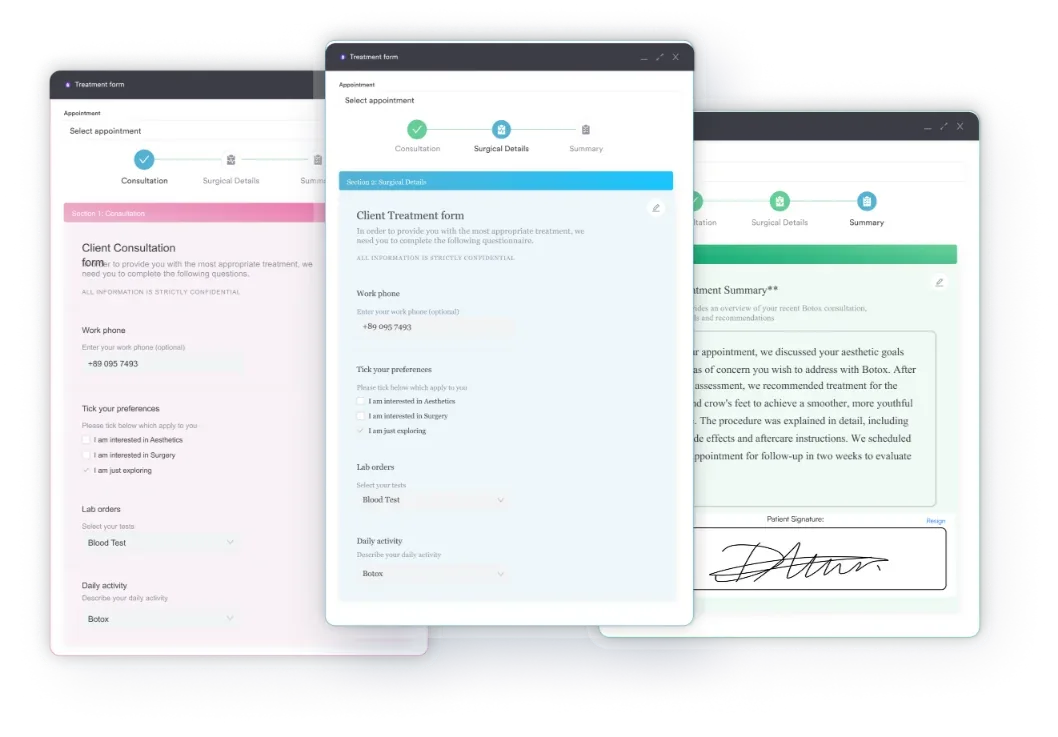
Using structured medical documentation forms built for syncope presentations helps ensure coders receive the clinical narrative they need without chasing providers for addenda.
The Includes and Excludes1 notes for R55 define exactly which presentations belong here and which require a different code entirely. Misreading Excludes1 is the most common cause of R55 claim denials.
Includes (coded under R55): Blackout, fainting, vasovagal attack.
Excludes1 (never code R55 when these are documented): Per the official ICD-10-CM FY2026 tabular list and the ICD List reference database, nine conditions carry an Excludes1 note under R55. Excludes1 means the condition cannot coexist with R55 on the same claim as a primary or secondary diagnosis.
The table below maps each Excludes1 condition to its correct ICD-10-CM code. Coding any of these as R55 is a coding error and a payer audit risk.
A common audit trigger: coding R55 alongside orthostatic hypotension (I95.1). Because I95.1 is Excludes1 for R55, these two codes cannot appear on the same claim. If orthostatic hypotension is confirmed and documented, I95.1 replaces R55, it does not supplement it. For related neurological LOC presentations, see guidance on intracranial hemorrhage ICD-10 codes for cases where a structural cause is found.
Run a pre-submission edit check: if R55 and any Excludes1 code appear on the same claim, flag the encounter for physician review before billing. Most clearinghouses will reject the claim automatically, but catching it internally avoids rework and delays.
Inadequate documentation is the primary reason R55 claims are delayed or denied. Payers and RAC auditors look for a clinical narrative that rules out the Excludes1 conditions and supports the symptom-level diagnosis.
The following checklist represents the documentation elements that should appear in the encounter note. This aligns with guidance from the CDC/NCHS ICD-10-CM tool and standard AHA Coding Clinic principles.
Implementing digital intake forms that prompt patients to describe the episode before the visit gives clinicians a structured narrative to build from, reducing the documentation burden at the point of care. For related ICD-10 symptom-code documentation practices, the approach used for situational anxiety ICD-10 coding follows the same attestation principles.
R55 is a valid principal diagnosis for inpatient DRG grouping and outpatient claim submission. The MS-DRG assignment for syncope without complication or comorbidity (CC) typically groups to DRG 312. With a CC, the grouping shifts to DRG 311, yielding meaningfully higher reimbursement.
Common CPT codes billed alongside R55 in outpatient and emergency settings include:
Payer policies on R55 vary. Medicare typically covers the workup without prior authorization when documentation supports the medical necessity of each ordered test. Commercial payers may require a referral or pre-authorization for longer-term cardiac monitoring (implantable loop recorder). Always verify payer-specific requirements using the AAPC Codify ICD-10-CM lookup for coverage indicators.
Practices managing high volumes of cardiology and internal medicine visits can reduce R55-related denial rates by linking claims management software directly to their clinical documentation workflow. This creates an audit trail from the chart note to the submitted claim. Clinics running these workflows through a GP clinic management software platform typically capture the relevant CPT pairings and exclusion checks at the point of submission rather than after the fact.


Pabau links clinical notes directly to claim submission, giving your coding team the documentation evidence they need before a claim leaves the practice.

Practices still reconciling historical claims or converting legacy data will encounter ICD-9-CM code 785.0. The crosswalk below reflects the official CMS GEM (General Equivalence Mapping) conversion. For research purposes, ResDAC’s guide to ICD codes in Medicare files explains how ICD-9 to ICD-10 transitions appear in administrative claims data.
The crosswalk is approximate rather than exact because ICD-10-CM introduced additional granularity in the cardiovascular chapter. Claims converting 785.0 to R55 are considered valid, but documentation for encounters after October 1, 2015 (ICD-10 go-live) should use the ICD-10-CM language. Practices using practice management software with integrated code lookup avoid the manual conversion step entirely for current encounters. For context on how ICD-10 documentation standards apply to other neurological and psychiatric presentations, see our guide to autism spectrum disorder ICD-10 documentation. Each Administrative Contractor publishes its own coverage articles, so a national answer is often the wrong one. Practices treating medical billing as a back-office task find errors at the front desk instead.
Syncope documentation fails most often not because clinicians lack knowledge but because the encounter note does not capture the right elements in a structured way coders can act on. Unstructured free-text notes miss orthostatic vitals, skip the attestation statement, and omit the differential diagnosis reasoning that justifies R55 over I95.1.
Pabau addresses this at the front end of the workflow. Structured patient records in Pabau allow practices to build syncope-specific encounter templates that prompt for the documentation checklist above, all captured in the same system that feeds claim submission. Coders review a consistent note structure rather than interpreting varied free-text across providers.

On the billing side, Pabau’s claims management software flags potential Excludes1 conflicts before submission, reducing the volume of R55 claims returned for documentation review. Practices handling cardiology, internal medicine, or general practice volumes benefit from having documentation capture and billing review in a single practice management platform rather than across disconnected systems.
For practices managing patients whose syncope workup involves anxiety or psychiatric co-management, Pabau’s record structure also supports the parallel documentation requirements for situational anxiety ICD-10 coding within the same patient encounter.
Build a syncope encounter template in your EHR that includes a required field for orthostatic blood pressure readings and a checkbox confirming physician attestation that no specific etiology was identified. This single structural change reduces coder addendum requests for R55 encounters by removing the most common documentation gap.
ICD-10 Code R55 handles the most common diagnostic scenario in syncope care: a transient loss of consciousness without a confirmed specific etiology. Getting it right means understanding the nine Excludes1 conditions, documenting orthostatic vitals and physician attestation at every encounter, and correctly mapping near-syncope presentations when ICD-10-CM provides no more specific code.
Pabau’s claims management software and structured record templates help practices capture the documentation that supports R55 before claims leave the building. To see how Pabau handles syncope and general medicine coding workflows, book a demo.

Coding a complex colorectal-urological procedure? Vesicocolic fistula repair billing code covers CCSD code M3720, a procedure that sits at the intersection of colorectal and urological surgery.
Billing a urethral caruncle excision? Urethral caruncle excision billing guide walks through CCSD code M5580 from initial patient assessment through claims submission.
Coding an autism spectrum diagnosis? ICD-10 code for autistic disorder covers the correct code F84.0, related autism spectrum codes, and documentation tips for accurate billing.
ICD-10 Code R55 is the diagnosis code for syncope and collapse, used to report transient loss of consciousness (including fainting, blackout, and vasovagal attack) when no more specific etiology has been established. It is a billable, specific ICD-10-CM code effective for FY2026 (October 1, 2025), located in Chapter 18 under the general symptoms code block R50-R69.
Nine conditions carry an Excludes1 note under R55, meaning they cannot be coded alongside it: cardiogenic shock (R57.0), carotid sinus syncope (G90.01), heat syncope (T67.1-), neurocirculatory asthenia (F45.8), orthostatic hypotension (I95.1), postprocedural shock (T81.1-), psychogenic syncope (F48.8), Stokes-Adams attacks (I45.9), and syncope due to spinal puncture (G97.1). When any of these is documented, that code replaces R55.
Both code to R55. Syncope is a full transient loss of consciousness; near syncope (presyncope) is the feeling of imminent loss of consciousness without complete collapse. ICD-10-CM has no separate code for presyncope, so R55 is the accepted default for near syncope when documentation does not support a more specific diagnosis. Physician attestation that no specific etiology was identified is essential to support R55 for either presentation.
Vasovagal syncope codes to R55. “Vasovagal attack” is explicitly listed in the official ICD-10-CM Includes note for R55, meaning no additional specificity code is needed when the physician documents a vasovagal episode. If a secondary contributing condition is separately documented (dehydration, anaemia), code it alongside R55 using standard multiple-coding conventions.
The ICD-9-CM equivalent of R55 is 785.0 (Syncope and collapse). The crosswalk is approximate: both codes describe the same clinical scenario, but ICD-10-CM introduced additional specificity in surrounding chapters. For historical claims or research using Medicare data, the ResDAC ICD codes guide explains how to handle ICD-9 to ICD-10 transitions in administrative datasets.
Documentation for R55 should include: a description of the episode (onset, duration, setting), documented precipitating factors, associated symptoms (nausea, diaphoresis, palpitations), orthostatic vital signs, ECG results, and a physician statement confirming no specific etiology was identified. These elements support the symptom-level code selection and satisfy payer medical necessity requirements for any associated workup billing.