ICD-10 code S61.201A: Open wound of left index finger without nail damage
ICD-10 code S61.201A covers a left index finger wound of unstated type ICD-10 co...

Last Updated: Oct 16, 2026
Billable Code Specific Code
R54 is the billable ICD-10-CM code for age-related physical debility.
Coders working in geriatric care, skilled nursing facilities, and home health encounter R54 frequently but deny it just as often. Claims get rejected not because the code is wrong, but because the supporting documentation doesn't satisfy medical necessity criteria or because coders reach for R54 when a more specific code already exists.
ICD-10 code R54 sits in Chapter 18 of the ICD-10-CM classification - the chapter reserved for symptoms, signs, and abnormal findings that don't yet have a confirmed diagnosis. Understanding where it fits, when it's appropriate, and what documentation supports it is what separates a clean claim from a denial.
Let Pabau's smart automation suggest the right codes, reduce claim denials, and keep your practice compliant—effortlessly.
Automate repetitive tasks and focus on what matters most—your patients.
Reduce coding errors and ensure compliance with the latest regulations.
Clean claims, fewer denials, and faster reimbursements.
Powerful insights and reporting to help your practice thrive.
HIPAA compliant SOC 2 certified GDPR-compliant Trusted by 4,000+ clinics worldwide

ICD-10 code R54 is a valid, billable Chapter 18 code with the long-standing official descriptor “Age-related physical debility” – in place since ICD-10-CM’s original US adoption – and this remains the current descriptor for FY2026
Frailty, old age, senescence, senile asthenia, and senile debility are established Includes terms under R54 – documented frailty maps directly to R54, not to a separate code like R68.89
R54 should only be assigned when a more specific diagnosis code does not exist – CMS guidelines prohibit using symptom codes when a confirmed condition is documented
R54 is commonly confused with R53 (malaise and fatigue) and M62.81 (muscle weakness) – each has distinct clinical criteria requiring separate documentation
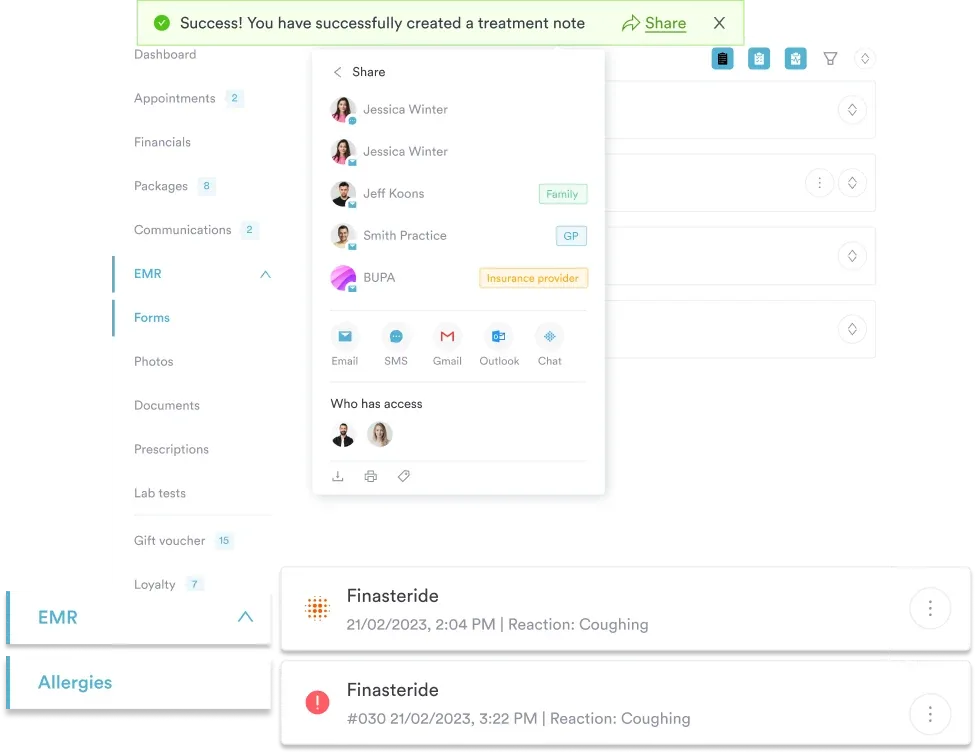
Pabau’s claims management software links diagnosis codes directly to claim generation, reducing the transcription errors that cause R54 denials
R54 is a billable, specific ICD-10-CM code valid for submission on HIPAA-standard 837P and 837I claim formats. Its official descriptor, “Age-related physical debility,” is long-standing and remains current for FY2026 (October 1, 2025 through September 30, 2026). Coders should verify status against the current-year tabular list, as annual updates can affect code validity and descriptors.
Age-related physical debility – R54’s official descriptor since ICD-10-CM’s original US adoption – refers to a generalized state of physical weakness, diminished strength, or overall functional decline that is age-related or non-specific in origin. The tabular entry also includes related terms as long-standing Includes notes: Frailty, old age, senescence, senile asthenia, and senile debility. This descriptor and these Includes terms remain current for FY2026.
This is a residual code – it exists to capture a clinical presentation when no more specific code applies. In geriatric practice, this commonly arises when an elderly patient presents with diffuse physical decline that isn’t traceable to a single defined condition like sarcopenia, Parkinson’s disease, or heart failure.
R54 falls within the R50-R69 block of Chapter 18, which covers general symptoms and signs. This is the same block that contains R53 (malaise and fatigue), R55 (syncope), and R57 (shock).
The same residual-use principle extends to related symptom codes outside this block.
Many coders hesitate to use broad, nonspecific codes, assuming they signal poor documentation. For R54, that broad scope correctly describes the presentation rather than pointing to a documentation problem.
It applies when the debility genuinely lacks an identifiable underlying cause at the time of coding. It also applies when the presentation matches one of R54’s Includes terms (frailty, old age, senescence, senile asthenia, senile debility) without a separately documented condition.
Chapter 18 of the ICD-10-CM tabular list governs how symptom codes like R54 are used. The CMS ICD-10 coding guidelines establish a clear hierarchy: Definitive diagnosis codes take priority over symptom codes. R54 and its Chapter 18 neighbours are only appropriate when a confirmed diagnosis code would be redundant or when no confirmed diagnosis exists.
Per the ICD-10-CM Official Guidelines for Coding and Reporting (Section I.C.18), signs and symptoms that are “integral to a disease process” should not be coded separately when the underlying condition is documented. This is the most common source of R54 denials: A chart documents heart failure as the primary condition but the coder also assigns R54 for the accompanying weakness.
R54 can serve as either a principal diagnosis or a secondary/additional diagnosis, depending on the clinical context. As a principal diagnosis, it is permissible when debility is the chief reason for the encounter and no more definitive condition has been established. As a secondary code, it can accompany another primary diagnosis when the debility is a distinct clinical finding that affects care.
Payer-specific Local Coverage Determinations (LCDs) may restrict primary-diagnosis use for certain claim types. Coders should verify applicable LCD requirements through the relevant Medicare Administrative Contractor (MAC) before submitting R54 as a standalone principal diagnosis on facility claims.
Our primer on practice management software explains how practices track undiagnosed patients through tests and reviews.
The most common R54 coding errors stem from confusing it with adjacent symptom codes. Each code in this cluster has distinct clinical criteria, and incorrect substitution leads to claim denials or, worse, audit exposure.
R53 is a category header – it is not valid for submission on its own. Coders must use a subcategory code such as R53.1 (weakness) or R53.81 (other malaise). The ICD-10-CM alphabetic index routes “debility NOS” to R53.81, which creates a genuine clinical overlap with R54.
The distinction comes down to emphasis. R54 implies generalized physical decline associated with aging or deconditioning.
R53.81 (other malaise) captures a broader sense of ill-being that isn’t tied to physical strength loss. When the clinical note explicitly describes weakness as the dominant symptom and the context is geriatric decline, R54 is the more accurate choice.
Frailty is not a separate ICD-10-CM code – it is a long-standing Includes (synonym) term under R54, alongside old age, senescence, senile asthenia, and senile debility. In practice, this means a clinician’s documented diagnosis of “frailty” maps directly to R54; it is not coded as a separate condition, and it should not be assigned to R68.89 or any other standalone frailty code.
Coders should update any internal crosswalks, superbills, or EHR favorites lists that still route documented frailty to R68.89 or a similar standalone code. Frailty has long been a synonym term under R54, and continuing to code it separately can create inconsistency between the clinical note and the claim.
In geriatric assessment encounters and multidisciplinary team reviews, query the physician only when the documentation is ambiguous about whether frailty, sarcopenia, or a cognitive condition is the intended diagnosis, since those remain separate, Excludes1 conditions.
R54 denials rarely result from the code itself being invalid. They result from documentation that doesn’t establish medical necessity for the encounter or doesn’t support the symptom-level coding choice. Three elements cause the majority of R54 documentation failures.
Per ICD-10-CM Official Guidelines and AHIMA coding standards, the following documentation elements should be present to support R54 assignment. Using structured patient records within your practice management system makes capturing these elements part of routine workflow rather than a retrospective audit task. Keeping a coding guide on hand for CPT, ICD-10-CM, and HCPCS structure helps coders confirm these elements quickly.
The same principle applies to M72.8 and other symptom-level codes. The note must establish why a symptom-level code is appropriate and what clinical reasoning supports the diagnosis assigned.
Run a documentation audit on R54 claims before submission: Confirm the note describes physical weakness specifically (not just fatigue), documents functional impact on ADLs, and states that no more specific diagnosis has been established. Claims missing any of these three elements are the primary source of R54 denials.
Skilled nursing facilities (SNFs) and long-term care facilities account for a significant portion of R54 usage. In these settings, debility often serves as the primary reason for admission following acute hospitalization, or as a secondary diagnosis reflecting the patient’s baseline functional status. Teams at longevity clinics and geriatric practices face similar documentation demands when coding for age-related physical decline.
The CMS MDS 3.0 RAI (Resident Assessment Instrument) Manual governs clinical assessment in SNF settings. When R54 is coded for MDS-related billing, the debility must be reflected in the resident’s functional assessment data, not merely listed as a diagnosis without supporting assessment documentation.
Home health agencies (HHAs) use R54 in OASIS-based assessments to characterize patients recovering from acute illness or managing age-related decline in a community setting. The OASIS Guidance Manual (CMS) requires that all coded diagnoses be supported by the clinical findings documented in the comprehensive assessment.
Common codes used alongside R54 in home health billing include Z74.01 (bed confinement status), Z87.39 (personal history of other musculoskeletal disorders), and Z96.641-Z96.649 (presence of artificial hip joint) when relevant to the patient’s functional picture. Accurate HIPAA-compliant clinical documentation across these combined diagnoses is essential for home health claim integrity.
Medicare reimbursement for claims carrying R54 depends on the claim type, the clinical setting, and the applicable MAC jurisdiction. There is no blanket coverage determination for R54 as a standalone code – reimbursement is tied to whether the documented service is medically necessary and whether the diagnosis supports that medical necessity.
Coders should check applicable Medicare claims data and consult the relevant MAC’s Local Coverage Determinations (LCDs) for the services billed alongside R54. MAC jurisdictions handle symptom-code claims differently, and a code that clears without issue in one region may require additional documentation in another.

Pabau connects diagnosis code selection in clinical notes directly to claim generation – so the documentation that supports R54 and the claim that submits it are always aligned. No manual re-entry, no transcription errors.

Most R54 denials are preventable. The errors below account for the majority of incorrect applications and audit findings related to this code.
R54 has been a valid, billable ICD-10-CM code since the United States adopted ICD-10-CM, with the long-established descriptor “Age-related physical debility,” per the CDC/NCHS ICD-10-CM web tool. The tabular entry’s Includes terms (frailty, old age, senescence, senile asthenia, senile debility) and Excludes1 notes (age-related cognitive decline R41.81, sarcopenia M62.84, senile psychosis F03.-, senility NOS R41.81) are similarly long-standing.
The only FY2025 tabular change touching R54 was a minor Excludes1 notation fix – adding a dash so “senile psychosis (F03)” reads “senile psychosis (F03.-),” indicating the code requires further characters. The code number, chapter placement, and descriptor are unchanged, and R54 remains valid and billable for FY2026 (October 1, 2025 through September 30, 2026).
For FY2026 validity, coders should still verify directly against the CMS annual release of the ICD-10-CM tabular list, since annual updates can introduce further descriptor, Includes, or Excludes changes. The AAPC Codify ICD-10-CM lookup is a useful secondary tool for confirming current-year status, though the CMS tabular list remains the authoritative source.
Annual ICD-10-CM updates take effect each October 1. Always confirm code validity and descriptor wording against the applicable fiscal year’s tables before submitting claims.
One of the most consistent sources of R54 billing errors is the disconnect between the clinical note and the claim. A clinician documents debility with appropriate functional context, but the coder working from a separate system re-enters the diagnosis manually and either selects the wrong code or misses a secondary code that would have clarified the clinical picture.
Integrated practice management software that connects diagnosis code selection to claim generation closes that disconnect. When the code selected in the clinical note flows directly to the billing workflow, the documentation and claim stay synchronized without manual re-entry.
Pabau’s claims management software links diagnosis codes assigned during the encounter directly to the generated claim, reducing the transcription errors that cause R54 denials.

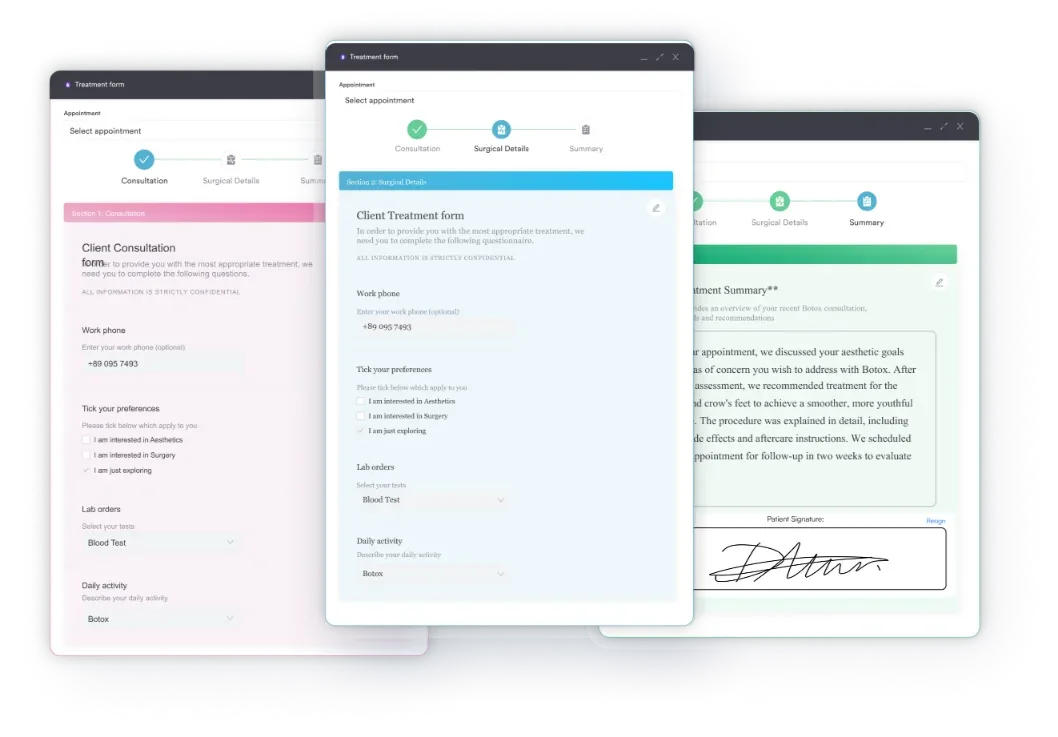
Beyond claim generation, structured documentation templates that prompt clinicians for functional status, ADL impact, and workup status at the point of care address the missing documentation elements that cause downstream denials.
For practices evaluating solutions.
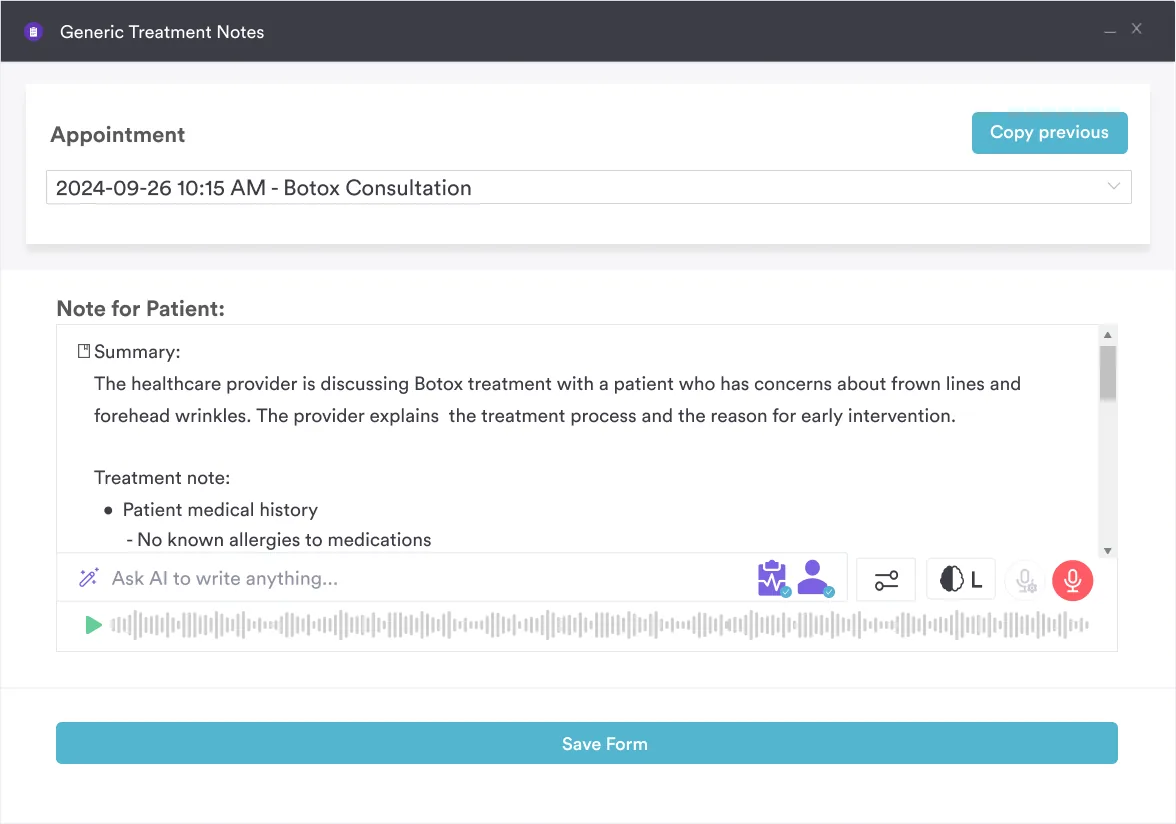
Check your EHR or PMS for a diagnosis code suggestion or crosswalk feature. When coders can search R54 within the clinical workflow rather than switching to an external lookup tool, they spend less time on code verification and more time on documentation quality – the factor that determines whether the claim clears.
R54 denials are a documentation problem as much as a coding problem. When debility is the correct clinical description, the code is valid and billable – but it requires notes that establish functional impact, confirm the absence of a more specific diagnosis, and align with the clinical setting’s assessment requirements.
Pabau’s integrated claims management software keeps diagnosis code selection and claim generation synchronized, eliminating the manual re-entry step where most R54 errors originate. To see how Pabau supports compliant clinical documentation and billing workflows, book a demo.

Billing a kidney wound repair? CCSD code M0550 billing guide covers billing for surgical repair of an injured or lacerated kidney.
Billing an open kidney biopsy? CCSD code M0814 billing guide covers the scope of the open surgical approach to native kidney biopsy.
Billing a bladder exstrophy repair? CCSD code M3640 billing guide covers how urologists submit claims for this rare congenital bladder repair.
ICD-10 code R54 is a billable ICD-10-CM diagnosis code with the long-standing official descriptor “Age-related physical debility” – a generalized state of physical weakness or functional decline, typically age-related, where no more specific underlying diagnosis has been established. The code includes frailty, old age, senescence, senile asthenia, and senile debility as Includes (synonym) terms. It sits within Chapter 18 (Symptoms, signs and abnormal clinical findings, R00-R99), in the R50-R69 general symptoms and signs block.
Yes. R54 is a valid, billable, specific ICD-10-CM code accepted on both 837P (professional) and 837I (institutional) claim formats. Its descriptor, “Age-related physical debility,” is long-standing and remains current for FY2026. Coders should still verify status against each new fiscal year’s CMS tabular list release, effective every October 1.
No – frailty is not coded separately from R54. Frailty, along with old age, senescence, senile asthenia, and senile debility, is a long-standing Includes (synonym) term under R54 (Age-related physical debility). When a clinician documents frailty, code it directly to R54 rather than to R68.89 or any other code. R54 excludes age-related cognitive decline (R41.81), sarcopenia (M62.84), senile psychosis (F03.-), and senility NOS (R41.81) – these remain distinct, separately coded diagnoses.
Use R54 when the clinical note documents generalized physical weakness and functional decline consistent with age-related debility. Use R53 subcodes (particularly R53.81, other malaise) when the presentation is broader – general ill-being without the same emphasis on physical strength loss. Note that R53 itself is not a valid submission code; a subcategory code is required.
Medicare does not have a single blanket coverage policy for R54. Reimbursement depends on the claim type, care setting, and the applicable MAC’s Local Coverage Determinations (LCDs). Practices should check their MAC jurisdiction’s LCDs and confirm that the documented service meets medical necessity criteria when submitting R54 as a principal diagnosis.
Supporting documentation must include a clinical description of physical weakness or functional decline, documentation confirming no more specific diagnosis has been established, functional impact on activities of daily living, relevant clinical context (patient age, recent hospitalization, comorbidities), and workup status. Missing functional impact documentation is the single most common reason R54 claims are denied.