



HCPCS code E0198: Water pressure pad billing guide
HCPCS code E0198 is a water pad for a standard mattress HCPCS code E0198 is the ...

Last Updated: Oct 13, 2026

CPT code 19020 covers mastotomy with exploration or drainage of a deep breast abscess, reached through breast tissue.
Medicare treats 19020 as a major procedure with a 90-day global period, so routine follow-up care is already paid for.
The 2026 national average pays roughly $514 in an office setting and roughly $316 in a facility.
Depth, laterality, and a documented abscess all have to appear in the record before the claim goes out.
Practice management software like Pabau keeps the operative note, diagnosis codes, and invoices on one patient record.
CPT code 19020 covers mastotomy with exploration or drainage of a deep breast abscess. The surgeon opens the breast, works through the tissue, and drains a collection that antibiotics could not clear.
Two words in the descriptor decide whether the claim pays. The first is deep, the second is exploration. When the operative note skips them, a payer reads the service as skin-level drainage and reimburses it that way.
Medicare also treats 19020 as major surgery, with a 90-day global period attached. That one fact changes how you bill every follow-up visit for the next three months.
19020 is the breast-specific incision code for a deep abscess. The official descriptor from the American Medical Association reads mastotomy with exploration or drainage of abscess, deep. In the code set it sits in the Surgery section, under Breast, in the Incision category.
Depth is the whole test. The code applies when a surgeon cuts through breast parenchyma to reach a collection below the superficial tissue planes. Drainage at or near the skin surface belongs to the integumentary codes instead.
Practices billing plastic surgery or breast surgical services usually meet 19020 after antibiotic treatment has already failed.
The procedure is short, yet the note has to carry more detail than the surgery takes. Anesthesia follows the abscess depth and the patient’s tolerance, so some cases run under local with sedation and others need general.
From there the sequence is consistent. The surgeon incises the skin, dissects through breast parenchyma, and opens the abscess cavity. Drainage and irrigation follow, and many cavities are packed rather than closed, so the infection cannot seal itself back in.
Exploration matters for coding as much as drainage does. When a surgeon opens the breast to judge the extent of infection and finds no discrete abscess, 19020 still stands. Both halves of that work belong in the note, so clinical documentation templates that prompt for depth and drainage earn their keep.
Use 19020 when the infection sits deep in the breast and conservative care has failed. Three presentations account for most of these cases.
In obstetrics and gynecology practices, most of these abscesses arrive in the weeks after delivery. Wherever the patient comes from, the note has to tie the presentation to the depth of the work. A chart that says only “breast abscess”, with no depth, no imaging, and no failed conservative care, invites a denial. An eligibility check at booking and again at arrival catches mid-month plan changes. Time-based and complexity-based selection can point at different codes, so the documented medical decision making decides.
N61.1 is the workhorse diagnosis for a non-puerperal breast abscess. The table below pairs the common presentations with the codes payers expect to see. Treat it as a coding reference, then confirm the pairing against your payer’s coverage policy.
Lactation and the puerperium are not interchangeable here. O91.13 names lactation directly, so it fits the breastfeeding patient better than O91.12 does. For a postoperative infection, T81.42XA already carries the depth in its description, and the seventh character A marks the initial encounter.
Laterality is the modifier you can count on needing. The others depend on what else happened in the operating room that day.
Most payers require LT or RT on any procedure performed on a paired structure. A 19020 claim without one often comes back as a request for information rather than a payment. Before you pair 19020 with another surgical code in the same session, check the NCCI edits.
Record the side, left or right, in the operative note and on the claim line before submission. Missing laterality is one of the most common reasons breast surgery claims come back. Make it a required field in your pre-claim check.
Medicare’s 2026 national average runs about $514 in the office and about $316 in a facility. The CMS Physician Fee Schedule sets both figures, then geographic cost indices adjust them for your locality.
Treat those as planning figures. Rates move every January, so pull your own locality’s amount from the fee schedule lookup before you build a fee schedule or quote a patient.
The place-of-service code decides which rate applies. Bill POS 11 and Medicare pays the non-facility rate, because your practice absorbs the room, supplies, and staff time. Use POS 22 or 24 and the hospital or surgery center bills that overhead, so the physician payment drops.
One error shows up again and again. A claim goes out with POS 11 after the surgery actually happened in a hospital outpatient department, which creates an overpayment and an audit flag. Check the POS against the location in the operative note every time.
19020 carries 3.73 work RVUs. Practice expense and malpractice bring the total to 15.40 in the office and 9.47 in a facility. That difference is why the two payment rates diverge.
Multiply either total by the 2026 conversion factor of roughly $33.40 and you land on the payment amounts above. Values shift with each fee schedule final rule, so check the current year in the AAPC code lookup before you quote a figure.
CMS assigns 19020 a 090 global period, which makes it a major surgical procedure. That window covers the day before surgery and the 90 days after it.
Routine post-operative care inside the window is already paid for. Anything beyond routine care needs a modifier that says so, and each one answers a different question.
Teams that treat 19020 as a minor procedure bill visits Medicare already considers settled. Those charges get denied now, or clawed back later in an audit.
A 19020 charge passes through four sets of hands on its way through the revenue cycle. Each one of them can stall it.
Most delays trace back to step one. A coder cannot claim depth the surgeon never wrote, and a query to the surgeon adds days to the claim.
Keeping the note, the diagnosis, and the charge in one system removes that round trip. It also keeps records accessible for the audit trail your HIPAA compliance program has to show.
Most 19020 denials come from ordinary medical billing errors rather than coverage disputes. Five of them show up again and again in audits of breast surgical codes.
Write the global period end date into the chart on the day of surgery. Your front desk then knows which follow-up visits are already covered, and which ones need modifier 24 or 78 before they go out the door.
Coders new to breast surgery confuse 19020 with the integumentary drainage codes more than any other pair. The line between them is anatomy and approach rather than abscess size.
So the test stays simple. Drainage that stays in skin and subcutaneous tissue is 10060 work, and aspirating a breast cyst is breast cyst is 19000. Once the surgeon cuts through breast parenchyma to reach a deep abscess, 19020 is the code, whatever volume comes out.
A 19020 claim stalls when the paperwork and the charge live in different systems. Practice management software like Pabau keeps the operative note, the consent forms, and the invoice on one patient record. Your billing team reads the note and raises the charge in the same place.
Coding stays a human decision, and it should. What changes is the search. Nobody hunts through a shared drive for the note that proves depth, because it sits on the appointment it belongs to.
Digital intake forms collect history and consent before the patient arrives, so the pre-operative record is complete on the day of surgery.
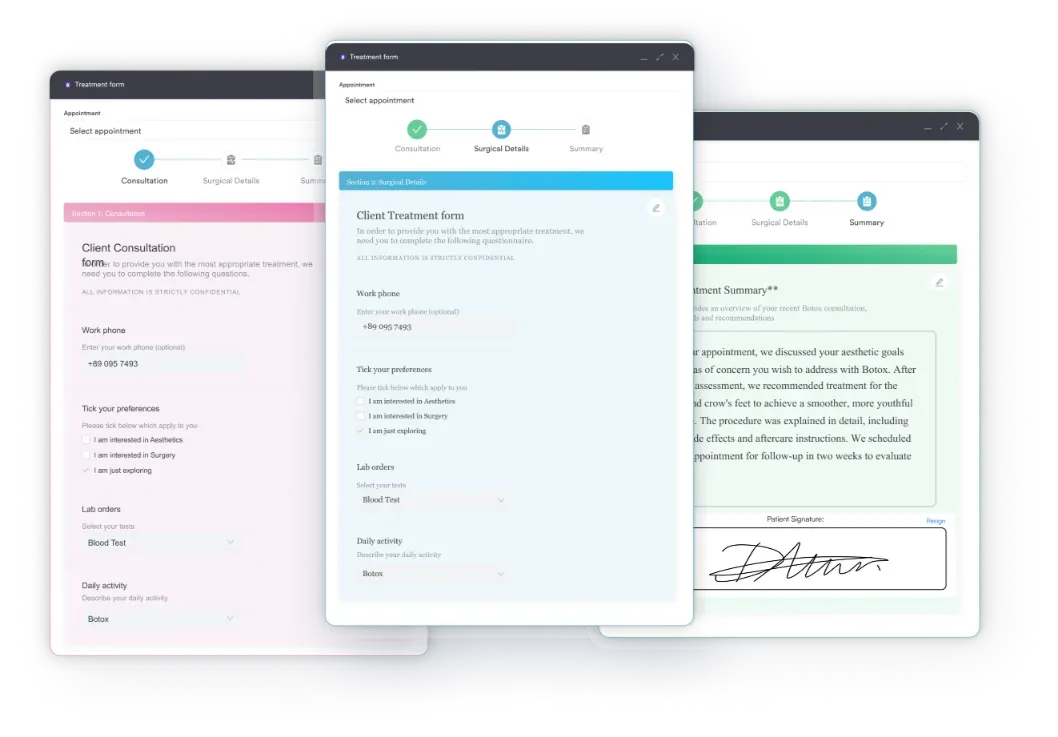
Pabau’s claims management software then tracks each insurance claim against that record. Reporting shows which claims are still open, so an unpaid surgical charge does not quietly age out.
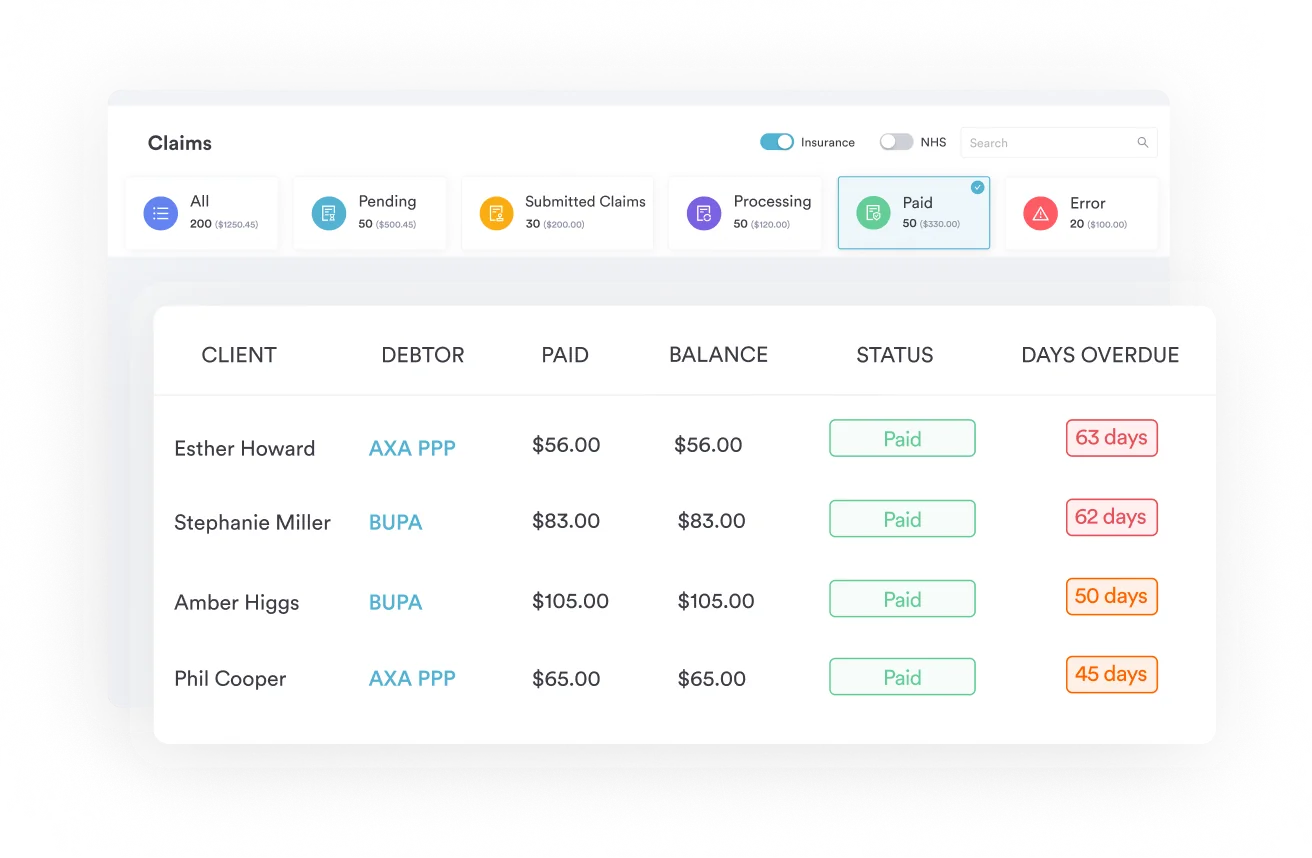
Practices running several surgical codes at once use practice management software to keep documentation and billing on the same timeline. Nobody has to reconcile two systems at month end.

Pabau keeps operative notes, consent forms, and invoices on the same patient record. Your billing team can support a 19020 claim without chasing paperwork across systems.

Three details decide whether 19020 pays on the first pass. The note has to say deep, the claim has to say which breast, and the place of service has to match the room. Everything else follows from those three.
The 90-day global period is the part worth writing down. Mark the end date in the chart on the day of surgery, and your team stops billing visits Medicare has already paid for.
In most practices the coding is sound and the paperwork is what slips. Book a demo to see how Pabau keeps operative notes, diagnoses, and claims on one patient record.

Aspirating a breast cyst instead of draining an abscess? CPT 19000 walks through the descriptor, diagnosis pairings, and Medicare rates.
Coding an excision rather than a drainage? CPT 19125 covers the documentation and reimbursement for open breast lesion excision.
Billing reconstructive surgery in the same practice? CPT 21195 sets out the modifiers and global period rules for mandibular reconstruction.
Adding graft procedures to your fee schedule? CPT 21235 explains how cartilage graft work is documented and billed.
Need the diagnosis side of breast coding? ICD-10 C50.411 shows how laterality and specificity work in breast diagnosis codes.
It is a major procedure. CMS assigns 19020 a 90-day global period, so routine post-operative care is bundled for three months after surgery.
Yes. Medicare prices 19020 in both office and facility settings, and the office rate is the higher of the two. Abscess depth and anesthesia needs usually decide the setting.
Traditional Medicare does not require prior authorization for 19020. Many commercial and Medicare Advantage plans do, so check the plan’s surgical list before scheduling.
Append modifier 78 when the patient returns to the operating room for a related complication. Use modifier 58 instead when the second drainage was staged or planned from the start.
19101 is an open incisional biopsy of the breast, performed to get tissue for diagnosis. 19020 explores or drains an abscess, and the goal is infection control.
Yes. Placing a drain during the mastotomy is part of the procedure, and removing it during the global period is bundled as well.
Yes, where state scope of practice and payer credentialing allow it. The claim carries the performing provider’s own NPI unless incident-to rules apply.



