



CCSD code G5100: Bypass of duodenum billing guide
CCSD code G5100 bills a bypass that leaves the duodenum in place CCSD code G5100...

Last Updated: Oct 16, 2026

CPT code 10060 covers incision and drainage of a simple or single abscess of the skin or subcutaneous tissue.
Use CPT 10061, not 10060, for complicated, multiple, or carbuncle-type abscesses, since upcoding to 10061 for a simple case is a compliance risk.
The 10-day global period bundles most follow-up services, so bills within that window need Modifier 24 or 79 to avoid automatic denial.
Pabau’s claims management software checks a claim’s required fields, blocks submission when data is missing, and shows billers a claim-status dashboard.
CPT code 10060 covers incision and drainage of a simple, single abscess of the skin or subcutaneous tissue. Get the code right, and reimbursement follows the fee schedule. Get it wrong the other way, and it becomes upcoding, a pattern Medicare audits specifically for.
The American Medical Association maintains CPT code 10060 within the integumentary system section of the CPT code set. It covers procedures performed on the skin and the tissue just beneath it.
The official AMA descriptor reads: Incision and drainage of abscess (eg, carbuncle, suppurative hidradenitis, cutaneous or subcutaneous abscess, cyst, furuncle, or paronychia); simple or single.
In practice, the physician makes an incision over the abscess, evacuates the purulent material, and may irrigate and pack the wound afterward. The key word is simple. That means one abscess cavity, no extensive dissection, and no connection to nearby structures.
This code is one of the most commonly billed minor surgical procedures in primary care, urgent care, and dermatology settings. A deep ischiorectal or perirectal abscess, drained under general or regional anesthesia, is billed under CPT code 46040 instead.
Practices with high volumes of skin procedures benefit from skin clinic software. Tools like this pre-map frequently used CPT codes to compatible ICD-10 diagnoses, which cuts manual entry errors at each encounter.
Selecting between CPT 10060 and CPT 10061 is the most consequential coding decision for abscess I&D procedures. Choose wrong, and the claim either underpays or creates an upcoding compliance risk.
Decision rule: If the operative note describes a single abscess cavity with straightforward incision, drainage, and optional packing, bill CPT 10060. Reserve CPT 10061 for encounters where documentation explicitly supports complexity.
Review your operative note before selecting between 10060 and 10061. If the note says “incised and drained” without specifying multiple sites or complex morphology, default to CPT 10060. Billing 10061 on the basis of a simple note is the most audited upcoding pattern for skin I&D procedures.
Modifiers affect both reimbursement and claims adjudication. Applying the wrong modifier, or omitting one, on CPT 10060 is a top cause of initial denials. The table below covers the modifiers most relevant to abscess I&D billing.
One nuance is worth flagging. Modifier 25 attaches to the E/M code, not to CPT 10060. A common biller error is appending Modifier 25 directly to the surgical code instead.
The National Correct Coding Initiative (NCCI) bundles the pre-procedure evaluation into the global surgical package. Modifier 25 on the E/M signals to Medicare that the visit was a distinct, medically necessary service.
Every CPT 10060 claim requires an ICD-10-CM diagnosis code that establishes medical necessity. Medicare and most commercial payers cross-reference the diagnosis against an LCD (Local Coverage Determination) to confirm the abscess warrants surgical intervention.
The codes below are the most commonly linked to 10060 claims. Verify current coverage against your MAC’s LCD before submission.
For a broader look at how site-specific coding works across ICD-10 families.
Reimbursement for CPT 10060 is calculated using the Resource-Based Relative Value Scale (RBRVS). Medicare multiplies the total RVU by the annual conversion factor set in the Medicare Physician Fee Schedule (MPFS).
Rates vary by geographic practice cost index (GPCI) and by place of service. Verify current figures against the CMS Physician Fee Schedule lookup tool.
RVU values update every year through the MPFS rule-making process. The work RVU cited here reflects the CY 2026 fee schedule. Confirm the current year’s figures before finalizing your practice’s fee schedule, since the numbers reset annually. Use the FastRVU 2026 RVU lookup tool for a quick check.
Place of service matters. Non-facility (office) reimbursement is higher because the practice bears the supply and equipment costs. Facility-setting reimbursement is lower because the hospital or ASC bills a separate facility fee. Billing the wrong place-of-service code on CPT 10060 causes overpayment, if facility reimbursement was intended, or underpayment, if the office performed all services. The authorization requirement sits with the plan, not the code, so it varies between patients.
Medicare covers CPT 10060 when the procedure is medically necessary, consistent with the CMS Medicare Coverage Database article (Article ID 56766).
Medical necessity isn’t assumed from the CPT code alone. Documentation must show that conservative treatment failed or wasn’t appropriate, and that surgical drainage was clinically indicated.
Use digital forms to standardize your pre-procedure note templates. A complete operative note for 10060 should include all of the following elements:
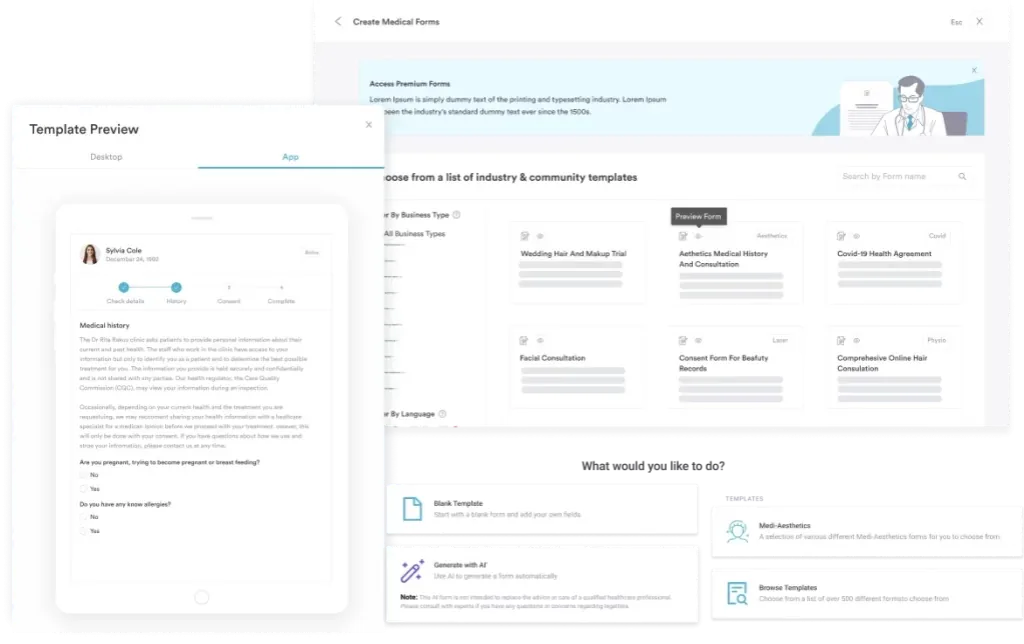
For practices submitting Medicare claims, documentation must also be consistent with the relevant MAC’s LCD. Missing or vague documentation, such as “I&D performed” with no site, size, or complexity description, is the leading cause of post-payment audits on 10060 claims.
A HIPAA-compliant clinic software that stores complete, timestamped encounter notes protects against that audit exposure.

Pabau checks that a claim’s required fields are complete before it’s submitted. Your billing team catches problems before the payer does, not after a denial comes back.

CPT 10060 carries a 10-day global period under the Medicare Physician Fee Schedule. This means Medicare bundles all related pre- and post-procedure services into the original surgical payment for 10 days following the procedure date.
What is included in the global package:
What is NOT included (and can be billed separately):
Practices frequently miss Modifier 24 on follow-up visits, and the payer automatically denies the otherwise billable E/M service. Tracking global period windows per patient and per procedure gets easier when a practice management system flags open global periods alongside the appointment schedule.
CPT 10060 belongs to a family of incision and drainage codes. Understanding the full code set prevents incorrect substitution and supports accurate code selection when the clinical picture is more complex. The AAPC Codify CPT lookup is a useful cross-reference for the codes below.
Billing patterns repeat across CPT families outside the integumentary system too. Coaching CPT codes and IVF CPT codes both group sibling codes by complexity or technique, the same way 10060 and 10061 do.
The same rule applies to ADHD screening CPT code selection. Match the encounter note to the descriptor, not the other way around.
The same logic extends to ICD-10 diagnosis coding. The same logic applies to CPT 10060, where a site-specific L02.x code always beats an unspecified one.
Billing errors on CPT 10060 fall into three groups: wrong code selection, missing modifiers, and incomplete documentation. Each maps to a denial type that compounds over time if a practice doesn’t address it systematically.
Run a quarterly audit of your 10060 denial rate broken down by denial reason code. If CO-4 (procedure inconsistent with modifier) or CO-97 (service included in global) appear in your top five denial codes, you have a modifier workflow problem. Fix the template at the documentation level, not just the billing level.
Most practices split abscess billing between two people. The clinician charts the encounter, and a biller keys the CPT and ICD-10 codes into the claim afterward. That handoff is where a laterality code gets dropped, a modifier goes missing, or a field the payer requires gets left blank.
Practice management software like Pabau checks a claim’s required insurer-submission fields before it goes out. If a claim for CPT 10060 is missing a diagnosis pointer or a modifier the payer expects, Pabau’s claims management software catches it first.
The platform blocks the Send button until the biller fixes the problem, so an incomplete claim never reaches the payer as a denial.
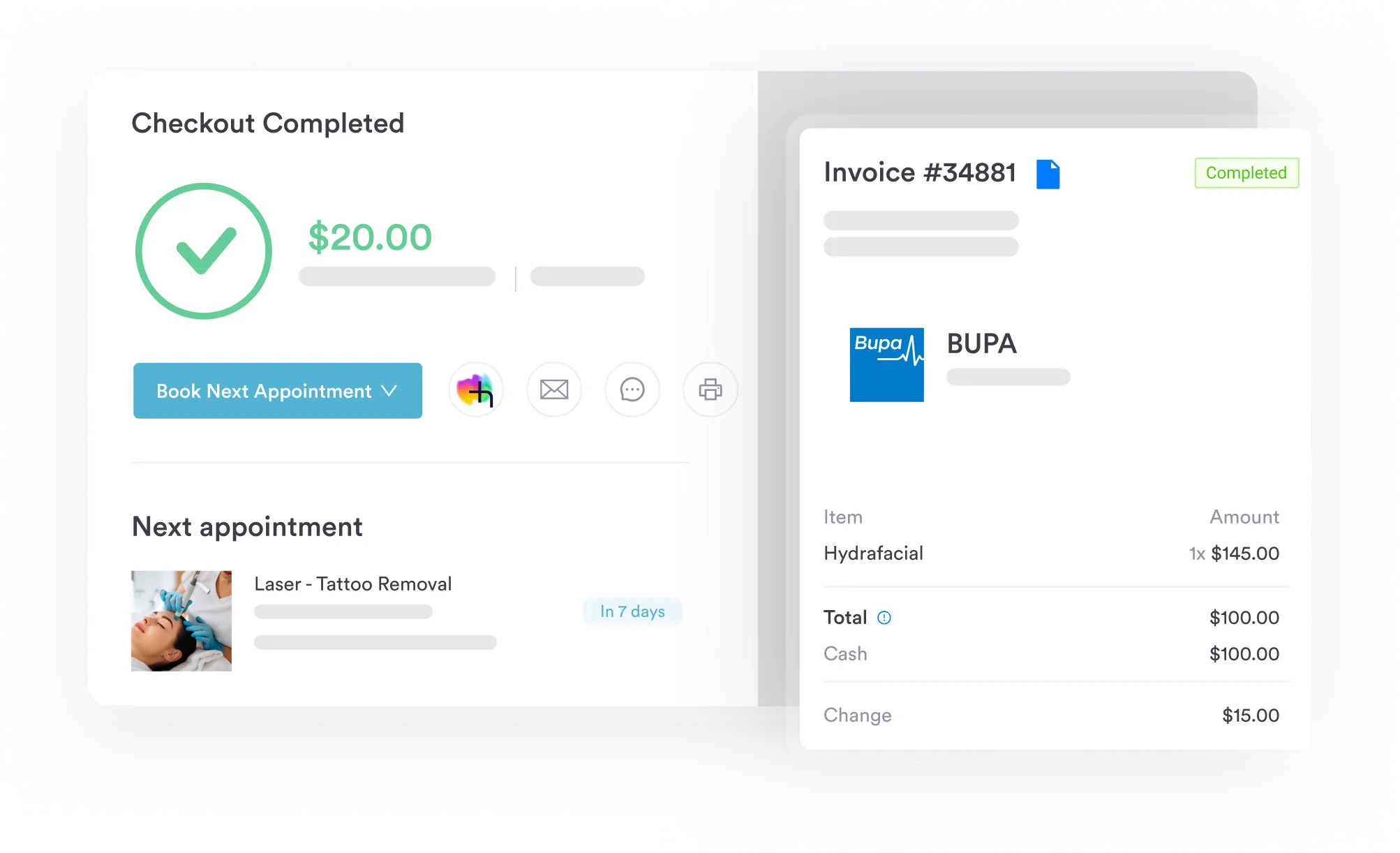
Billers can also track every claim’s status, submitted, pending, denied, or paid, from one dashboard instead of logging into separate payer portals. For a practice billing high volumes of minor procedures like I&D, that visibility cuts the time spent chasing down where a claim actually is.
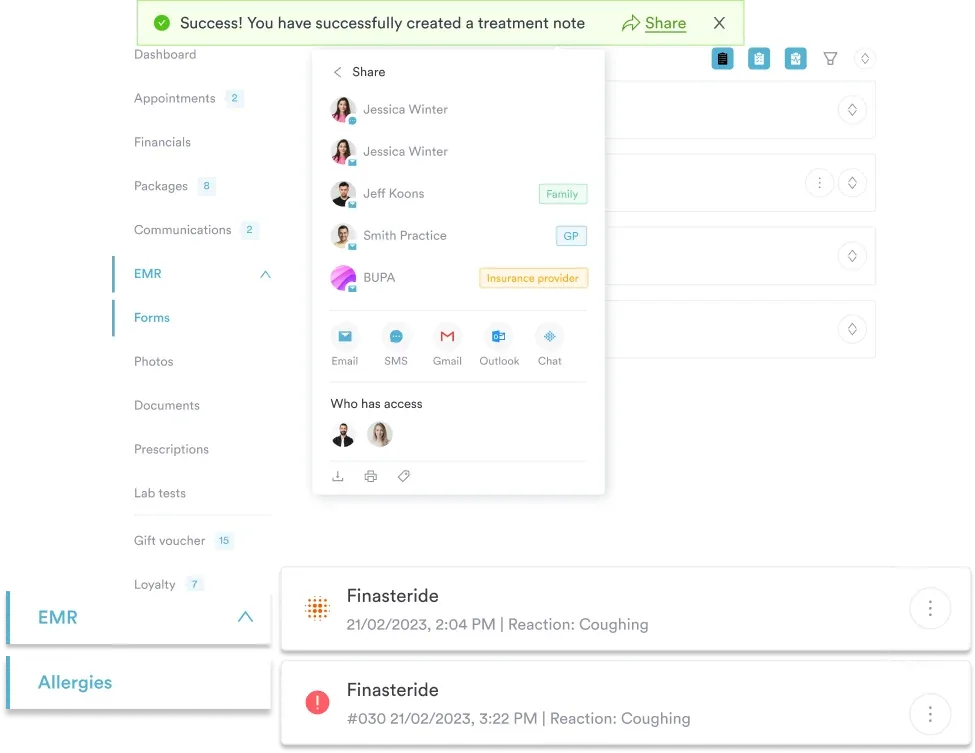
The patient record management system stores the complete encounter note alongside the billing record. That lets a practice resolve audit queries from a single screen, instead of hunting across separate systems.
Pabau’s claims management software checks that a claim’s required fields are complete, then blocks the Send button until they are. Your team catches problems before submission, not after a denial.
CPT 10060 is simple to define but easy to bill wrong. Most denials trace back to one of three moments. Someone picks 10061 without documented complexity, or forgets Modifier 24 or 79 inside the 10-day global period. Or they attach an unspecified ICD-10 code when a site-specific one was available.
Fixing that starts with the operative note, not the claim form. A note that states the site, the technique, and the complexity gives the biller everything needed to code it right the first time.
Practices that catch a missing modifier or an incomplete field before submission spend less time reworking denied claims. Pabau’s claims management software is built for that check. Book a demo to see how it fits your practice’s I&D billing.

Curious how CPT coding handles a malignant lesion instead of an infection? CPT code 17264 covers destruction of a malignant skin lesion, with its own size-based RVU tiers.
Billing a skin graft instead of a drainage procedure? CPT code 15120 breaks down split-thickness autograft billing for the face, hands, and feet.
Need the add-on code for a larger skin graft? CPT code 15241 explains full-thickness skin graft add-on billing rules.
Treating a vascular skin lesion rather than an abscess? CPT code 17108 covers destruction of cutaneous vascular proliferative lesions.
Supplying DME alongside a wound care plan? HCPCS code A4640 covers the billing rules for an alternating pressure pad.
Most payers, including Medicare, don’t require prior authorization for CPT 10060, since it’s a same-day, medically necessary minor procedure. Some commercial plans and Medicaid managed care organizations review it retrospectively instead. Check the payer’s medical policy first if you rarely bill that plan, since a few do carve out I&D for prior review.
Yes. Nurse practitioners and physician assistants can perform and bill CPT 10060 within their state scope of practice. Medicare pays advanced practice providers at 85% of the physician fee schedule. If the visit qualifies as incident-to a supervising physician, it bills under the physician’s NPI at the full rate instead.
No. A Bartholin’s gland abscess has its own code, 56420, because it involves a different anatomical structure and technique than a general cutaneous abscess. Billing 10060 for a Bartholin’s abscess is a common site-specificity error that payers catch during claims review.
No. Incision and drainage leaves the cavity open to continue draining, so CPT 10060 doesn’t include suture closure. If the physician performs a separate wound repair at another site during the same visit, that repair may be billable separately with the appropriate modifier.
No. CPT 10060 is a hands-on surgical procedure, so a practice can’t bill it as a telehealth visit. A clinician can use telehealth for the initial evaluation or a follow-up check, but the incision and drainage itself requires an in-person encounter.



