CCSD code G5100: Bypass of duodenum billing guide
CCSD code G5100 bills a bypass that leaves the duodenum in place CCSD code G5100...

Last Updated: Oct 16, 2026

CPT code 19125 reports open excision of a breast lesion localized by a preoperative radiological marker such as a wire, clip, or radioactive seed.
Billing is based on lesion count, not wire count: Use add-on code 19126 for each additional lesion excised with a marker.
The critical distinction from CPT 19120 is the radiological marker requirement. Using 19120 when a marker was placed is the most common coding error for this procedure.
Pabau’s claims management software helps surgical practices store CPT code libraries with pre-configured modifier prompts, reducing manual billing errors at point of care.
CPT Code 19125 is a billable code for the open excision of a breast lesion identified by a preoperative radiological marker. The official descriptor comes from the American Medical Association’s CPT code set. It reads: Excision of breast lesion identified by preoperative placement of radiological marker, open; single lesion. The distinction from CPT 19120 hinges on one clinical element: whether a marker was placed before the operation.
This code applies when a surgeon removes a breast lesion that was identified preoperatively using imaging-guided marker placement, including a hookwire, radioactive seed, or clip. The lesion is typically non-palpable, meaning it cannot be felt on physical exam and requires imaging to localize. CPT Code 19125 is frequently used in breast cancer screening workflows. Mammography or ultrasound identifies a suspicious area that then requires surgical biopsy or excision for definitive pathology. For practices handling plastic surgery EMR workflows, accurate code selection at this step is essential to clean claim submission.
The code covers a single lesion only. When the surgeon removes additional marker-guided lesions in the same session, add-on code 19126 applies for each one.
Understanding the procedural steps helps coders verify that CPT Code 19125 is the right choice before submitting a claim. The sequence below reflects the standard clinical workflow for a marker-guided breast excision.
If the operative note does not document marker placement and specimen radiography, the claim for CPT Code 19125 is at high risk of denial. Payers require evidence of both elements to distinguish this code from the non-marker excision code 19120.
The 19125 vs 19120 distinction is where most claims errors occur. Both codes describe open excision of a breast lesion, but they are not interchangeable. Using 19120 when a preoperative marker was placed results in underpayment; using 19125 when no marker was used results in a denial or audit flag.
The operative note must explicitly state that a radiological marker was placed and used to guide the excision. Coders should treat this as a checklist item, not an assumption. The same discipline governs session-based codes like 19297 elsewhere in the breast surgery section. Review the CPT guidelines for the full surgery section, codes 19000 through 19499.
CPT 19126 is an add-on code that reports each additional lesion excised with a preoperative radiological marker. It applies during the same operative session as CPT code 19125. Critically, 19126 is reported based on the number of lesions removed, not the number of wires or markers placed.
A patient with two wires localizing a single lesion still generates one claim line for 19125 and no claim line for 19126. A patient with two separate lesions each localized by a wire generates one claim line for 19125 plus one line for 19126. This distinction is the second most common source of billing errors for this code family.
Add-on code 19126 is never reported without 19125 as the primary code. Because 19126 is an add-on, modifier -51 (multiple procedures) does not apply to it.
Skin and reconstructive procedures generate detailed claims, so comparing the best plastic surgery software is worth the time.
Modifier selection for CPT Code 19125 depends on laterality, the clinical relationship to other procedures performed the same day, and payer-specific policies. The table below covers the modifiers most commonly used with this code.
Modifier applicability varies by payer. Always confirm modifier policies against current National Correct Coding Initiative (NCCI) edits and individual payer guidelines before submitting. Modifier -59 in particular requires clinical justification; routine use without documented distinct service context invites audit scrutiny.
Check the NCCI edit table before applying modifier -59 with CPT Code 19125. If no NCCI conflict exists between the two codes being billed, the modifier is unnecessary. Its presence can trigger a medical review request from the payer.
Medical necessity for CPT Code 19125 must be supported by an appropriate ICD-10-CM diagnosis code, with laterality specified at the highest level of detail available. These diagnoses often surface first during preventive exams at OB/GYN practices, before a patient is referred for surgical excision. The most frequently paired diagnosis codes are listed below.
Always use the most specific ICD-10-CM code available based on pathology confirmation and operative documentation, down to the exact subsite recorded in pathology. Examples include C50.411 or C50.412 for upper-outer quadrant malignancies. The CDC ICD-10-CM tool provides an annually updated searchable code set for less common subsites.
Medicare reimbursement for CPT Code 19125 is calculated under the Medicare Physician Fee Schedule (MPFS) using a Resource-Based Relative Value Scale (RBRVS). The total payment reflects work RVUs, practice expense RVUs, and malpractice RVUs, each adjusted by a geographic practice cost index (GPCI) for the provider’s locality.
These figures are approximate national averages. Actual reimbursement varies significantly by geographic locality. Use the CMS Physician Fee Schedule lookup tool to retrieve current RVU values and payment amounts for your specific MAC jurisdiction. Commercial payers typically reimburse at a percentage of the Medicare rate, often ranging from 110% to 160% depending on the payer contract. Verify with individual payer contracts, as rates are not universal.
For detailed RVU breakdowns across procedure codes, the FastRVU 2026 RVU lookup tool provides current work and practice expense data. It also covers malpractice RVU figures for fee schedule analysis.
The operative note for a CPT Code 19125 claim must document specific elements to distinguish this procedure from CPT 19120. Those elements must also survive payer audit review. Missing any item from this checklist is the leading cause of 19125 downcodes and denials. For practices using digital intake forms and procedure documentation workflows, embedding these requirements into operative note templates keeps that information complete. It reaches the billing team before claims go out.

Review of medical chart audit findings across surgical specialties consistently shows that laterality and specimen radiography are the two most frequently omitted documentation elements. Practices that use structured operative note templates see significantly fewer 19125 downcodes than those relying on free-text dictation.
Breast excision coding generates a predictable set of recurring errors, most of which a pre-submission documentation check prevents. The same claims risk reduction principle that works in aesthetic practices applies equally to surgical coding.
Build a pre-submission checklist for CPT Code 19125 claims. Confirm marker documentation in the operative note, verify that lesion count matches 19126 billing, and check laterality consistency across procedure and diagnosis codes. Also confirm specimen radiography is not billed as a separate line. Running this checklist before submission catches most 19125 denials before they occur.
CPT Code 19125 sits within a broader family of breast surgery codes. Understanding adjacent codes reduces the risk of under-coding or over-coding related procedures, including the anesthesia code 00402 billed alongside the excision on the same claim.
Review the AAPC CPT code reference for the full breast surgery section, codes 19000 through 19499. Use it to verify code assignments when a procedure falls at the boundary between partial excision and mastectomy.
Breast surgery coding errors most often originate before the claim reaches the billing team. The distance between what the surgeon documents and what the coder receives is where 19125/19120 misclassifications and 19126 wire-vs-lesion errors take hold. Pabau’s claims management software is built to close that distance. It embeds coding logic into the clinical documentation workflow instead of treating billing as a separate step.
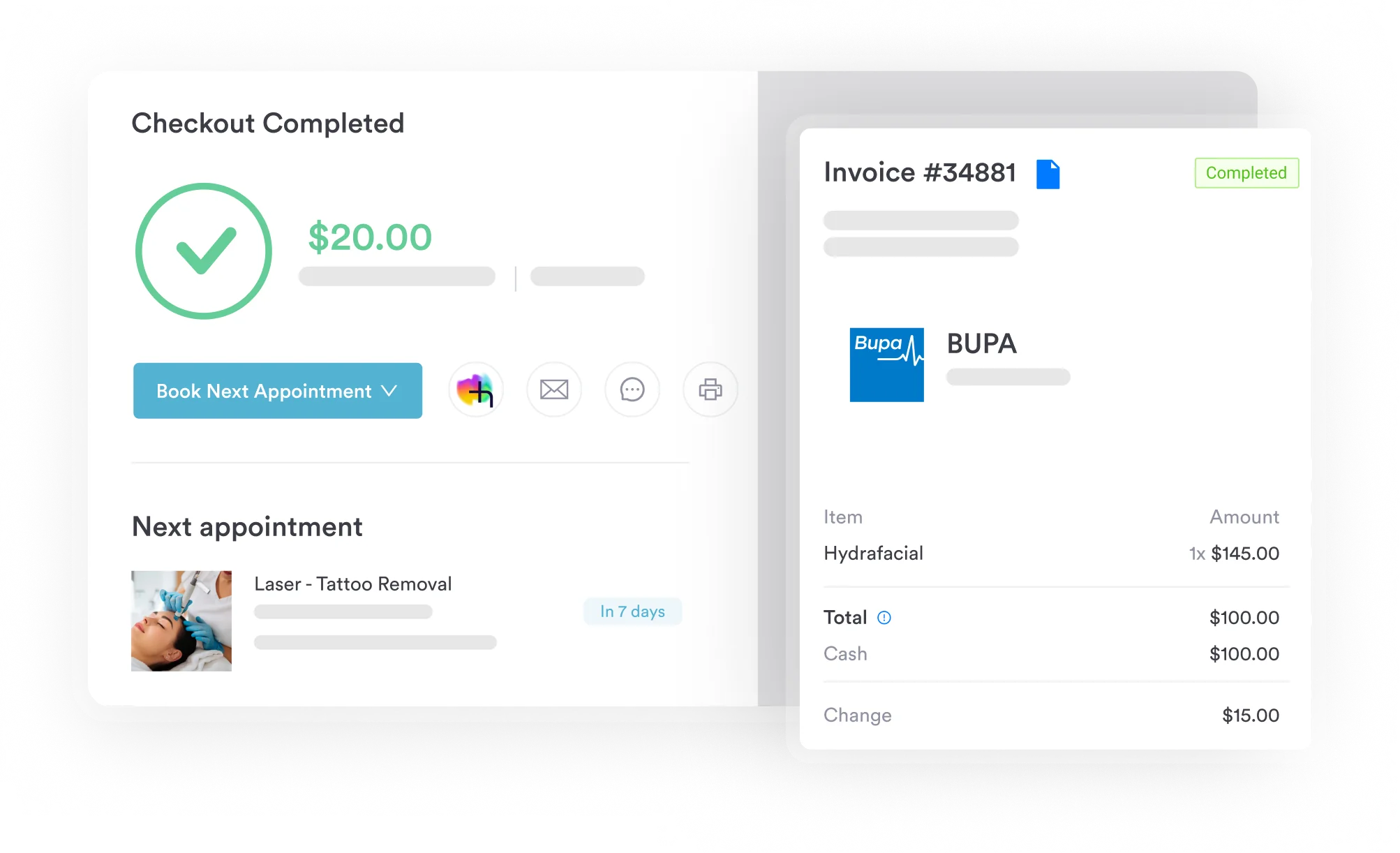
Practices using Pabau can configure procedure code libraries that store CPT Code 19125, 19126, and related codes with pre-attached modifier prompts. When a clinician documents a marker-guided excision, the workflow surfaces the relevant modifier options and add-on code reminders at the point of care. This reduces the reliance on coders catching incomplete surgical documentation after the fact. Pabau also supports integrated patient records that link operative notes directly to the billing claim. This removes the manual transfer step where laterality mismatches and specimen radiography omissions commonly occur. For practices concerned with HIPAA-compliant clinical documentation, Pabau’s single-platform architecture keeps documentation and billing within the same secure environment. Downcoding is as common as upcoding, and both trace back to how the decision-making level was recorded. A coding error surfaces as a cash flow problem weeks later, which is why the healthcare revenue cycle is measured end to end.


Pabau helps breast surgery and surgical practices configure CPT code libraries with built-in modifier prompts and integrated operative note workflows. The right codes reach your billing team without a manual translation step.

The majority of CPT Code 19125 claim denials trace back to the same two documentation problems. One is missing operative confirmation of marker placement, and the other is wrong lesion-vs-wire counting for 19126. Getting this right is a documentation discipline issue as much as a coding one.
Pabau helps surgical practices build those documentation checkpoints directly into operative workflows, so coders receive complete information and claims submit clean the first time. To see how Pabau handles surgical billing workflows end-to-end, book a demo.

Curious how excision coding shifts for a different lesion size? 11402 covers benign lesion excision billing for lesions between 1.1 and 2.0 cm.
Need the add-on billing rules for a different procedure type? 15276 explains add-on billing for skin substitute graft application.
Handling coding for a related plastic surgery procedure? 15830 covers the billing requirements for panniculectomy claims.
CPT code 19125 is used to report the open surgical excision of a breast lesion localized preoperatively with a radiological marker. Markers include a hookwire, radioactive seed, or clip. It applies to a single lesion and requires documentation of both the marker placement and intraoperative specimen radiography confirming lesion removal.
CPT 19125 requires a preoperative radiological marker for lesion localization; CPT 19120 does not. When a marker (wire, seed, or clip) is documented in the operative note, 19125 is the correct code. Using 19120 when a marker was placed results in underpayment and is the most common coding error for open breast excision.
CPT 19126 is reported for each additional breast lesion excised with a preoperative radiological marker during the same operative session as 19125. The count is based on lesions, not wires. If two wires were used to bracket a single lesion, only 19125 is billed. If two separate lesions were each excised with a marker, bill 19125 plus one unit of 19126.
The most commonly used modifiers with CPT Code 19125 are -LT (left breast) and -RT (right breast). -50 (bilateral) applies when both sides are treated, though many payers prefer separate line items with -LT and -RT instead. -59 (distinct procedural service) applies when supported by NCCI edit review. -78 and -79 cover an unplanned return to the OR or an unrelated procedure during the global period. Modifier applicability varies by payer, so always verify against current NCCI edits and payer policies.
No. Intraoperative specimen radiography is bundled into CPT Code 19125 under NCCI edits and should not be billed as a separate service. Billing it separately will result in a denial. Confirm current NCCI edit status before submitting any additional radiology codes alongside 19125, as bundling rules can change quarterly.
Medicare reimbursement for CPT Code 19125 varies by geographic locality and care setting. In a facility (hospital or ASC), the national approximate payment to the physician is $250-$320. Non-facility rates are higher, typically $450-$550. Use the CMS Physician Fee Schedule lookup tool with your specific MAC locality code to retrieve exact current figures, as rates are updated annually.