CPT code 21011: Excision of soft tissue tumor of the face
CPT code 21011: Official descriptor and procedure overview CPT code 21011, as pu...

Last Updated: Oct 8, 2026

CPT code 19328 covers removal of an intact breast implant, performed without a capsulectomy.
Use CPT 19330 when the implant has ruptured, since that code also covers removing the implant contents.
Do not report 19371 with 19328 for the same breast. A complete capsulectomy already includes taking the implant out.
Apply modifier LT or RT for one side, and modifier 50 for bilateral removal, subject to payer policy.
Pabau’s claims management software links operative notes to procedure billing, so coders check implant condition and laterality in one view.
CPT code 19328 is the billable code for removal of an intact breast implant, performed without a capsulectomy. The implant is whole when it comes out, with no rupture and no silicone or saline in the pocket.
The code is published by the American Medical Association (AMA), and its official descriptor reads removal of intact breast implant. The 2021 CPT revision reworked this family of codes to sharpen the line between intact removal, ruptured removal, and capsule work.
Two distinctions decide whether 19328 is the right code:
The code sits in the integumentary system section of the AAPC CPT code database. Many of the implants it removes were originally placed under 19325, so both codes often appear in the same patient’s surgical history.
The most common miscoding in breast implant billing is swapping CPT code 19328 for CPT 19330. Payers audit this pair closely, because reimbursement levels and medical necessity criteria differ between the two.
Code selection rule: The implant’s condition during surgery, as documented in the operative report, drives code selection. If the surgeon opens the capsule and finds the implant intact, bill 19328. If rupture turns up during the procedure, switch to 19330. If the whole capsule comes out as well, report 19371 alone for that breast. Where a code carries an evaluation and management component, documented complexity sets the level billed. A resubmission does not restart the clock, so the original filing limit still governs.
Two capsule codes also show up in these encounters. CPT 19370 covers revision of the peri-implant capsule, including capsulotomy, capsulorrhaphy, or partial capsulectomy. CPT 19380 covers revision of a reconstructed breast, which means secondary revision of an existing reconstruction rather than simple capsule work.
Laterality and bilateral billing are the two modifier situations billers meet most with CPT code 19328. Applying the wrong modifier, or leaving one off, is a top denial trigger for breast procedure claims.
Bilateral billing note: Medicare and many commercial payers want modifier 50 on a single line rather than separate LT and RT lines. Always check the payer’s bilateral billing instructions before you submit. Incorrect bilateral reporting is a National Correct Coding Initiative (NCCI) audit flag.
Modifier 22 needs supporting documentation. The operative report has to quantify the extra time or complexity behind the increased payment request. Without that detail, payers routinely deny or downcode the claim.
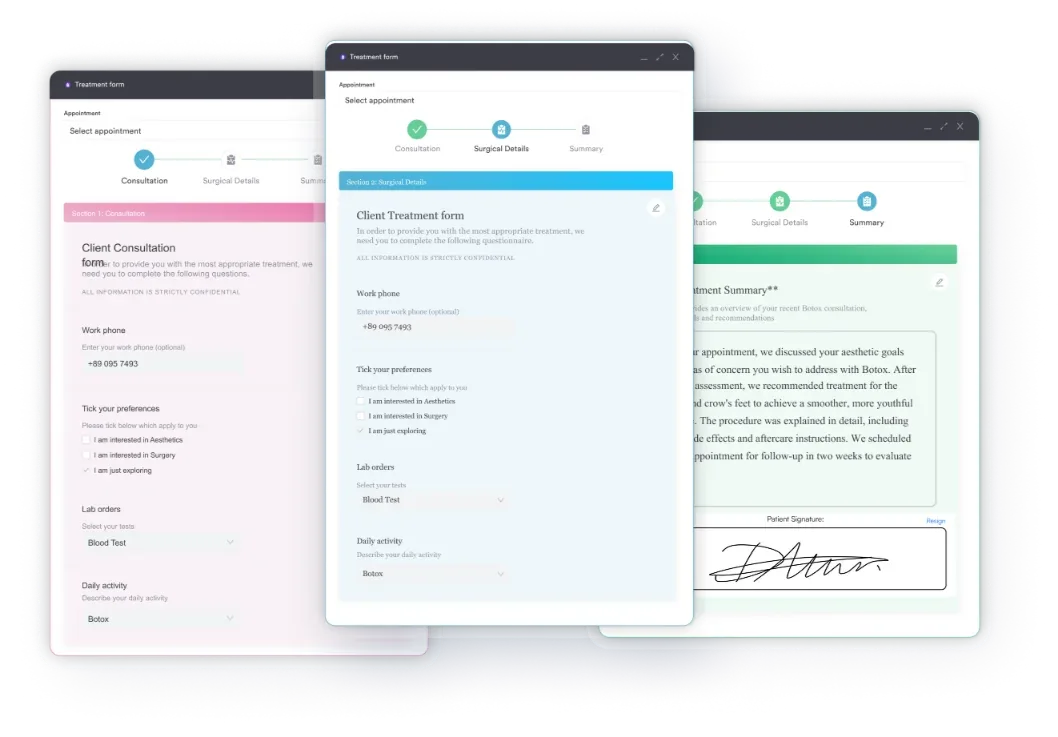
Practices with a steady volume of these cases lean on structured operative templates that capture complexity factors every time. Practice management software like Pabau supports that with digital intake forms, which record pre-operative findings in fields the coder can search later.
Reimbursement for CPT code 19328 varies by payer, place of service, and geography. The figures below are general reference estimates. Verify current rates through the CMS Physician Fee Schedule lookup for your MAC jurisdiction before billing.
Cosmetic versus reconstructive classification: Whether 19328 is covered comes down to the payer’s determination. Removal of implants placed for cosmetic augmentation is usually not covered by insurance.
Removal tied to a documented medical indication may qualify for reconstructive coverage under a Local Coverage Determination (LCD). Qualifying indications include implant-related illness, rupture, a BIA-ALCL diagnosis. Never present coverage as guaranteed, and check the LCD and the individual policy first.
Before submitting a 19328 claim under reconstructive coverage, obtain pre-authorization and document medical necessity in the chart note. Include imaging findings, the prior authorization number, and the clinical indication that prompted removal. Claims filed without pre-auth where the payer requires it are denied on the first pass every time.
Breast implant procedures rarely bill in isolation. Coders need the surrounding family to pick the primary code and avoid NCCI bundling denials. An expander-to-implant exchange, for example.
19371 and 19328 are not billed together. The AMA’s parenthetical under 19371 tells coders not to report it with 19328, 19330, or 19370 in the same breast. A complete peri-implant capsulectomy already includes taking the implant out, so 19328 adds nothing to the claim.
Modifier 59 does not change that. The exclusion sits in CPT itself rather than in an NCCI procedure-to-procedure edit, so there is no edit pair for modifier 59 to unbundle. Adding it to a 19371 and 19328 claim invites a review instead of a payment.
Two adjuncts are still reportable at the same session. Report 19342 when a new implant goes in. Report 19330 with 19371 only in the narrow case where ruptured implant material extends beyond the capsule, and confirm your payer accepts that pairing.
Surgeons billing these codes often run the whole workflow inside dedicated plastic surgery software.
The operative report is the foundation of a defensible 19328 claim. Payers audit breast implant removal claims more often than many surgical codes, because the cosmetic versus reconstructive line is blurry.
Structured pre-operative and operative documentation is what keeps first-pass denial rates down.
The operative report for a 19328 claim must address each of the following elements:
Practices that build these habits into their cosmetic surgery workflows from day one spend far less time on audits. Reconstructing a two-year-old record from memory is the alternative.
Most denials on CPT code 19328 fall into five recurring patterns. Catching them before submission is cheaper than working appeals afterwards.
Aesthetic practices and med spas that remove implants alongside cosmetic treatments carry this denial risk on both sides of the schedule. Connecting scheduling, clinical notes.
Run a monthly denial audit on your 19328 claims alone. Filter by denial reason code: CO-4 for modifier issues, CO-16 for missing information, CO-97 for bundling, and CO-167 for diagnosis. Each code maps to one documentation or coding fix, and fixing the root cause beats appealing claims one at a time.
In most systems the clinical record and the claim live in separate places. Someone rekeys implant condition, capsule status, and laterality into the billing screen. That re-entry step is where missed codes and wrong modifiers appear.
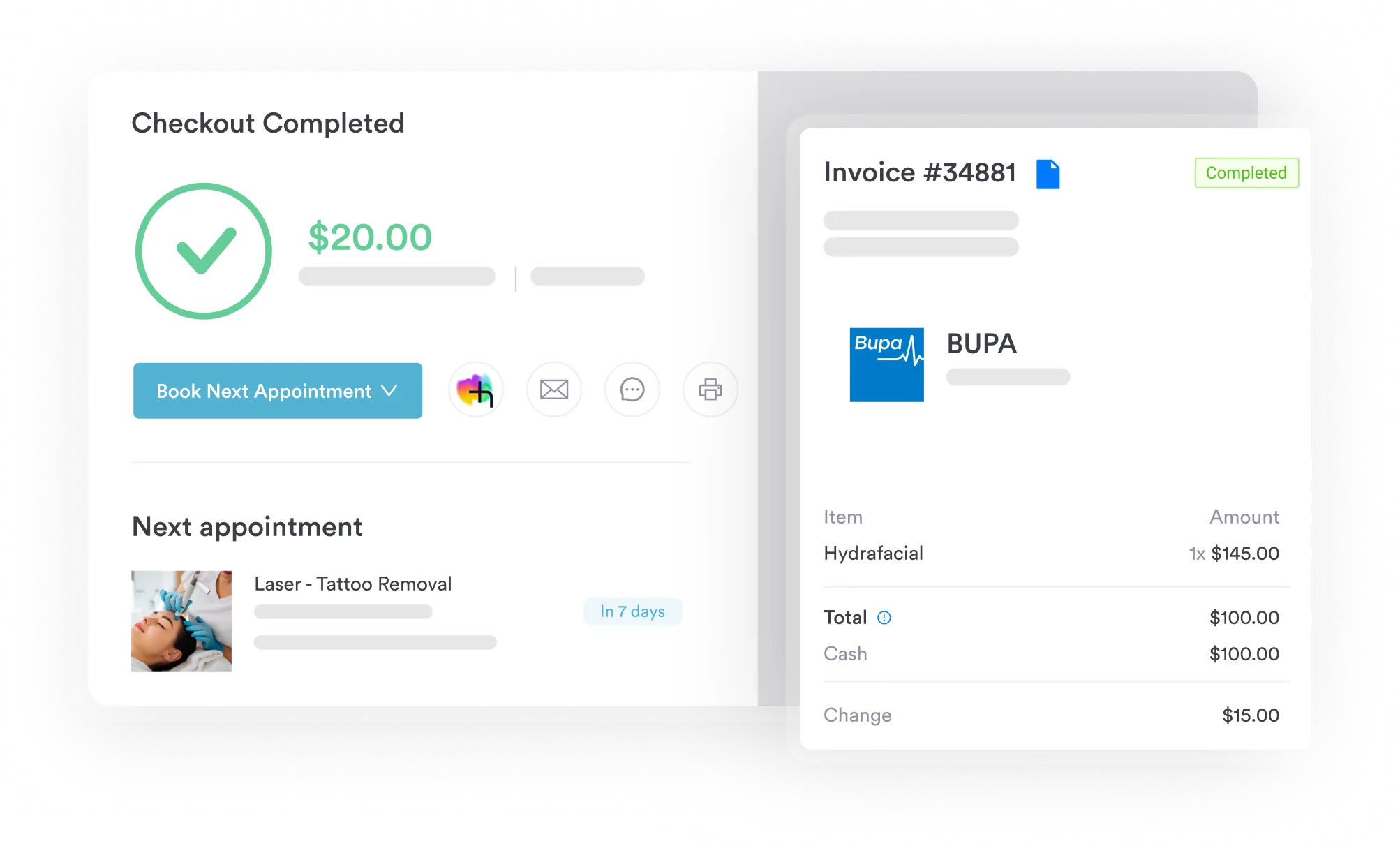
Pabau’s claims management software ties procedure documentation to billing codes at the point of care. On a breast implant removal, the coder reads implant condition and laterality beside the claim form. Nothing has to be looked up in a second system.
Pabau is built around aesthetic and cosmetic surgery workflows, from the implant consultation through consents, operative notes, and follow-up. Keeping all of it in one record is the main reason practices move to dedicated plastic surgery EMR software.

Connect your operative documentation to procedure coding in one platform. Fewer manual steps mean fewer claim errors and faster reimbursement for your practice.

Breast implant removal billing turns on one fact recorded in the operative note. If the implant came out whole and the capsule stayed in, 19328 is the code. If the capsule came out too, the claim belongs on 19371 instead, and 19328 does not go beside it.
Denials on this code cluster around documentation and modifiers rather than genuine doubt about the descriptor. Fix the operative template once, and the same claim stops coming back three weeks later.
Pabau’s plastic surgery EMR keeps intake, operative documentation, and claim submission in one audit-ready record. Book a demo to see how it handles breast procedure billing in your practice.

Billing a percutaneous breast biopsy? CPT code 19084 explains the imaging guidance and unit rules that decide whether the claim pays.
Ablating a fibroadenoma in the same practice? CPT code 19105 covers cryosurgical ablation, including how to report multiple lesions.
Coding a xerosis cutis diagnosis? ICD-10 code L85.3 covers the billable code and the body site, severity, and cause the note needs.
CPT code 19328 covers surgical removal of an intact breast implant, meaning the implant is not ruptured when it comes out. The code does not include capsulectomy. If the surgeon removes the whole peri-implant capsule, report CPT 19371 for that breast instead.
CPT 19328 applies when the implant is intact, and CPT 19330 applies when it has ruptured. 19330 also covers removal of the implant contents. The implant’s condition in the operative report decides the code, not pre-operative imaging alone.
Use modifier LT or RT for a unilateral procedure, and modifier 50 for bilateral removal at the same session. Modifier 22 applies where documented complexity increases surgical time substantially. Modifier 59 belongs only on a genuinely separate procedure, and it never unbundles 19371 from 19328.
Medicare rates for CPT 19328 vary by MAC jurisdiction and geographic practice cost adjustments. Non-facility estimates generally sit between $800 and $1,200 as a reference figure. Practices should verify current rates in the CMS Physician Fee Schedule lookup for their own location.
No. The AMA instructs coders not to report 19371 with 19328 in the same breast, because a complete capsulectomy already includes implant removal. Modifier 59 does not unbundle the pair, since the exclusion sits in CPT rather than in an NCCI edit. Report 19342 when a new implant is inserted.
Coverage depends on whether the payer classifies the removal as cosmetic or reconstructive. Removal for a documented medical indication, such as implant-associated illness, BIA-ALCL, or severe capsular contracture, may qualify under a Local Coverage Determination. Verify the policy terms and obtain pre-authorization before assuming coverage.