HCPCS code T2043: Hospice continuous home care billing guide
HCPCS code T2043 pays for hospice crisis care by the hour HCPCS code T2043 is th...

Last Updated: Oct 7, 2026

CPT code 15860 covers an IV injection of a testing agent, such as fluorescein or ICG, to check vascular flow in a flap or graft.
The code carries a global period of 000, meaning no pre- or post-operative services are bundled into payment.
Modifier 59 may unbundle CPT 15860 from a same-session reconstructive procedure, but payer policies vary and must be verified before billing.
Pabau’s claims management software links CPT 15860 with the correct modifiers and supporting ICD-10 codes at the point of care, reducing manual re-entry errors.
CPT code 15860 is a billable code for an intravenous injection of a testing agent, such as fluorescein or indocyanine green (ICG). It evaluates vascular flow in a surgical flap or graft. It’s a companion code, reported alongside the primary reconstructive procedure rather than billed alone. Correct billing depends on the modifier applied, the ICD-10 code paired with it, and how NCCI edits treat it alongside the primary procedure.
According to the AMA’s CPT code set, CPT code 15860 describes an intravenous injection of a testing agent. It tests the vascular patency of a flap or graft. The short descriptor used by CMS is “IV njx tst vasc flo flap/grf.” The code sits within the Integumentary System section of the CPT codebook (codes 10000-19999). It falls under the subsection titled Other Repair (Closure) Procedures (codes 15780-15879).
Practices billing this code in plastic surgery and reconstructive surgery settings should note that it is a companion code, not a standalone procedure code. It is reported in addition to the primary reconstructive CPT code. It documents an adjunct diagnostic step performed during surgery or post-operatively to confirm tissue viability.
CPT code 15860 is reported when a provider injects a vascular testing agent during or after flap or graft surgery. The injection assesses tissue perfusion. Two agents are commonly used: Fluorescein dye (traditional) and indocyanine green (ICG) for fluorescence-based imaging systems such as SPY.
ICG imaging with systems like the SPY Elite (Stryker) has become the standard approach in many reconstructive practices. Payers vary significantly in whether they recognize CPT 15860 for ICG/SPY use specifically. Verify payer coverage before billing. Where coverage is uncertain, document medical necessity using the appropriate ICD-10 codes.
CPT code 15860 is used by plastic surgeons, reconstructive surgeons, burn surgery teams, wound care specialists. Billing accuracy in these settings benefits from reconstructive surgery software. It ties procedure codes to clinical documentation at the point of care.
Document the specific agent used (fluorescein vs. ICG), the system employed (e.g., SPY Elite), the clinical rationale for testing, and findings in the operative note. Without this detail, payers have grounds to deny CPT 15860 as not medically necessary or not separately billable.
Modifier selection for CPT code 15860 is payer-specific. These are the most commonly applied modifiers, with guidance on when each is appropriate. Confirm requirements with individual payers before billing.
Modifier 59 carries audit risk. Use it only when you can document that CPT 15860 was performed at a separate session or for a different anatomical site. It also applies when the injection isn’t included in the primary procedure’s standard components. Modifier XS (separate structure) is a more precise alternative that some payers now require instead of 59.
Reimbursement for CPT code 15860 varies by payer, geographic locality, and place of service. The figures below represent Medicare benchmarks based on the Medicare fee schedule. Always verify current-year rates directly with CMS before billing, as fee schedules update annually.
Relative Value Units (RVUs) determine Medicare payment amounts. CPT code 15860 carries a relatively low total RVU, reflecting its role as a companion injection code rather than a primary surgical procedure. Use the FastRVU 2026 lookup tool to verify current Work, PE, and MP RVU values by geographic location.
CPT code 15860 reimburses differently depending on where the service is rendered. Non-facility rates (office setting) are higher because the practice absorbs overhead costs. Facility rates (hospital or ambulatory surgery center) are lower because the facility bills separately for equipment and supplies.
Payer coverage for CPT code 15860 is conditional on documented medical necessity. The ICD-10 diagnosis codes below commonly support claims for vascular flow testing. Note that Local Coverage Determinations (LCDs) vary by Medicare Administrative Contractor (MAC) region. Review your MAC’s specific LCD before building a standard ICD-10 pairing list.
The same documentation discipline applies to burn injury ICD-10 codes. Link the code directly to the clinical scenario documented in the operative note.
The National Correct Coding Initiative (NCCI) maintains edit tables that identify CPT code pairs that CMS considers bundled into a single payment. CPT code 15860 may bundle with the primary reconstructive CPT code billed on the same date of service, depending on the code pair and payer.
Modifier 59 or modifier XS can override the bundle when 15860 is a genuinely distinct service, such as a separate injection or clinical decision. Overuse without supporting documentation triggers audit scrutiny. The same modifier logic applies to add-on graft codes billed on the same date.
Modifier documentation must exist in the record before the modifier is appended, not after a denial. The same principle applies when billing vascular procedure codes such as CPT 17108.
CPT code 15860 carries a global period of 000 (zero days), according to CMS reporting indicators (verify against the current CMS MPFS indicator file). A 000 global period means no pre-operative or post-operative services are included in the code’s payment. Each session can be billed independently.
CPT code 15860 sits within a narrow code range used for repair and closure procedures. Coders working with flap and graft billing should be familiar with adjacent codes to ensure 15860 is selected accurately and not confused with similar procedures. Skin graft procedures billed before a perfusion check.
You can search the full CPT range via the AAPC Codify CPT lookup.
Manual re-entry between clinical documentation and billing software is where CPT code 15860 errors typically occur. Coders working from paper operative notes miss modifier flags. Billers working from disconnected systems attach wrong ICD-10 codes or omit 15860 entirely when it was performed.
Pabau’s claims management software connects clinical documentation directly to billing. Within the treatment record, providers can document the vascular testing procedure. They can attach CPT code 15860 with the correct modifiers and linked ICD-10 diagnosis codes at the point of care. No separate login, no manual transfer to a billing platform. The same point-of-care approach applies to wound preparation codes such as CPT 15004. It reduces the risk of unbundling errors and denial cycles common in multi-code reconstructive claims. Under current evaluation and management rules, the counted elements changed but the need to show reasoning did not.
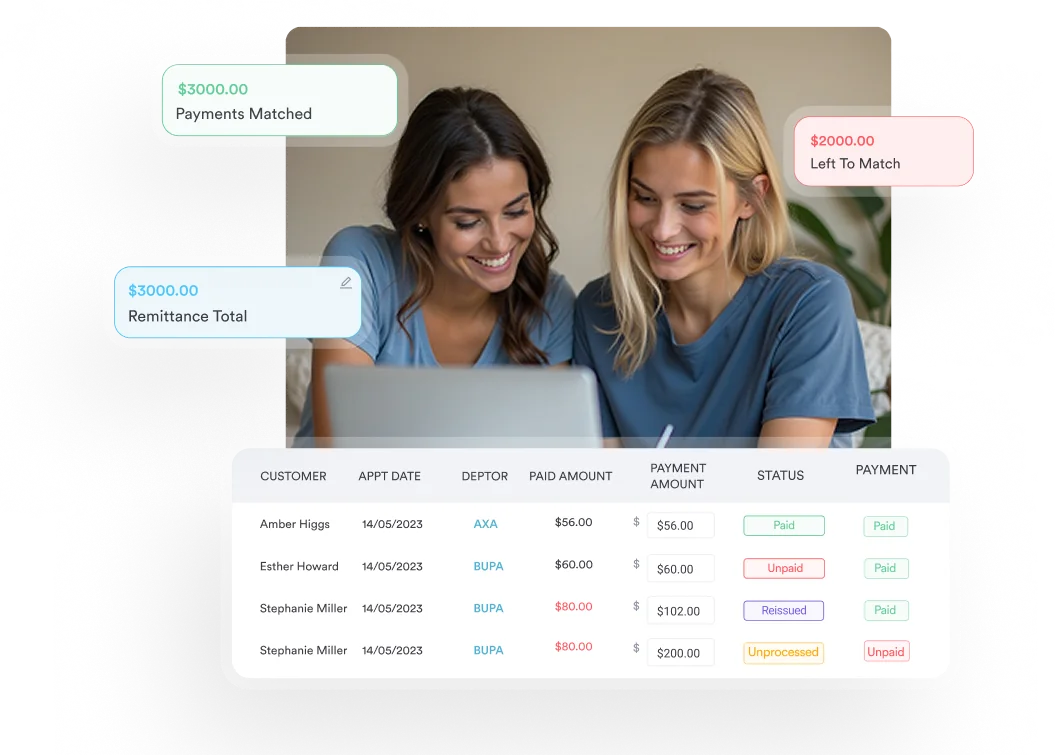
Pabau also generates procedure-level billing reports, giving practice managers visibility into CPT 15860 claim volumes, denial rates, and reimbursement trends. For practices managing plastic surgery billing workflows across multiple reconstructive cases, that consistency matters.

Pabau helps plastic surgery and reconstructive practices attach the right CPT codes, modifiers, and ICD-10 codes at the point of care, reducing claim errors before submission.

Run a monthly denial audit specifically for CPT 15860 claims. Filter by denial reason code (typically CO-97 bundling or CO-4 modifier issue). The pattern will tell you whether the problem is documentation, modifier selection, or payer policy, and that distinction changes the fix entirely.
A CPT code 15860 claim rarely fails on the code choice itself. It fails when the operative note, the modifier, and the ICD-10 pairing fall out of step by the time the claim goes out. Verify the NCCI edit before applying modifier 59, and confirm current rates directly with CMS. Document the testing agent and the clinical rationale in the note every time.
Pabau’s claims management software keeps CPT codes, modifiers, and diagnosis codes tied together from the treatment record through to claim submission. That keeps the alignment intact without a manual check at each step. Book a demo to see how it works for reconstructive and integumentary billing.

Billing for a dermal autograft? CPT 15131 covers documentation and billing for dermal autografts on the trunk, arms, and legs.
Coding an unspecified eye disorder? ICD-10 code H57.9 covers the billable status, synonyms, and documentation guidance for this code.
Coding chronic otitis media by ear? ICD-10 code H65.31 covers the right-ear code and its left-ear and bilateral sibling codes.
CPT code 15860 is used to report an intravenous injection of a vascular testing agent, such as fluorescein or indocyanine green (ICG), to evaluate blood flow and tissue perfusion in a surgical flap or graft. It is a companion code reported alongside the primary reconstructive procedure code.
Medicare may cover CPT 15860 when medical necessity is documented with appropriate ICD-10 diagnosis codes. Coverage varies by Medicare Administrative Contractor (MAC) region and is governed by Local Coverage Determinations. Verify with your specific MAC before billing.
Modifiers 59 (distinct procedural service), 51 (multiple procedures), 26 (professional component), TC (technical component), LT, and RT may apply, depending on payer requirements and the clinical circumstances. Modifier 59 requires documentation that the service was genuinely distinct from the primary procedure billed on the same date.
CPT 15860 is the code most commonly used for ICG/SPY fluorescence imaging to test flap or graft perfusion. However, payer recognition for this specific use case varies significantly. Some payers do not separately reimburse 15860 for ICG use, or may require prior authorization. Always verify individual payer policy before billing.
NCCI edits may bundle CPT 15860 with the primary reconstructive code billed on the same date of service. Check the current CMS NCCI Procedure-to-Procedure edit table for the specific code pair. If the modifier indicator is “1,” modifier 59 or XS may be used to unbundle when clinical documentation supports a distinct service.
CPT 15860 has a global period of 000 (zero days), meaning no pre-operative or post-operative services are bundled into a single payment. Each session in which the injection is performed may be billed independently. Verify this indicator in the current CMS Medicare Physician Fee Schedule indicator file.