ICD-10 code S61.201A: Open wound of left index finger without nail damage
ICD-10 code S61.201A covers a left index finger wound of unstated type ICD-10 co...

Last Updated: Oct 16, 2026
Billable Code Specific Code
L08.9 is the billable ICD-10-CM code for local infection of the skin and subcutaneous tissue, unspecified.
This page reflects the 2026 ICD-10-CM edition.
Let Pabau's smart automation suggest the right codes, reduce claim denials, and keep your practice compliant—effortlessly.
Automate repetitive tasks and focus on what matters most—your patients.
Reduce coding errors and ensure compliance with the latest regulations.
Clean claims, fewer denials, and faster reimbursements.
Powerful insights and reporting to help your practice thrive.
HIPAA compliant SOC 2 certified GDPR-compliant Trusted by 4,000+ clinics worldwide

ICD-10 Code L08.9 describes a local infection of the skin and subcutaneous tissue, unspecified, within Chapter 12 (L00-L99)
L08.9 is a billable/specific code valid for HIPAA-covered transactions, effective October 1, 2025 through September 30, 2026
Use L08.9 only when no more specific skin infection code applies; payers may query or deny claims when a specific code like L03.x (cellulitis) is available
Pabau’s claims management software and digital intake forms help billing teams apply L08.9 accurately and document encounters that support the unspecified designation
ICD-10 Code L08.9 – “Local infection of the skin and subcutaneous tissue, unspecified” – is a billable, specific ICD-10-CM code. That means it can be used as a stand-alone diagnosis for reimbursement purposes without requiring a more specific child code beneath it.
The code sits in Chapter 12 of ICD-10-CM, which covers diseases of the skin and subcutaneous tissue (L00-L99), within the L00-L08 block (“Infections of the skin and subcutaneous tissue”). According to the CDC/NCHS ICD-10-CM web tool, this is the code to use when a local skin infection is documented but its specific type is not identified in the clinical record.
The “unspecified” qualifier is critical. L08.9 does not describe a specific pathogen, infection type, or anatomical site beyond “skin and subcutaneous tissue.” When the record does specify the type, a more precise code within the L00-L08 block or elsewhere in Chapter 12 should be used instead.
The table below summarizes the core attributes of ICD-10 Code L08.9 for quick reference during claim preparation or documentation review.
L08.9 covers local infections of the skin (epidermis, dermis) and the subcutaneous tissue beneath it, where the specific type of infection has not been identified or documented. The WHO ICD-10 classification describes this layer as encompassing the epidermis, dermis, and hypodermis (subcutaneous fat), all of which may be involved in a local infection coded L08.9.
Clinical presentations that may warrant this code include:
This overlaps with the Applicable To inclusion term “infection of skin NOS” (Not Otherwise Specified), which is the formal clinical coding term mapped to L08.9.
The key phrase is “has not been further specified.” If the record identifies cellulitis (L03.x), an abscess or furuncle (L02.x), impetigo (L01.x), or erysipelas (A46), those more specific codes apply. Staphylococcal scalded skin syndrome belongs on that list too, and it carries ICD-10 code L00 rather than L08.9. L08.9 is a residual category for genuine clinical uncertainty or documentation that simply hasn’t captured the infection type. Good clinical documentation practices reduce over-reliance on unspecified codes. Coverage verification also surfaces the deductible position, which changes what the practice collects at the desk.
Understanding where L08.9 sits in the ICD-10-CM hierarchy helps coders navigate the correct code path and identify when a sibling code is more appropriate. The hierarchy from broadest to most specific is:
The parent code L08 itself is not billable, and neither is L08.8 – it’s a non-billable header for the L08.8x subcategory. The billable children are L08.0, L08.1, L08.81, L08.82, L08.89, and L08.9.
When the type of local infection is documented but doesn’t match L08.0 (pyoderma) or L08.1 (erythrasma), use the matching L08.8x code – L08.81 for pyoderma vegetans, L08.82 for omphalitis not of newborn, or L08.89 for anything else specified. When the type isn’t documented at all, use L08.9. You can verify the current hierarchy using the CMS ICD-10 codes page.
For practices managing dermatology or skin clinic billing, the skin clinic software category covers integrated coding workflows that reduce hierarchy navigation errors at the point of care.
The excludes notes for the L08 block (and by extension L08.9) define conditions that must NOT be coded under this classification. Knowing these prevents rejected claims and incorrect co-coding. There are two types of excludes notes in ICD-10-CM with different implications.
Excludes1 (cannot code together): The L00-L08 block carries no Excludes1 notes. There are no conditions that ICD-10-CM prohibits from being coded alongside L08.9 at this level.
Excludes2 (not included here, but can co-exist): Excludes2 conditions are distinct diagnoses that may legitimately appear alongside L08.9 at the same encounter. For the L00-L08 block, these are:
Always consult the AAPC ICD-10-CM code reference or the official tabular list for the complete, current list of excludes notes at the block and code level before finalizing a claim.
The ICD-10-CM official coding guidelines are clear: assign the most specific code supported by the documentation. L08.9 is appropriate when no more specific code is defensible. The table below compares L08.9 against the most commonly confused alternatives.
Payers may flag L08.9 on a claim and request medical records if the encounter type (e.g. a dermatology visit) suggests a more specific diagnosis should be available. This isn’t a guarantee of denial, but it is a common audit trigger.
Practices that consistently document specific infection types will see fewer queries on this code.
Review your coding patterns quarterly. If L08.9 appears on more than 20% of dermatology or wound care claims in a given month, that signals incomplete documentation rather than genuine diagnostic uncertainty. Audit five to ten charts and check whether the treating clinician described the infection type but the coder still defaulted to unspecified.
Using an unspecified code is defensible when the clinical record genuinely does not support a more specific diagnosis. That does not mean documentation can be vague – it means the documentation must clearly establish why specificity is unavailable.
For L08.9, the medical record should include:
If a culture was ordered but results were pending at the time of coding, the record should note this. In that scenario, the coder should code to the highest degree of certainty available at the time, then update with a more specific code once culture results are received.
Practices using digital intake forms for dermatology or wound care encounters can build in structured fields for infection description, reducing the chance of an “unspecified” code appearing simply because the intake form didn’t capture the right detail.
Documenting infection characteristics at point of care is far more reliable than retrospective querying. For HIPAA-compliant management of these records.

For practices transitioning legacy records, or reconciling older claims, the ICD-9-CM predecessor to L08.9 is code 686.9 – “Unspecified local infection of skin and subcutaneous tissue.” This crosswalk is based on the General Equivalence Mappings (GEMs) files maintained by CMS.
The crosswalk is approximate: ICD-9 code 686.9 had a broader scope, and the ICD-10-CM transition introduced greater specificity within the L08 block.
The crosswalk for L08.9 is considered approximate in CMS GEMs terminology – one ICD-9 code may map to multiple ICD-10 codes, and vice versa. Always validate against current CMS documentation for audits or retroactive claim corrections.
Most avoidable L08.9 denials come from two issues: using the code when a specific code is available, and failing to update a preliminary code once test results or follow-up notes provide more detail. A few practical steps reduce both risks.
Practices using claims management software can flag encounters where L08.9 appears alongside procedure codes that typically require a more specific diagnosis, building a pre-submission check directly into the billing workflow. Integrated patient record management that links clinical notes to claim preparation also shortens the loop between documentation and coding, reducing both errors and denials.
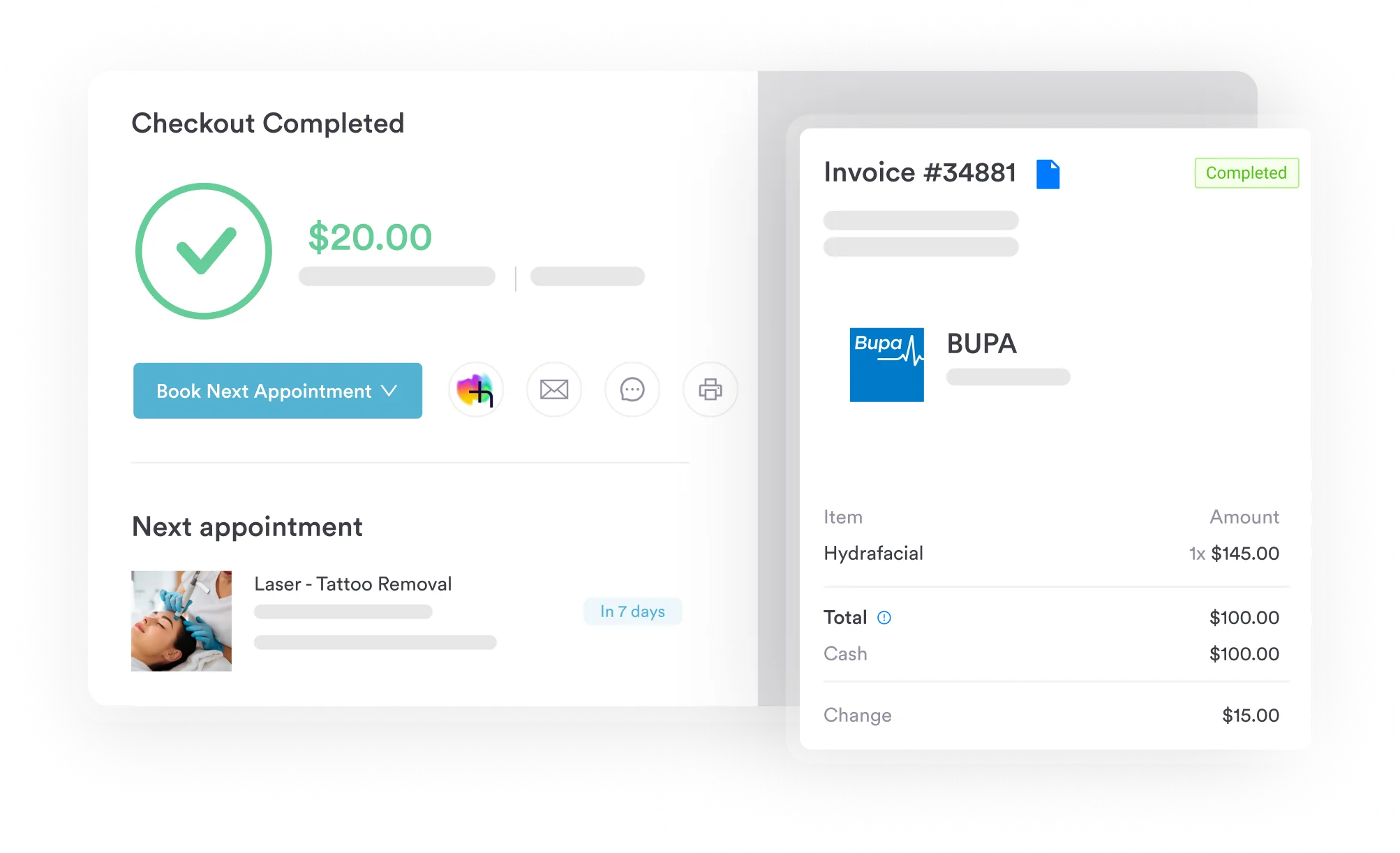
For teams moving toward paperless documentation workflows, AI-assisted clinical documentation can help structure encounter notes so that skin infection descriptions are captured in a format that naturally supports code specificity at the time of dictation, reducing reliance on L08.9 as a default.
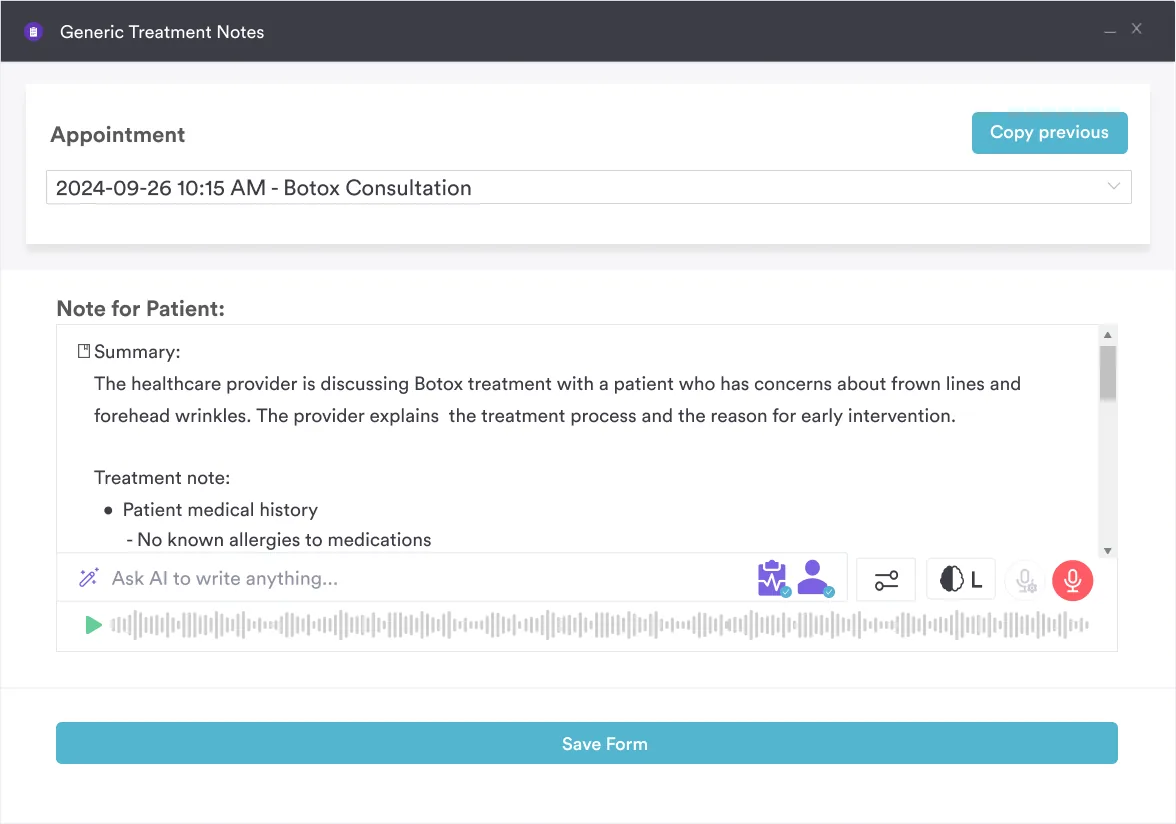

Pabau’s claims management software and integrated clinical documentation help billing teams catch when a more specific ICD-10 code is available before claims are submitted. See how it works for skin clinics and dermatology practices.

When L08.9 appears on a claim for a dermatology or wound care encounter, document why the infection type was unspecified. A single sentence in the note, such as ‘culture pending, infection type not yet determined,’ is sufficient to defend the unspecified designation on audit.
ICD-10 Code L08.9 is a legitimate, billable diagnosis code – but it is also one of the most over-used residual codes in dermatology and primary care billing. The right approach is to use it only when the clinical record genuinely does not support a more specific code, and to document clearly why the infection type is unspecified.
Pabau’s claims management software helps skin clinics and billing teams build specificity checks into the pre-submission workflow, reducing the rate of L08.9 queries from payers. To see how Pabau handles clinical documentation and code validation in dermatology and skin clinic workflows, book a demo.

Billing Mohs surgery for skin cancer removal? CPT code 17314 breaks down the modifiers and Medicare rates coders need to get right.
Coding another small-vessel vasculitis diagnosis? Hypersensitivity angiitis diagnosis code covers immune-mediated small-vessel inflammation and lists Goodpasture’s syndrome as its only inclusion term.
Coding another “unspecified” diagnosis? ICD-10 code M51.9 walks through the same specificity question for spinal disc disorders.
ICD-10 Code L08.9 is a billable diagnosis code for a local infection of the skin and subcutaneous tissue when the specific type of infection has not been further documented or determined. It is used when no more specific code within the L00-L08 block – such as L03.x for cellulitis or L02.x for abscess – is supported by the clinical record.
Yes. L08.9 is a billable/specific ICD-10-CM code valid for stand-alone diagnosis coding and for submission in HIPAA-covered electronic transactions. It is effective from October 1, 2025 through September 30, 2026 under the 2026 ICD-10-CM edition.
Cellulitis is coded under L03.x (with additional digits for anatomical site), not L08.9. L03.x applies when the medical record specifically documents cellulitis. L08.9 applies when the record describes a local skin infection but does not identify the type. Using L08.9 when cellulitis is documented is a coding error and may result in a payer query.
ICD-9-CM code 686.9 – “Other local infections of skin and subcutaneous tissue, unspecified” – is the approximate predecessor to L08.9. This crosswalk is drawn from the CMS General Equivalence Mappings (GEMs) files and should be validated against current CMS documentation for retroactive corrections or audit purposes.
The medical record must describe the presenting skin infection (site, characteristics, treatments) and clearly indicate – either explicitly or by the absence of further detail – that the infection type has not been determined. If a culture was ordered and results were pending, this should be noted. Once results confirm a specific infection type, the code should be updated to the most specific code available.
L08.9 falls under parent code L08 (“Other local infections of skin and subcutaneous tissue”), within block L00-L08 (“Infections of the skin and subcutaneous tissue”), in Chapter 12 of ICD-10-CM (“Diseases of the skin and subcutaneous tissue,” L00-L99). The parent code L08 is not itself billable.