



CCSD code G5100: Bypass of duodenum billing guide
CCSD code G5100 bills a bypass that leaves the duodenum in place CCSD code G5100...

Last Updated: Oct 16, 2026

CPT Code 15004 covers surgical preparation or recipient site creation at high-complexity anatomical locations: the face, scalp, neck, hands, feet, genitalia, and multiple digits. It covers the first 100 sq cm of wound area, or 1% of body area in infants and children.
The critical distinction from CPT 15002 is anatomical site: 15004 applies to high-complexity locations; 15002 covers trunk, extremities, and non-specified areas. Billing the wrong code based on site is the leading denial trigger.
Medicare denials for CPT 15004 most often trace to missing wound size documentation in sq cm. Every claim must include the exact measurement in the operative note.
Pabau’s claims management software automates CPT code capture, flags incomplete documentation fields before submission, and tracks wound care billing across encounters.
CPT Code 15004 describes surgical preparation or creation of a recipient site. This includes excision of open wounds, burn eschar, or scar tissue, plus incisional release of scar contracture.
It applies specifically to high-complexity anatomical sites: face, scalp, eyelids, mouth, neck, ears, orbits, genitalia, hands, feet, and multiple digits.
The American Medical Association (AMA) publishes and maintains the CPT code set. It defines the first 100 sq cm of wound area as the threshold for this code. For infants and children, that threshold is 1% of body area instead.
This code sits within the CPT 15000 series, which covers surgical preparation and skin grafting procedures. CPT 15004 is reserved exclusively for the anatomical sites listed above.
These locations carry higher technical complexity, greater tissue fragility, and more demanding healing requirements than trunk or extremity wounds. The parallel code for standard-complexity sites.
CPT 15005 is the companion add-on code for wound areas exceeding the first 100 sq cm threshold. It cannot be reported alone; it always requires 15004 as the primary code. Confirm add-on code status in the current AMA CPT manual before billing, as designations are subject to annual review.
CPT 15004 is reported when a clinician surgically prepares a wound site at one of the specified high-complexity anatomical locations before a subsequent procedure. Most often, that means before the application of a skin graft or cellular/tissue-based product. The preparation itself, not the graft application, is what this code captures.
Three clinical scenarios trigger CPT 15004:
The code is also reported when preparing a recipient site before applying cellular and tissue-based products (CTPs) such as skin substitutes. In that workflow, 15004 covers only the preparation step. The CTP application itself is reported separately under codes such as CPT 15271 or 15275.
Wound care billing workflows that track preparation and application as distinct episodes are less prone to bundling denials. Pabau’s claims management software links procedure codes to encounter-level documentation, helping billers distinguish preparation from application at claim time.
Wound dressing supplies applied afterward.
CPT 15002 and CPT 15004 describe the same procedure type (surgical site preparation) but apply to different anatomical locations. Billing the wrong code based on site is the single most common denial trigger for wound preparation claims. The anatomical split is the defining criterion.
A practical rule: if the wound is on the hand, foot, face, or neck, the correct code is 15004. If it is on the thigh, abdomen, or upper arm, use 15002. Scalp wounds fall under 15004, since scalp appears only in the high-complexity site list, not in the 15002 descriptor. Confirm the operative note documents the specific anatomical sub-site. Most claim errors are structural rather than clinical, which is why scrubbing rules catch them. If the encounter included an assessment and a plan, the evaluation and management component needs its own documentation.
Modifier selection for CPT 15004 affects both claim approval and reimbursement rate. Using the wrong modifier, or omitting one when required, is a fast path to a denial. Below are the modifiers most commonly applied with this code.
The National Correct Coding Initiative (NCCI) publishes bundling edits that specify which codes cannot be reported together without a modifier. When CPT 15004 is billed alongside a skin graft or CTP application code, modifier -59 is often required to override the NCCI bundle.
Verify current NCCI edits using the AAPC Codify code lookup before submitting.
Modifier documentation practices are easier to standardize when they are built into the billing workflow rather than added retrospectively. For practices managing CTP workflows.
An EMR built around plastic surgery workflows keeps lesion sizes, margins, and photos tied to each procedure code.
Missing or incomplete documentation is the primary reason Medicare and commercial payers deny CPT 15004 claims. Each element below must appear in the operative note or procedure record before a claim is submitted.
Measure and record wound dimensions before preparation begins, not after. Post-preparation measurements reflect a smaller surface area after tissue removal, which can understate the work performed and undermine the claim. Document the initial wound size in sq cm as a discrete field in the operative note.
Documentation for burn eschar preparation should also pair with a burn-specific diagnosis code. A code such as T31.52 supports the medical necessity criteria payers check before approving the claim.
ICD-10-CM has no aftercare Z codes for injuries, so a later wound visit reuses the same injury code with a new 7th character. ICD-10 code S22.022G uses G for delayed healing, and its fracture family carries no malunion character.
Practices that capture wound measurements as structured data fields (rather than free text) have an easier time extracting the required metrics at billing time.
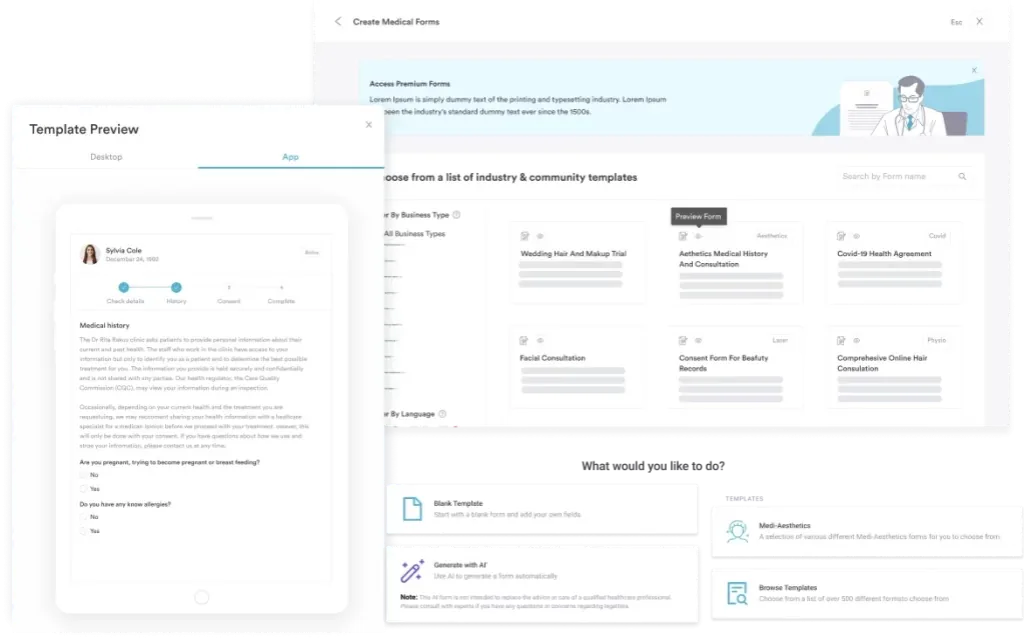
Pabau’s digital forms can be configured with mandatory measurement fields for wound care encounters. This ensures billers have the required sq cm value before a claim leaves the practice.
Medicare reimbursement for CPT 15004 is set by the Medicare Physician Fee Schedule (MPFS), which the Centers for Medicare and Medicaid Services (CMS) updates annually.
Rates vary by geographic location (through the Geographic Practice Cost Index) and by place of service. The figures below reflect 2026 national non-facility and facility rates; verify current values using the CMS fee schedule lookup.
Exact dollar figures for CPT 15004 are updated each calendar year and vary by locality. For the current year’s values, use the FastRVU RVU lookup tool, which pulls from CMS MPFS data.
Always note that rates are subject to geographic adjustment and confirm with your MAC before using any third-party fee schedule figure for claim submission.
Relative Value Units (RVUs) determine the physician’s Medicare payment under the Resource-Based Relative Value Scale (RBRVS). CPT 15004 carries three RVU components:
Total RVU values are multiplied by the annual CMS conversion factor to produce the dollar payment rate. RVU values are updated in the annual MPFS final rule, published each November for the following calendar year.
One of the most frequent clinical contexts for CPT 15004 is wound bed preparation before the application of cellular and tissue-based products. CTPs include skin substitutes, amniotic membranes, and other biologic wound care materials applied to promote healing at high-complexity sites.
The billing structure has two distinct layers:
Medicare coverage for CTPs depends on the applicable Local Coverage Determination (LCD) issued by the Medicare Administrative Contractor (MAC) for the practice’s region. Not all CTPs are covered for all wound types or anatomical locations.
Before reporting CTP application codes alongside CPT 15004, verify that the specific product is covered under the MAC’s LCD. Also confirm that the wound type meets medical necessity criteria.
A common billing error is bundling the preparation and application into a single claim line. NCCI edits may flag this pairing unless modifier -59 is appended to demonstrate that the two services are distinct. Practices billing the CPT 15272 add-on alongside 15004 preparation should document both units separately to avoid this.
CPT 15004 does not operate in isolation. Understanding the full family of wound preparation and grafting codes is essential for accurate claim submission.
Practices billing across multiple wound care specialties, such as plastic surgery, podiatry, or burn surgery, benefit from a code crosswalk document. It should map preparation codes to their correct graft application counterparts by anatomical site. Include adjacent codes such as CPT 97597 for active wound care management.
Medicare denials for CPT 15004 cluster around a predictable set of errors. Most are preventable with a pre-submission documentation review. The following are the most frequently encountered denial patterns.
Appeals for CPT 15004 denials based on missing documentation succeed when the original note exists but was not transmitted with the claim. Practices should establish a same-day documentation policy for wound preparation procedures to avoid this.
Structured clinical record workflows that require operative note sign-off before a claim batch closes reduce the volume of preventable denials. Debridement add-on codes such as CPT 11001 are also easy to miscode against 15004 without a clear note on which service was performed.
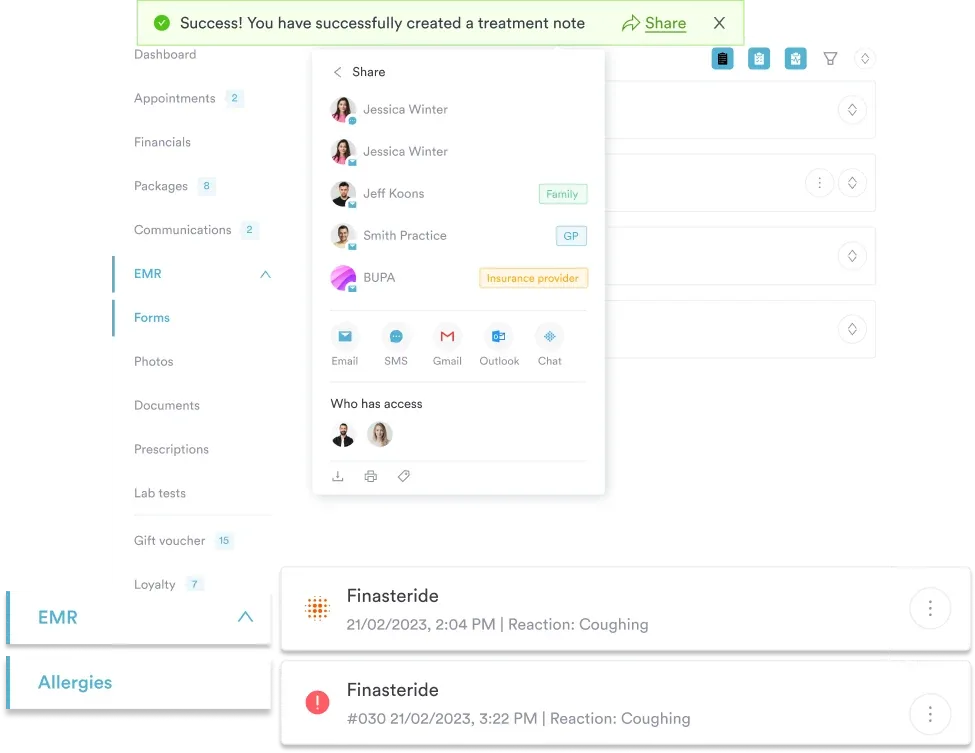
Wound care billing involves multiple interdependent codes, strict measurement documentation, and payer-specific rules that change annually. A billing error at the preparation stage cascades through the entire claim if the graft application codes are also on the same encounter.
Pabau’s claims management tools give wound care practices a structured path from encounter documentation to claim submission.
Key capabilities for CPT 15004 workflows:
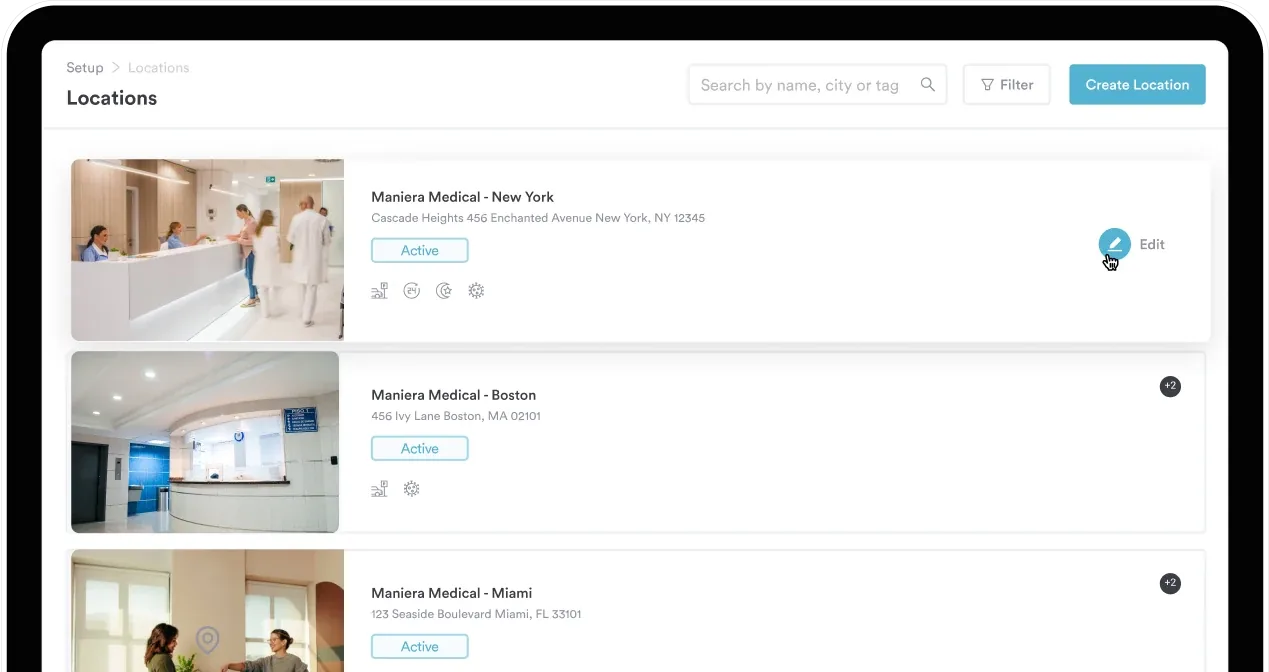
Practices managing high-complexity wound care across multiple providers benefit from Pabau’s multi-location management, which keeps billing rules and documentation templates consistent across sites.
For practices where HIPAA-compliant documentation handling is a priority.
The medical forms guide extends to wound care: a poorly designed operative note template produces missing-data denials, regardless of who performed the work.

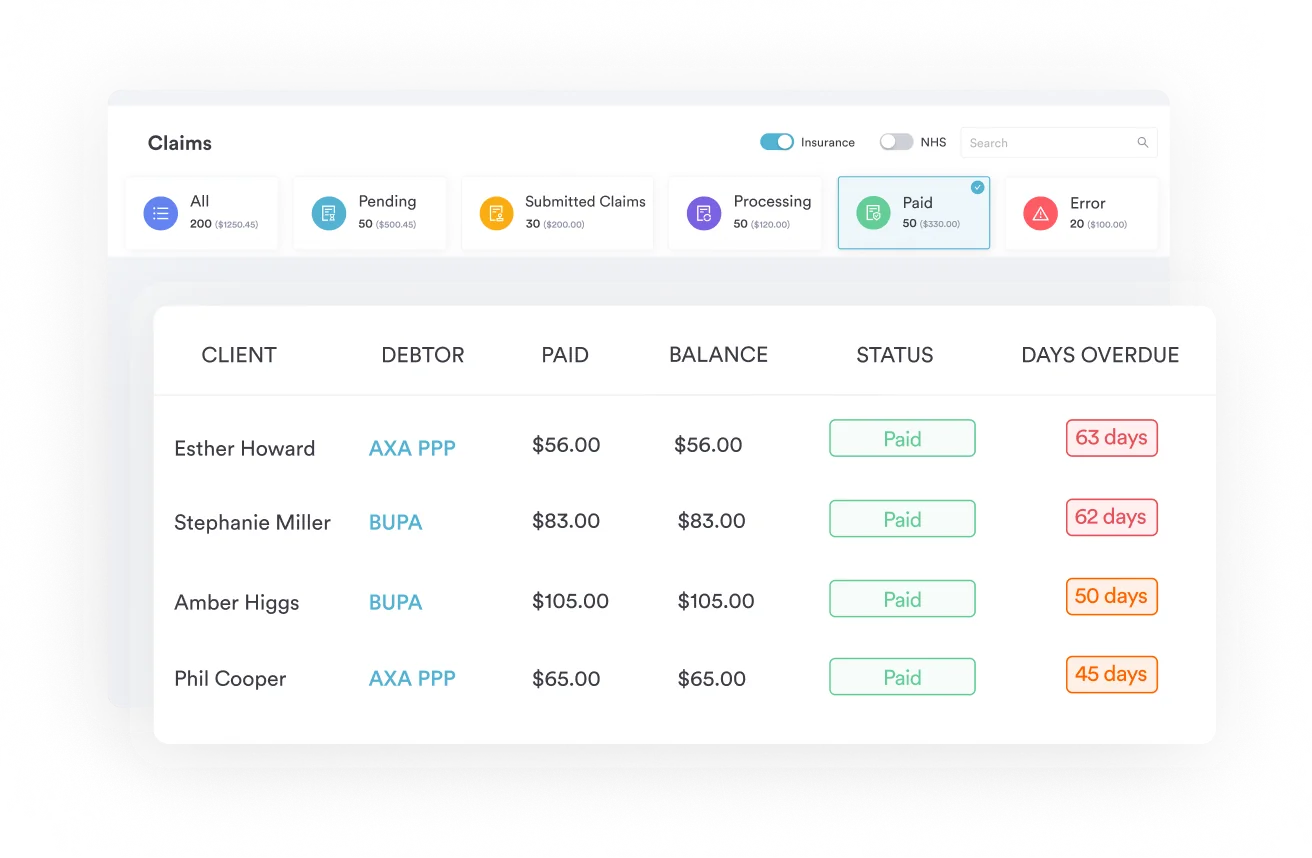
Pabau helps wound care practices capture wound size, anatomical site, and procedure details as structured data at the point of care, so every CPT 15004 claim goes out complete.

CPT Code 15004 denials are rarely random. They follow predictable patterns: wrong site, missing sq cm measurement, no modifier on a bundled pair, or an operative note that was not attached. Solving these at the workflow level, before claims go out, is more effective than managing appeals after the fact.
Pabau’s claims management software enforces documentation requirements at the encounter level, so wound preparation claims go out complete the first time. To see how it handles wound care billing workflows, book a demo.

Coding an intracranial abscess as a manifestation? ICD-10 code G07 covers why the underlying disease must be coded first or the claim is incomplete.
Coding intracranial phlebitis or thrombophlebitis? ICD-10 code G08 covers the billable diagnosis code for intracranial and intraspinal phlebitis and thrombophlebitis.
Coding a confirmed Huntington’s disease diagnosis? ICD-10 code G10 covers the single billable code for all confirmed presentations of Huntington’s disease.
CPT Code 15004 is used to report surgical preparation or creation of a recipient site. This applies to excision of open wounds, burn eschar, or scar tissue, including subcutaneous tissues. It also covers incisional release of scar contracture at high-complexity anatomical sites, including the face, scalp, neck, hands, feet, genitalia, and multiple digits. It covers the first 100 sq cm or 1% of body area in infants and children.
CPT 15004 and CPT 15002 describe the same type of procedure (surgical site preparation) but apply to different anatomical locations. CPT 15004 covers high-complexity sites (face, scalp, hands, feet, neck, genitalia, digits); CPT 15002 covers trunk, extremities, and non-specified areas. The first unit threshold (100 sq cm) is the same, but their respective add-on codes differ: 15005 extends 15004 and 15003 extends 15002.
Medicare most commonly denies CPT 15004 for missing wound size documentation, since the sq cm measurement must appear in the operative note. Other common triggers include incorrect anatomical site coding, such as billing 15004 for a wound that should be 15002. Bundling with a graft application code without modifier -59, or a global period conflict with a prior surgical procedure, can also trigger a denial. MAC-specific Local Coverage Determinations may add additional medical necessity criteria for CTP-related claims.
No, CPT 15004 is a primary procedure code, not an add-on code. CPT 15005 is the add-on code that extends 15004 for each additional 100 sq cm beyond the first unit. CPT 15004 is reported as the base code; 15005 cannot be reported without it.
Yes, but they must appear on separate claim lines with correct modifier placement. CPT 15004 covers the preparation of the recipient site. A skin substitute application code such as CPT 15275 covers the application of the cellular or tissue-based product. NCCI edits may require modifier -59 on the secondary code to prevent automatic bundling. Medicare coverage for the CTP product itself depends on the applicable MAC LCD.
The non-facility rate (for office-based settings) is higher because the physician’s practice bears equipment and overhead costs. The facility rate (for hospital outpatient departments or ambulatory surgery centers) is lower because the facility separately bills for overhead. Use the CMS Physician Fee Schedule lookup to confirm current rates, as both amounts are updated annually and vary by geographic locality.



