



HCPCS code E0198: Water pressure pad billing guide
HCPCS code E0198 is a water pad for a standard mattress HCPCS code E0198 is the ...

Last Updated: Oct 13, 2026

CPT Code 11760 describes repair of the nail bed, a surgical procedure that may include suturing, nail plate removal, and skin grafting when necessary.
Medicare covers CPT 11760 under LCD A52998 when medical necessity is documented with an appropriate ICD-10-CM diagnosis code.
Missing modifiers such as -LT, -RT, or -59 are among the most common denial triggers for nail bed repair claims.
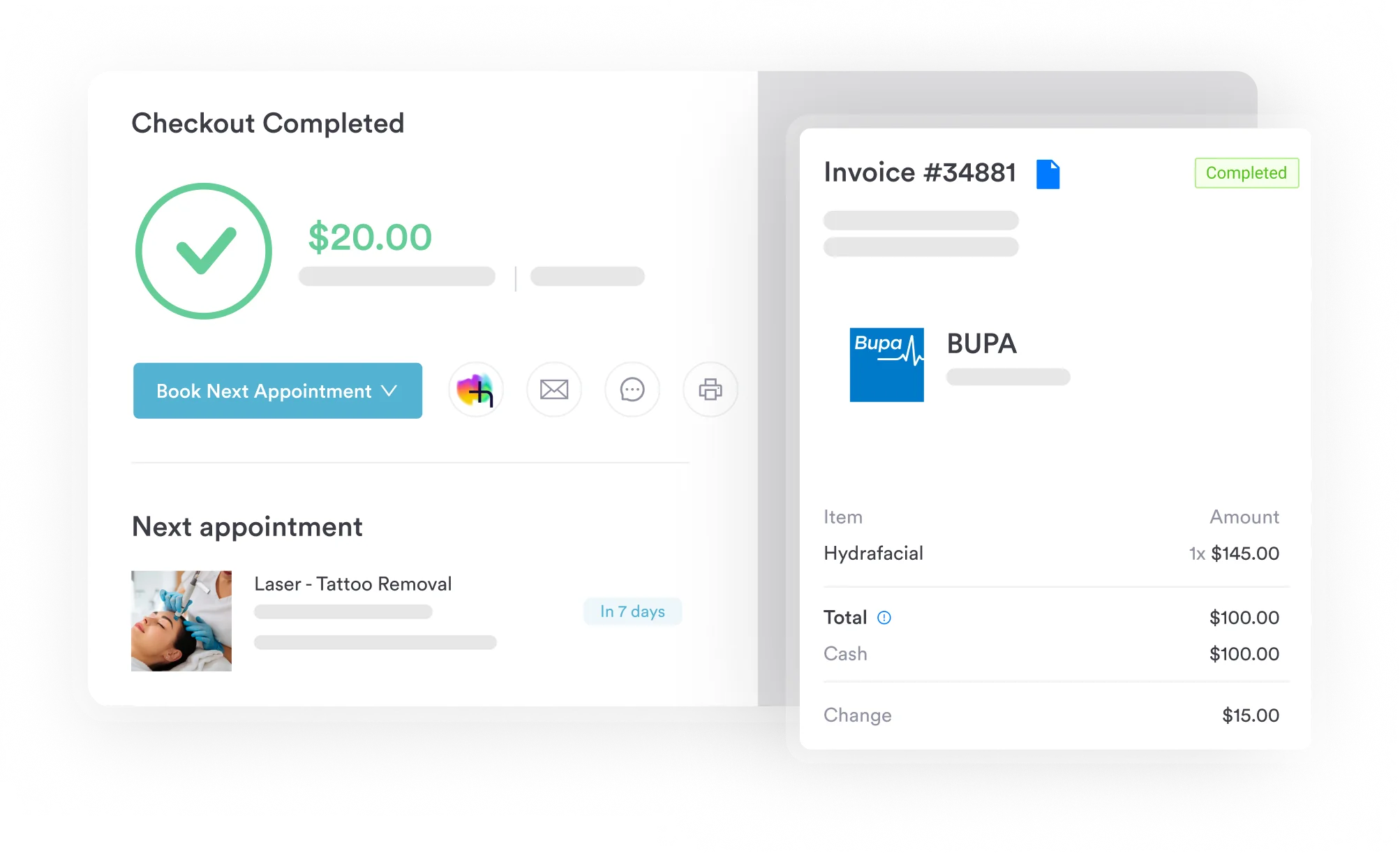
Practice management software like Pabau helps podiatry, dermatology, and emergency medicine practices apply modifier rules and submit clean 11760 claims through built-in claims management tools.
CPT Code 11760 is the procedure code for repair of the nail bed, covering surgical reconstruction or suturing of a damaged or lacerated nail bed. Coders routinely confuse it with nail removal codes (11730, 11740) or nail excision codes (11750, 11752), which leads to denials and underpayment.
Practices that handle nail trauma, post-surgical repair.
According to the American Medical Association (AMA), CPT Code 11760 sits within the Surgical Procedures on the Nails section (codes 11719 through 11765). Its official descriptor is: Repair of nail bed.
The procedure involves accessing the nail bed by removing the nail plate, suturing lacerations or repairing defects, and replacing the nail or applying a protective dressing. Skin grafting may be included when the defect is large enough to require it.
This code applies to traumatic nail bed injuries (crush injuries, lacerations from machinery or doors), post-surgical nail bed reconstruction, and repair following nail avulsion. It does not cover simple nail removal or nail matrix excision.
The nail procedure code family runs from 11719 to 11765, and code selection errors in this range are extremely common. A crush injury that required nail plate removal AND nail bed suturing is 11760, not 11730.
Billing the wrong code exposes the practice to both underpayment and potential audit risk. Review related CPT code guides to see how the same code-selection principles apply across specialties. CPT code 67904, for blepharoptosis repair, is picked on surgical approach and levator excursion rather than on how severe the droop looks.
Key distinction for 11760 vs 11762: If the repair requires a graft harvested from a separate donor site, code 11762 applies. If suturing alone closes the nail bed defect (with or without nail plate removal), 11760 is correct. Upcoding to 11762 when no graft was taken is an audit flag.
Similar code-family confusion shows up in dermatologic surgery.
Under CMS LCD A52998, Medicare covers nail procedure codes including CPT 11760 only when paired with a diagnosis code that establishes medical necessity. Submitting a claim without a covered ICD-10-CM code is the leading cause of preventable denial for this code. Practices should store approved pairings in their claims management software to prevent submission errors.
Always verify ICD-10 pairings against the current CMS LCD A52998 for your Medicare Administrative Contractor (MAC) region, as regional LCDs may impose additional coverage criteria. For digit-specific injuries, select the most specific laterality and digit codes available rather than defaulting to unspecified codes.
Trauma from a vehicle collision can bring an external cause code onto the claim beside the nail bed repair. ICD-10 code V47.1XXA carries an Excludes1 note against its traffic-accident equivalent V47.6, so one injury event never supports both.
Unspecified codes increase audit risk under Medicare. Keep documentation of ICD-10 pairing logic in your medical forms workflows.
Flag unspecified ICD-10 codes (those ending in A without digit/laterality detail) in your billing queue. For CPT 11760 claims, always specify the digit (thumb, index, great toe, etc.) and side (right vs left) in both the operative note and the diagnosis code selection. Specificity reduces denial rates and strengthens medical necessity documentation.
Our roundup of software for plastic surgery practices shows how documentation, photos, and billing fit together.
Modifier errors are the second most common denial trigger for nail bed repair claims, after missing ICD-10 codes. The right modifier depends on the clinical scenario: which digit, which side, whether an E/M service happened the same day, and whether multiple procedures were performed.
Payer policies vary, so treat the table below as general guidance and verify with each payer. Practices managing high nail procedure volumes benefit from HIPAA-compliant practice software that enforces modifier rules at claim creation.
Important: Modifier -25 attaches to the E/M code, not to CPT 11760 itself. A common billing error is appending -25 directly to the procedure code. When performing nail bed repair in an emergency department, the facility charges the ED E/M separately; the physician bills the procedure code with the appropriate digit modifier.
Medicare reimburses CPT Code 11760 based on the Medicare Physician Fee Schedule (MPFS), calculated using the Resource-Based Relative Value Scale (RBRVS). Reimbursement varies by place of service and geographic locality.
Based on a work RVU of approximately 1.59, practice expense RVU of approximately 3.81, and malpractice RVU of approximately 0.19, the 2026 national average reimbursement for CPT 11760 is approximately $180-$190 for non-facility settings and approximately $100-$110 for facility settings. Confirm the exact rate against the CMS MPFS lookup tool for your specific locality.
Use the FastRVU 2026 RVU lookup to pull the current Work RVU, Practice Expense RVU, and Malpractice RVU for your region.
Place of service significantly affects reimbursement. When the procedure is performed in a hospital outpatient department or ambulatory surgical center (facility setting), the physician receives the lower facility rate because the facility separately bills its own overhead costs. In an office-based practice (non-facility), the physician rate is higher to cover practice expenses.
Podiatry practices see this same facility/non-facility split on other codes.
Private payer rates for CPT 11760 are contract-specific and not publicly disclosed. Most commercial insurers use Medicare rates as a benchmark, paying anywhere from 100% to 150% of Medicare depending on the contracted fee schedule.
Always verify your contracted rate through your payer portal before assuming reimbursement amounts. Posting contracted rates in your digital intake forms and financial policy documentation helps set patient expectations before service delivery.
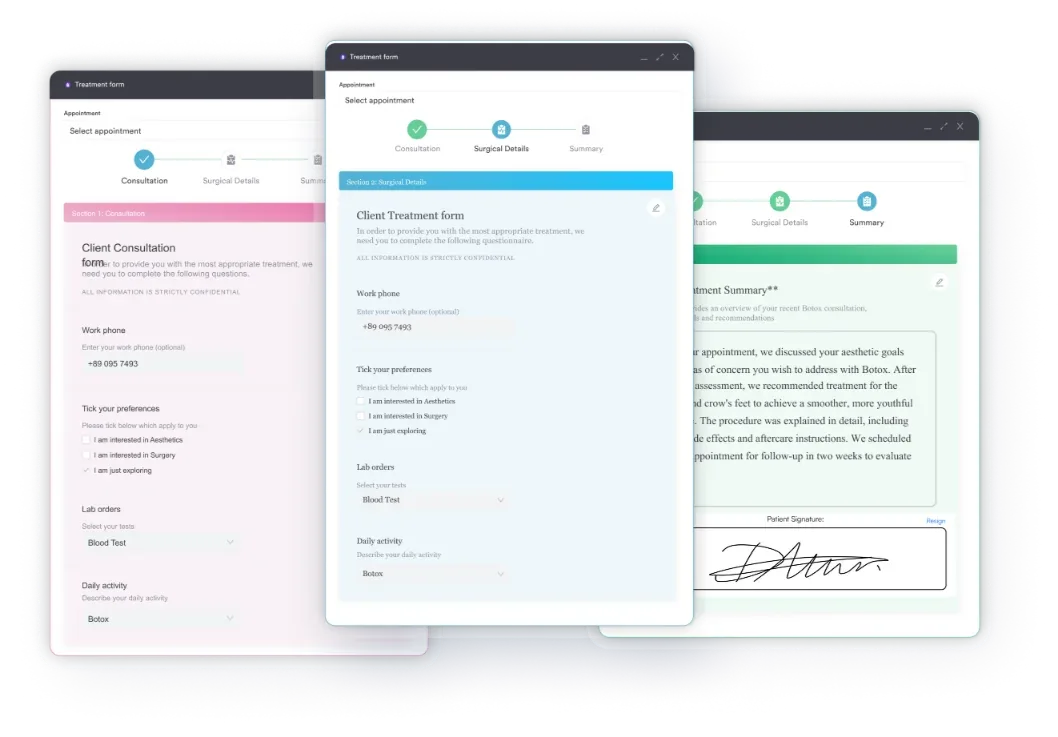

Pabau’s claims management tools help podiatry and dermatology practices apply the right modifiers, pair correct ICD-10 codes, and submit clean CPT 11760 claims the first time. Fewer denials, faster reimbursement.

Clean claims for nail bed repair start with the operative note. Payers and auditors look for specific documentation elements to confirm that CPT 11760 was medically necessary and that the procedure described matches the billed code.
Inadequate documentation is the third most common denial reason for this code. Following HIPAA compliance guidelines extends to documentation retention: nail procedure records must be retained per state law and federal guidelines.
Your procedure note for CPT 11760 must include:
Anesthesia documentation follows the same logic across specialties.
Digital documentation tools built into skin clinic software can template these elements into the operative note, reducing the risk of incomplete documentation at claim submission.
For practices using electronic health records, embedding a nail bed repair procedure note template ensures consistency across providers. Review practice management software features that support structured procedure note capture for surgical billing workflows.
Nail bed repair claims have a higher-than-average denial rate in emergency medicine and podiatry settings, primarily due to a handful of recurring errors. Understanding these patterns prevents revenue leakage and reduces the administrative burden of appeals. Tracking denial patterns through EHR integration with your billing system is the most efficient way to catch these systematically.
CPT 11760 carries a 10-day global surgical period under the Medicare global surgery policy, though this should be verified in the AAPC code reference and the CMS global period lookup for the most current assignment. Within this 10-day window, certain services are bundled into the procedure payment and cannot be billed separately.
Billing routine post-operative nail checks separately within the 10-day global window is a common compliance error that can trigger overpayment demands on audit. Build a flag into your scheduling workflow for patients returning within 10 days of CPT 11760. Practices using patient data security tools built into their EHR can automate global period tracking to prevent inadvertent duplicate billing. Payment posting from a remittance file is faster than manual entry and keeps the adjustment reasons attached.
Manual nail bed repair billing workflows create avoidable errors: coders rely on memory for modifier combinations, ICD-10 pairings get missed under volume pressure, and global period violations slip through without a system alert.
Practice management platforms address each of these failure points through structured billing workflows. The CPT code billing patterns used for other surgical procedures in the same specialty follow the same structural logic.
Pabau’s claims management tools support nail procedure billing through built-in code templates, modifier enforcement rules, and claim scrubbing before submission. Practices billing CPT 11760 across podiatry, dermatology, and emergency medicine can configure payer-specific modifier requirements once and apply them consistently across every claim.
The system flags missing ICD-10 pairings and incorrect place-of-service codes before the claim leaves the practice, reducing the back-and-forth of denial appeals.
For practices managing high procedure volumes, reviewing available automation features that support surgical billing workflows helps identify where technology replaces manual coder review. Clean claims submitted the first time cost significantly less per encounter than the rework cycle of denial, appeal, and resubmission.
CPT Code 11760 is a straightforward code with a deceptively high denial rate caused by missing modifiers, wrong ICD-10 pairings, and incomplete documentation. The difference between a clean 11760 claim and a denial is almost always in the operative note and the modifier selection, not the procedure itself.
Pabau’s claims management tools help podiatry, dermatology, and emergency medicine practices encode modifier rules, store approved ICD-10 pairings, and flag global period conflicts before claims leave the building. Fewer corrections, faster payment. To see how Pabau handles nail procedure billing workflows, book a demo with the team.

Treating a nail condition that needs its own diagnosis code? L62 covers nail disorders in diseases classified elsewhere and pairs naturally with CPT 11760 documentation.
Need the full breakdown on nail matrix excision billing? CPT 11750 covers the excision-and-matrix-destruction pathway that’s easy to confuse with a straightforward nail bed repair.
Billing an add-on nail avulsion procedure? CPT 11732 walks through the add-on code rules for additional nail plates removed in the same session.
CPT Code 11760 is the procedure code for repair of the nail bed. It covers surgical reconstruction or suturing of a damaged or lacerated nail bed, which may include removal of the nail plate and, when necessary, skin grafting to close the defect. It is used for traumatic nail bed injuries, crush injuries, and post-surgical nail bed repair.
The 2026 Medicare national average for CPT 11760 is estimated at approximately $180-$190 for non-facility settings and approximately $100-$110 for facility settings such as hospital outpatient departments. Verify the exact rate for your geographic locality using the CMS Medicare Physician Fee Schedule lookup tool, as GPCI adjustments vary by region.
The most commonly used modifiers with CPT 11760 are digit-specific modifiers (-FA through -F9 for fingers, -TA through -T9 for toes), laterality modifiers (-RT/-LT), modifier -25 on a same-day E/M code, modifier -51 for multiple procedures, and modifier -59 or -XS for distinct procedural services. Modifier usage varies by payer.
Covered ICD-10-CM codes for CPT 11760 under Medicare LCD A52998 include digit-specific open wound codes (S61.0xxA series for fingers, S91.2xxA series for toes), nail disorder codes (L60.0, L60.8), and mechanism codes (W45.0XXA). Always select the most specific digit and laterality available to reduce denial risk.
CPT 11760 covers repair of the nail bed (suturing a lacerated or damaged nail bed), while CPT 11750 covers excision of the nail and nail matrix, either partial or complete, as performed for conditions like severe ingrown toenail with matrix destruction. The key distinction is that 11760 is restorative (repair), and 11750 is ablative (permanent removal).
CPT 11760 carries a 10-day global surgical period. Within this window, routine post-operative care such as wound checks, dressing changes, and suture removal is bundled into the procedure payment and cannot be billed separately. Unrelated conditions and return-to-OR complications can be billed with appropriate modifiers (-24, -78, -79).



