CPT code 93503: Swan-Ganz catheter billing and modifiers
CPT code 93503: Official descriptor and procedure overview In the AMA CPT code s...

Last Updated: Oct 23, 2026

CPT Code 11771 describes extensive excision of a pilonidal cyst or sinus requiring deep subcutaneous dissection — distinct from the simpler 11770 and more complex 11772.
The code carries a 90-day global period. Post-operative E/M visits within that window are bundled unless a separately identifiable condition is billed with modifier 24.
Most coders misapply 11771 when operative notes fail to document the depth of dissection and wound size — without that language, payers will downcode to 11770.
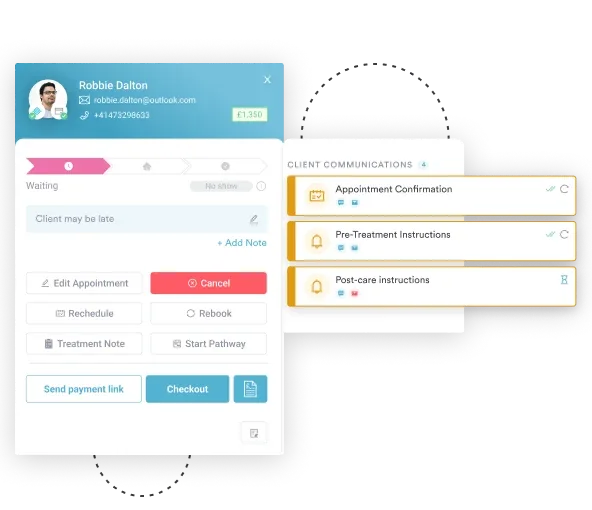
Practice management software like Pabau keeps claim status, insurer routing, and payment reconciliation for CPT Code 11771 in one dashboard, so a downcoded or rejected claim does not sit unnoticed in someone’s queue.
CPT Code 11771 is one of three codes in the pilonidal cyst excision family, and it is the one most frequently miscoded.
The official AMA CPT code set descriptor reads: Excision of pilonidal cyst or sinus; extensive. That single word, “extensive,” is what separates this code from its siblings and what payers scrutinize most closely on audit.
A pilonidal cyst (also called a pilonidal sinus or sacrococcygeal cyst) develops in the cleft of the buttocks near the coccyx, typically when hair follicles become impacted and infected. Surgical excision is indicated when conservative measures fail or when abscess formation recurs.
Practices billing for these procedures on behalf of general surgeons or colorectal surgeons will encounter all three codes in the 11770-11772 range. Getting the right one starts with a clear read of the operative note.
For surgical practice administrators who also manage plastic surgery EMR workflows, the documentation logic is the same across integumentary excision codes.
The three codes in this family share a parent section but describe meaningfully different procedures. Selecting the wrong one risks a claim denial or an audit flag for upcoding.
CPT Code 11771 sits in the middle of this range. The word “extensive” refers to the depth and breadth of subcutaneous dissection required — not the size of the external skin opening.
A surgeon who removes a large cyst through a relatively small incision but performs deep tissue dissection has documented 11771-level work, provided the operative note captures it. The same logic of choosing between simple, extensive, and complicated levels shows up in other code families.
The decision tree is straightforward in practice. Use 11770 when the surgeon removes a small, uncomplicated cyst with minimal tissue disruption and primary closure.
Use CPT Code 11771 when the operative note describes wide excision into subcutaneous fat and the wound is either packed open or closed with tension. Use 11772 when the anatomy is distorted by prior surgery, multiple sinus tracts exist, or a flap is required for closure.
Every CPT Code 11771 claim requires a supporting diagnosis code from the ICD-10-CM system. The two primary codes for pilonidal disease are L05.01 and L05.91, and choosing between them depends on whether the cyst is infected at the time of surgery.
L05.01 and L05.91 are the primary pairing codes for CPT Code 11771 across standard coding crosswalks. The distinction matters for coverage too: some payers apply different medical necessity criteria depending on whether an abscess is documented.
That same principle holds across ICD-10 more broadly: the diagnosis code must reflect the condition at the time of service, not the chronic history.
For additional ICD-10 crosswalk methodology, the AAPC Codify CPT lookup provides paired code references by CPT code.
Modifiers alter how CPT Code 11771 is interpreted by payers. Using the wrong modifier, or omitting one when required, is a fast path to denial or audit. The most common modifiers for this code fall into three categories: complexity, bilateral/multiple procedure, and global period exceptions.
Modifier 22 warrants extra attention. Using it with CPT Code 11771 is supported by standard CPT modifier guidance, but the documentation requirement is significant — the operative note must spell out precisely what made this excision more complex than the typical extensive case.
Payers do not accept vague language. Attaching modifier 22 without a supporting report that quantifies the additional work triggers manual review and frequently results in denial.
Practices that track documentation-driven audit triggers across their coding mix will recognize the same pattern in unrelated codes.
Modifier choice can also decide which provider gets paid. A medically directed liver transplant under CPT code 00796 pays QK or QY to the anesthesiologist and QX to the CRNA, half each.
Skin procedure documentation gets demanding fast, so plastic surgery EMR software with photo and consent tools helps.
Medicare reimburses CPT Code 11771 under the Physician Fee Schedule (MPFS), with payment varying by place of service and geographic location. The CMS fee schedule lookup is the authoritative source for current-year rates.
The distinction between facility and non-facility payment is one of the most practical differences billing staff need to understand.
When CPT Code 11771 is performed in a physician’s office (place of service 11), Medicare pays the non-facility rate because the practice bears the overhead.
When performed in an outpatient hospital (POS 22) or ASC (POS 24), Medicare pays the lower facility rate instead, because the facility receives a separate payment for overhead. The difference matters for surgical practices deciding where to schedule these cases.
Exact 2026 dollar values vary by Medicare Administrative Contractor (MAC) locality and should be pulled from the FastRVU lookup tool or directly from the CMS MPFS search.
Geographic Price Cost Indexes (GPCI) mean a practice in Manhattan will receive a meaningfully different payment than the same code in rural Mississippi. Always verify current-year rates before setting patient cost estimates.
Run CPT Code 11771 through the CMS Physician Fee Schedule lookup before every payer contract negotiation. The facility/non-facility rate split determines whether in-office surgical suites are financially viable for pilonidal cyst volume at your practice.
CPT Code 11771 carries a 90-day global period (designated “090” in the Medicare Physician Fee Schedule Database). This is confirmed via CMS MPFSDB data and aligns with its classification as a major surgical procedure. Understanding what falls inside that window prevents both under-billing and improper claim submission.
Services bundled into the 90-day global period include the day before and the day of surgery, the immediate post-operative period, and all post-surgical care directly related to the pilonidal cyst excision for 90 days after the procedure date. Billing a standard office visit during this period for wound checks related to the original surgery will result in denial. Checking insurance eligibility before the visit catches terminated coverage while the appointment can still be rescheduled. Two practices can bill the same encounter at a different visit level, and the note settles which was right.
Practices that use automated billing workflows can flag global period windows by procedure date, reducing the risk of staff inadvertently submitting a bundled visit as a separate charge. Tracking the 90-day window manually across a high-volume surgical practice is where errors compound. For related CPT billing strategies.
The single most common reason CPT Code 11771 gets downcoded to 11770 is a vague operative note. Payers define “extensive” by what appears in the documentation, not by what the surgeon performed.
An operative note that reads “excision of pilonidal cyst, wound closed” supports 11770. An operative note that describes wide excision extending into the subcutaneous fat, wound dimensions, and the decision to leave the wound open or close under tension supports 11771.
Medical necessity must be established before the operative note. The pre-operative record should document the patient’s history of failed conservative treatment, prior incision and drainage if applicable, and the clinical decision to proceed with excision.
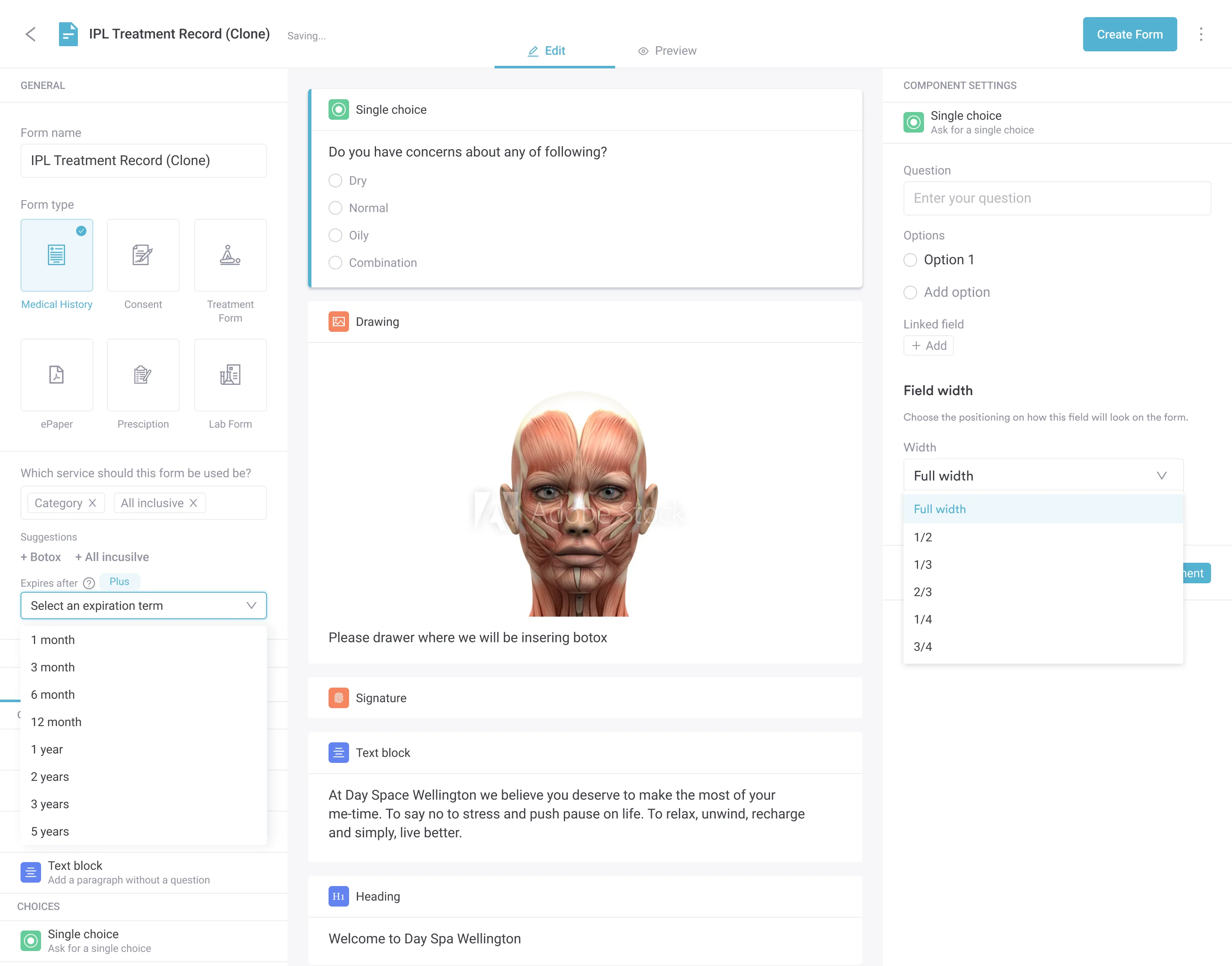
Practices that manage digital intake forms electronically have an advantage here: structured pre-operative questionnaires capture the history systematically, so less is missing when a payer audits the record.
Maintaining HIPAA-compliant documentation practices also ensures the audit trail is intact if a payer requests records.
The National Correct Coding Initiative (NCCI) establishes code pairs that Medicare considers bundled. Billing both codes in a bundled pair for the same patient on the same date without a qualifying modifier results in denial of the secondary code.
For CPT Code 11771, the key bundling scenarios involve wound closure and simple excision codes.
11770 and 11771 cannot be billed together for the same surgical site. If a surgeon excises one cyst requiring simple technique and a second cyst requiring extensive technique during the same session, the documentation must clearly support separate anatomical sites to justify unbundling with modifier 59.
The modifier indicator in the NCCI table determines whether modifier 59 is even available. A “0” indicator means the edit is absolute and cannot be overridden, while a “1” indicator means modifier 59 may apply.
Billing staff should pull the current NCCI table for these code pairs rather than relying on memory. The same NCCI logic applies to unrelated code pairs.

Pabau’s claims management software puts every claim’s status, insurer routing, and payment reconciliation on one dashboard, so your surgical billing team can see where an 11771 claim stands without switching systems.

Three billing errors account for the majority of CPT Code 11771 claim problems. Each has a clear corrective action.
The operative note says “excision of pilonidal cyst” with no further detail. The payer downcodes to 11770. The fix is upstream: surgeons need a documentation template that prompts for depth of dissection, wound dimensions, and wound management rationale.
Practice management software like Pabau will not catch a vague operative note.
The mirror error occurs when billing staff default to 11772 for any surgical excision, assuming it always pays more. Without documented sinus tracts, flap closure, or prior surgical distortion, an 11772 claim for what the note describes as extensive excision is upcoding.
Payers that identify this pattern flag the practice for recoupment. Code to what the note says, every time.
An office-performed procedure submitted with POS 22 (outpatient hospital) results in a lower facility reimbursement when the non-facility rate should apply. The reverse also happens: a hospital-performed case coded as POS 11 triggers a mismatch that prompts payer review.
The place of service on the claim must match where the procedure took place. Tracking this systematically across a surgical caseload is a function that practice management software handles by linking the scheduler’s location data to the billing record automatically.
For dermatology and skin surgery-adjacent practices.
Complex surgical codes like CPT Code 11771 sit at the intersection of documentation quality, modifier logic, and global period tracking. Each of those functions has historically lived in a different system. That fragmentation is where billing errors breed.
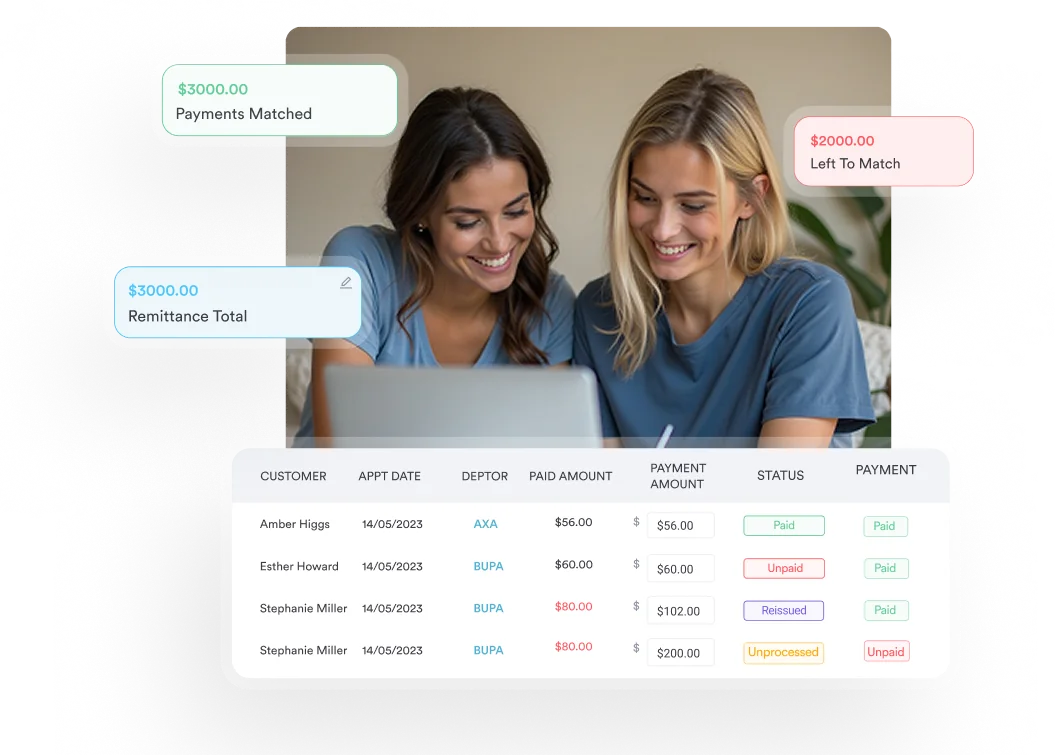
Practice management software like Pabau brings the claim itself under one roof, even if it cannot referee the coding decision. Its claims management software gives surgical practices a single dashboard for every 11771 claim’s status — pending, submitted, processing, paid, or error.
Each claim routes to the correct insurer automatically, based on the policy saved on the patient record, and goes out from the same dashboard with the invoice attached and the status updated the moment it’s sent.
Background validation confirms that details like membership numbers and authorization codes are in place before the send button unlocks. Once a payer pays, that payment reconciles against the original invoice from the same screen.
None of that replaces a well-documented operative note. It does mean the administrative side of an 11771 claim — who it went to, what stage it’s at, and whether it’s been paid — isn’t scattered across separate systems.
Most CPT Code 11771 denials and downcodes trace back to one root cause: the operative note doesn’t say “extensive” in a way payers recognize. The code is valid, the procedure was performed, but the documentation doesn’t carry the claim. Fixing that is a documentation workflow problem, not a coder problem.
Practice management software like Pabau will not rewrite a vague operative note. It does keep every 11771 claim’s status, insurer routing, and payment reconciliation on one dashboard, so a downcode or a stalled claim doesn’t sit hidden in someone’s inbox.
If your team manages high-volume pilonidal cyst billing, book a demo to see how the claims workflow fits alongside the rest of your surgical billing process.

Coding an immune platelet disorder? ICD-10 code D69.3 coding guide covers immune thrombocytopenic purpura and why it applies only once secondary causes of low platelets are excluded.
CPT Code 11771 is used to bill for the extensive excision of a pilonidal cyst or sinus, a procedure involving deep subcutaneous dissection in the sacrococcygeal region. It is the middle-complexity code in the 11770-11772 family, used when the procedure requires more than minimal dissection but does not involve the complicating factors (sinus tracts, flap closure, prior surgery) that define 11772.
CPT 11770 covers simple excision with minimal tissue disruption. 11771 covers extensive excision with deep subcutaneous dissection, and the wound may be left open or closed. 11772 covers complicated excision involving additional complexity such as multiple sinus tracts, flap closure, or a surgically distorted field from prior procedures. Code selection is driven by the operative note, not by external wound size.
CPT Code 11771 has a 90-day global period. All post-operative care directly related to the pilonidal cyst excision is bundled into the surgical fee for 90 days following the procedure. Separately billable services during this window require modifiers 24 (unrelated E/M), 78 (return to OR for complication), or 79 (unrelated surgical procedure).
The most commonly applied modifiers are 22 (increased procedural complexity, requires detailed operative documentation), 51 (multiple procedures in the same session), 59 (distinct procedural service for NCCI edit override where the modifier indicator permits), 78 (return to OR for related complication), and 79 (unrelated surgery during global period). Modifier 24 applies to E/M visits for unrelated conditions during the 90-day global window.
The primary ICD-10 diagnosis codes paired with CPT Code 11771 are L05.01 (pilonidal cyst with abscess) and L05.91 (pilonidal cyst without abscess). L05.02 (pilonidal sinus with abscess) and L05.92 (pilonidal sinus without abscess) are used when the presentation is a sinus tract rather than a discrete cyst. The abscess vs no-abscess distinction affects medical necessity criteria for some commercial payers.
Yes, CPT Code 11771 is generally payable in an ambulatory surgical center (ASC) setting, with the ASC receiving a separate payment under the CMS ASC payment system. The physician receives the facility rate rather than the non-facility rate in this setting. Practices should verify the current ASC payment indicator in the CMS ASC payment file annually, as ASC payability status is subject to CMS updates.
The operative note must document: anatomical site and patient positioning, depth of subcutaneous dissection, wound dimensions (length, width, depth), presence of abscess or sinus tracts, wound management decision (open packing vs primary closure vs partial closure), and estimated blood loss. Pre-operative records establishing medical necessity (failed conservative treatment, prior I&D, symptom duration) are also required for payer audit readiness.
Medicare reimbursement for CPT Code 11771 varies by place of service and geographic locality. The non-facility rate (office setting) is higher than the facility rate (outpatient hospital or ASC). Exact 2026 values should be pulled from the CMS Physician Fee Schedule lookup tool using your MAC locality, as Geographic Price Cost Indexes (GPCI) create meaningful rate differences across regions.