CPT code 93503: Swan-Ganz catheter billing and modifiers
CPT code 93503: Official descriptor and procedure overview In the AMA CPT code s...

Last Updated: Oct 23, 2026

CPT Code 01965 reports anesthesia for a spontaneous incomplete or missed abortion, not an elective termination.
The code carries 4 base units, and total billing combines those with time units calculated in 15-minute intervals.
Billing 01965 for an induced abortion is a common audit trigger, since elective terminations require CPT 01966 instead.
Practice management software like Pabau keeps time documentation and modifier selection together in one anesthesia record.
CPT Code 01965 is the anesthesia code for a spontaneous incomplete or missed abortion, distinct from CPT 01966, which covers induced abortion. As a result, correct billing depends on confirming the procedure was spontaneous and, in turn, documenting the anesthesia start and stop times needed for the time-unit calculation.
Specifically, this reference covers the code description, base units, time calculation, modifiers, ICD-10 pairings, reimbursement, related codes, documentation requirements, and common billing errors.
CPT Code 01965 is the AMA-maintained code for anesthesia services provided during incomplete or missed abortion procedures. In both cases, the procedure is a spontaneous obstetric event, not an elective intervention.
An incomplete abortion occurs when a spontaneous pregnancy loss leaves retained products of conception in the uterus, requiring surgical or medical management. By contrast, a missed abortion is a pregnancy in which fetal demise has occurred but has not been expelled. Either way, both conditions require clinical intervention, and when anesthesia is administered, CPT Code 01965 applies. Accordingly.
CPT Code 01965 carries 4 base units, as assigned by the American Society of Anesthesiologists (ASA) relative value guide and confirmed by CMS. In other words, base units reflect the inherent complexity of the procedure, independent of how long anesthesia is administered.
Total anesthesia billing adds time units to the base units. Specifically, CMS calculates time units at one unit per 15 minutes of anesthesia time. Putting those two together, the resulting formula is straightforward: (Base units + Time units) x Conversion factor = Allowable payment. For example, for a procedure lasting 45 minutes, that is 4 base units plus 3 time units, totaling 7 units before applying the conversion factor.
The conversion factor itself varies annually and by geography. Because of that, consult the CMS Physician Fee Schedule lookup for the current year’s anesthesia conversion factor in your locality. Meanwhile, practices that keep time documentation inside their practice management system can flag missing anesthesia times before submission.

Confusing 01965 and 01966 is the single most common audit trigger in obstetric anesthesia billing. Specifically, the distinction is clinical, not administrative: 01965 applies to spontaneous events (incomplete or missed abortion); 01966 applies to induced (elective) abortion. Consequently, billing 01966 when the procedure was a spontaneous loss constitutes upcoding and exposes the practice to recoupment and investigation.
The operative note and anesthesia record must clearly state whether the abortion was spontaneous or induced. For that reason, auditors cross-reference the ICD-10 diagnosis code against the CPT code billed. As a result, a spontaneous-loss ICD-10 paired with CPT 01966 is an automatic flag.
Always verify the procedure type in the operative note before assigning CPT 01965 or 01966. Confirm whether the abortion was spontaneous (01965) or elective (01966). Payer audits routinely cross-reference the ICD-10 code against the CPT code billed, and a mismatch is an automatic denial trigger.
Because anesthesia claims hinge on time units and modifiers, claims management software helps catch errors before payers do.
Anesthesia billing requires a modifier identifying the provider’s role in the anesthesia care. Consequently, submitting CPT Code 01965 without a modifier will result in denial from most payers. In turn, the correct modifier depends on whether the anesthesiologist personally performed the service, medically directed CRNAs, or a CRNA billed independently.
Modifier selection depends on actual provider role and payer policy. Therefore, verify each payer’s specific rules before billing, since commercial payers sometimes differ from Medicare definitions. In addition.
Every CPT 01965 claim requires a supporting ICD-10-CM diagnosis code to establish medical necessity. Specifically, the diagnosis must reflect the spontaneous nature of the abortion event. As a result, payers cross-reference the ICD-10 code to confirm the procedure type matches the CPT code billed.
These ICD-10 codes are commonly paired with CPT 01965 based on typical crosswalk data. However, they are not a guarantee of coverage, and payers may require additional supporting documentation. For instance. Either way, verify applicability against the current ICD-10-CM guidelines from the CMS ICD-10 codes page.
Medicare reimbursement for CPT Code 01965 uses the standard anesthesia formula: total units (base plus time) multiplied by the Medicare anesthesia conversion factor. The conversion factor is updated annually by CMS and varies by geographic locality. As a result, no single national dollar figure applies to all practices.
Practices should confirm rates directly with each payer. After all, reimbursement data published on third-party sites may not reflect the current year or your locality. For that reason.
CPT 01965 sits within the obstetric anesthesia subsection of the CPT code set. As a result, understanding adjacent codes reduces selection errors when the clinical situation changes. In particular.
Base unit values for adjacent codes are sourced from the ASA relative value guide and reflect general published values. Therefore, verify against the current year’s ASA guide or the AAPC Codify CPT lookup before billing.
An accurate CPT Code 01965 claim depends entirely on the quality of documentation in the anesthesia record and operative note. In fact, missing or ambiguous documentation is the fastest path to a denial. Notably.
Using digital clinical forms built around anesthesia documentation requirements can reduce the risk of missing fields at the point of care. Specifically, purpose-built anesthesia record templates prompt for all required data before the record is closed. In addition.

Anesthesia billing for obstetric procedures generates a distinct pattern of errors. Specifically, these are the ones most likely to trigger a denial or audit for CPT Code 01965.
Practices can reduce these errors significantly by building pre-submission edit rules into their billing workflow. For example, Pabau’s patient record system keeps anesthesia documentation and billing data in the same environment, reducing transcription errors between the clinical record and the claim. In addition.
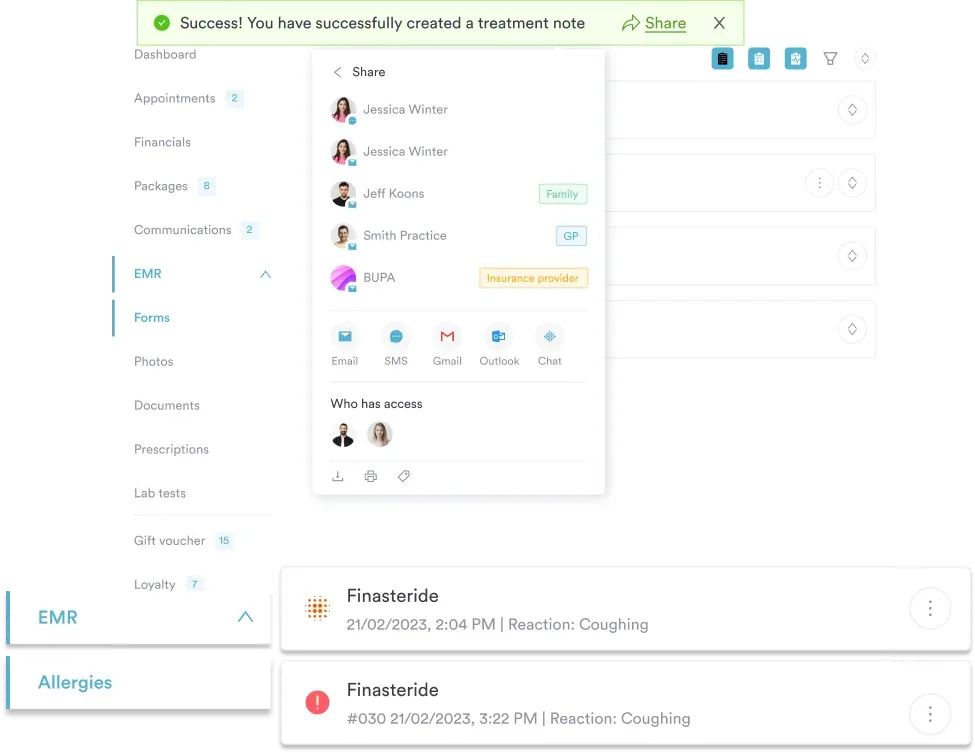
Many anesthesia and OB/GYN teams still track start and stop times on a paper anesthesia record. Afterward, they re-key the provider role, modifier, and diagnosis code into a separate billing system. As a result, each transfer is a chance for a missing field or a mismatched code to slip through.
Practice management software like Pabau keeps the anesthesia record, treatment note, and diagnosis code in the same patient chart. As a result, the details a coder needs are already there when the claim is prepared. In addition, digital forms prompt for anesthesia start and stop times before the record can close. Similarly, the physical status modifier sits alongside the rest of the visit documentation.
The result is fewer claims held up by a missing time entry or an unmatched ICD-10 code. As a result, staff also spend less time chasing down the operative note after the fact.

Pabau’s digital forms and patient records keep anesthesia time documentation, provider role, and diagnosis codes together in one chart. OB/GYN and anesthesia teams submit cleaner claims as a result.

Getting CPT Code 01965 right comes down to two things. First, confirm the procedure was a spontaneous event, not elective, and second, document anesthesia time with the correct provider-role modifier. Together, these two steps determine whether a claim pays cleanly or triggers a denial. Ultimately, the 01965 vs 01966 distinction is the costliest mix-up in this section, and clear documentation at the point of care avoids it entirely. Denials on this code repeat until someone reads the pattern rather than reworking each claim. Practices that review a sample of notes each month catch documentation level drift before a payer does.
Practice management software like Pabau keeps the anesthesia record, treatment note, and billing details in one patient file. As a result, that closes the gap between what was performed and what was submitted. Book a demo to see how the workflow supports anesthesia and OB/GYN billing.

Coding an elective termination instead of a spontaneous loss? CPT 01966 covers the induced-abortion anesthesia code and its own audit triggers.
Need the surgical side of an incomplete abortion claim? CPT 59812 walks through billing the surgical treatment of an incomplete abortion.
Building out the ICD-10 side of an obstetric claim? O87.9 covers a related postpartum complication code worth knowing.
Still coding zoledronic acid with a deleted code? J3487 crosswalk billing guide explains the switch to J3489 and its covered-indication rule.
Billing a Humate-P infusion and second-guessing the units? Humate-P billing guide shows how a 1,500 IU dose converts to 15 billable units.
CPT Code 01965 is used to report anesthesia services provided during incomplete or missed abortion procedures. Both are spontaneous obstetric events, not elective terminations. Specifically, the code is assigned by the anesthesiologist or CRNA billing for the anesthesia component of the procedure. As a result, it’s separate from the surgical CPT code used by the obstetrician.
CPT 01965 carries 4 base units. In addition, total reimbursement adds time units, one per 15 minutes of anesthesia, to the 4 base units. Then, multiply that total by the Medicare anesthesia conversion factor for your locality and year.
There is no single national rate. Instead, Medicare payment for CPT 01965 equals total units (4 base units plus time units). Then, multiply that by the annual Medicare anesthesia conversion factor for your geographic locality. For that reason, consult the CMS Physician Fee Schedule lookup tool for the current rate in your area.
Medicaid coverage for CPT 01965 generally applies because the procedure involves a spontaneous pregnancy loss rather than an elective termination. However, rates, prior authorization requirements, and coverage conditions vary significantly by state. Therefore, contact your state Medicaid agency or check your state’s fee schedule for current reimbursement information.