



CCSD code G5100: Bypass of duodenum billing guide
CCSD code G5100 bills a bypass that leaves the duodenum in place CCSD code G5100...

Last Updated: Oct 16, 2026

CPT code 01432 covers anesthesia for arteriovenous fistula procedures on the veins of the knee and popliteal area, carrying 6 ASA base units.
It’s a child code under 01430. Routine venous work like varicose vein stripping and endovenous ablation belongs under 01430, not 01432.
Reimbursement follows (Base Units + Time Units) x Conversion Factor, and six modifiers, AA, QZ, QK, QX, QY, and AD, determine who gets paid and how much.
Practice management software like Pabau helps anesthesia billing teams log provider type, start and stop times, and ASA status in one record, so claims leave the practice with the documentation payers expect.
CPT code 01432 is the anesthesia code for repairing an arteriovenous fistula in the veins of the knee and popliteal area. It carries 6 base units. That’s a narrow, specific scope, not a catch-all for every vein procedure in the region.
Coders often reach for 01432 out of habit, because “knee and popliteal veins” sounds like it should cover varicose vein stripping or endovenous ablation too. It doesn’t. The sections below walk through the descriptor, the base units, the modifiers, and the ICD-10 codes that belong on a 01432 claim.
The American Medical Association (AMA), which owns and maintains the CPT code set, assigns 01432 this exact official descriptor:
Official descriptor: “Anesthesia for procedures on veins of knee and popliteal area; arteriovenous fistula.”
That single line does a lot of work. It names the anatomy: the knee and the popliteal fossa, the hollow behind the knee where the popliteal vein runs before becoming the femoral vein. It also names the vessel type, a vein rather than an artery, and the exact clinical scenario.
01432 sits as an indented child code under 01430 in the CPT anesthesia section, inside the Knee and Popliteal Area subsection (01320–01444). Read the relationship this way: bill 01430 for venous work in this region. The exception is when the procedure is for an arteriovenous fistula. Then 01432 applies instead.
Clinically, that AV fistula is often iatrogenic. It’s a rare but documented complication of knee arthroscopy and total knee arthroplasty. An instrument injures the popliteal artery and vein together, creating a direct connection between them. When a surgeon goes back in to repair that fistula, 01432 describes the anesthesia for that repair. It doesn’t describe the anesthesia for the original knee procedure that caused it. A service billed to Australian Medicare needs the matching schedule item and the documentation the descriptor asks for. Practices that review a sample of notes each month catch documentation level drift before a payer does.
Both anesthesiologists and Certified Registered Nurse Anesthetists (CRNAs) can report CPT code 01432, subject to the modifier and state supervision rules covered further down.
Pabau helps anesthesia billing teams capture the provider type and case details in one structured record at the point of care. Billers then have accurate documentation to work from when they choose the modifier.
CPT code 01432 carries 6 anesthesia base units, as assigned by the American Society of Anesthesiologists (ASA) Relative Value Guide. That’s double its parent code’s value: 01430 (venous procedures, not otherwise specified) carries 3.
Base units reflect the complexity of the procedure itself. They don’t move with time or patient status; those get captured separately.
Anesthesia reimbursement never uses the standard Medicare physician fee schedule that surgical CPT codes use. It runs on a unit-based formula instead, codified by the Centers for Medicare and Medicaid Services (CMS) in the Medicare Claims Processing Manual, Chapter 12:
(Base Units + Time Units) x Conversion Factor = Reimbursement
Time starts when the anesthesia provider begins prepping the patient for induction, and it ends when that provider is no longer in personal attendance. Get the start and stop times wrong, and the whole claim is wrong, not just the time-unit line.
Take a 45-minute arteriovenous fistula repair in the popliteal vein, billed to a payer using a $22.00 conversion factor. That figure is illustrative, not a real payer rate. Confirm the current conversion factor for your locality and billing year before you submit anything.
This example uses illustrative figures only. For the real, locality-adjusted conversion factor, check the CMS Anesthesiologists Center, which publishes the annual Anesthesia Conversion Factor addendum.
A general Medicare RVU lookup tool prices surgical CPT codes by relative value units. It doesn’t carry anesthesia base units or anesthesia-specific conversion factors, so it won’t return a usable number for CPT code 01432.
Log anesthesia start and stop times in the record as the case happens, not after it wraps. Reconstructed times are one of the fastest ways to trigger an audit request on a 01432 claim. The time-unit math has to tie out exactly to what’s documented.
CMS requires a modifier on every anesthesia claim to identify who provided the care and under what arrangement. Submitting 01432 without one will get the claim rejected by most payers. Six modifiers routinely apply here:
QK and QX are always billed as a pair: one on the directing physician’s claim, one on the CRNA’s claim. Miss either half, and the practice leaves money uncollected. AD looks like just another direction modifier, but it isn’t. It pays differently, and the next section covers exactly how.
A quick check before you pick a modifier: does the state require physician supervision for CRNAs? Opt-out states let a CRNA bill QZ without it. Everywhere else, a CRNA working under a physician bills QX, and the physician bills QK or QY on a separate claim.

Pabau’s claims management tools help anesthesia practices capture the right CPT code, attach the correct modifier pair, and track reimbursement outcomes, all within one practice workflow.

Medicare uses the same base-unit-plus-time-unit formula described above, then applies a locality-specific conversion factor. CMS updates that factor every year alongside the Medicare Physician Fee Schedule.
Because Medicare rates shift by locality and by year, this guide doesn’t publish a specific dollar figure as a fixed rate. Confirm the current number through the CMS Physician Fee Schedule Look-Up Tool, updated every January, or the CMS Anesthesiologists Center’s annual conversion factor addendum.
That last rule matters for 01432 specifically. Its own base value, 6, is higher than the 3-unit AD payment. So a supervising physician billing AD on a 01432 case gets paid the flat 3 units, regardless of how long the case actually ran. Time documentation still matters for the clinical record; it just doesn’t factor into this particular payment.
Medicaid and commercial rates diverge from Medicare, and from each other. Always confirm each payer’s current conversion factor before you submit a claim.
Every 01432 claim needs an ICD-10 diagnosis code that supports the arteriovenous fistula the procedure treated. Payers run edits comparing the diagnosis to the procedure, and a mismatch is one of the easiest ways to get a claim flagged.
Confirm every code against the current-year release using the CDC/NCHS ICD-10-CM web tool before you submit. ICD-10-CM updates take effect every October 1, and billing a retired code from a prior fiscal year is a common, preventable denial.
Skip the older varicose-vein and chronic venous insufficiency codes here. Those pair with 01430, the general venous code, not with 01432. If the operative note describes a fistula, the diagnosis code needs to describe one too.
A venous-insufficiency condition that just sits in the same anatomical neighborhood won’t hold up. The same rule applies to arterial diagnoses like I74.5: real vascular pathology, but not a fistula, and not a match for this code.
Don’t go looking for a left or right version of I77.0. Unlike a lot of vascular codes, arteriovenous fistula, acquired doesn’t split by laterality, so there’s no separate code for the right or left leg. Note which limb was involved in the operative record for clinical clarity, and bill I77.0 exactly as it reads in the tabular list either way.
01432 belongs to a tight cluster of anesthesia codes covering the knee and popliteal area (01320–01444). Pick the wrong code from this family, and the claim gets flagged fast.
The line that trips people up most is 01430 versus 01432. Both are venous codes in the same anatomical zone, and the base units differ by exactly double: 3 versus 6.
If the operative note describes routine vein work, varicose vein stripping, vein ligation, endovenous ablation, bill 01430. If it describes repairing or ligating an arteriovenous fistula, bill 01432.
Surgical excision codes hinge on depth instead. CPT code 24076 covers only subfascial tumors, so an operative note omitting that plane defaults the claim to subcutaneous 24075.
01440, 01442, and 01444 all sit on the arterial side of the same anatomical region, and CMS assigns all three the same 8 base units. Match the specific code to the operative technique described: arterial NOS, thromboendarterectomy, or excision and graft. There’s no base-unit difference to guide you among those three.
Both anesthesiologists and CRNAs report CPT code 01432, but the rules differ by state. In opt-out states, a CRNA bills independently with QZ and collects full payment.
Elsewhere, a CRNA working under physician direction bills QX, and the directing physician bills QK or QY on a separate claim. Match the modifier pair to how the case was actually staffed, not to habit. The same modifier logic carries over to other anesthesia codes.
A code lookup tells you what 01432 means. It doesn’t tell you whether last month’s claims used it correctly, or flag a missing modifier before the claim goes out. That’s where revenue actually leaks.
Pabau’s claims management software brings that accuracy into the daily workflow. Practices can build CPT code 01432 into service templates, attach modifier logic to provider type, and track claim outcomes from one dashboard. Billing staff see what’s pending, what’s been denied, and what’s still outstanding, without switching between tools.
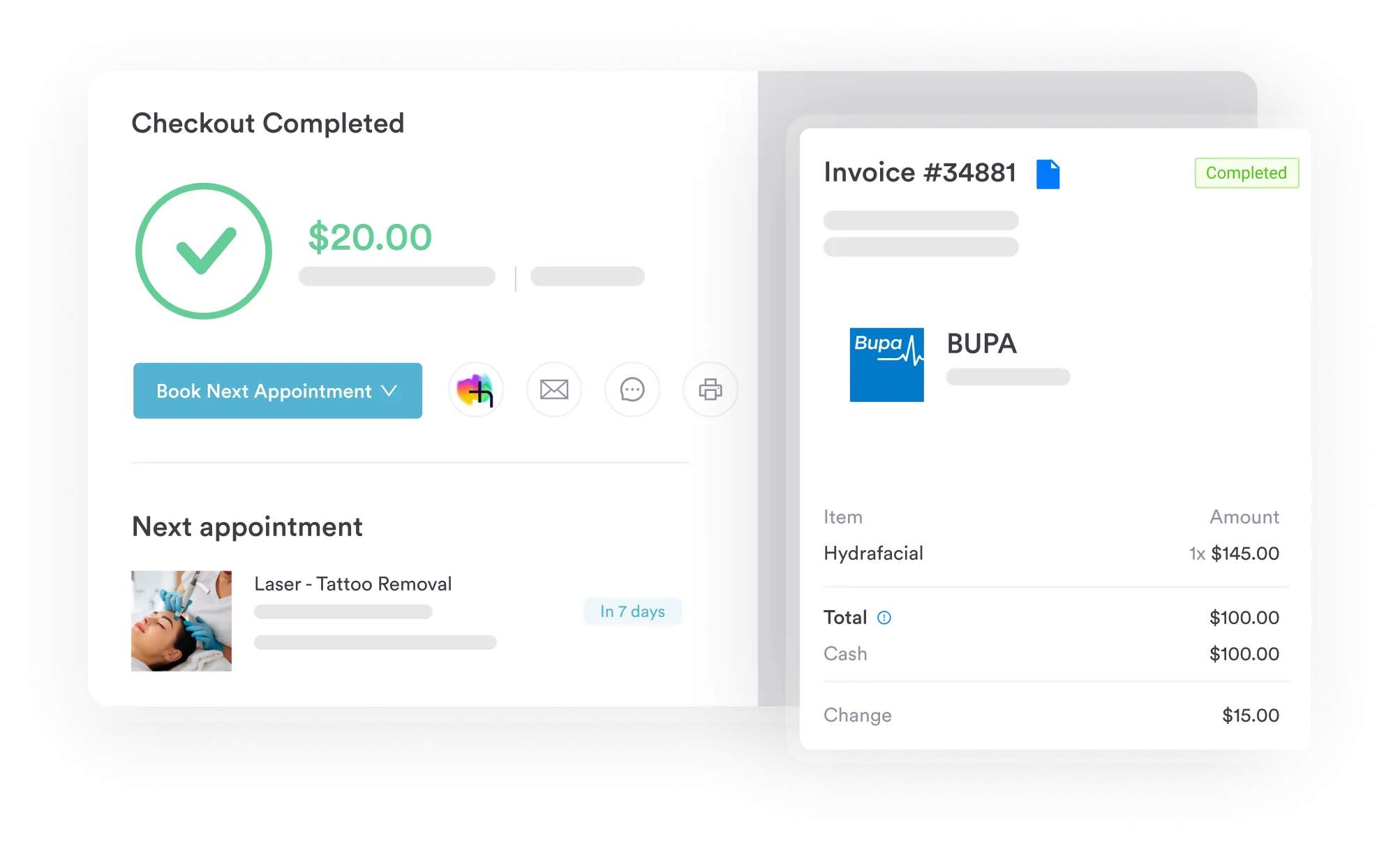
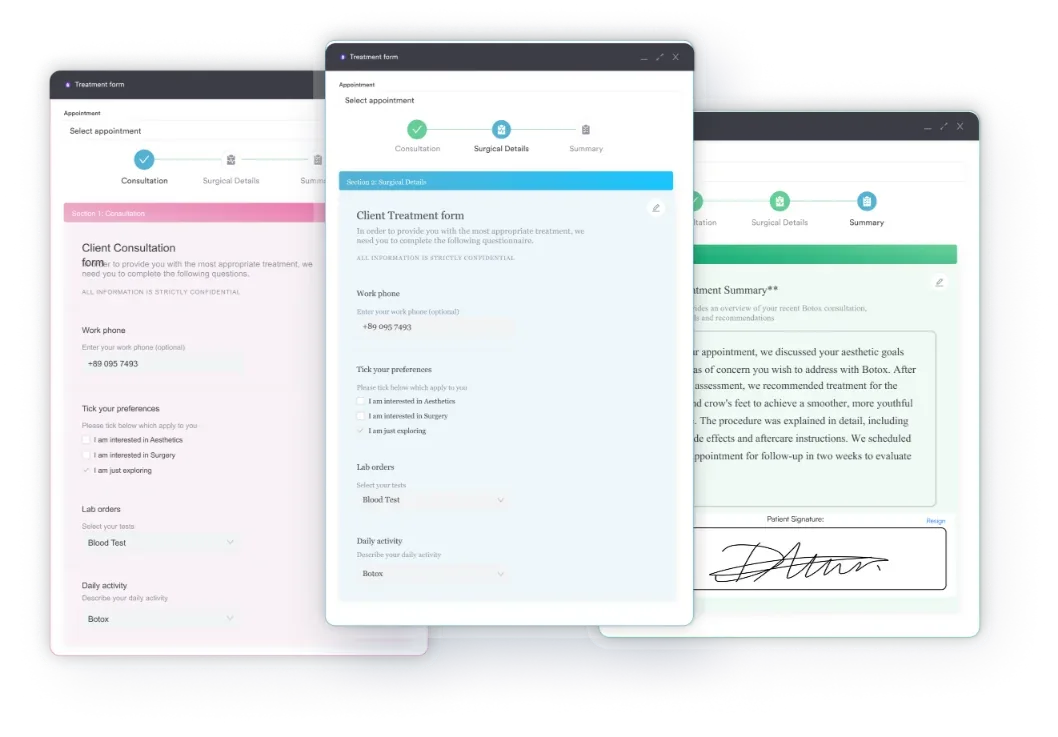
Anesthesia billing also means keeping the paperwork straight: anesthesia records, operative notes, time logs, and consent forms. Pabau’s intake and consent forms. They keep the trail payers and auditors expect.
As a practice management platform built for clinical practices, Pabau connects documentation, scheduling, and billing in one system.
That accuracy matters for the practices on both ends of this complication.
The AAPC Codify library remains the reference for code-level lookups and crosswalks. Practice management software picks up where that lookup ends: turning the correct code into a clean, trackable claim.
CPT code 01432 is a narrow code, and that’s exactly why it trips coders up. Six base units, six modifiers, and one easy mix-up with its own parent code: get the operative note right, and everything downstream follows.
Practice management software like Pabau helps anesthesia billing teams keep the provider type, the time log, and the ASA status together in one record. That way, the claim that goes out already carries what the payer will ask for. To see how it works for anesthesia billing specifically, book a demo with the team.

Need the anchor code for the whole knee and popliteal family? CPT code 01320 covers general anesthesia for knee and popliteal area procedures.
Billing anesthesia for arterial work in the same region instead? CPT code 01440 covers arterial procedures on the knee and popliteal area.
Billing anesthesia further down the same leg? CPT 01490 covers anesthesia for a lower leg cast application, removal, or repair, billed at three base units.
Yes. An iatrogenic AV fistula is a rare complication of knee arthroscopy and total knee arthroplasty. It usually happens when an instrument injures the popliteal artery and vein together. Repairing that fistula gets billed under 01432, not the original knee surgery anesthesia code.
Medical direction (modifiers QK, QY) covers up to four concurrent cases, and both the physician and the CRNA bill separately. Medical supervision (modifier AD) applies above four concurrent cases and pays far less: a flat 3 base units, with no time units added.
Yes. Report the payment modifier, AA, QZ, QK, and so on, alongside the ASA physical status modifier (P1 through P6) on the same claim line. One identifies the provider arrangement, and the other reflects how sick the patient was.
Convert total minutes into 15-minute units, then round per your payer’s policy. A 100-minute case works out to 6.67 units under a strict 15-minute rule. Some payers round to the nearest whole unit, others accept fractional units. Confirm the specific payer’s rule before rounding up.
No. 01432 covers a fistula encountered on the knee or popliteal veins, often incidentally. A planned surgical AV fistula built for dialysis access usually sits at the wrist, forearm, or thigh, billed under a different vascular access code.



