HCPCS Code J1110: Dihydroergotamine mesylate injection billing guide
HCPCS Code J1110: Official descriptor and drug overview HCPCS Code J1110 is the ...

Last Updated: Oct 29, 2026
CCSD code L8520 is the code UK private insurers use for open varicose vein surgery on both legs in one session. The surgeon ties off and strips the long or short saphenous vein in each leg. Removing the bulging tributaries is part of the same code.
The trunk count is the first thing a reviewer checks. Strip both saphenous veins in each leg and the operation becomes L8780, which can't be billed with L8520. Reviewers also ask why open surgery was chosen, since NICE ranks it behind ablation and foam. Below are the code choice, insurer fees, the record a reviewer expects and a pre-submission checklist.
Let Pabau's smart automation suggest the right codes, reduce claim denials, and keep your practice compliant—effortlessly.
Automate repetitive tasks and focus on what matters most—your patients.
Reduce coding errors and ensure compliance with the latest regulations.
Clean claims, fewer denials, and faster reimbursements.
Powerful insights and reporting to help your practice thrive.
HIPAA compliant SOC 2 certified GDPR-compliant Trusted by 4,000+ clinics worldwide

CCSD code L8520 covers open ligation and stripping of the long or short saphenous vein in both legs, with phlebectomies included.
Use L8510 when only one leg is treated, and L8780 when both saphenous veins are stripped in both legs.
Endovenous laser, radiofrequency, foam and glue treatments have their own codes, so a stripping code can’t stand in for them.
Insurers fund vein surgery for symptoms, so the record needs the symptoms, the duplex findings and a CEAP class for each leg.
NICE ranks open surgery third, so the note should say why endothermal ablation and foam sclerotherapy were unsuitable.
CCSD code L8520 is the bilateral code for ligation and stripping of the long or short saphenous vein.
The surgeon ties off the incompetent saphenous trunk at its junction and strips it out, in both legs during one operation. Local excision and multiple phlebectomy of the bulging tributaries are written into the descriptor, so they’re part of the same code.
The code sits in Chapter 9 Vascular system of the CCSD schedule, in section 9.7 Varicose veins. CCSD stands for Clinical Coding and Schedule Development, the group of UK insurers that maintains the schedule. The L-series covers vascular procedures, from carotid surgery to vein treatments.
L8520 is still on insurer schedules. Freedom Health Insurance’s Elite fee schedule for Chapter 9, dated 1 August 2026, lists it under varicose veins. We found no CCSD notice retiring the code. CCSD’s own code pages need a login, so check the code’s status there before a high-value claim.
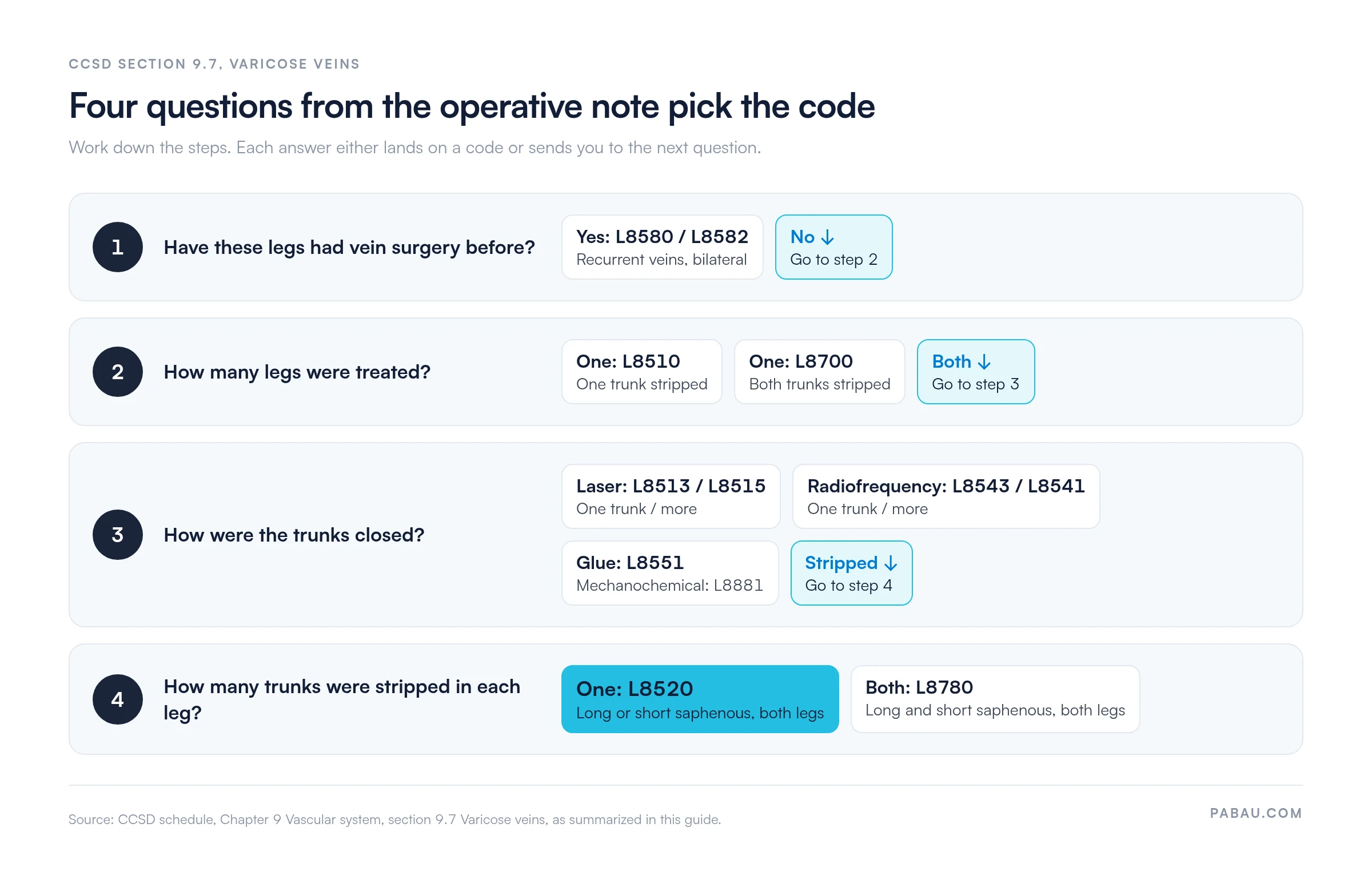
Section 9.7 holds more than 25 vein codes, and several describe almost the same operation. So read the operative note first, then answer four questions in order. Have these legs had vein surgery before? How many legs were treated? How were the trunks closed? How many trunks were stripped in each leg?
The table below adds what each neighboring code covers, so you can match its wording against the note.
The trunk count is the easiest place to go wrong. CCSD lists L8520 as an unacceptable combination with L8780, so a claim carries one or the other. If the surgeon stripped both saphenous veins in both legs, the whole operation is L8780.
Technique is the other split. For bilateral laser closure, use CCSD code L8513 for one trunk per leg and CCSD code L8515 for more.
Radiofrequency closure of more than one trunk in both legs is CCSD code L8541. Redo surgery belongs under CCSD code L8580 or L8582.
Each insurer sets its own fee for L8520, and the CCSD descriptor carries no price. Freedom Health Insurance publishes its Elite schedule openly, which makes it a useful benchmark. Its figures for the codes around L8520 are below.
Source: Freedom Health Insurance, Freedom Elite schedule of fees, Chapter 9, dated 1 August 2026.
Two figures stand out. The surgeon’s fee for bilateral stripping matches bilateral single-trunk laser or radiofrequency, so the open operation earns no premium. Stripping a second trunk in each leg lifts the fee from £600 to £1,000, which is why reviewers check the trunk count first.
Bupa, AXA Health, Vitality and Aviva each publish code-level fees through their provider tools. Check L8520 on Bupa’s code search or the AXA Health specialist procedure codes portal before you quote the patient. Vitality’s fee finder and Aviva’s fee schedule do the same job for their members.
Numbers make more sense attached to a patient. Take someone whose duplex scan shows long saphenous reflux in both legs, with no earlier vein surgery. The surgeon ties off both long saphenous veins at the groin and strips them out.
Through small incisions, the surgeon also removes the bulging tributaries. That whole operation is one L8520. The phlebectomies sit inside the code, so they get no line of their own.
Now change one fact. Suppose the scan had also shown short saphenous reflux in both legs, and both trunks came out. The code becomes L8780, and Freedom’s surgeon fee rises from £600 to £1,000.
Private medical insurance pays for varicose vein surgery when the veins cause symptoms. Bupa’s varicose veins funding request form states it plainly. Its policies cover treatment when the patient is experiencing symptoms, in line with NICE CG168, and exclude cosmetic or preventative treatment.
NICE CG168 sets the bar a reviewer will use. It recommends referral to a vascular service for symptomatic primary or recurrent varicose veins. Skin changes, superficial vein thrombosis and venous leg ulcers, healed or active, qualify as well. Veins that cause no symptoms don’t need referral.
The same guideline ranks the treatments. Endothermal ablation comes first, ultrasound-guided foam sclerotherapy second, and surgery only when foam is unsuitable. An L8520 claim is therefore a third-line operation in NICE’s terms, and the note should explain why the first two options didn’t fit.
Wording decides a lot. “Patient dislikes the appearance of her veins” invites a cosmetic decline. “Aching and heaviness in both legs by evening, with ankle swelling and eczema above the left medial malleolus” describes a covered condition. Write the clinical finding every time.
Reviewers read the L8520 claim against the clinical record, so the record has to carry the reasoning. Capture these elements before and during surgery.
Conservative care needs a careful line. NICE advises against compression hosiery as treatment unless interventional treatment is unsuitable. A symptomatic patient who never wore stockings still meets the guideline, so don’t stall the claim waiting for a hosiery trial.
Get pre-authorization before surgery and quote L8520 itself. An authorization for L8510 covers one leg, so a bilateral claim against it goes back unpaid. Each insurer handles vein surgery a little differently.
Plans change between renewals, so confirm cover for each patient rather than relying on last year’s answer. Our Bupa CCSD codes guide covers the wider Bupa submission process.
Once cover is confirmed, the claim still has a route to travel. Each checkpoint hands something to the next, so an early slip tends to surface as a query at the end.
When a claim does stall, the cause is usually one of these six errors. Each one has a direct fix.
A few minutes with the file catches those errors before an insurer does. Tick each line before the claim leaves the practice.
Vein surgery claims tend to stall after the consultation, before the invoice goes out. The duplex report sits in one system, the operative note in another, and the authorization number in an email. When a reviewer queries the trunk count, someone has to collect all three again.
Pabau, the practice management platform we build, keeps those pieces in one patient record. Consultation forms capture symptoms and the CEAP class for each leg, and the duplex report attaches to the same file. Pabau’s claims management software then builds the CCSD claim from that record and tracks it to payment.
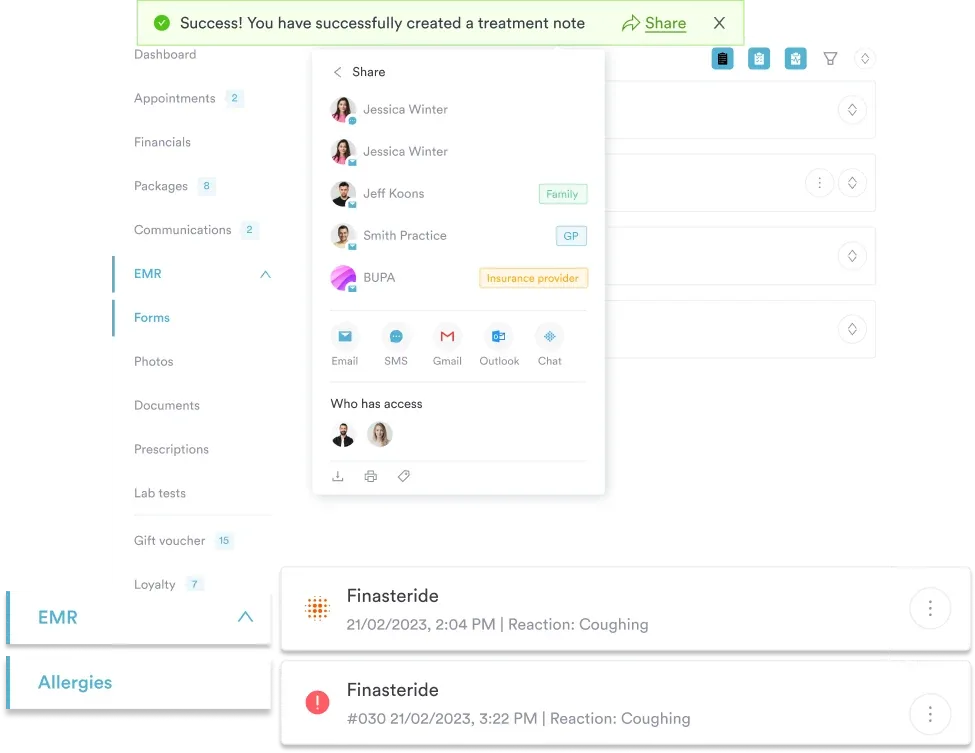
The result is a claim that answers the reviewer’s questions before they’re asked. Your team spends less time chasing queried vein claims and more time booking the next patient.
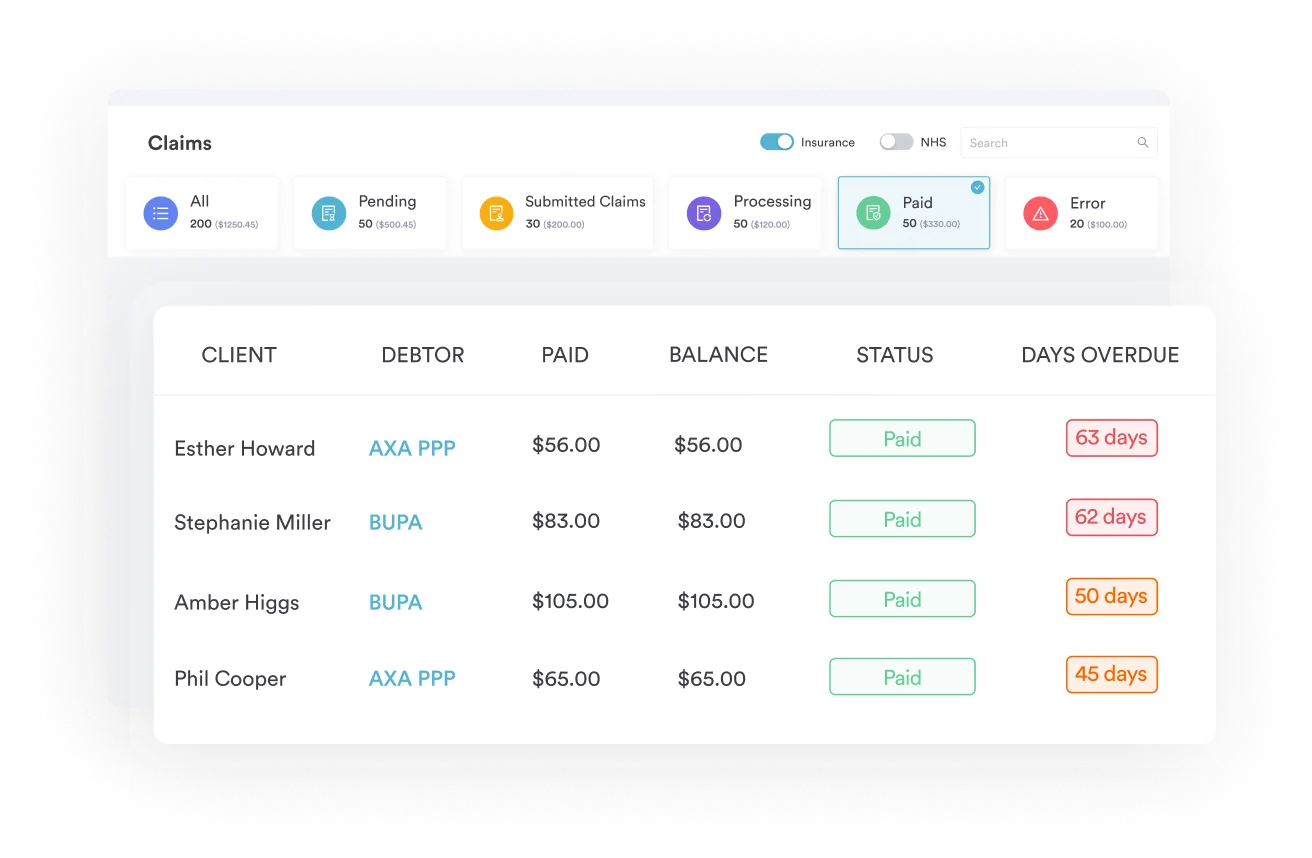

Pabau keeps the duplex report, CEAP class and operative note in one record, then builds the CCSD claim from it. Track every claim’s status in one place.

L8520 rewards precision more than effort. The surgeon’s fee matches a bilateral laser case, so the claim stands or falls on three facts in the record. Both legs were treated, and one saphenous trunk was stripped in each. The patient also had symptoms that ablation or foam couldn’t address.
Code from the operative note, authorize the bilateral code and let the record make the clinical case. If you’d like those records and claims in one system, book a demo of Pabau.

Closing both legs with a laser instead? CCSD code L8515 covers bilateral EVLT of more than one venous trunk.
Using radiofrequency on several trunks? CCSD code L8541 explains bilateral radiofrequency ablation and how it differs from laser.
Operating on veins that came back? CCSD code L8580 covers bilateral recurrent varicose vein surgery with groin or popliteal re-exploration.
Treating with injections only? CCSD code L8680 covers bilateral varicose vein injection sclerotherapy.
Want every Bupa code in one place? Bupa CCSD procedure codes sets out the full schedule and its fee categories.
L8520 covers open ligation and stripping of the long or short saphenous vein in both legs during one operation. Local excision and multiple phlebectomy of the tributaries are included, so they aren’t billed separately.
It’s the everyday name for the operation behind L8520. The surgeon ties off the saphenous vein where it joins the deep vein. That’s at the groin for the long saphenous and behind the knee for the short. The vein is then stripped out.
L8510 is open stripping of one trunk in one leg. L8520 is the same operation in both legs. L8780 covers both the long and short saphenous veins in both legs, and CCSD won’t accept it alongside L8520.
No. The anesthetist claims a separate fee under the same code. Freedom’s Elite schedule lists £428 for the anesthetist on L8520, alongside £600 for the surgeon.
CEAP is the standard grading system for chronic venous disease. It stands for clinical, etiological, anatomical and pathophysiological. Insurers mostly read the clinical grade, which runs from C0, with no visible signs, to C6 for an active venous ulcer.
Use the I83 category for varicose veins of the lower extremities. I83.9 covers veins without ulcer or inflammation, while I83.0, I83.1 and I83.2 record an ulcer, inflammation or both. Match the code to the symptoms in the note.