HCPCS Code J1560: Gamma globulin IM injection billing guide
HCPCS Code J1560: Official descriptor and covered services HCPCS Code J1560 carr...

Last Updated: Nov 11, 2026
Billable Code
L6840 is the CCSD code for repair of a limb artery using vein graft. It covers open repair or bypass of an arm or leg artery using the patient's own vein, usually the great saphenous.
L6840 sits in CCSD Chapter 9, Vascular System, under sub-chapter 9.6.0, Non-Specific. A synthetic graft, a patch alone or an endovascular approach takes a different code. The operative note therefore has to name the vein used.
Let Pabau's smart automation suggest the right codes, reduce claim denials, and keep your practice compliant—effortlessly.
Automate repetitive tasks and focus on what matters most—your patients.
Reduce coding errors and ensure compliance with the latest regulations.
Clean claims, fewer denials, and faster reimbursements.
Powerful insights and reporting to help your practice thrive.
HIPAA compliant SOC 2 certified GDPR-compliant Trusted by 4,000+ clinics worldwide

CCSD code L6840 covers repair of a limb artery using the patient’s own vein as the graft. A synthetic graft repair takes a different CCSD code.
Acute limb ischemia, critical limb ischemia, arterial trauma and popliteal aneurysm are the main indications, each paired with a supporting ICD-10 diagnosis code.
The operative note must name the vein used, the target artery and segment, and the anastomotic technique. Missing detail is the leading cause of denial.
Most UK private insurers require pre-authorization for L6840. Emergency cases may qualify for retrospective authorization under each insurer’s own protocol.
CCSD code L6840 is the procedure code for repair of a limb artery using vein graft. It sits in the Clinical Coding and Schedule Development (CCSD) schedule. That is the billing standard UK private insurers use, including Bupa, AXA Health, Aviva and Vitality Health.
The official descriptor, “Repair of limb artery using vein graft,” names the operative intent, which is arterial repair or reconstruction. It also names the conduit, a biological vein rather than a synthetic graft. The operative record has to show both for the code to be defensible.
The CCSD schedule places L6840 under Chapter 9, Vascular System (sub-chapter 9.6.0, Non-Specific). The CCSD codes library lists its neighbors in that chapter, from synthetic graft repair to patch angioplasty and endovascular work. Subclavian bypass outside the chest, such as from the carotid artery, sits there as code L3711.
Each of those procedures carries its own code because the conduit, the operative risk and the resources used differ. Choosing the code next to L6840 by mistake is still a billing error with compliance consequences.
Arterial repair with vein graft starts with harvesting a segment of the patient’s own vein, most commonly the great saphenous vein. The surgeon uses it to restore blood flow through a damaged, occluded or aneurysmal limb artery. The saphenous vein is favored for its caliber, availability and long-term patency compared with synthetic grafts, especially in infrapopliteal reconstructions.
Earlier vein surgery can take that option away. A great saphenous vein removed by ligation and stripping, billed as L8700, is no longer available as a conduit. The surgeon then harvests the small saphenous or an arm vein instead.
The operative sequence typically follows these steps:
The phrase “using vein graft” in the L6840 descriptor decides the code. If the surgeon uses a synthetic conduit such as PTFE or Dacron, a different CCSD code in the vascular chapter (Chapter 9) applies. The operative note must leave no doubt about which conduit went in.
The clinical justification for L6840 must be reflected in the accompanying ICD-10 diagnosis code. Insurers cross-reference the procedure code against the diagnosis to validate medical necessity, so a mismatched pairing is a common denial trigger. The table below maps the main indications to their ICD-10 codes and flags the ICD-10-CM (US) subcodes that UK insurers may not expect.
NICE guidance on peripheral arterial disease sets out which patients are suitable surgical candidates. A popliteal aneurysm repair also has a code of its own, L6230, so check which descriptor the operative note supports. When in doubt, the ICD-10 code should reflect the documented clinical severity, not the highest-reimbursing option.
Understanding the boundaries of CCSD code L6840 prevents both under-billing and unbundling errors. The table below distinguishes what is included in the code, what is separately billable, and what falls under a different CCSD code entirely.
Chapter 9 of the CCSD schedule, Vascular System, groups arterial reconstruction codes closely together. The closest neighbor is L6800, repair of a limb artery, whose descriptor names no vein graft. An axillo-bifemoral bypass is a separate procedure billed under L1680. Across the chapter, the conduit and the operative approach separate L6840 from the codes around it. Reconstruction of the renal artery supplying a transplanted kidney has its own code too, L4292.
Read in order, three questions about the operative note settle whether L6840 applies.
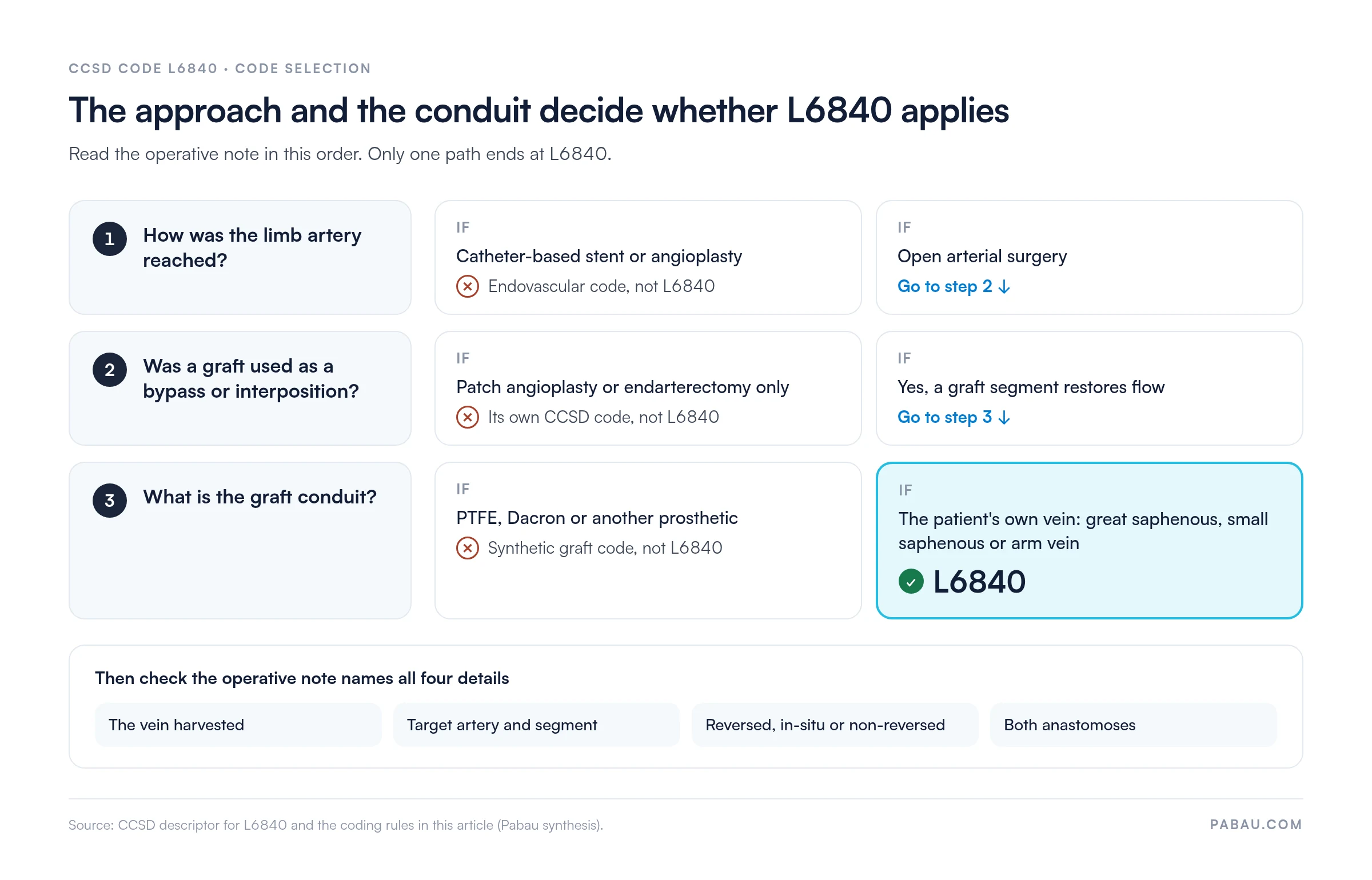
Confirm the graft conduit before selecting the code. Look in the operative note for the words ‘vein’, ‘saphenous’, ‘in-situ’ or ‘reversed’, which confirm L6840. If the note says ‘PTFE’, ‘Dacron’, ‘prosthetic’ or ‘synthetic’, a different CCSD code in the vascular chapter (Chapter 9) applies. Never infer the conduit from the procedure name alone.
An incomplete operative note is the most preventable cause of L6840 claim rejection. UK private insurers expect the operative documentation to support every element of the code descriptor. They scrutinize vascular claims closely because of the high procedure value. The billing compliance standard for major vascular cases calls for same-day dictation where possible.
The operative note must contain all of the following to support L6840:
A note that records only “bypass procedure performed using vein” is insufficient and will trigger an insurer query. It omits the conduit source, the target artery and the anastomotic detail.
Vascular surgeons who dictate operative notes can treat the CCSD L6840 descriptor as a documentation checklist. Each word in it matches an element the insurer expects the note to confirm.
Most UK private insurers require pre-authorization for major vascular surgery including L6840. Authorization confirms that the procedure is covered under the patient’s policy and that the insurer agrees in advance to meet the cost. Proceeding without it, except in genuine emergencies, risks non-payment regardless of how accurately the claim is coded.
Key points on insurer pre-authorization for L6840 cases:
Emergency exception: When surgery is performed for acute limb ischemia as a limb- or life-saving procedure, most insurers have a retrospective authorization process. The practice must notify the insurer as soon as practicable, typically within 24-48 hours of surgery. It then submits the operative note and clinical summary with the retrospective authorization request.
Rules vary by insurer and by individual policy terms. Always check the patient’s specific policy before assuming retrospective authorization applies.
L6840 claim denials follow a recognizable pattern. Most are preventable with accurate code selection, complete documentation, and confirmed authorization. The table below maps the most frequent denial reasons to their fixes.
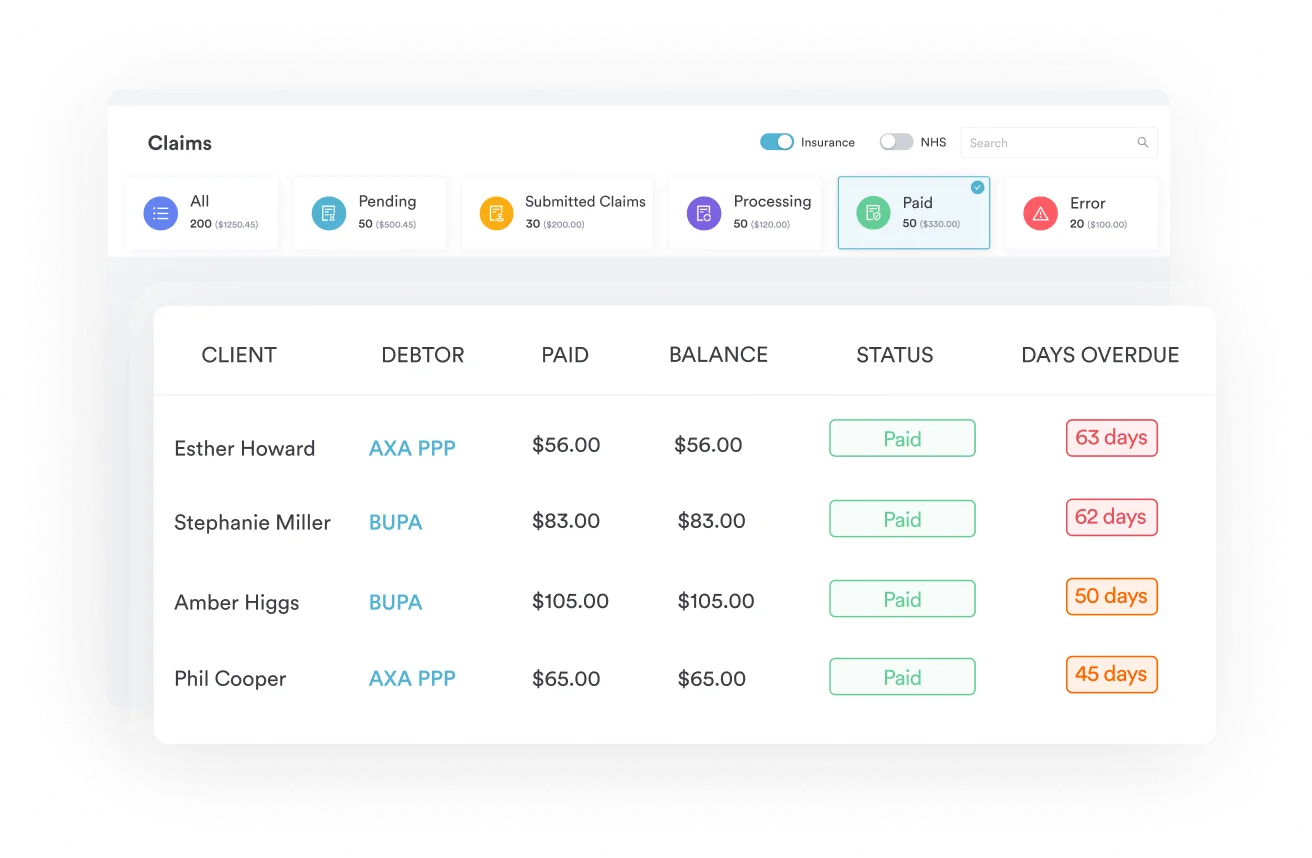
Practices that use dedicated claims management software can track L6840 submissions, flag missing authorization references and monitor denial patterns across insurers. That shortens the time between the procedure and payment.
Vascular reconstruction under L6840 is performed under general or regional anesthesia. The anesthetist submits their own CCSD-coded claim separately, using the relevant anesthetic code and time-based units. The surgeon’s L6840 claim and the anesthetist’s claim go in independently. Neither billing team submits on the other’s behalf.
An assistant at operation fee is claimable in the following circumstances:
Insurers vary in how they apply surgical grading scales to assistant fees. Bupa and AXA Health both publish grading guidance in their provider documentation.
Emergency cases involving acute limb ischemia are more likely to be accepted for assistant fees given the complexity and time-pressure of the operative environment. Always confirm the specific insurer’s current policy before submitting an assistant fee alongside L6840, as blanket approval is not guaranteed.
Submit the assistant surgeon’s details, including their name and GMC number, in the claim notes field when billing an assistant fee alongside L6840. Some insurers automatically query assistant fees without supporting personnel information, even when the operative note confirms two-surgeon involvement.
These practical steps reduce denial rates and speed up payment for L6840 claims. Apply them as a standard workflow for every vascular reconstruction case.
Digital documentation that captures operative detail at the point of care cuts the need to reconstruct notes later. It also makes the records sent with CCSD claims more complete.
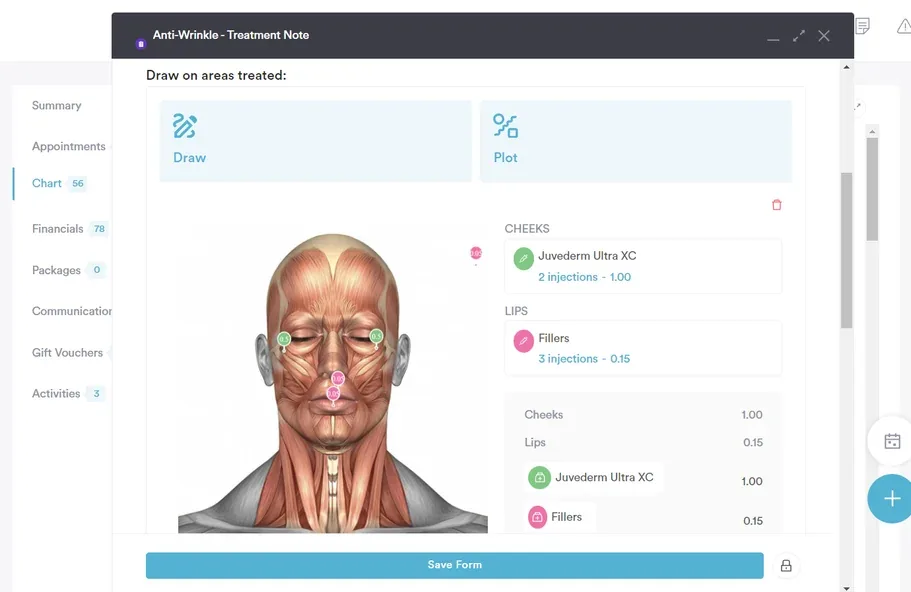
In many vascular practices, the operative note, the authorization letter and the claim sit in three different places. The billing team rebuilds the case from email and dictation days after surgery, and that is where conduit detail goes missing.
Pabau keeps all three on one patient record. The authorization code, dates and sessions are tracked on the case, with a warning when one is missing. UK claims go out through Healthcode and Bupa from the same record that holds the operative note.
The result is an L6840 claim that matches its note, with the authorization reference already on the case. Your team spends less time answering insurer queries about which vein went in.

Pabau supports UK private practice billing, clinical documentation and compliance workflows for vascular surgeons and specialist practices. See how it tracks authorizations on the case and sends insurer claims through Healthcode.

CCSD code L6840 is a high-value code, and its claims stand or fall on the operative note. The fix belongs upstream of the billing desk. Ask surgeons to name the vein and both anastomoses at dictation, and confirm authorization when the case is booked.
Do that, and the ICD-10 pairing and the conduit check become a quick read rather than a query to the surgeon weeks later. The trade-off is a few extra minutes per case at dictation, which costs far less than a denied vascular claim.
Pabau supports UK vascular surgery teams by tracking authorization codes and claim status on the case, with UK claims routed through Healthcode and Bupa. Book a demo to see how Pabau keeps each CCSD claim tied to the note behind it.

Need a full reference for Bupa CCSD codes? Bupa CCSD codes covers the full schedule structure, fee submission rules, and how Bupa processes CCSD-coded private healthcare claims.
Looking to reduce claim rejections across your practice? Claims management software explains how Pabau tracks submissions, monitors denial patterns, and streamlines insurer claim workflows for UK private practices.
Billing an endovascular case instead? CCSD code L6300 covers transluminal procedures on the femoral artery, the catheter-based alternative to open repair.
Repairing an arteriovenous fistula? CCSD code L7520 explains the code and documentation for repair of an acquired arteriovenous fistula.
Want to strengthen your billing compliance process? Medical billing compliance outlines the documentation and audit requirements that protect private practices during insurer reviews.
CCSD code L6840 covers repair of a limb artery using autologous vein graft. That includes bypass and interposition grafts where the conduit is vein harvested from the patient. It applies to open reconstruction of any limb artery, such as the femoral, popliteal, tibial, brachial or radial. The operative note must confirm the conduit was vein, not synthetic material.
The defining distinction is conduit type. L6840 applies when autologous vein graft is used. Repair using synthetic graft (PTFE or Dacron), patch angioplasty, endarterectomy, or endovascular stenting each has a different CCSD code in the vascular chapter (Chapter 9). Reading the operative note for explicit conduit identification is the only reliable way to select between them.
Any autologous vein is accepted, including reversed great saphenous vein, in-situ great saphenous vein, small saphenous vein, cephalic vein, and basilic vein. The operative note must name the specific vein used. Synthetic conduits are excluded from L6840 regardless of the arterial target.
Yes, for elective cases, most UK private insurers including Bupa, AXA Health, Aviva, and Vitality require pre-authorization before major vascular surgery proceeds. For emergency surgery for acute limb ischemia, insurers typically offer a retrospective authorization route. The practice must notify them within 24-48 hours of the procedure. Individual policy terms vary, so verify with the specific insurer before assuming the emergency pathway applies.
The most common reason is an operative note that fails to name the vein conduit. Missing pre-authorization and a mismatched ICD-10 diagnosis code follow close behind. Insurers also deny synthetic graft procedures miscoded as L6840, bundled components such as vessel exposure billed separately, and claims sent after the deadline. Each is preventable with a pre-submission documentation checklist.
Yes. The anesthetist submits their own CCSD claim separately using anesthetic time-based codes. An assistant at operation fee can be claimed when the insurer’s surgical grading policy permits it and the operative note confirms the assistant’s clinical necessity. Confirm the specific insurer’s assistant fee policy before submission, as not all insurers allow it for every L6840 case.
The appropriate ICD-10 code depends on the clinical indication. Acute arterial thrombosis or embolism maps to I74.2-I74.4. Atherosclerotic occlusion with critical ischemia maps to the I70.2 series. Popliteal artery aneurysm uses I72.4. Traumatic arterial injury uses the relevant S-code with the correct laterality and encounter qualifier. Each must accurately reflect the documented diagnosis, not the highest-reimbursing option.