CCSD Code B2222: Bilateral open adrenalectomy billing guide
CCSD Code B2222: Definition and clinical description CCSD Code B2222 is the code...

Last Updated: Nov 16, 2026
CCSD code 20210 is the UK private billing code for a pure tone audiogram by air conduction, with masking included. It sits in Chapter 30 of the schedule, and the CCSD Technical Guide names Audiology Diagnostic as one of its diagnostic chapters.
The test measures hearing thresholds ear by ear through earphones. Masking the other ear is part of the code, so it never goes on the claim as a second line. Bone-conduction testing falls outside this descriptor, and the schedule lists the air-and-bone audiogram as 20220.

CCSD code 20210 covers a pure tone audiogram by air conduction, and masking of the non-test ear is included in the code.
The code sits in Chapter 30, Audiology diagnostic, of the CCSD schedule used by UK private medical insurers.
An air-and-bone audiogram is coded 20220, and an impedance audiogram is coded 20230, so match the code to the test performed.
Each insurer sets its own fee and pre-authorization rules for 20210, so check the patient’s policy before the appointment.
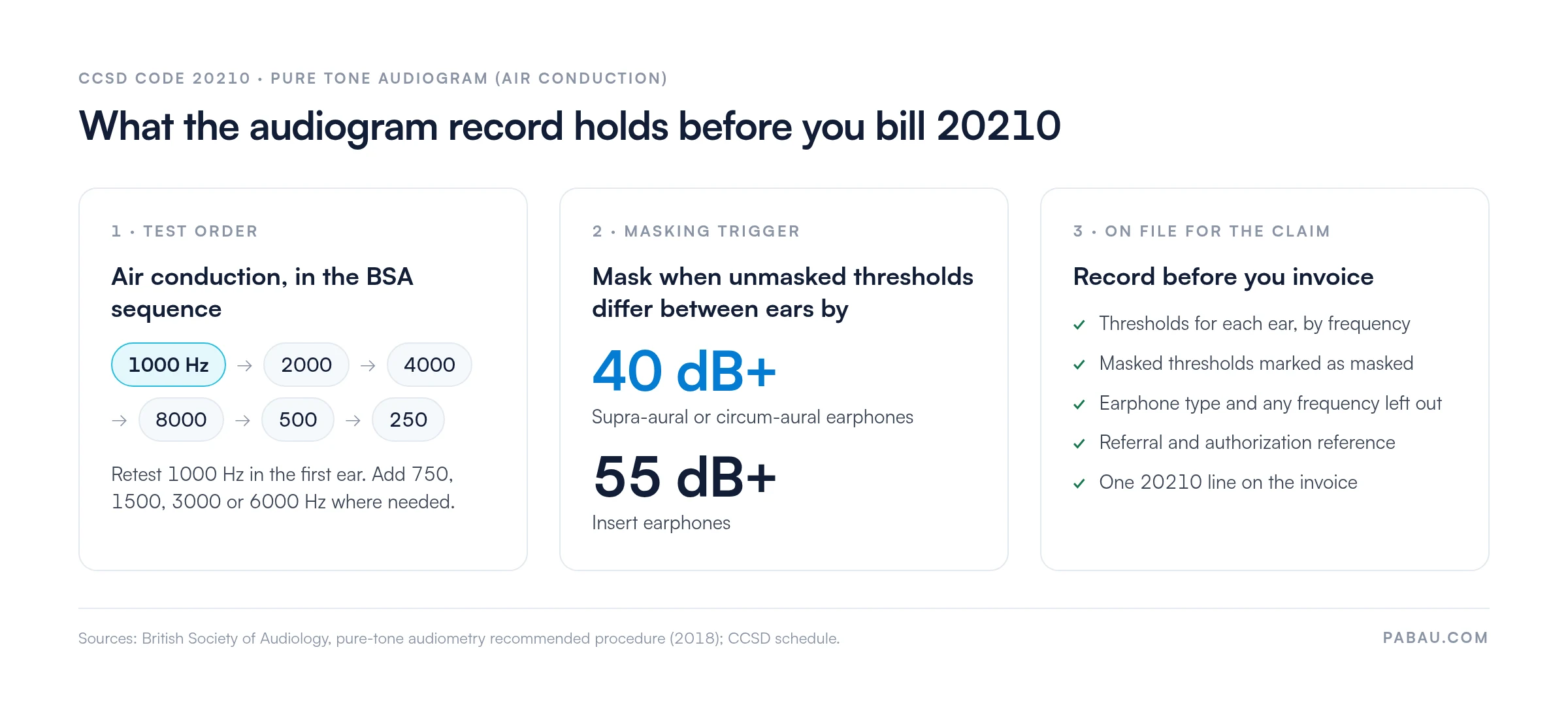
A clean claim rests on the audiogram record: thresholds per ear, masked thresholds marked, earphone type and the authorization reference.
CCSD code 20210 is the code a UK private practice bills for a pure tone audiogram tested by air conduction. The descriptor includes masking, so one 20210 line covers the whole test. Our overview of CCSD billing codes explains how the schedule is organized.
The schedule belongs to the Clinical Coding & Schedule Development Group, which brings together four major private insurers: Bupa, AXA Health, Aviva and Vitality. The group writes the codes and narratives, while each insurer sets its own fees.
A pure tone audiogram finds the quietest tone a patient can hear at each frequency, in each ear. The British Society of Audiology recommended procedure sets out how UK audiologists run it.
The BSA procedure starts with the better-hearing ear at 1000 Hz. The tester then moves to 2000, 4000, 8000, 500 and 250 Hz, and retests 1000 Hz in the first ear.
Intermediate frequencies of 750, 1500, 3000 and 6000 Hz are added where needed. When a frequency is left out, the BSA procedure asks for the reason to be recorded.
Sound played loudly into a poorer ear can cross the head and be heard by the better ear. Masking noise in the non-test ear stops that from skewing the result.
The BSA’s first masking rule covers air conduction. Masking is needed when unmasked thresholds differ between ears by 40 dB or more with supra-aural or circum-aural earphones. With insert earphones, the trigger is a difference of 55 dB or more.
The panel below pulls those rules together with the records an insurer may ask to see.
The audiology codes next to 20210 describe different tests. Pick the one that matches what the audiogram record shows.
An impedance test answers a different clinical question, so it has its own code, 20230. The CCSD Technical Guide accepts that two procedures at one attendance can need two codes. Each insurer still has its own contract rules on combining them.
The attendance itself is a separate code too. A follow-up outpatient consultation, for example, is coded 20310, so check the insurer’s rules before you bill both.
Practices that also treat US patients will meet a different code set. There, the closest match is 92552, which covers threshold pure tone audiometry by air only.
Five steps take a 20210 claim from booking to payment. Each one closes off a common reason for an insurer query.
For Bupa patients, our reference on Bupa CCSD codes covers how Bupa applies the schedule.
Check that the authorization was issued for 20210 itself. An authorization raised for a different audiology code, or for another clinician, will not cover the test you performed.
The audiogram is the evidence for the code. If an insurer queries the claim, these are the details it will look for.
Audiogram results are health data, which UK GDPR treats as special category data. Keep them in the patient record with controlled access, not in email threads or shared spreadsheets.
The four insurers in the CCSD Group all use its codes, and each publishes its own lookup or fee schedule. Cover and pre-authorization for 20210 depend on the patient’s policy, so check the insurer’s tool before you treat.
The CCSD Group does not set prices. Its Technical Guide leaves the fee for each clinical event to each funder and provider to agree.
That means the figure paid for 20210 differs by insurer and by contract. The Bupa fee schedule is a useful place to start comparing.
Queries on 20210 tend to come from a handful of avoidable mistakes. Each one has a check that sits earlier in the workflow.
In many private audiology practices, a 20210 claim passes through three places. The audiometer holds the audiogram, the notes sit in one system, and the invoice goes out from another.
Pabau, the practice software we make for private healthcare, puts those steps on one patient record. The clinician completes a structured audiometry form during the test, and the authorization reference sits on the same record.
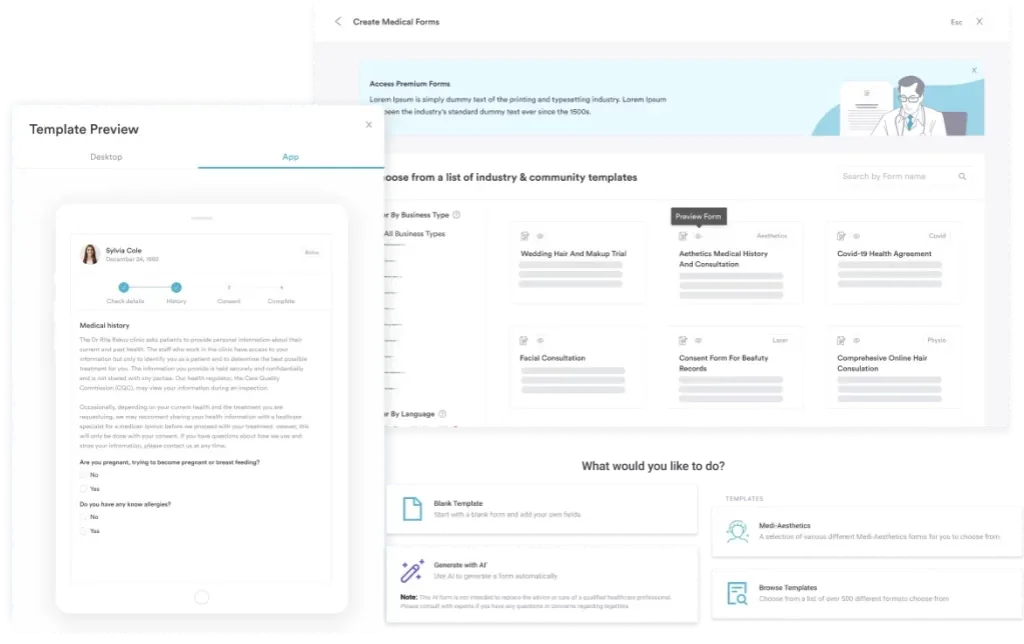
When the invoice is raised, Pabau sends UK claims through Healthcode and Bupa from that same record. Pabau’s rework-free claims management carries the code and the authorization number onto the claim, so nobody retypes them.
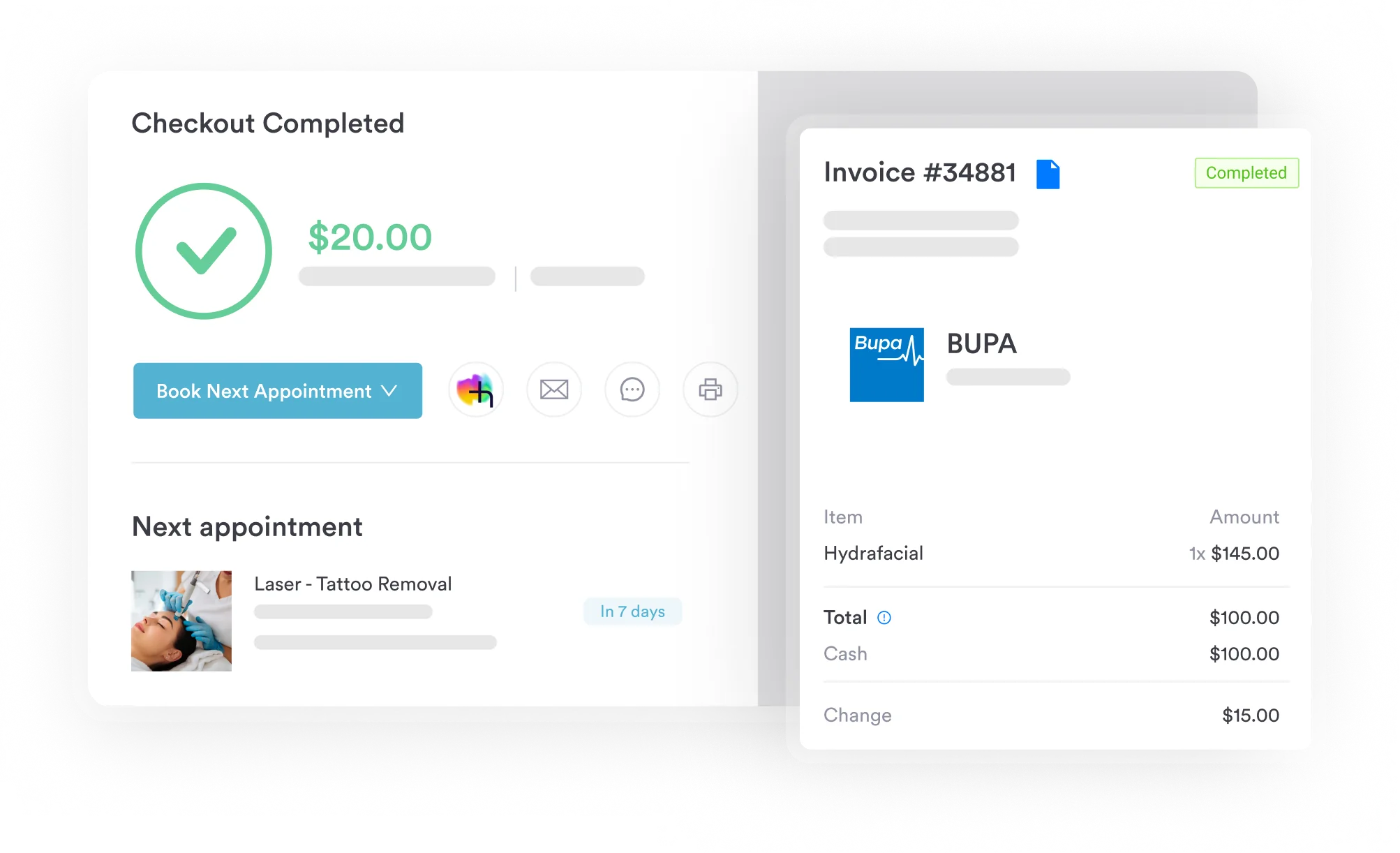

Pabau keeps audiometry forms, authorization references and CCSD invoices on one patient record, and sends UK claims through Healthcode and Bupa.

Billing 20210 well comes down to the audiogram, not the code number. If the record shows air-conduction thresholds, masked results and the earphone used, the claim defends itself.
The decision that matters happens before the test. Know whether bone conduction or impedance testing is planned, and get the authorization for the right code.
Book a demo to see how Pabau keeps audiometry records, authorization references and CCSD claims on one patient file.

Billing middle ear tests in the same practice? CCSD code 20230 covers the impedance audiogram and what to record for it.
Coding the consultation that goes with the test? CCSD code 20310 explains how a follow-up outpatient consultation is billed.
Treating patients insured in the US as well? CPT code 92552 is the US code for air-only threshold audiometry.
Want fewer claims coming back from insurers? Medical billing compliance sets out the record-keeping standards that keep claims clean.
Testing bone conduction as well? CCSD code 20220 covers the air-and-bone audiogram that replaces 20210 on the claim.
CCSD code 20210 covers a pure tone audiogram tested by air conduction, including masking of the non-test ear. It records hearing thresholds for each ear across the test frequencies. Bone-conduction testing and impedance testing are coded separately.
No. The 20210 descriptor includes masking, so it never goes on the claim as an extra line. The audiogram should still show which thresholds were masked, because that is the evidence the code was used correctly.
The CCSD schedule lists the pure tone audiogram by air and bone conduction, including masking, as 20220. Use it in place of 20210 when bone-conduction thresholds were also tested.
They describe different tests, so each has its own code. The CCSD Technical Guide accepts that two procedures at one attendance can need two codes. Each insurer has its own rules on combinations, so confirm them before you bill both.
The CCSD Group’s four insurer members are Bupa, AXA Health, Aviva and Vitality, and each works from the CCSD schedule. Whether a patient’s policy covers 20210, and whether it needs pre-authorization, depends on their plan.
Each insurer and provider sets it. The CCSD Group writes the codes and narratives but leaves fees to each funder and provider. Check the insurer’s own fee schedule or code search for the current figure.