

CCSD code G5100: Bypass of duodenum billing guide
CCSD code G5100 bills a bypass that leaves the duodenum in place CCSD code G5100...

Last Updated: Oct 16, 2026
Billable Code Specific Code
S86.921A is the billable ICD-10-CM code for laceration of unspecified muscle(s) and tendon(s) at lower leg level, right leg, initial encounter.
Emergency departments and urgent care teams reach for this code after acute lower leg trauma. Check billability against the current CMS tables before you submit. Payer acceptance can vary even for a code that is specific and billable.
Let Pabau's smart automation suggest the right codes, reduce claim denials, and keep your practice compliant—effortlessly.
Automate repetitive tasks and focus on what matters most—your patients.
Reduce coding errors and ensure compliance with the latest regulations.
Clean claims, fewer denials, and faster reimbursements.
Powerful insights and reporting to help your practice thrive.
HIPAA compliant SOC 2 certified GDPR-compliant Trusted by 4,000+ clinics worldwide

S86.921A is a billable ICD-10-CM code for laceration of unspecified muscle and tendon at lower leg level, right leg, initial encounter.
The 7th character A marks an initial encounter. Use D for a subsequent encounter and S for sequela.
If the clinical note names the injured muscle or tendon, a more specific S86 code replaces S86.921A.
Practice management software like Pabau ties diagnosis codes to encounter records, so laterality and encounter-type errors surface before submission.
Knowing where S86.921A sits in the ICD-10-CM hierarchy helps you pick the right level of specificity. The code descends through four layers before it reaches the billable level.
The parent subcategory S86.92 covers lacerations where the specific muscle or tendon cannot be identified. When the note names a particular structure, such as the Achilles tendon or a peroneal muscle, a more specific S86 code applies instead. S86.921A is correct only when the injured structure stays unspecified after clinical assessment.
The CDC ICD-10-CM web tool confirms the full hierarchy in a few clicks. Run the check before you finalize S86.921A, in case a more specific sibling code matches the documented findings better.
The 7th character is mandatory for every code in the S86 category. Leave it off and the code is invalid, so payers reject the claim outright. The three values describe phases of care rather than a running count of visits.
One mistake shows up again and again. Practices keep submitting S86.921A across several follow-up visits while the injury is clearly healing. Once active treatment ends and the patient moves to routine care, the 7th character must change to D.
ICD-10-CM Official Guidelines Section I.C.19 defines an initial encounter as the phase of active treatment. It does not mean the patient’s first visit to any provider for that injury. Auditors know the difference, and a run of A-coded visits is easy for them to spot.
Laterality sits in the 6th character position of S86.921A. Sending the wrong side is a simple documentation error, and it happens often where charting is finished hours after the visit. Coders in urgent care and primary care practices name it as their most frequent correction.
Use S86.929A only as a last resort, when the record genuinely fails to say which leg is injured. Most payers expect laterality wherever documentation supports it. Persistent unspecified coding invites medical necessity reviews and the denial codes that follow them.
A clean claim for S86.921A rests on documentation that supports every component of the code. Miss one element and you get a denial or a request for more information. Physical therapy practices taking on post-acute care should check that the notes reflect the current encounter type.
Structured patient record documentation prompts clinicians for laterality and encounter type while they chart. That catches errors before the claim leaves the building rather than after. Review your note templates against the list above, then read them against your billing compliance obligations.
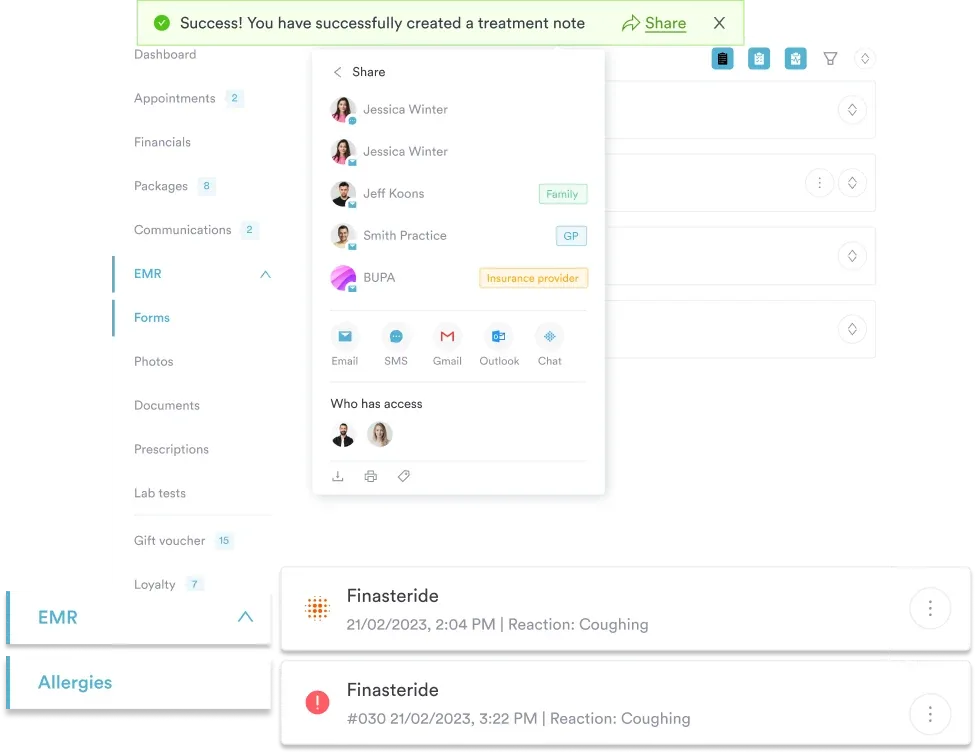
Run a monthly audit of S86.921A claims that carry 7th character A across more than two consecutive visits for the same patient. Active-treatment encounters rarely stretch past two or three visits without a switch to the D character. Clusters of repeat A-coded visits for one injury are a standing target in payer audits.
Not every lower leg muscle and tendon laceration maps to S86.921A. The “unspecified” qualifier is the constraint that decides it. The code fits a narrow set of clinical scenarios.
The sideline version is familiar to anyone who covers contact sports. A clinician examines the player, documents the wound, and leaves structure identification to imaging or surgery. S86.921A describes that situation accurately until the picture gets clearer.
The diagnosis code and the repair procedure code travel together on the claim. Layered closures sit in the intermediate repair family that includes CPT code 12051. A leg defect that needs tissue rearrangement is coded with CPT code 14020 instead.
For post-acute care, our rehabilitation protocols guide shows how encounter-type coding shifts as the patient works back toward full loading.
Practices reconciling historical claims or older health records sometimes need to map S86.921A back to ICD-9-CM. The same applies to multi-year trend analysis that spans the ICD-10 transition on October 1, 2015.
Crosswalk mappings are approximate. The General Equivalence Mappings (GEMs) files published by CMS acknowledge that many ICD-10-CM codes have no one-to-one ICD-9-CM equivalent. Verify accuracy against the official GEMs files for your own use case. The AAPC Codify lookup shows crosswalk data next to current code descriptions.
Choosing well from the S86.9xx group means knowing the siblings and parents around it. Nerve damage is coded separately, so a deep peroneal nerve injury at the ankle takes ICD-10 code S94.20XA rather than an S86 code.
The distinction between S86.921A and S86.821A is worth committing to memory. “Unspecified” means the structure was never identified. “Other” means it was identified but has no dedicated code of its own.
Most S86.921A denials trace back to a handful of predictable mistakes. Fixing them at the documentation stage costs far less than appealing them later. Good denial management starts in the clinical note, not the appeal letter.
The fix is the same in every case. Put the prompt in front of the clinician while the patient is still in the room. Structured digital intake forms and charting templates that will not save without a laterality value do exactly that.
Pull your practice’s S86.921A submission history for the past six months. If more than 10% of those claims needed correction before payment, the documentation template is the problem. It almost certainly lacks a structured prompt for laterality and encounter type at the point of charting.
In most practices the coder rebuilds the encounter after the fact. They read a note written hours earlier, infer the encounter type, and take laterality from whatever the clinician had time to record. Every one of those inferences is a chance to get the code wrong.
Practice management software like Pabau turns that around. Charting templates ask for laterality and encounter type while the clinician is still with the patient. The diagnosis code then attaches to that encounter record, so claims management works from documented facts rather than reconstruction.
Claims leave through our Claim.MD integration, which submits electronically and returns payer responses into the same record. A rejected 7th character shows up within days instead of at the end of a billing cycle. Your team fixes one claim rather than a month of them.

Pabau links diagnosis codes to encounter records and prompts for laterality and encounter type while the clinician charts. Fewer corrections, fewer denials, and cleaner claims from the first submission.

S86.921A is not a difficult code. What trips practices up is the distance between what the clinician wrote and what the coder submits.
Close that distance once, in the note template, and the laterality errors and stale 7th characters largely stop appearing. It costs an afternoon of template work and saves a rework queue every month. The trade-off worth remembering is that “unspecified” has to be earned, not assumed.
Book a demo to see how Pabau captures laterality and encounter type at the point of charting. Your S86.921A claims then go out right the first time.

Coding a patella fracture with malunion? ICD-10 code S82.026P covers subsequent-encounter coding for a patella fracture healing with malunion.
Need the sequela side of injury coding? ICD-10 code S68.612S shows how the S character works once the original injury has healed.
Billing a wound that needed a graft? CPT code 15150 covers the documentation and billing rules for tissue cultured skin autografts.
S86.921A is a billable ICD-10-CM code for laceration of unspecified muscle(s) and tendon(s) at lower leg level, right leg, initial encounter. It tells the payer four things. The injured structure is unspecified and the site is the lower leg, below the knee. The side is the right leg, and the visit is an active-treatment encounter.
Yes. S86.921A is a specific, billable ICD-10-CM code, valid for claim submission under the 2026 edition effective October 1, 2025. You can use it as a standalone diagnosis code wherever it matches the documented clinical findings.
The only difference is laterality. S86.921A designates the right leg and S86.922A designates the left leg. Both describe laceration of unspecified muscle(s) and tendon(s) at the lower leg level for an initial encounter. The 6th character carries the distinction, with 1 for right and 2 for left.
Use S86.921D once the laceration is healing and the patient is on routine follow-up care rather than active treatment. Acute management covers wound repair and any initial surgery. When care moves on to monitoring, therapy for a healing wound, or cast changes, the 7th character changes from A to D.
The note must record a laceration rather than a sprain or contusion. It also needs the lower leg as the site and the right leg as the affected side. It has to confirm that the specific muscle or tendon is unidentified, and that the visit is an active-treatment encounter. Include the mechanism of injury too, since payers increasingly use it for medical necessity review.
The closest siblings are S86.921D for a subsequent encounter and S86.921S for sequela. S86.922A covers the left leg and S86.929A covers an unspecified leg, both at initial encounter. The parent subcategory S86.92 and the broader category S86.9 are not billable and exist only for classification.



