

CCSD code G5100: Bypass of duodenum billing guide
CCSD code G5100 bills a bypass that leaves the duodenum in place CCSD code G5100...

Last Updated: Oct 16, 2026
Billable Code Specific Code
S68.612S is the billable ICD-10-CM code for complete traumatic transphalangeal amputation of right middle finger, sequela.
Let Pabau's smart automation suggest the right codes, reduce claim denials, and keep your practice compliant—effortlessly.
Automate repetitive tasks and focus on what matters most—your patients.
Reduce coding errors and ensure compliance with the latest regulations.
Clean claims, fewer denials, and faster reimbursements.
Powerful insights and reporting to help your practice thrive.
HIPAA compliant SOC 2 certified GDPR-compliant Trusted by 4,000+ clinics worldwide

S68.612S is the ICD-10-CM code for a complete traumatic transphalangeal amputation of the right middle finger, sequela.
The sixth character 2 names the right middle finger specifically. The genuine “other finger” code is S68.618, and its sequela form is S68.618S.
S68.612S is billable under the FY2026 ICD-10-CM edition, effective October 1, 2025, on both CMS-1500 and UB-04 claim forms.
Use S68.612S only for a late effect of the injury, such as phantom pain, scar contracture, or grip loss. It never covers the original injury.
Practice management software like Pabau captures the diagnosis code at the point of care, so laterality and encounter type reach the claim intact.
ICD-10-CM code S68.612S means complete traumatic transphalangeal amputation of the right middle finger, sequela. It describes a healed amputation through a phalanx of the right third digit. You assign it at a later visit, for a residual effect of that injury.
The code is billable and diagnosis-specific under the FY2026 ICD-10-CM edition, which took effect on October 1, 2025. Payers accept it on both the CMS-1500 and the UB-04 claim form.
S68.612 does not mean “other finger,” despite the heading that sits above it. That phrase belongs to the S68.61 rubric title, which covers ten child codes. Read the sixth character instead. The 2 in S68.612 means the right middle finger.
The table below collects the facts a coder or clinician needs before putting S68.612S on a claim.
Every character in S68.612S carries a specific clinical meaning. Misreading any one of them changes which digit, which hand, or which encounter is being described.
S68.612 identifies the right middle finger, also called the right long finger or the third digit of the right hand. Laterality is already inside the code, so no separate side code is needed.
The confusion comes from the heading one level up. S68.61 is titled “Complete traumatic transphalangeal amputation of other and unspecified finger(s).” That title describes the whole block of child codes, S68.610 through S68.619. It isn’t the description of any single code inside it.
The specific “other finger” code is S68.618, and its sequela form is S68.618S. Reserve it for a documented digit that none of the eight named codes covers, such as a supernumerary finger. If the record never identifies the digit, use S68.619S instead. The table below maps every sixth character in the series.
The thumb sits outside this subcategory. A complete transphalangeal amputation of the right thumb is S68.511, and the left thumb is S68.512.
A transphalangeal amputation passes through the shaft of a phalanx rather than through an interphalangeal joint. The bone itself is cut, not disarticulated at a joint line. That level differs from a transmetacarpal amputation, which runs through the metacarpal bones, and from a disarticulation at the joint.
The “complete” qualifier means the digit is entirely severed. Partial transphalangeal amputations belong in the S68.62 series, where S68.622 is the right middle finger.
Every S68.612 encounter takes one of three seventh characters. Each one maps to a distinct clinical scenario, and choosing between them is where coders go wrong most often.
The critical distinction between D and S is wound status. Seventh character D applies while healing is ongoing, exactly as it does on a code like S66.411D. Once the amputation site is fully healed and the patient returns for a residual condition, switch to S68.612S.
Under CMS ICD-10 coding guidance, a sequela encounter sequences the residual condition first. S68.612S then follows as the code that explains the cause.
S68.612S sits at the bottom of a nested hierarchy. Reading it from the chapter down helps coders place it correctly on a claim and cross-reference it in the record.
The CDC/NCHS ICD-10-CM web tool lets coders walk this hierarchy from the tabular list. It also confirms that S68.612S remains a billable specific code for the current fiscal year.
S68.612S sits inside a larger family of hand amputation codes, split by amputation level and by completeness. Nearby right-hand injury codes such as right-hand injury codes such as S61.314S follow the same pattern. Every code below still needs a seventh character before it can go on a claim.
The AAPC ICD-10-CM code lookup carries the full S68 range with descriptions and coding notes for each sibling code.
The S68 tabular list entry carries notes that widen what can be coded here, and others that call for a second code. Review them before defaulting to an unspecified code.
There are no Excludes1 notes at the S68.612S code level. The tabular list separates neighboring injuries structurally instead. A transphalangeal thumb amputation belongs in the S68.5 series, and an amputation of the hand at wrist level belongs in S68.4. Always verify against the official CMS tabular list before submitting. Some payers require prior authorization for this service, and a claim without it is denied regardless of coding.
Flag the transition from seventh character D to S in your EHR workflow. Watch for a progress note that documents ‘wound healed’ or ‘amputation site fully closed’. That note date marks the earliest point at which sequela coding begins. Build a task or checklist prompt into your post-operative discharge process so the coding team is notified automatically.
ICD-10-CM Official Coding Guidelines Section I.C.19 governs injury codes, including traumatic amputations. The same rules drive every amputation sequela code, from S78.121S down to the finger codes. Medical billing compliance here decides whether a claim is paid on first submission.
The FY2026 guidelines ship in the official CMS ICD-10 code files. Sequela rules are reviewed at each annual update, so check the current file rather than a saved copy.
To hold up on audit, the record must justify all five parts of the code. HIPAA-compliant medical documentation standards also require the record to be legible, dated, and authored by a qualified clinician. The specific elements for this code follow.
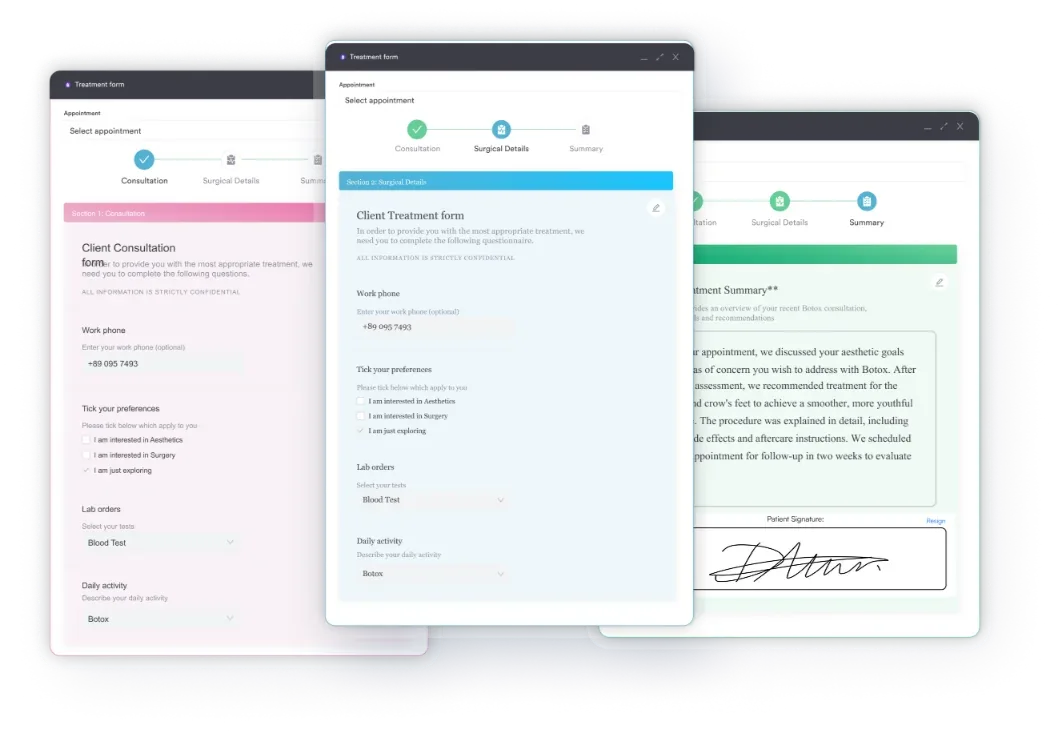
Using digital intake forms at each follow-up captures wound status and sequela conditions at the point of care. That beats reconstructing them at billing time, weeks after the visit.
S68.612S is valid on both major US claim forms. What matters is which box the code goes in, and in which position. Our CMS-1500 form guide walks through the diagnosis fields box by box.
Most state workers’ compensation payers accept S68.612S. Sequela rules can still intersect with state causation standards, so verify with the specific payer first. Workers’ compensation forms and sequencing requirements vary by jurisdiction.
Pabau’s claims management software supports ICD-10 entry inside the patient record. The sequela code and its condition code stay together, in the right order, on either claim form.
S68.612S is a diagnosis code, not a procedure code. It says why a service was provided, and it pairs with CPT codes that say what was done. For physical therapy practices treating the sequela of a finger amputation, the table below lists the usual pairings. They are representative, not payer-mandated.
One pairing detail is easy to miss. Hand procedure codes take an anatomical digit modifier, and for the right middle finger that modifier is F7. If the diagnosis says right middle finger, the procedure line should say F7, or the claim contradicts itself.
For workers’ compensation sequela encounters, the established-patient visit codes are the most common pairing with S68.612S. Therapy codes 97110 and 97140 apply when the visit involves active rehabilitation, which is routine work in occupational therapy practices.
Verify every pairing against current NCCI edits and payer local coverage determinations before submitting. Consistent medical forms capture the CPT service and the ICD-10 diagnosis in the same place, at the same visit. That’s what turns a coded encounter into a clean claim on first submission.
Five mistakes account for most rejected S68.612S claims. Four of them are visible in the record before the claim goes out.
Every one of these rejections lands in the same place. It reaches your denial management queue weeks after the visit, once the clinician who saw the patient has moved on.
Add a two-field cross-check to your claim review: Does the sixth character of the ICD-10 code match the digit modifier on the procedure line? For S68.612S the answer is F7, the right hand third digit. A mismatch between the diagnosis digit and the procedure digit is one of the few coding errors a scrubber can catch. Fix it before submission rather than after a denial.
In many practices the diagnosis code is chosen after the visit, from a note written hours earlier. Digit, side, and wound status are the first details to go missing. A sequela code with no healed-status note is also the first thing an auditor asks about.
Pabau, our practice management software, keeps the code with the encounter that produced it. Clinicians record the digit, the side, and the healed status on a structured form during the visit itself.
Your coding team then works from the record rather than from recall. S68.612S and S68.613S stop getting confused after the fact.
Claims leave the practice through our Claim.MD integration, so a coded encounter reaches the clearinghouse without re-entry. Remittances and rejections come back into the same patient record, which shortens the loop when something does need reworking.
The outcome is fewer first-pass rejections on trauma and sequela claims. Your team also spends less time reconstructing what a note should have said months ago.

Pabau captures diagnosis codes at the point of care and pairs them with the right encounter data before your claim goes out. See how it works for trauma and sequela billing.

S68.612S is narrower than its parent rubric suggests. It covers one digit on one hand, a healed complete transphalangeal amputation of the right middle finger, coded for a late effect. Anything broader belongs in S68.618S or S68.619S.
Get two things right and this code rarely comes back. Confirm the digit and side against the operative note. Then check that a clinician documented complete healing before you switch the seventh character to S.
Pabau’s practice management software helps billing teams capture ICD-10 codes accurately at the point of care and submit them in the right order. To see how it handles trauma and sequela billing, book a demo.

Coding a forearm bone lengthening procedure? Radius and ulna lengthening coding covers the CPT code for lengthening both the radius and ulna with an autograft.
Coding a closed forearm fracture treatment? Closed treatment of forearm fractures covers the CPT code for realigning both forearm bones without a surgical incision.
Coding a sacroiliac joint injection instead? Sacroiliac joint injection coding covers the CPT code for injecting the sacroiliac joint under imaging guidance.
Waiting on payer approval before a rehabilitation course starts? Prior authorization software explains how practices track approvals without chasing payers by phone.
S68.612S means “Complete traumatic transphalangeal amputation of right middle finger, sequela.” It describes a healed traumatic amputation through a phalanx of the right middle finger. The seventh character S shows the patient is being seen for a residual condition caused by that amputation. Examples include phantom limb pain and scar contracture.
No. S68.612 means the right middle finger. The phrase “other finger” comes from the S68.61 rubric title, which covers all ten child codes from S68.610 to S68.619. The specific code for other finger is S68.618, and its sequela form is S68.618S. Use S68.618S only when the record names a digit that none of the eight specific codes covers.
Yes. S68.612S is a billable, diagnosis-specific ICD-10-CM code in the FY2026 edition, effective October 1, 2025. It can be submitted on both CMS-1500 and UB-04 claim forms, and it meets the specificity level payers require for reimbursement.
The seventh character sets the encounter type for the same injury, a complete transphalangeal amputation of the right middle finger. S68.612A covers the first active-treatment visit. S68.612D covers follow-up while the wound is still healing. S68.612S covers visits after healing is complete, when the patient returns for a late effect. Using D after the site has healed is one of the most common errors on this code.
S68.613S is the code for a complete traumatic transphalangeal amputation of the left middle finger, sequela. The sixth character carries the side, so the left middle finger takes 3 where the right middle finger takes 2. A partial amputation of the left middle finger is S68.623S instead.
A subsequent encounter, seventh character D, happens while the injury is still healing and the patient is receiving routine care for the injury itself. A sequela encounter, seventh character S, happens after healing is complete, when the patient presents for a condition the injury caused. The distinction also changes sequencing. On a sequela claim the residual condition is coded first, and S68.612S follows as the causative code.
The most common pairings are established-patient office visit codes 99213-99215, for evaluation of phantom pain or scar management. Therapy codes 97110 and 97140 apply when the visit involves active rehabilitation for a functional deficit. CPT 26952, a finger amputation closed with local advancement flaps, can also pair with S68.612S in revision scenarios. Add the F7 digit modifier for the right middle finger, and verify pairings against current NCCI edits and payer coverage determinations.



