ICD-10 Code S42.444P: Medial epicondyle fracture, right humerus
ICD-10 Code S42.444P: full descriptor and code validity ICD-10 Code S42.444P car...

Last Updated: Oct 13, 2026
Billable Code Specific Code
S81.009S is the billable ICD-10-CM code for unspecified open wound, unspecified knee, sequela.
Let Pabau's smart automation suggest the right codes, reduce claim denials, and keep your practice compliant—effortlessly.
Automate repetitive tasks and focus on what matters most—your patients.
Reduce coding errors and ensure compliance with the latest regulations.
Clean claims, fewer denials, and faster reimbursements.
Powerful insights and reporting to help your practice thrive.
HIPAA compliant SOC 2 certified GDPR-compliant Trusted by 4,000+ clinics worldwide

ICD-10 code S81.009S covers an unspecified open wound of the unspecified knee, reported at a sequela visit.
It is a billable FY2026 code, effective October 1, 2025, and it is exempt from present on admission reporting.
The 7th character S separates a sequela visit from an initial encounter (A) and a subsequent encounter (D).
Assign it only when the original wound is documented as healed and the note ties the current condition to it.
Query the provider for laterality first, because S81.001S and S81.002S are more specific and payers prefer them.
S81.009S is a billable, specific diagnosis code valid for reimbursement in the FY2026 ICD-10-CM edition. It became effective October 1, 2025. The code is also present on admission (POA) exempt, so inpatient facilities report no POA indicator for it.
S81.009S describes an open wound at the knee where neither the side nor the wound type is documented, coded at a sequela visit. An open wound is a break in the skin that exposes the tissue underneath. The code breaks into three parts: the site, the two unspecified qualifiers, and the 7th character.
The two unspecified qualifiers stand for two different missing details. The first is laterality, so “unspecified knee” means the record never says right or left. The second is wound character, so an “open wound” with no descriptor such as laceration, puncture, or bite defaults to unspecified. Query the provider for laterality whenever the record is unclear, since more specific codes exist and payers prefer them. Self-pay does not mean uninsured, and many patients recover part of the fee with a superbill.
The same discipline applies to unspecified codes elsewhere in ICD-10-CM. Multiple sclerosis without a documented disease course is coded G35.D, and payers expect a course-specific subcode once the neurologist records one.
The 7th character S marks the encounter as a sequela visit. The patient is no longer in active treatment for the wound itself. What drives the visit is a lasting consequence of that earlier open knee wound. Coders in physical therapy practices and surgical follow-up settings meet this distinction constantly, and it drives a large share of 7th character errors.
Approximate synonyms accepted in documentation include sequela of open wound of knee, late effect of open wound of unspecified knee, and open wound knee sequela. All three map to the same code.
Every code in the S81 category needs a 7th character extension, so the base code S81.009 is never billable on its own. The character tells the payer which phase of care is being reported. Picking the wrong one is a leading reason trauma codes are denied on first submission.
A sequela is a condition that arises as a direct result of an earlier injury or illness, after that original condition has resolved. The ICD-10-CM official guidelines set the rule in Chapter 19, which covers injury, poisoning, and certain other consequences of external causes. The wound is no longer the focus of care, and what is being treated is the consequence.
ICD-9-CM called this a “late effect”. ICD-10-CM replaced that term with “sequela” throughout, and the mechanics stayed the same. The sequela code goes first. Second comes the code for the specific nature of the sequela, such as a scar contracture or a chronic pain code. Sequela codes in other chapters.
Use S81.009S once the wound has healed and the patient presents for a complication of it. The most common coder error is staying on the subsequent encounter code (D) long past the healing phase. Three things have to be true before you use S at that visit. The original wound is documented as healed, the current condition resulted from that wound, and the provider’s note links the two.
Use S81.009D while the wound is still healing and the provider is managing the wound itself. Use S81.009A at the first encounter, where active treatment begins. Knee wounds from contact sport often reach a sports medicine practice months later, once the skin has closed but movement has not come back. That visit is usually a therapy evaluation billed with CPT 97161.
Clinics tracking fracture and sprain recovery in Jane often start comparing Jane App alternatives as caseloads grow.
S81.009S sits within a six-level classification tree under the injury, poisoning, and external causes block. The hierarchy gives coders the anatomical context of the code. It also points to the neighboring codes worth reaching for once laterality or wound type turns up in the record.
The S81.009 base code has two siblings that differ only in laterality. When the record names the injured knee, use the laterality-specific code instead of the unspecified one. Laterality is something a provider’s note almost always carries once you query for it.
The wider S81 category also carries wound-type codes at the knee. Lacerations sit at S81.01x, puncture wounds without foreign body at S81.03x, puncture wounds with foreign body at S81.04x, and open bites at S81.05x. Each of those has its own laterality digits. Identify the wound type and the side before defaulting to the unspecified code. Repair work at the original visit is billed separately.
Each branch also carries its own 7th character, so the encounter phase has to match the visit. A puncture wound without foreign body at the unspecified knee codes to S81.039A while the patient is still in active treatment.
Neighboring categories cover injuries that are not open wounds. A superficial injury at the same site goes to S80. A knee wound that also damaged the popliteal artery carries its own sequela code. Open wound sequela codes exist for every body site, and the forearm version is S51.801S.
Query the provider for laterality before you submit any S81.009S claim. Right and left knee codes exist for every 7th character variant, and the chart almost always holds the answer. Laterality-specific codes reduce edit flags and show the specificity auditors expect.
Chapter 19 of ICD-10-CM sets the rules for sequela assignment, and five requirements have to be met before S81.009S goes on a claim. The CDC ICD-10-CM browser tool is the quickest way to confirm the current wording of any note quoted below. The same principles govern open wound sequela coding at other sites.
The S81 category carries both an Excludes1 and an Excludes2 note, and both apply to every code beneath it, including S81.009S. They set which conditions can and cannot be coded alongside an S81 code.
Excludes1 (never coded together): open fracture of knee and lower leg (S82.- with 7th character B or C), and traumatic amputation of lower leg (S88.-). If the open wound came with an underlying open fracture, code the fracture instead, as with S82.422B. A traumatic amputation is coded from S88 alone.
Excludes2 (both may be coded when both are present): open wound of ankle and foot (S91.-). A patient who has a knee wound and a separate ankle wound gets a code from each category, because the two sites are distinct injuries.
S81.009S is POA exempt, so inpatient hospitals assign no POA indicator (Y, N, U, W, or 1) for it on UB-04 claims. Injury sequela codes are exempt as a class under CMS guidance. A sequela arose from a prior injury by definition, which makes a POA determination meaningless for the current admission.
Facilities should verify that status against the current fiscal year’s CMS ICD-10-CM code files. The exempt list is confirmed in each annual release, so check it when the fiscal year turns over.
The code lookup is the easy part of an S81.009S claim. What trips practices up is the trail behind it. You need a note that proves the wound healed, a documented causal link, and a code that reaches the claim unchanged. Practice management software like Pabau holds all three on the same patient record.
A wound follow-up note has to state that the original wound closed and tie the current condition to it. A structured template prompts for both at the visit, well before anything reaches billing. Pabau’s digital intake and assessment forms carry those prompts inside the note itself, so nobody has to remember them.
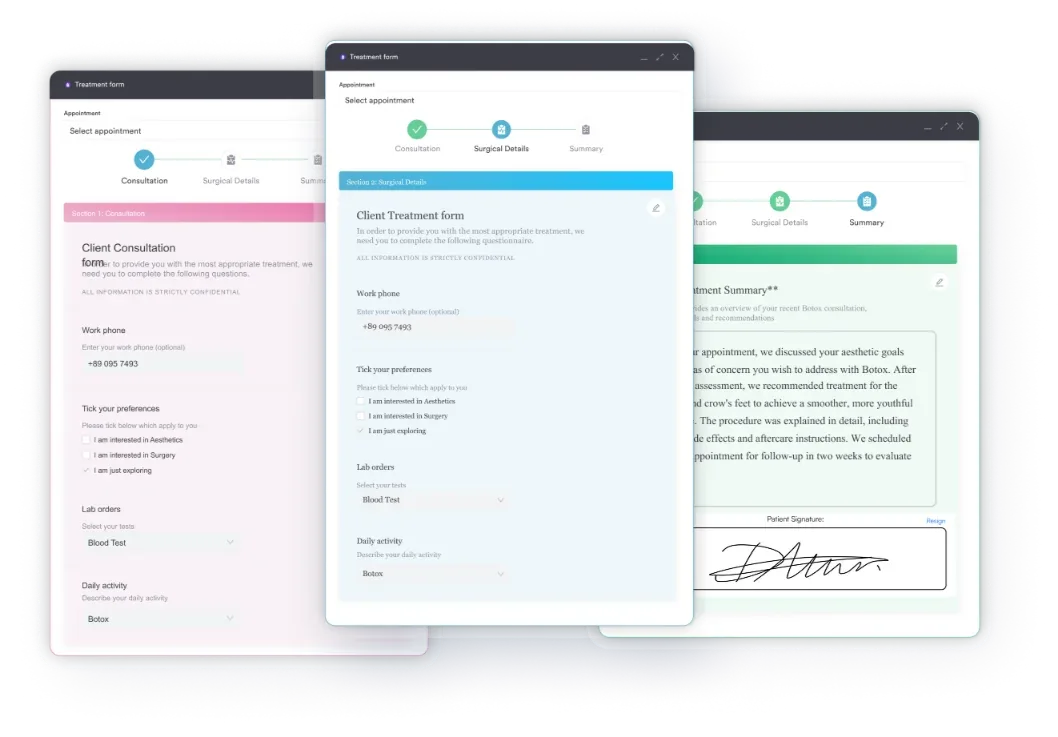
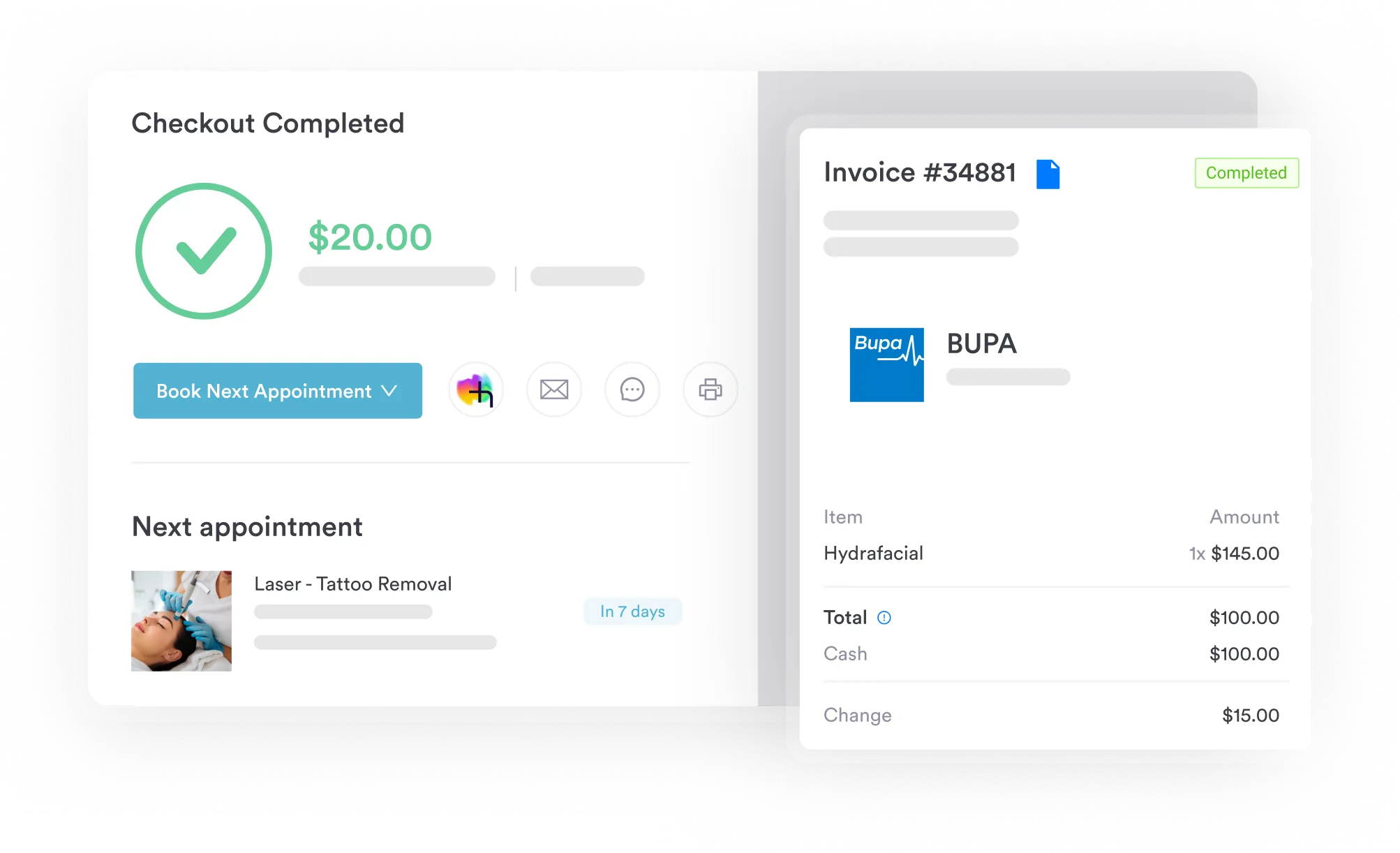
Codes then have to move from the record to the claim without being retyped. Copying a code out of a lookup site into a separate billing system is where transcription errors creep in. Pabau’s claims management software pulls the diagnosis and procedure codes already on the patient record into a pre-filled claim, then submits and tracks it. Your coders still choose the codes.
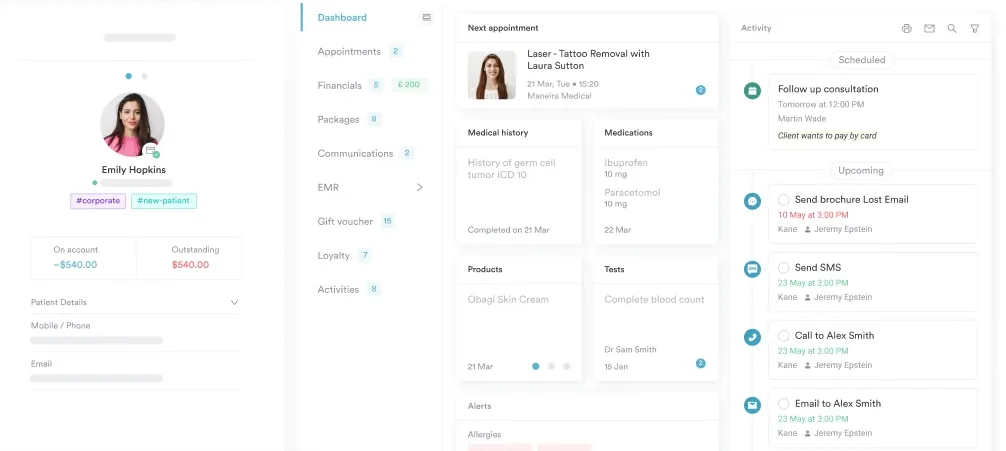
A sequela note also needs the original injury visit in view while it is being written. Pabau’s clinical records link past encounters to the current one, so the provider can cite the first wound encounter without hunting for it. That leaves an auditable chain behind the code if a payer reviews the claim.
For code hierarchy browsing alongside that workflow, the AAPC Codify lookup remains useful. A reference tool confirms the code, and the practice management system is what carries it through to a paid claim.

Pabau keeps the wound history, the sequela note, and the diagnosis code on the same patient record, then pre-fills the claim from it. Your team documents once and submits from the same place, so nothing is retyped between systems.

Build a sequela note template with three required fields. Confirm the original wound healed, record the date of the original injury encounter, and document the link between today’s condition and that wound. Those three fields close the documentation deficiency behind most S81.009S denials.
S81.009S is a code you should reach for less often than you probably do. Two of its three unspecified elements are usually answerable from the chart. A single laterality query turns it into S81.001S or S81.002S. Treat the unspecified version as the fallback, not the default.
What decides the claim is the 7th character and the note behind it. If the wound has healed and the provider has written down why today’s problem traces back to it, S is correct and defensible. If either half is missing, no amount of code accuracy will hold the claim up on review.
The practices that get this right build the check into the visit rather than the audit. Book a demo to see how Pabau keeps sequela documentation, diagnosis codes, and claims on a single patient record.

Coding a lower limb amputation rather than a wound? ICD-10 code S78.922S walks through the sequela rules for a partial traumatic amputation of the thigh.
Need the repair code for the original wound visit? CPT code 13100 covers complex wound repair and the documentation that has to sit behind it.
Working on a sequela code outside the injury chapter? ICD-10 code S06.813S shows the same two-code sequencing applied to an internal carotid artery injury.
Billing a cervical epidural injection? Cervical epidural injection billing covers the interlaminar injection into the cervical or thoracic epidural space using fluoroscopy or CT guidance.
Billing an intermediate repair instead? CPT code 12054 explains how repair complexity and wound length decide which code applies.
ICD-10 code S81.009S is a billable ICD-10-CM diagnosis code for an unspecified open wound of an unspecified knee, reported at a sequela visit. The patient presents with a lasting consequence of a knee wound that has already healed. The code is valid for FY2026, effective October 1, 2025, and it is exempt from present on admission reporting.
The three codes differ only in the 7th character. A is an initial encounter, where the provider is actively treating the open knee wound. D is a subsequent encounter, where the wound is healing and the provider is monitoring it. S is a sequela visit, where the wound has healed and the patient has a condition caused by that earlier injury. Staying on D after the wound has healed is the most common error in this code set.
Chapter 19 of ICD-10-CM sets five requirements. The original condition has to be healed. The provider’s note has to document a causal link between the current condition and the prior injury. The sequela code S81.009S is listed first. The code for the specific nature of the sequela is listed second. No active injury code for the same body site is assigned at that visit.
S81 carries an Excludes1 note for open fracture of knee and lower leg. That means S82 codes with a 7th character of B or C. Traumatic amputation of lower leg under S88 is Excludes1 too. Neither is ever coded with an S81 code. S81 also carries an Excludes2 note for open wound of ankle and foot under S91. Those codes can be assigned alongside S81 when both injuries are present.